Artwork
Count Lepic and His Daughters
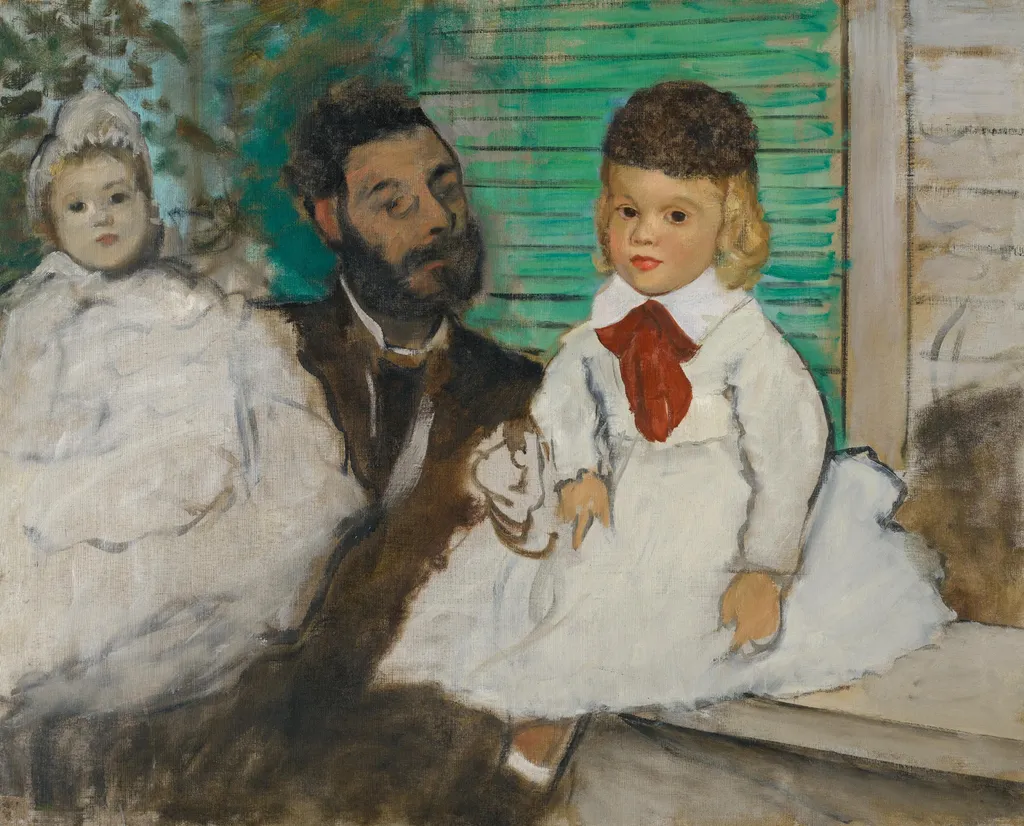
Count Lepic and His Daughters is an oil painting by the Impressionist artist Edgar Degas. It dates from 1871 and is held in the collection of the Foundation E.G. Bührle Collection.
About this work
Subject & Meaning
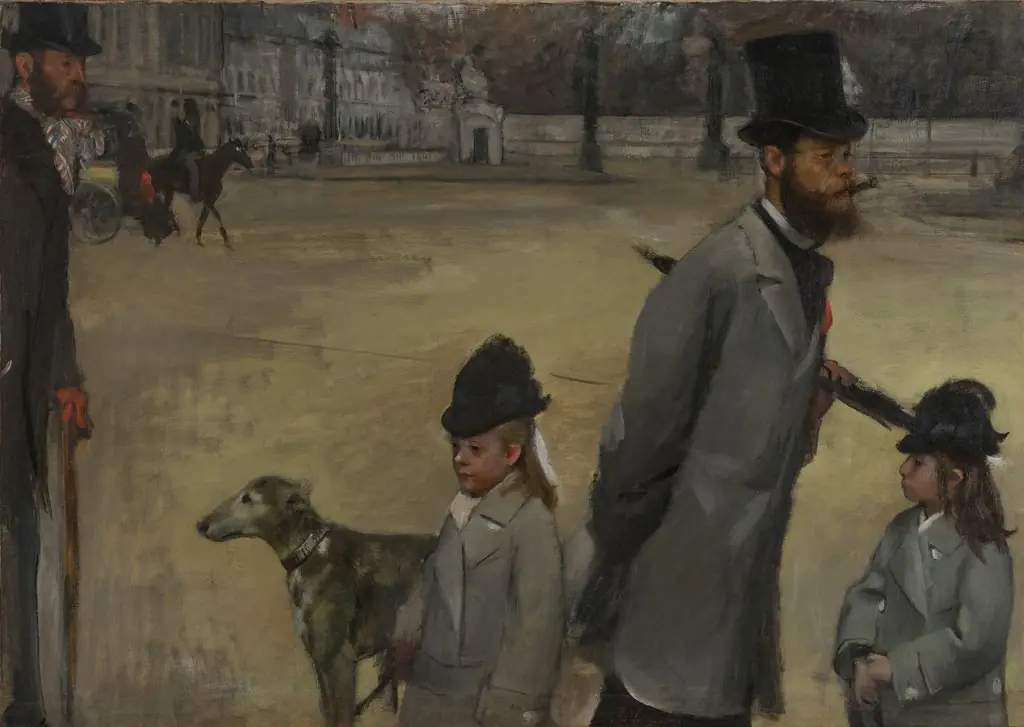
This work represents one of several instances where Degas featured Lepic, having also included him in the painting Place de la Concorde.
Edgar Degas's 1871 oil painting serves as a family portrait depicting Ludovic-Napoléon Lepic, often referred to as Count Lepic, seated with his two young daughters, Eylau and Jeanine. The composition focuses on the domestic bond between father and children, capturing them in a moment of stillness. Ludovic is portrayed with a beard, while the girls are shown in dresses, emphasizing their youth and familial connection.
This work represents one of several instances where Degas featured Lepic, having also included him in the painting Place de la Concorde. The image functions primarily as a record of the Lepic family unit during the early 1870s.
Technique & Style
The work is an oil painting on canvas executed in 1871 by Edgar Degas. It measures 65 cm in height and 81 cm in width. The handling combines loose, atmospheric brushwork with incisive linear accents, reflecting the artist’s Impressionist engagement with light and form.
Compositionally, the figures are arranged in a shallow, asymmetrical frieze, with the seated count and his two daughters grouped to one side, producing an off‑balance effect typical of Degas’s modern portraiture. The color palette is subdued, relying on muted ochres and greys enlivened by delicate touches of brighter pigment in the children’s attire, reinforcing the painting’s intimate yet restrained mood.
History & Provenance
Count Lepic and His Daughters is an oil on canvas completed by Edgar Degas around 1871, depicting Ludovic-Napoléon Lepic with his young daughters Eylau and Jeanine. The documented ownership chain begins with Galerie H. Fiquet, followed by the dealer Paul Rosenberg, before the painting entered the Foundation E.G. Bührle Collection, where it has been held since 1960 and is now on view at Kunsthaus Zürich. On February 10, 2008, the painting was stolen from the Foundation E.G. Bührle in Zürich, Switzerland. It was subsequently recovered in April 2012, reportedly in Serbia, with only slight damage.
Sources: 1, 2, 3, 4, 5
The painting is held in the collection of the Foundation E.G. Bührle Collection at the Kunsthaus Zürich, where it has been part of the collection since 1960.
It was stolen from the foundation on February 10, 2008, and recovered in April 2012 with slight damage.
Its inventory or accession number is not specified in the sources.
The work has been exhibited in the context of the foundation's collection displays and was featured in external links related to the Fondation E.G. Bührle.
The theft and recovery were documented in French and Spanish Wikipedia entries and reported by the foundation.
Legacy
The painting’s later reputation rests on its status as a canonical Impressionist family portrait and on its dramatic recovery after theft. Its prominence in the Foundation E.G. Bührle’s holdings has made it a recurrent subject in provenance and restitution discussions, especially following the 2008 theft from the Kunsthaus Zürich and its recovery in 2012 with only minor damage.
The work’s legacy is also linked to its role in Degas’s oeuvre as a key example of his engagement with modern life and intimate portraiture, often cited alongside Place de la Concorde, another depiction of Lepic.
Overview
Created around 1871, this oil on canvas by Edgar Degas portrays Ludovic‑Napoléon Lepic accompanied by his two young daughters, Eylau and Jeanine, strolling through a Parisian street. The composition captures a brief, intimate moment of family life, rendered with Degas’s characteristic attention to everyday scenes.
Context
Degas painted Lepic on multiple occasions, most notably in the larger composition Place de la Concorde. This repeated focus underscores Lepic’s role as a frequent model within Degas’s circle, offering insight into the artist’s network of acquaintances and his recurring exploration of familial and social themes.
Own this work as a print
Artist & collection
Artist
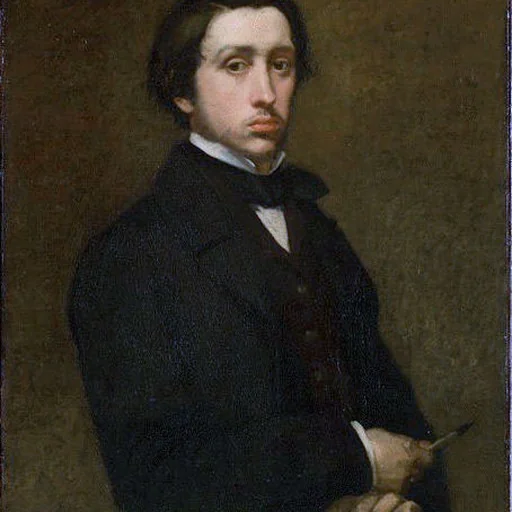
Born Hilaire-Germain-Edgar De Gas on 19 July 1834 in Paris, Edgar Degas came from an affluent banking family with aristocratic roots and spent his childhood among the cultivated circles of the French capital.

- Camille Monet und ihr Sohn Jean in Argenteuil
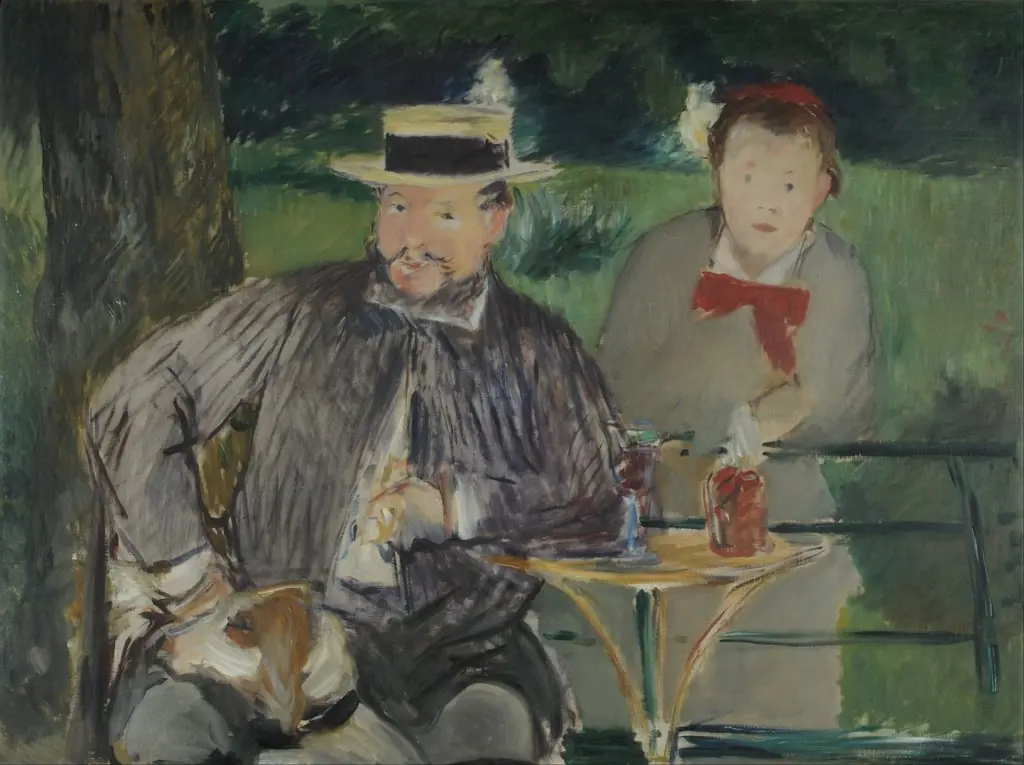 Portrait d'Ernest Hoschedé et sa fille Marthe
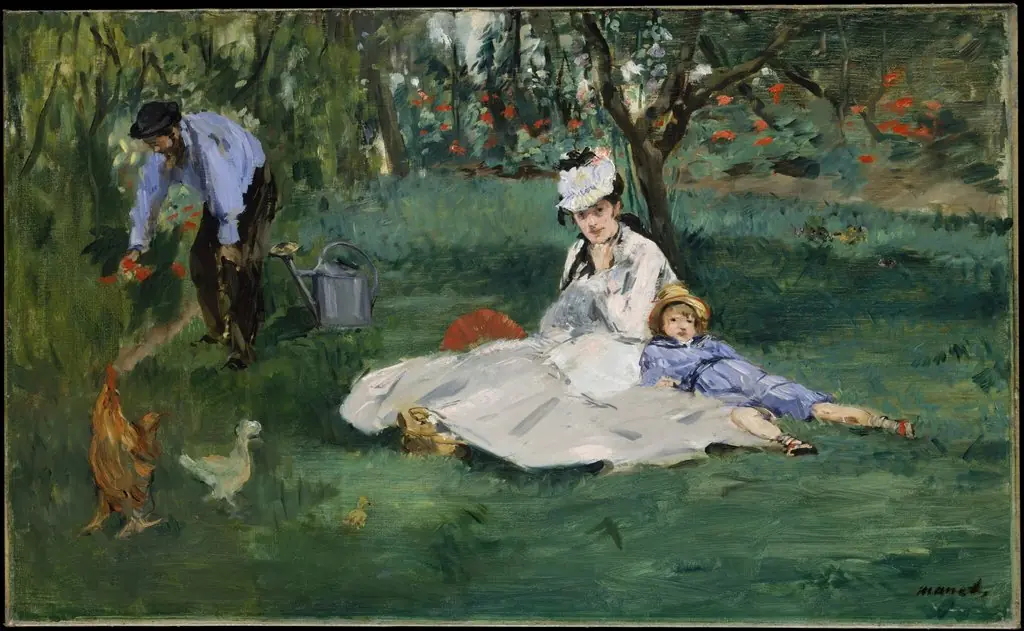 The Monet Family in Their Garden at Argenteuil
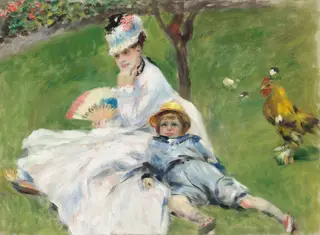 Madame Monet and Her Son
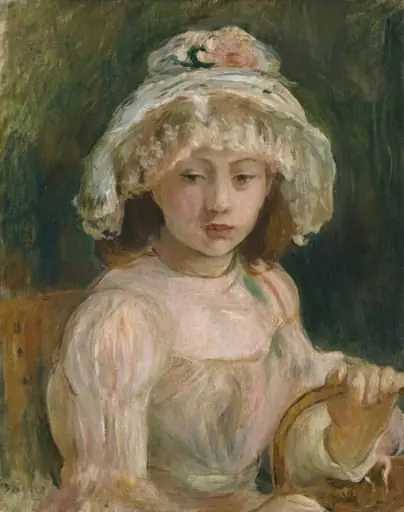 Young Girl with Hat
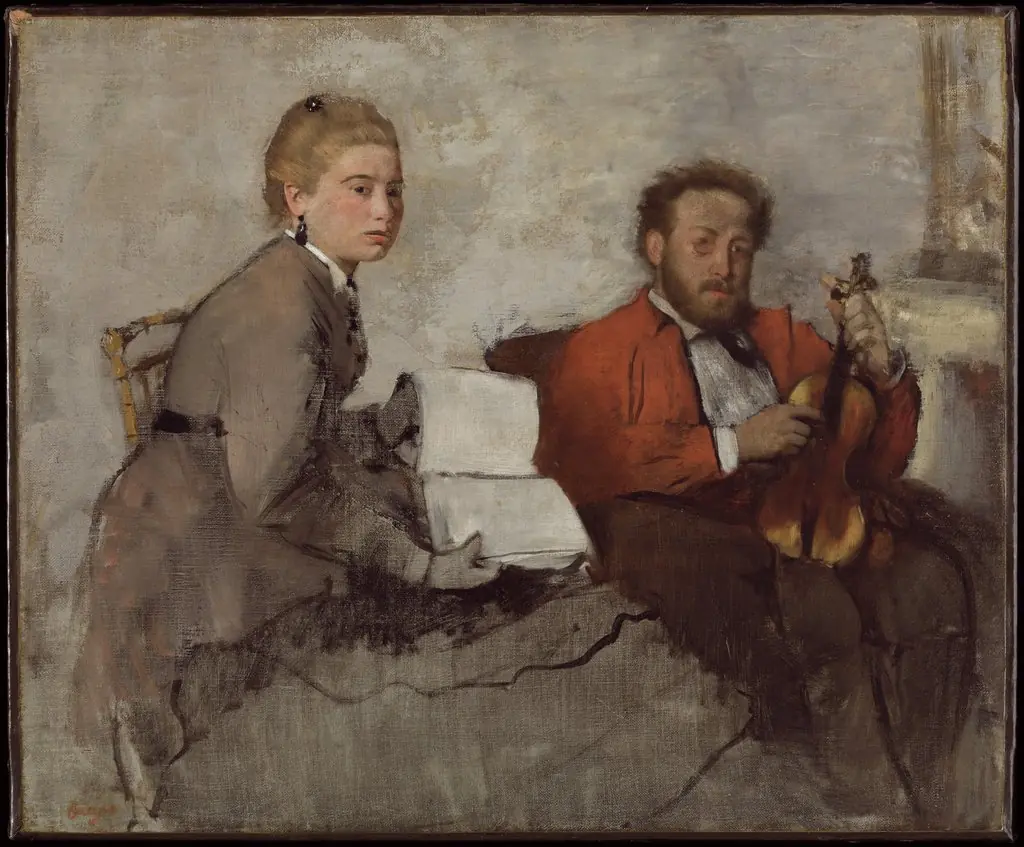 Violinist and Young Woman
 Sick Child
 Portrait de Diego Martelli
 At the Edge of the Forest (Edma and Jeanne)
 After the Bath
 The Railway