Artwork
The Railway
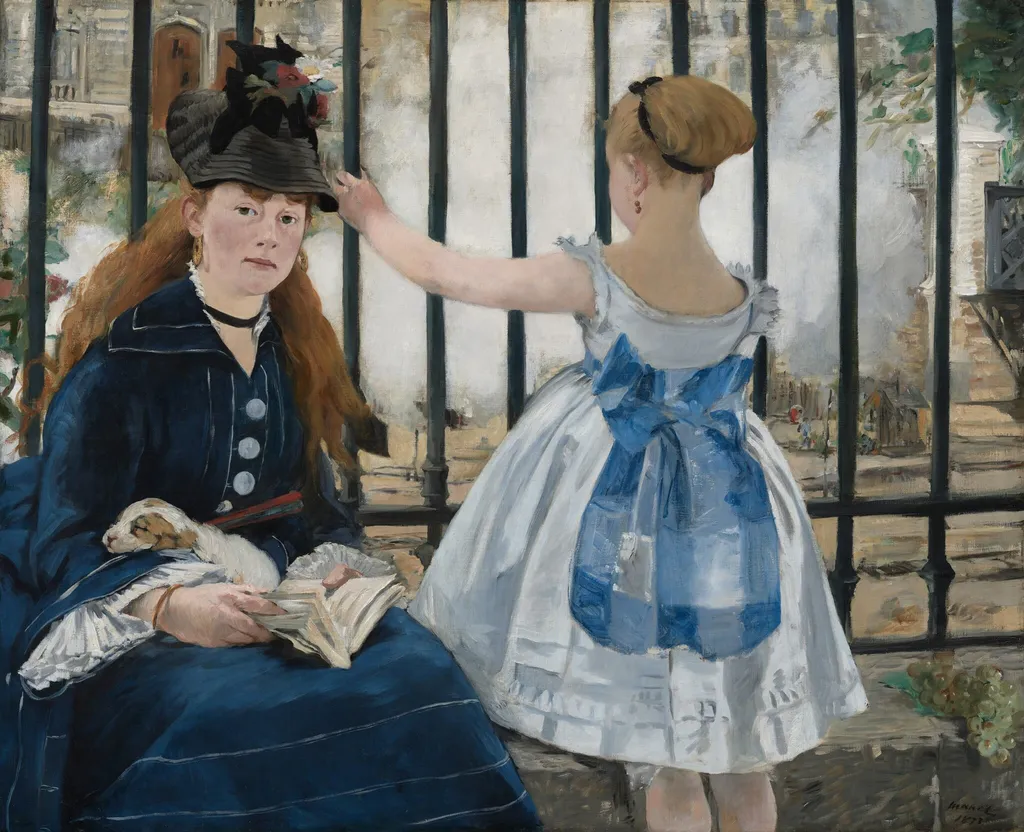
The Railway is an oil painting by the Impressionist artist Édouard Manet. It dates from 1873 and is held in the collection of the National Gallery of Art.
- Inscription
- Inscribed:lower right: Manet / 1873
About this work
Subject & Meaning
Manet’s The Railway centers on Victorine Meurent, the artist’s frequent model, seated in front of an iron fence near the Gare Saint-Lazare in Paris.
Manet’s The Railway centers on Victorine Meurent, the artist’s frequent model, seated in front of an iron fence near the Gare Saint-Lazare in Paris. She appears absorbed in a book, her gaze momentarily lifted to meet the viewer, while a sleeping puppy and fan rest in her lap. Beside her, a young girl in a white dress with a blue bow watches through the railings as steam from a passing train drifts across the scene.
The iron fence divides the composition into a compressed foreground and a vaporous background, where modern apartment buildings and the Pont de l’Europe are faintly visible. Critics initially found the work baffling, but later interpretations have emphasized its engagement with modernity, capturing fleeting moments and the tension between private contemplation and public spectacle in a rapidly industrializing city.
Technique & Style
Executed in 1873, The Railway is an oil painting on canvas measuring 93.3 by 111.5 centimeters. Manet worked primarily en plein air near the Gare Saint-Lazare, completing details in a neighbor's garden and his own studio. The composition deliberately rejects traditional deep space, compressing the foreground and separating it from the background with an iron grille that stretches across the entire width of the support.
Instead of depicting the train directly, the artist rendered only its white steam cloud. Contemporary critics at the 1874 Salon described the execution as sketchy and incoherent, noting the work's unfinished appearance due to its broad, visible brushwork. Stylistically, the painting contrasts the dark blue dress of the seated woman with the white attire of the standing child, using the black ribbons in their hair and neckwear as unifying visual elements.
The arrangement creates a narrow focus where modern apartment buildings and signal boxes appear flattened behind the railing.
History & Provenance
Édouard Manet painted The Railway in 1872 and 1873, executing much of the work en plein air near the Gare Saint-Lazare, close to his rented studio at 4 Rue de Saint-Pétersbourg, with finishing touches completed in his neighbor Alphonse Hirsch's garden. The work serves as his final portrait of his favored model, Victorine Meurent. Shortly after completion, the painting was acquired by the baritone Jean-Baptiste Faure, who loaned it to the Paris Salon of 1874.
Faure sold the work around 1881 for 5,400 francs to the art dealer Paul Durand-Ruel, who marketed it under several titles, ultimately settling on Gare St. Lazare. On December 31, 1898, Durand-Ruel sold it for 100,000 francs to Henry Osborne Havemeyer and his wife Louisine in New York. Following Louisine's death in 1929, the painting was inherited by their son, Horace Havemeyer, who bequeathed it to the National Gallery of Art in Washington, D.C., in 1956.
The Railway is held by the National Gallery of Art in Washington, D.C., which acquired the painting in 1956 as a bequest from Horace Havemeyer in memory of his mother. While the sources confirm the institution, they do not provide a specific inventory or accession number. The work's exhibition history includes its initial public display at the official Paris Salon in 1874, where it was lent by its first owner, the baritone Jean-Baptiste Faure.
At this exhibition, the painting faced harsh criticism from conservative critics who found its subject baffling and its execution sketchy, though a few reviewers recognized its powerful luminosity and modernity.
Context
When exhibited at the Paris Salon of 1874, Manet’s The Railway provoked sharp criticism: reviewers dismissed its subject as baffling, its composition as incoherent, and its handling as sketchy, while caricaturists lampooned the scene as a modern aberration. Conservative voices such as Jules Claretie questioned whether the work was a wager disguised as a painting, and Louis Veuillot even diagnosed a pictorial delirium. Yet a minority defended its modernity, Jules-Antoine Castagnary praised its powerful luminosity, Philippe Burty celebrated Manet’s influence on serious artists, and Stéphane Mallarmé publicly championed the picture.
Over time, scholarly reassessment aligned the work with Impressionism, emphasizing its condensed foreground, flattened space, and vaporous atmosphere as hallmarks of Manet’s late style. Today the painting is widely regarded as a pivotal synthesis of Realist portraiture and the visual language of modernity, situating Manet between Salon tradition and the avant-garde.
Legacy
Although The Railway was met with ridicule at its 1874 Salon debut, critics called its subject baffling and its execution sketchy, it later came to be celebrated as a symbol of modernity. Scholars such as T.J. Clark have emphasized how the painting captures fleeting urban experience while foregrounding enduring details, reinforcing its place in the narrative of modern art. Contemporary assessments, like that of Ina Conzen, view the work as a central piece in Manet’s oeuvre, noting its impressionistic treatment of the background and the model’s gaze as a meditation on transience.
Since its donation to the National Gallery of Art in Washington, D.C., in 1956, the painting has remained a key work in the museum’s collection, continuing to shape its reputation.
Overview
Édouard Manet's 1873 oil on canvas, The Railway, also known as Gare Saint-Lazare, depicts a scene of modern Parisian life. The painting features a woman and a young girl situated near the tracks of a bustling railway station. This work exemplifies Manet's engagement with contemporary subjects and his distinctive approach to figural composition, capturing a moment of quiet observation amidst an urban backdrop.
Own this work as a print
Artist & collection
Artist
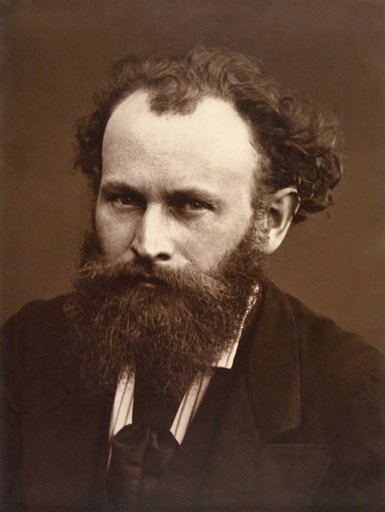
Édouard Manet was a French modernist painter. He was one of the first 19th-century artists to paint modern life, as well as a pivotal figure in the transition from Realism to Impressionism.

- Camille Monet und ihr Sohn Jean in Argenteuil
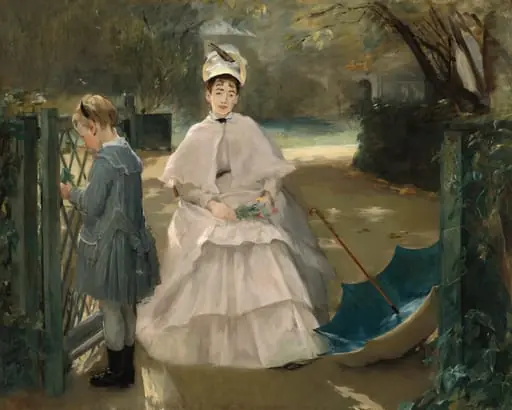 Nanny and Child
 Madame Monet and Her Son
 In the Garden
 Young Girl at a Window
 Place de la Concorde
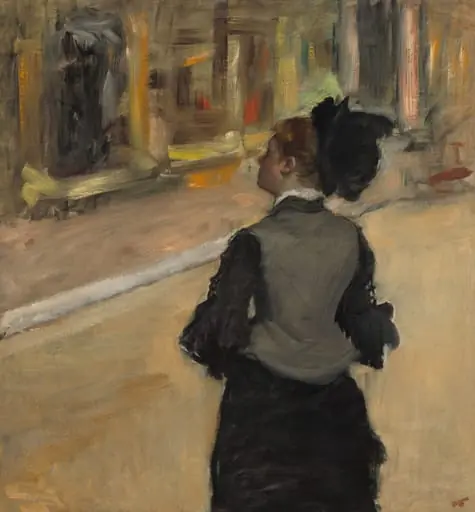 Woman Viewed from Behind (Visit to a Museum)
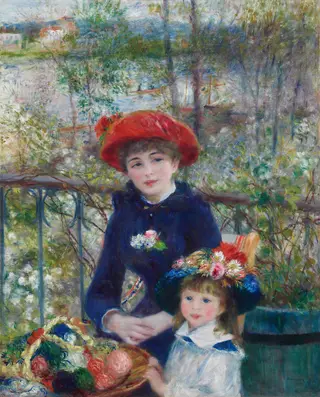 Two Sisters
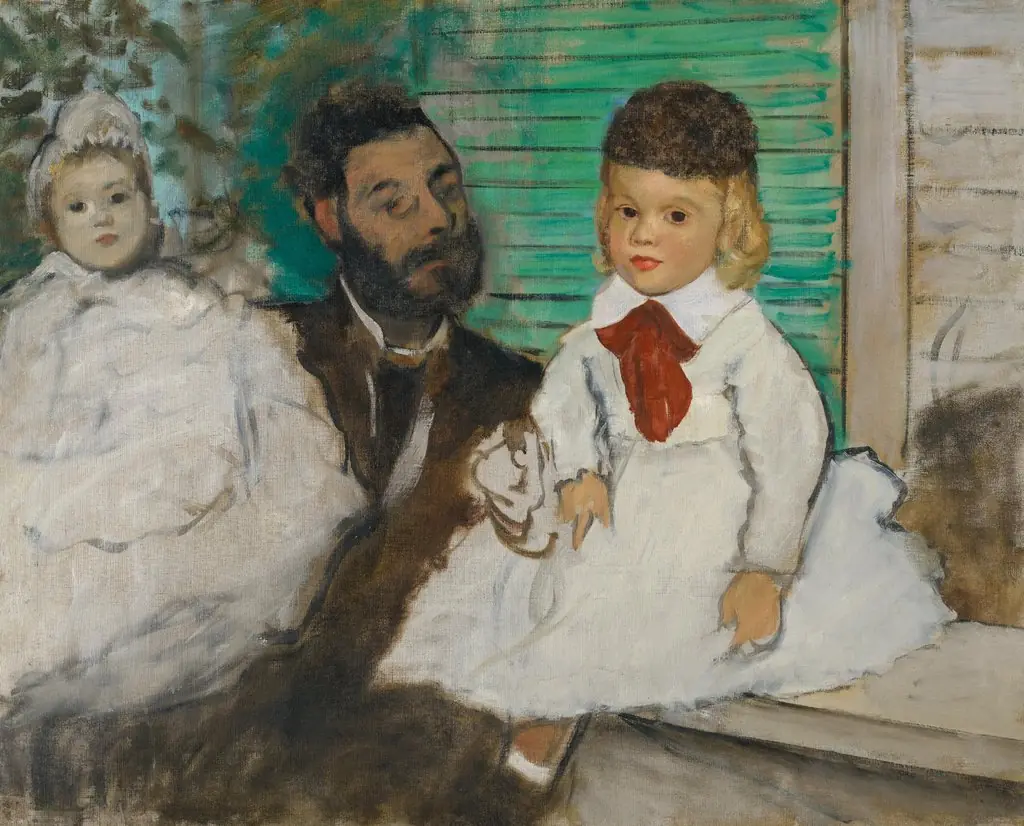 Count Lepic and His Daughters
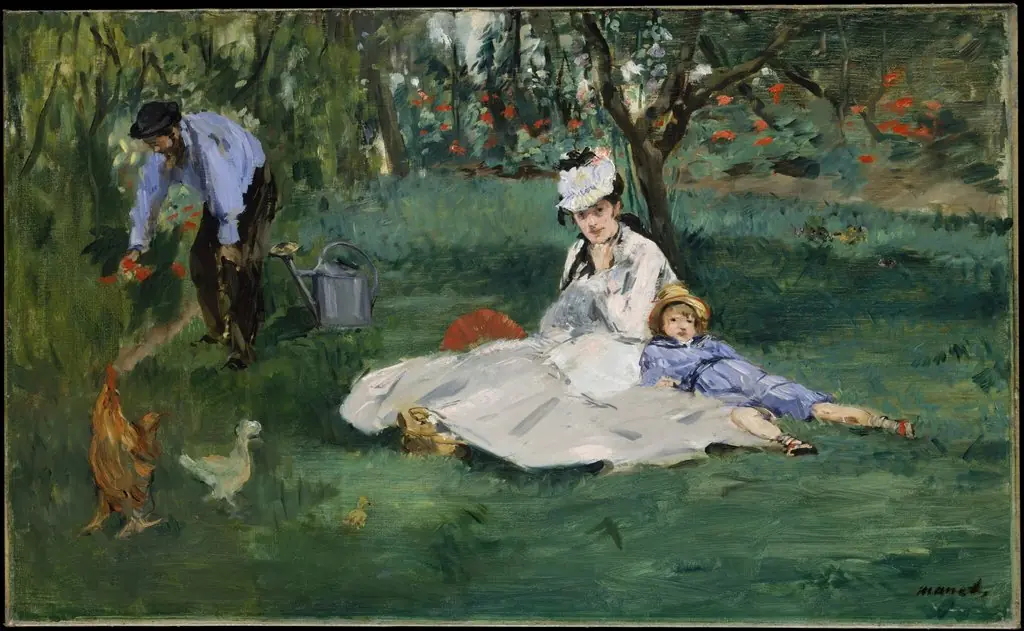 The Monet Family in Their Garden at Argenteuil
 Les Boëchelles. Two Walloon Peasant Children
 Portrait of a Young Girl