Artwork
Street of a Village
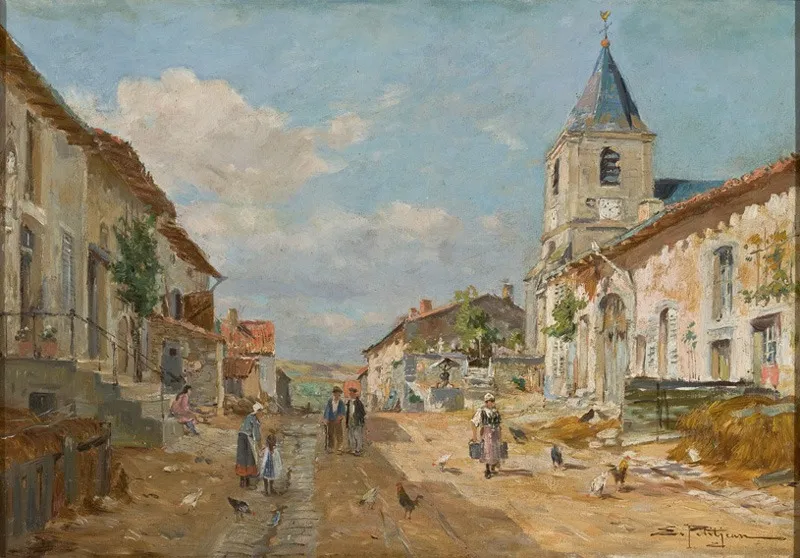
Street of a Village is an oil painting by the Post-Impressionist artist Edmond Marie Petitjean. It is held in the collection of the São Paulo Museum of Art.
About this work
Overview
Edmond Marie Petitjean, a French artist with no formal training, painted Street of a Village circa 1950 in oil on canvas. The work reflects his consistent focus on rural life and quiet outdoor settings. It is part of the São Paulo Museum of Art’s collection, where it stands as a representative example of his later output, characterized by gentle observation rather than dramatic expression.
Subject & Meaning
There is no narrative climax; instead, the quiet rhythm of ordinary moments is emphasized, suggesting a reverence for simple, enduring routines.
The painting portrays an ordinary village street, alive with unassuming daily activity. Figures, adults and children, interact near a cluster of chickens, while a church steeple rises prominently on the right, anchoring the scene in a sense of community and tradition. There is no narrative climax; instead, the quiet rhythm of ordinary moments is emphasized, suggesting a reverence for simple, enduring routines.
Technique & Style
Petitjean employed oil paint to build soft, layered surfaces that convey texture without sharp definition. Brushwork is loose but deliberate, capturing light on stone walls and fabric with subtle tonal shifts. The sky, rendered in pale blues and muted clouds, complements the earthy tones of the buildings, creating a harmonious, atmospheric whole that aligns with post-impressionist tendencies toward emotional tone over strict realism.
History & Provenance
The painting entered the São Paulo Museum of Art’s collection in the mid-20th century, likely through acquisitions focused on European modernist and post-impressionist works. Its provenance prior to this is undocumented, but its style and date suggest it was painted in France, possibly during Petitjean’s later years, when he increasingly turned to nostalgic depictions of rural life.
Context
Created in the postwar period, the painting reflects a broader European interest in reclaiming pastoral imagery amid urbanization and industrial change. Petitjean’s work, though not widely exhibited, resonated with audiences seeking solace in depictions of stable, communal life. His approach diverged from avant-garde trends, favoring quiet realism rooted in personal observation rather than theoretical innovation.
Legacy
Petitjean remains a lesser-known figure in art history, with no major institutional retrospectives. Street of a Village endures as a quiet testament to his dedication to everyday scenes. His oeuvre, though modest in scale, contributes to a broader understanding of non-academic painters who sustained regional and personal visions during a time of rapid artistic transformation.
Artist & collection
Artist
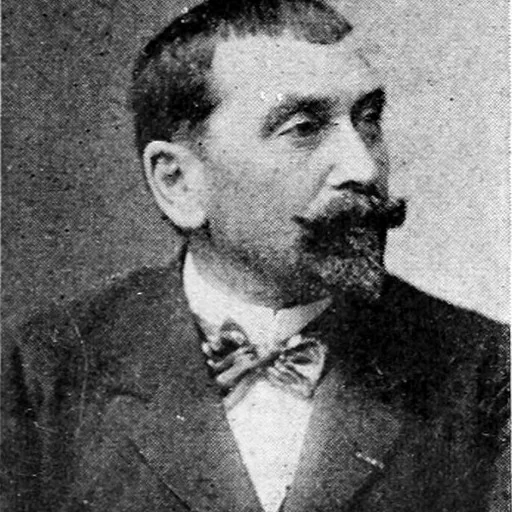
Edmond Marie Petitjean (5 July 1844, Neufchâteau – 7 August 1925, Paris) was a self-taught French painter; known for landscapes and seascapes.

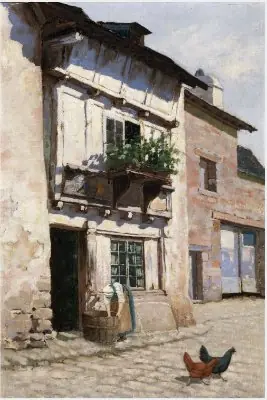 Village Street in Normandy
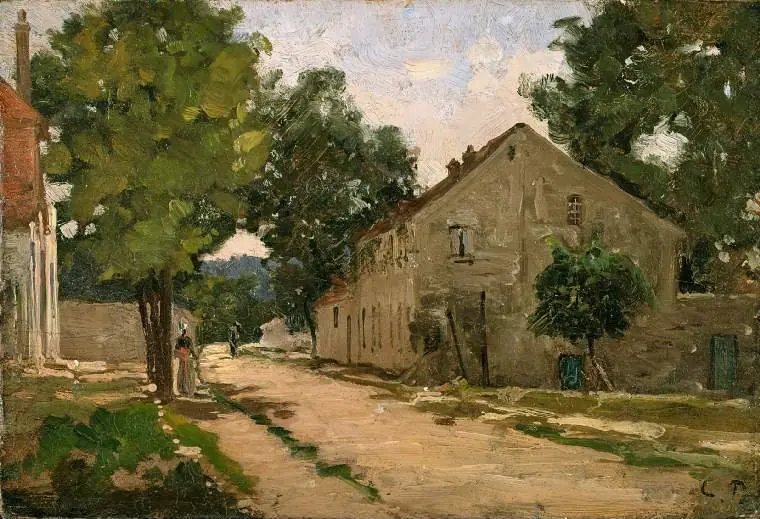 Route de Port-Marly
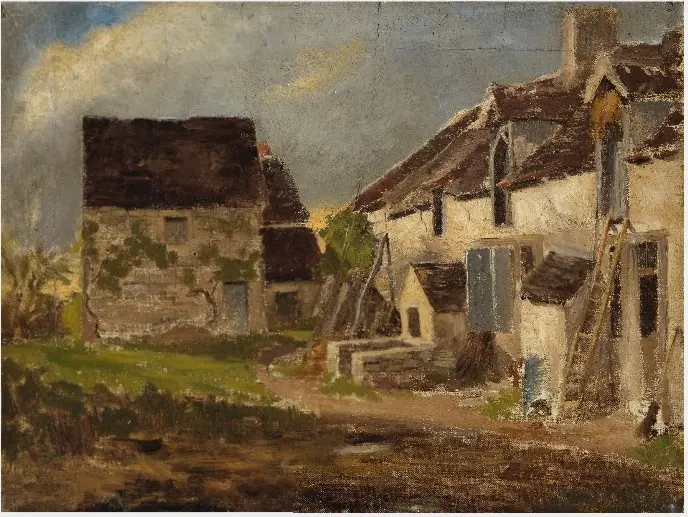 A House and Out-offices
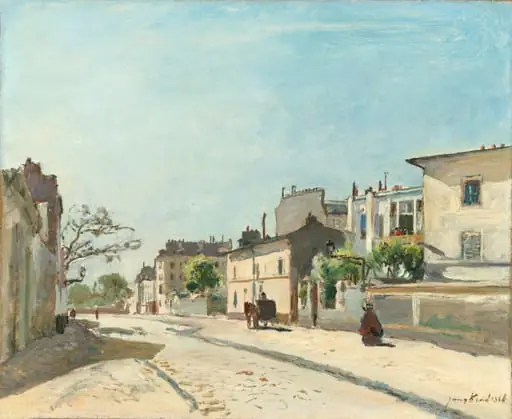 Rue Notre-Dame, Parijs
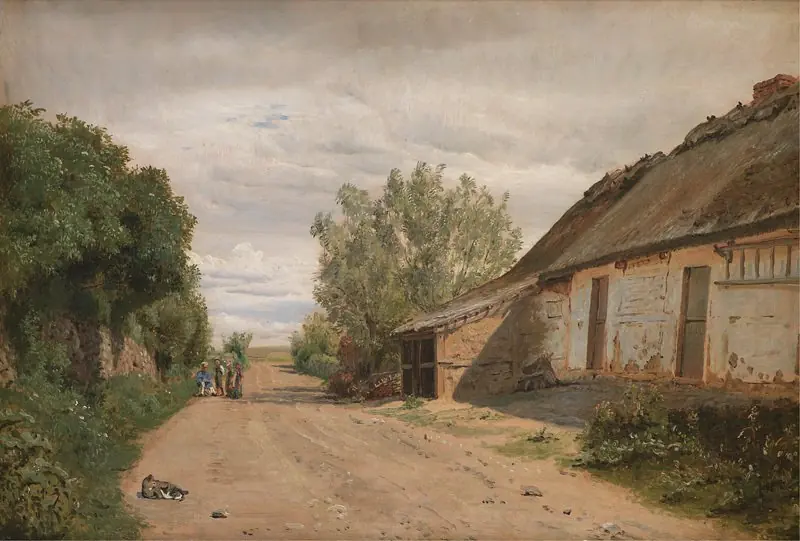 The Outskirts of the Village of Vejby. By the Roadside the Painter J.Th. Lundbye Sketching
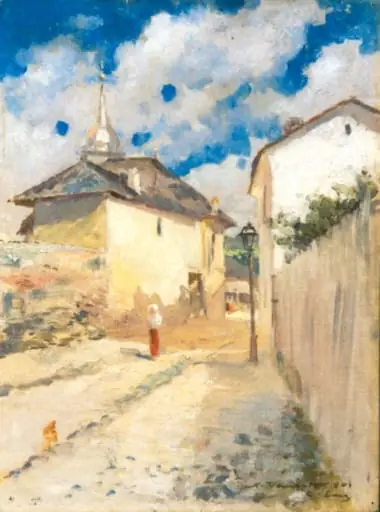 Case la Câmpulung
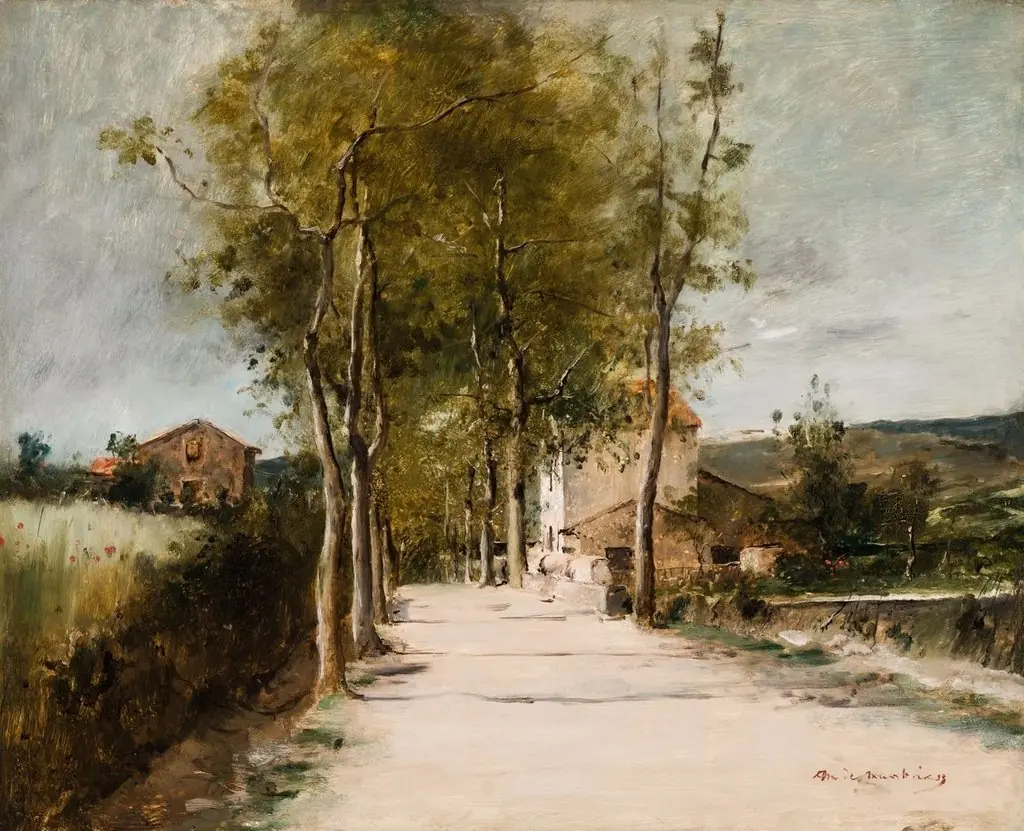 Landscape with Alley and Building
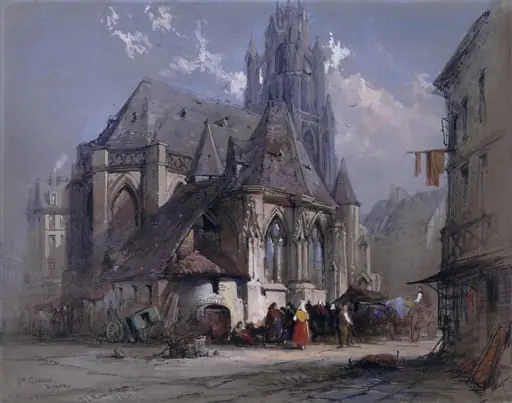 St. Godard, Rouen
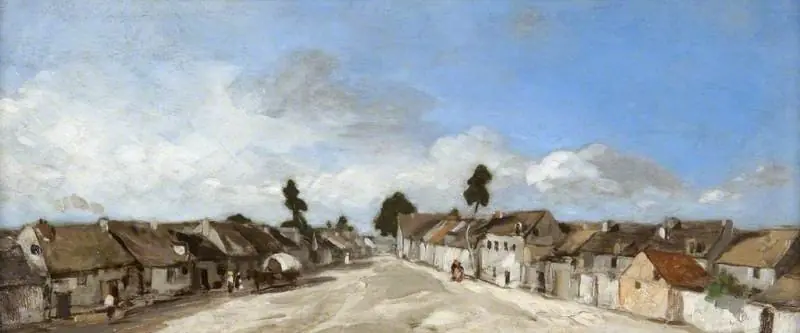 Village Scene, Barbizon
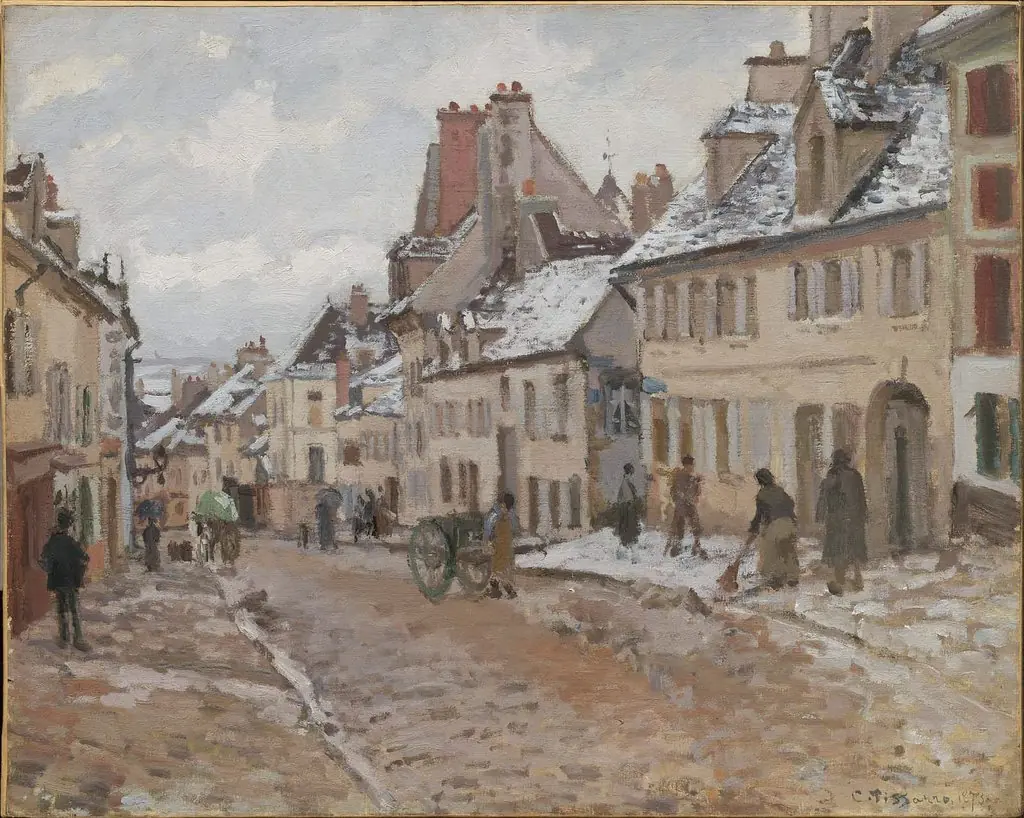 Pontoise, the Road to Gisors in Winter
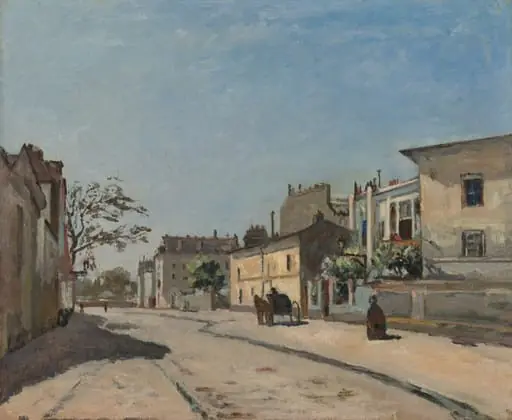 French Street Scene
- Village Street