Artwork
Rue Notre-Dame, Parijs
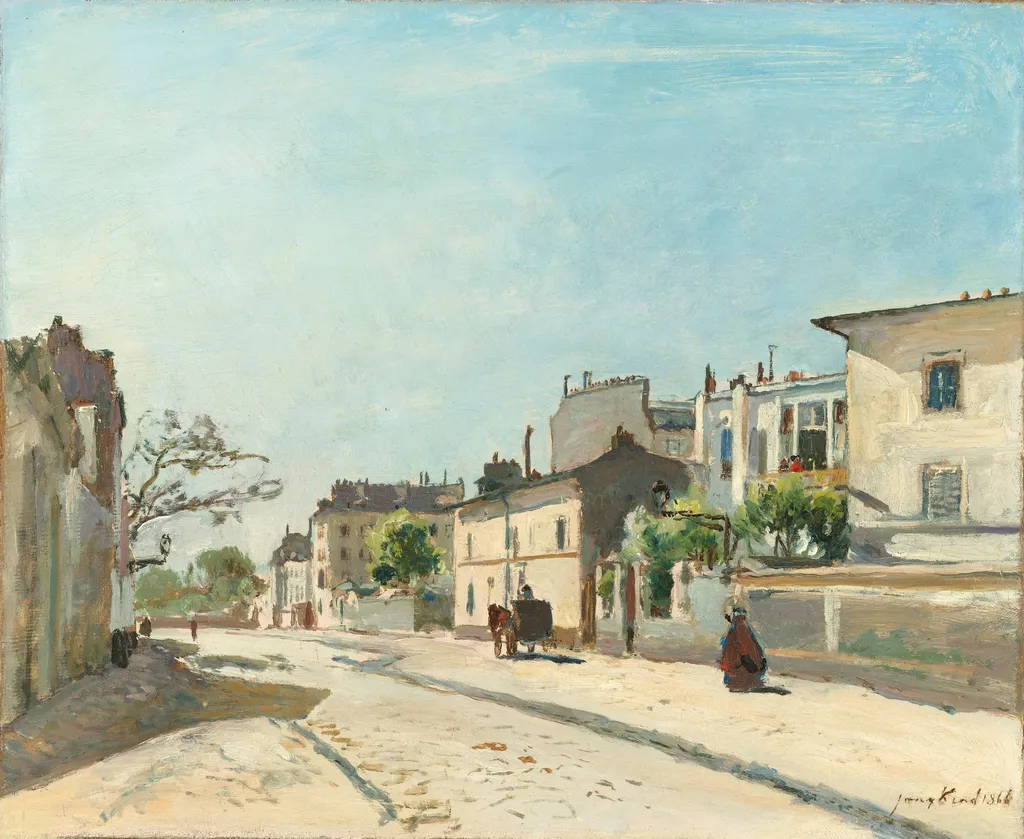
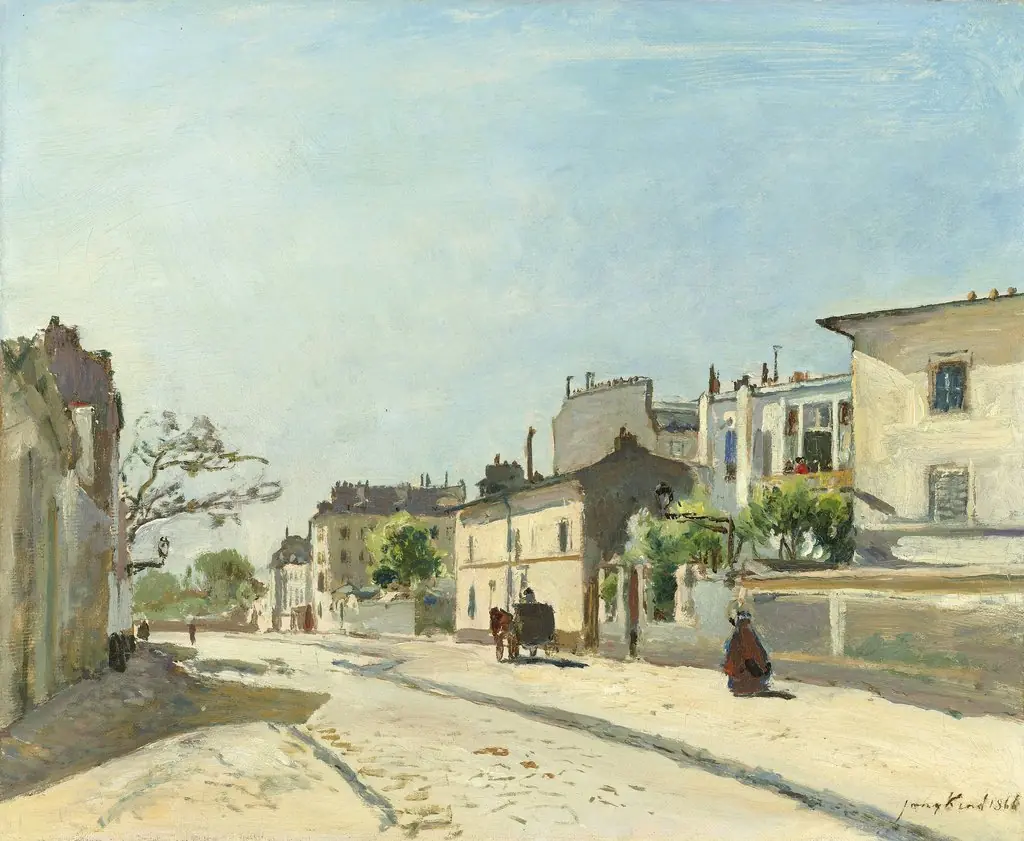
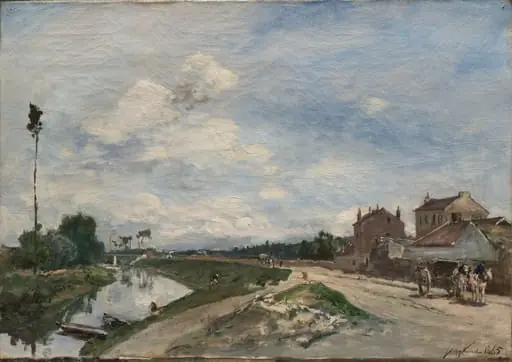
Rue Notre-Dame, Parijs is an unspecified painting by the Plein Air artist Johan Jongkind. It dates from 1866 and is held in the collection of the Rijksmuseum.
About this work
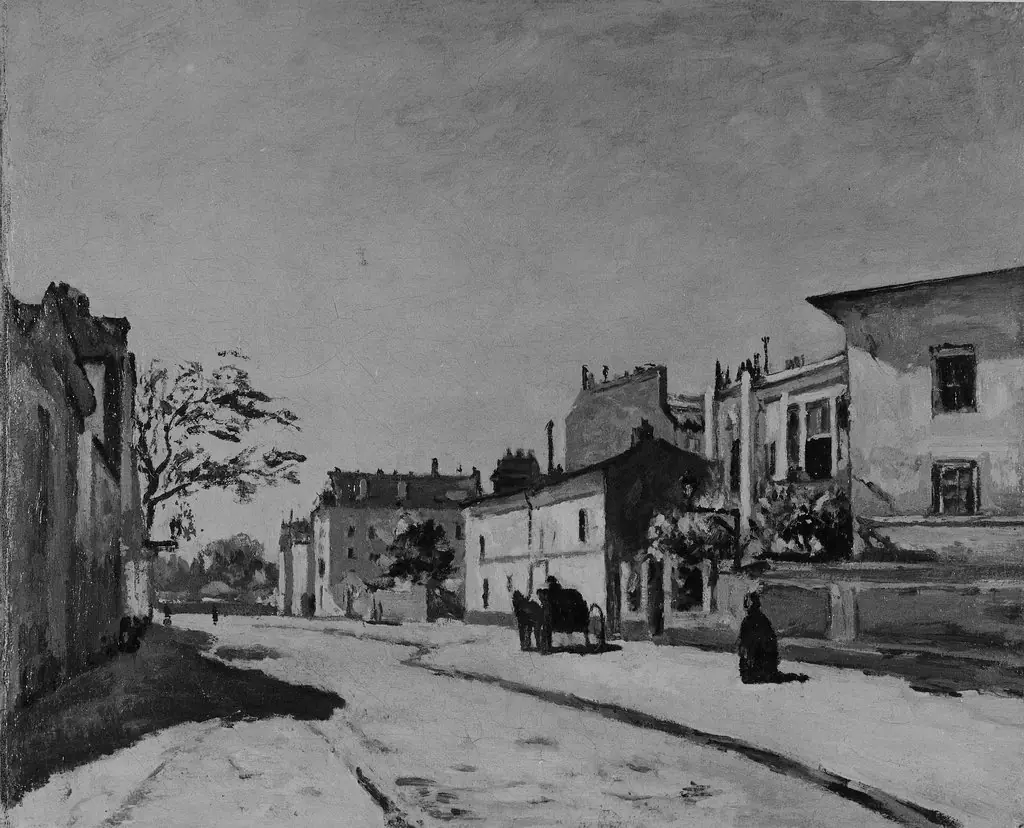
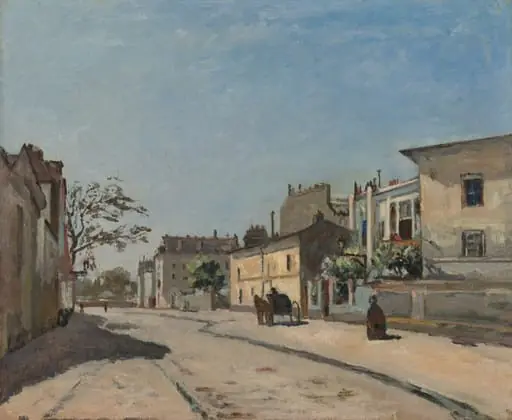
You see a bright Paris street in 1866, sunlight spilling over rooftops, shadows stretching long across the cobblestones.
You see a bright Paris street in 1866, sunlight spilling over rooftops, shadows stretching long across the cobblestones.
This painting feels fresh because the artist used quick, light brushstrokes to catch the fleeting glow of daylight. It’s one of the first times someone painted a modern city this way, focusing on light instead of tiny details. Later, a group of painters would do the same thing, but bigger.
To see how this idea grew, look up impasto.
Subject & Meaning
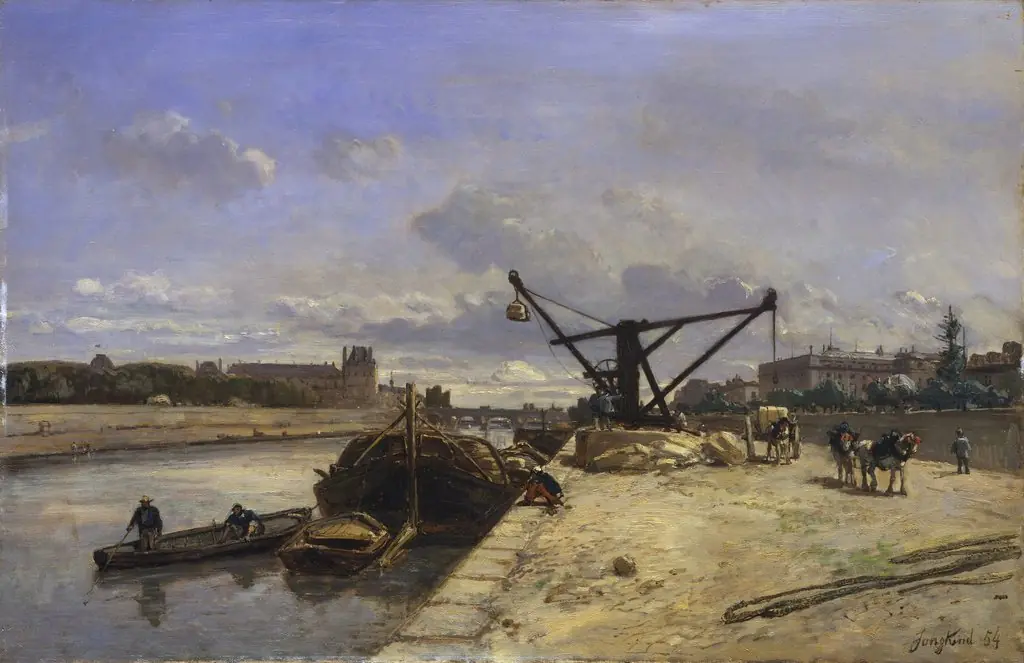
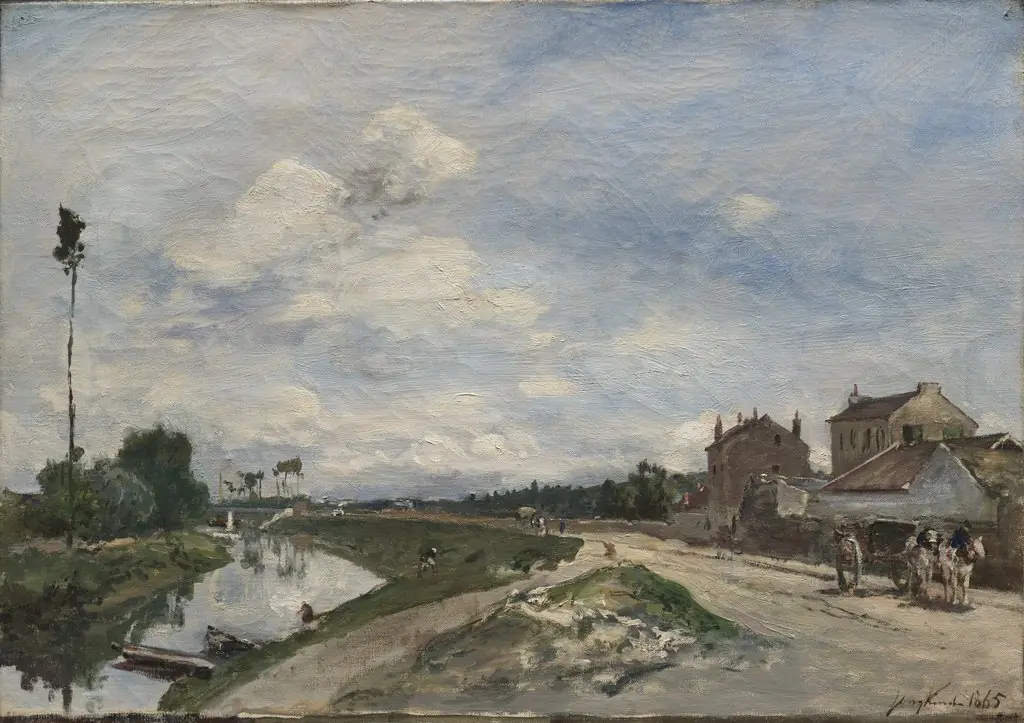
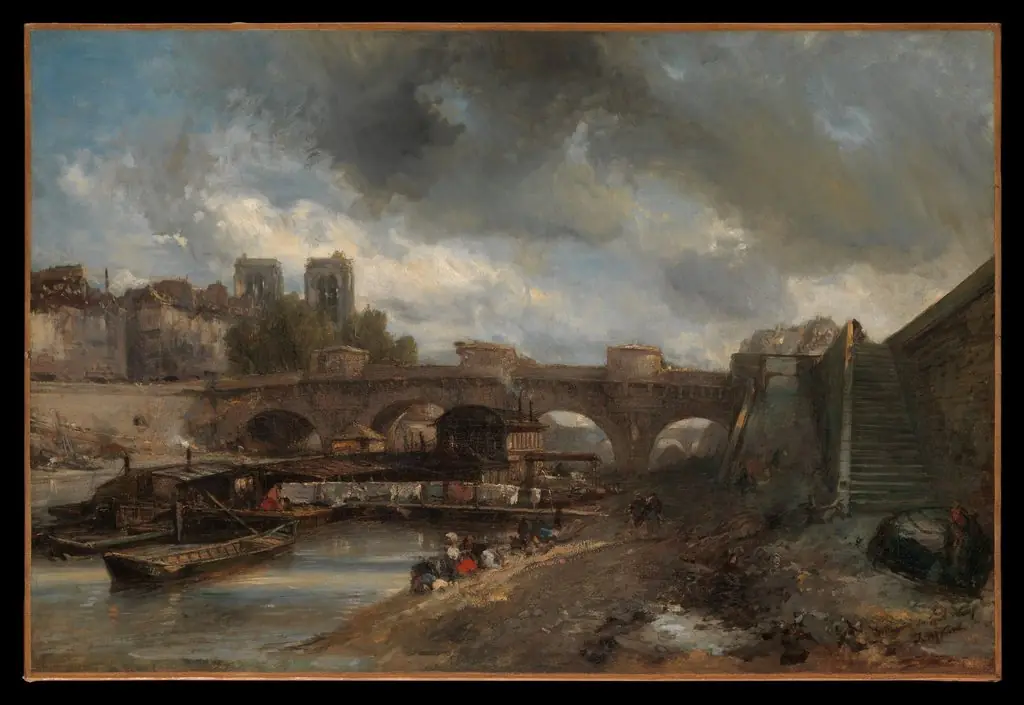
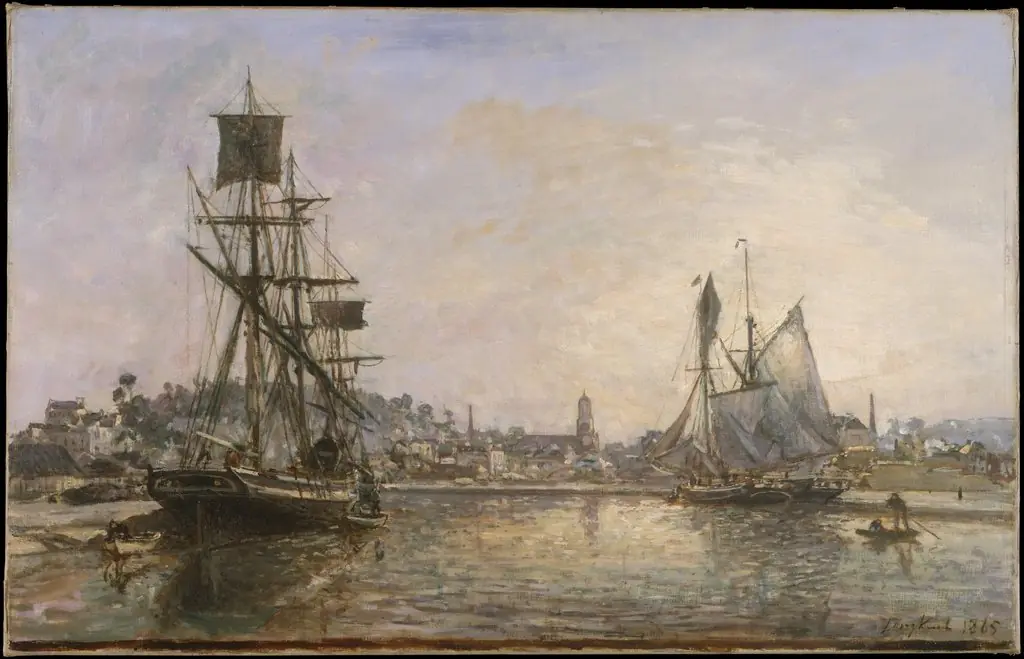
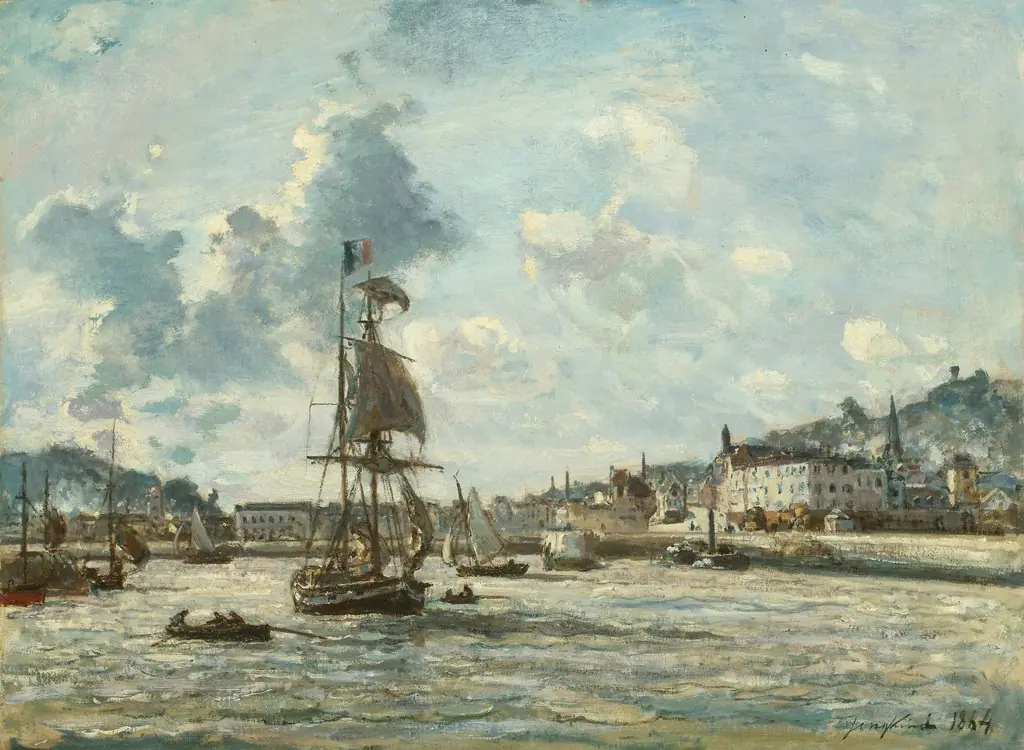
The painting depicts a specific urban view of the street named Rue Notre-Dame in Paris, situated within the broader context of the Seine river area near the Notre-Dame cathedral. As a landscape genre work, it captures the daily reality of the French capital rather than an idealized or mythological scene. The subject matter reflects the artist's recurring focus on Parisian cityscapes and riverbanks, which became a central theme in his oeuvre after he began painting views of the city in 1848. The work represents the intersection of urban life and the river environment, characteristic of Jongkind's approach to capturing the atmosphere of 19th-century Paris. By focusing on this specific street and its proximity to the cathedral, the painting documents the architectural and social fabric of the city during the Second Empire period.
Technique & Style
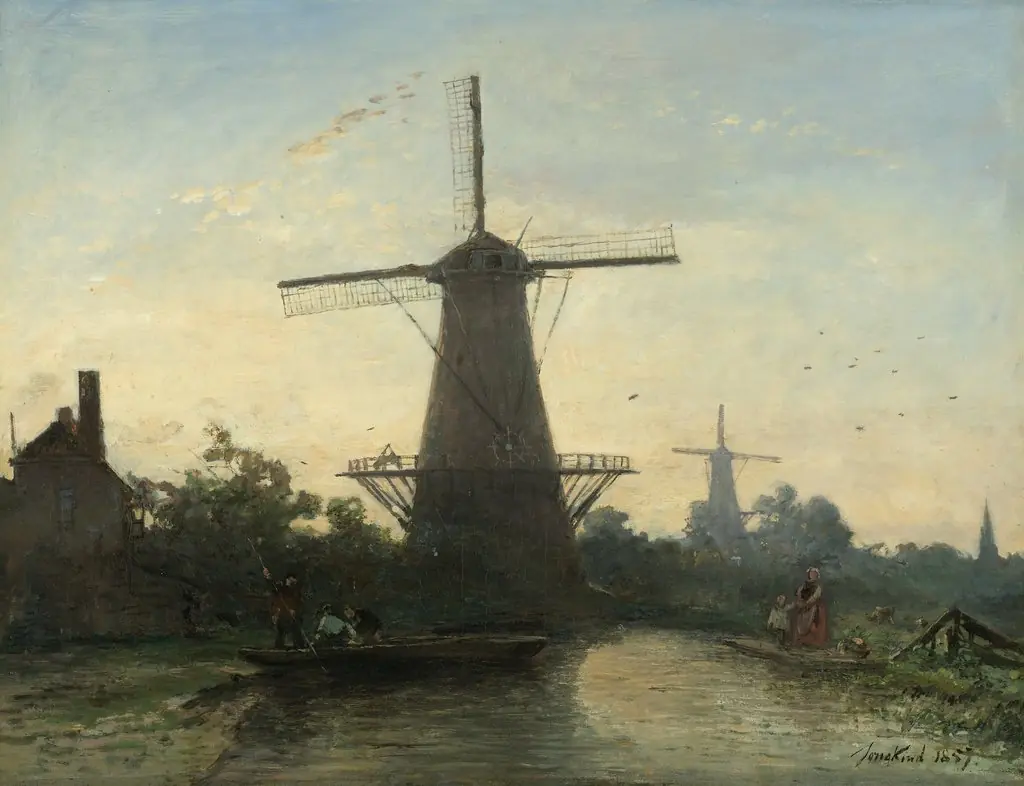
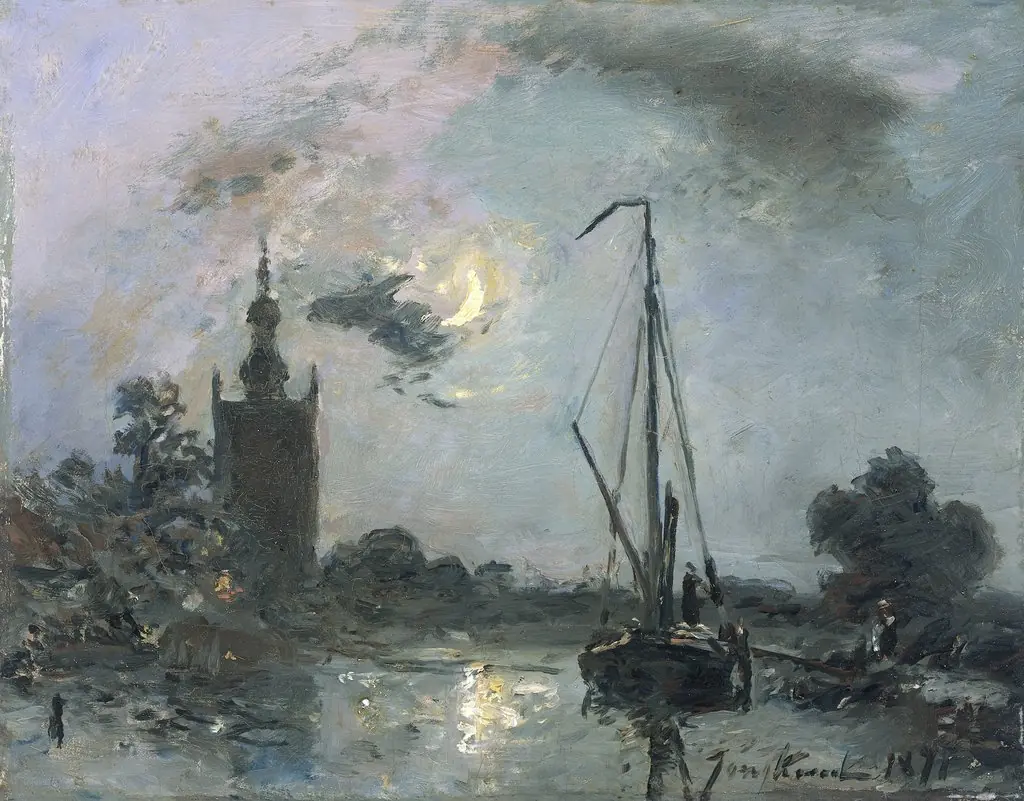
Created in 1866, Rue Notre-Dame, Parijs is an oil painting classified as a landscape. Consistent with Jongkind's broader practice during this period, the work likely originated from watercolor sketches made outdoors along the Seine, which were subsequently developed into studio paintings. The artist's approach is characterized by vigorous brushwork and strong contrasts, creating a lively depiction of the urban environment. Stylistically, the composition adheres to the tradition of 17th-century Dutch landscape painters by employing a low horizon line, a technique that allows the sky to dominate the visual field. This handling of light and atmosphere establishes Jongkind as a significant forerunner to the Impressionist movement.
History & Provenance
The painting Rue Notre-Dame, Parijs was executed by the Dutch artist Johan Barthold Jongkind in 1866. This work belongs to a recurrent series of views depicting the Seine and the area surrounding the Notre-Dame cathedral in Paris, a subject the artist began exploring shortly after his arrival in France in 1846.
By the mid-1860s, Jongkind had returned to Paris following a five-year residence in Rotterdam. He maintained a studio in the Montparnasse district, where he typically developed oil paintings based on watercolor sketches created outdoors. While the specific commission or initial buyer for this 1866 canvas is not detailed in available records, it emerged during a period when the artist was producing vigorous landscapes characterized by strong contrasts and low horizons.
Context
Jongkind's 1866 oil painting Rue Notre-Dame, Parijs exemplifies his marine-influenced urban landscapes, characterized by vigorous brushwork and low horizon compositions that foreground sky, aligning with his marine landscape tradition and Dutch Golden Age compositional approaches. His depiction of the Seine near Notre-Dame connects to his broader focus on French riverine scenes while demonstrating early Impressionist tendencies through outdoor sketching practices. Scholarship positions him as a pivotal precursor to Impressionism, noted for influencing Monet's development and receiving recognition from contemporaries like Baudelaire and Zola despite limited commercial success during his lifetime. His work's significance is underscored by inclusion in major institutions including the Rijksmuseum, Metropolitan Museum of Art, and Musée d'Orsay, with commemorative monuments established in both the Netherlands and France.
Legacy
Jongkind’s Rue Notre-Dame, Parijs (1866) is recognized within scholarship as a pivotal step in the transition from Realism toward Impressionism, particularly for its atmospheric handling of light and loose brushwork. Critics writing in the 1870s, 1890s, including Edmond de Goncourt, Émile Zola, and Paul Signac, singled out Jongkind’s Seine views for their luminous color and modern sensibility, cementing his reputation as a forerunner of the new movement. The work’s legacy is also tied to Jongkind’s role in forming the next generation: Monet explicitly credited him with providing the “definitive education” of his eye, and Jongkind’s Normandy sojourns introduced Monet to plein-air practice at Honfleur. Though Jongkind declined to join the 1874 Impressionist exhibition, his influence persisted through Boudin and the eventual circle of Monet, Pissarro, and Bazille.
Own this work as a print
Artist & collection
Artist
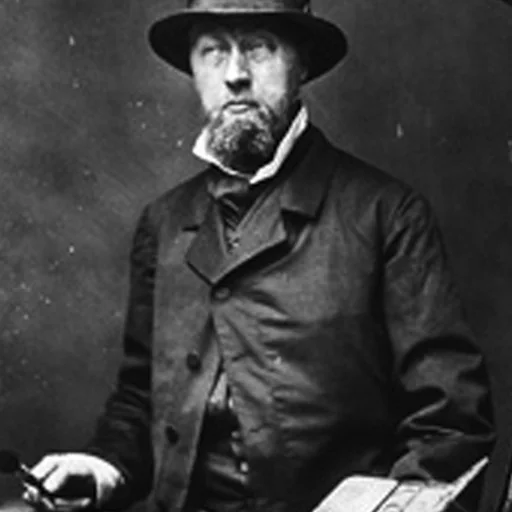
Johan Barthold Jongkind (Dutch pronunciation:; 3 June 1819 – 9 February 1891) was a Dutch painter and printmaker. He painted marine landscapes in a free manner and is regarded as a forerunner of impressionism.