Artwork
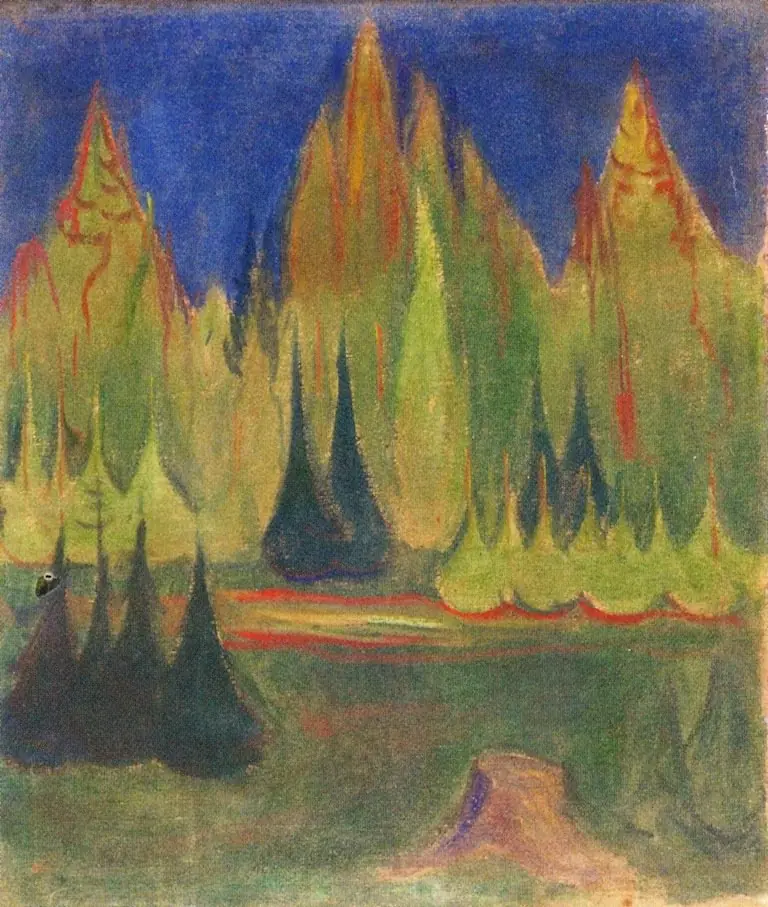
Dark Spruce Forest
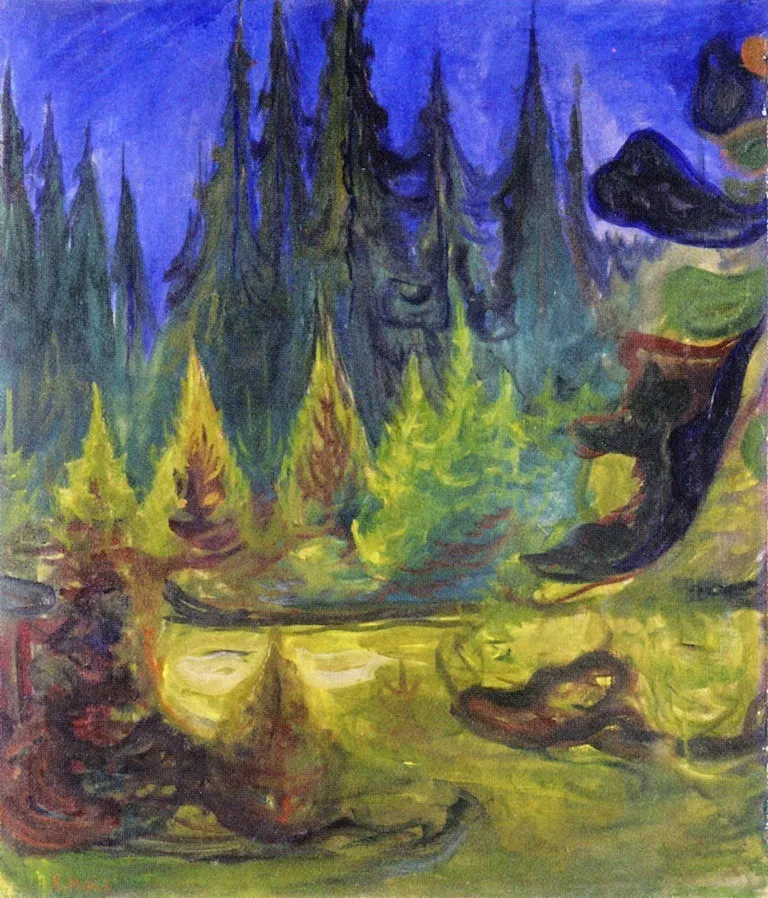
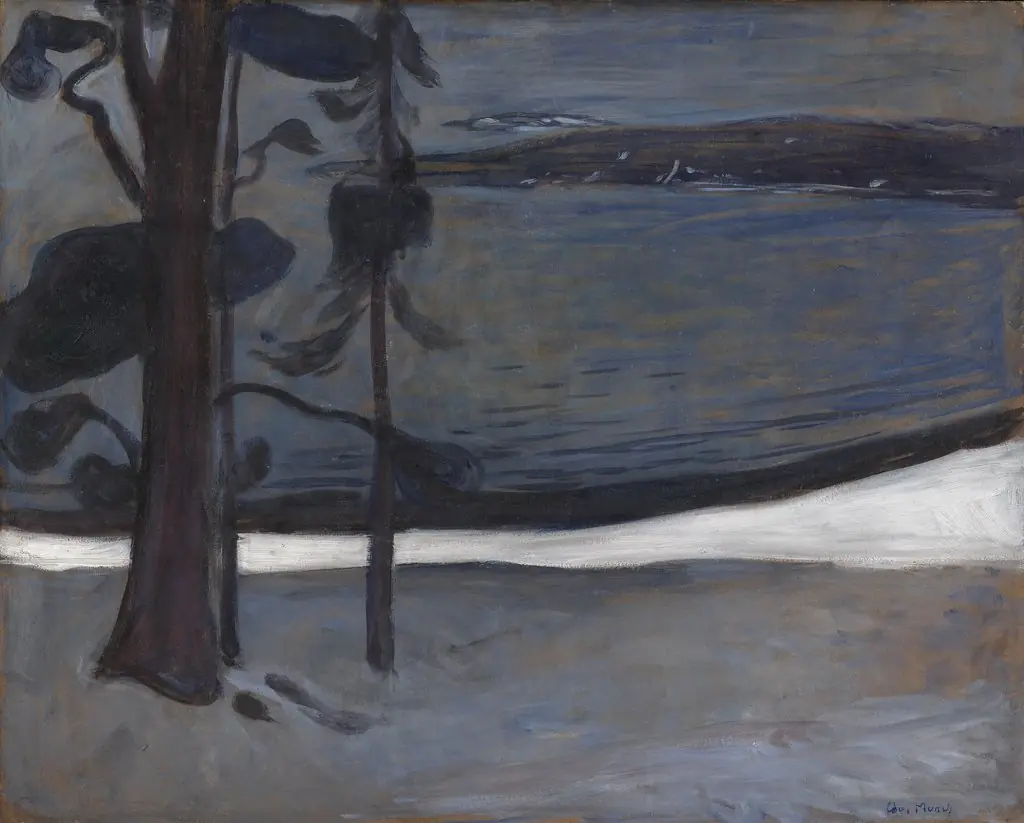
Dark Spruce Forest is an oil painting by the Post-Impressionist artist Edvard Munch. It is held in the collection of the Munch Museum.
About this work
Overview
The work is part of the permanent collection at the Munch Museum in Oslo, where it reflects his sustained interest in landscapes as emotional landscapes.
Edvard Munch painted Dark Spruce Forest in 1916, not 2000, using oil on canvas. It belongs to his later period, when his focus remained on nature as a vessel for inner states. The work is part of the permanent collection at the Munch Museum in Oslo, where it reflects his sustained interest in landscapes as emotional landscapes.
Unlike his earlier symbolic pieces, this forest scene avoids overt narrative, instead conveying mood through structure and tone.
Subject & Meaning
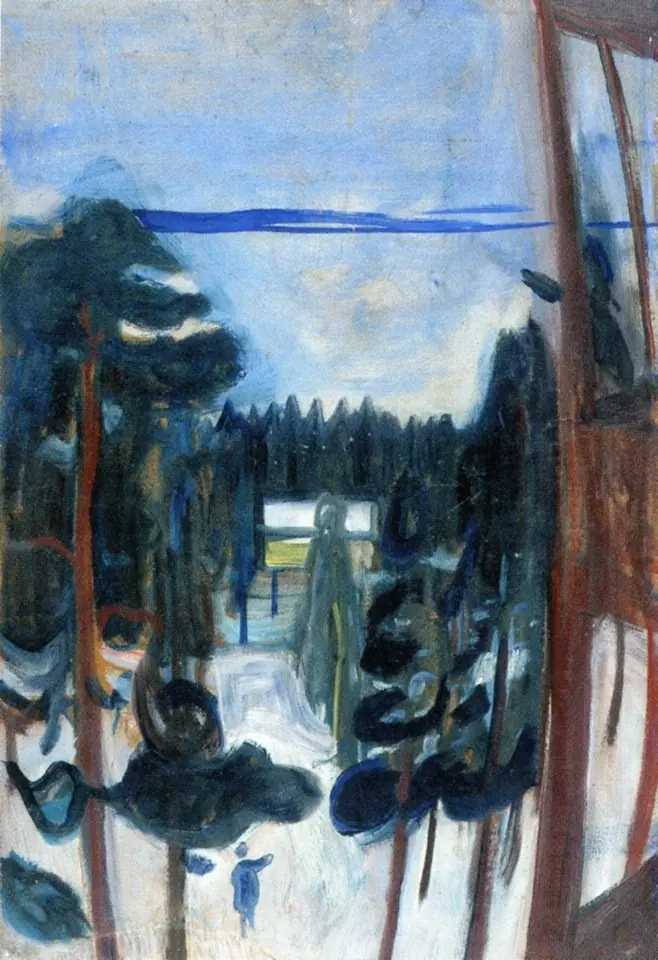
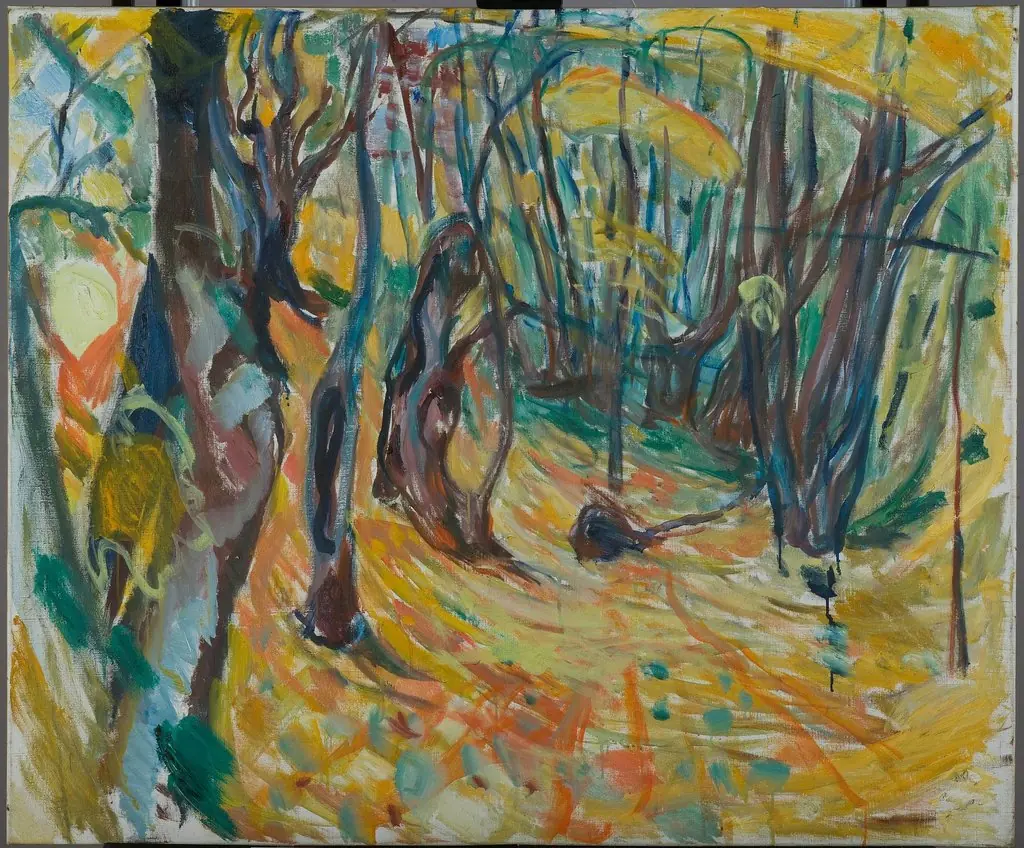
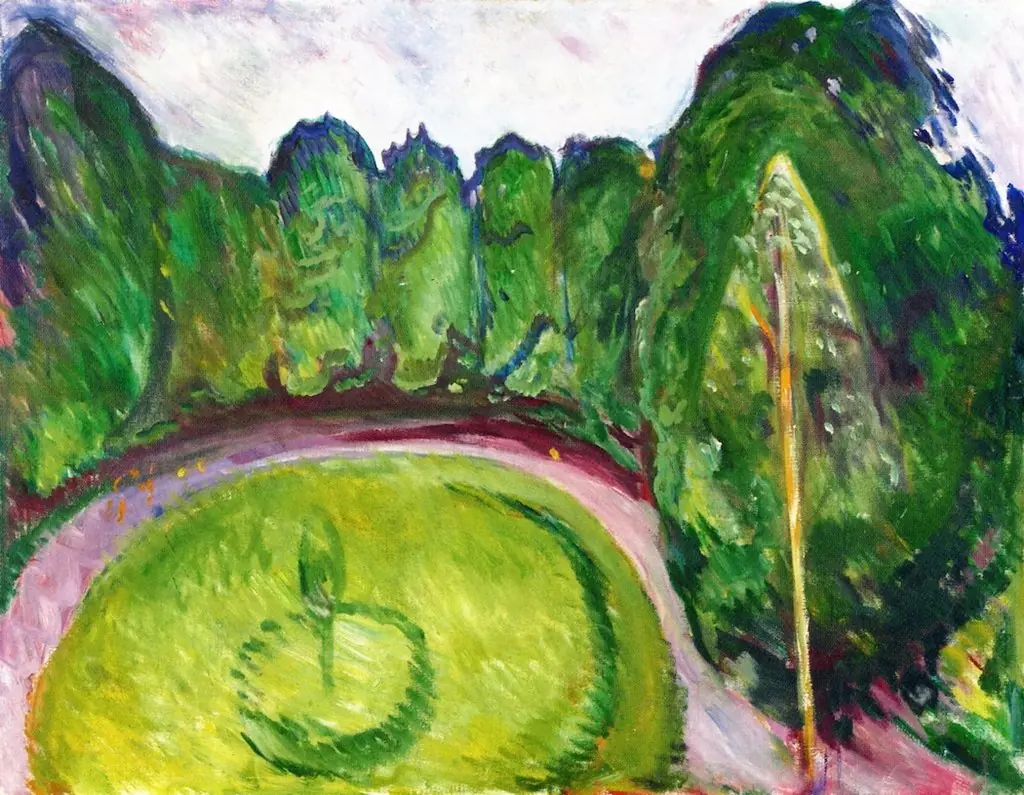
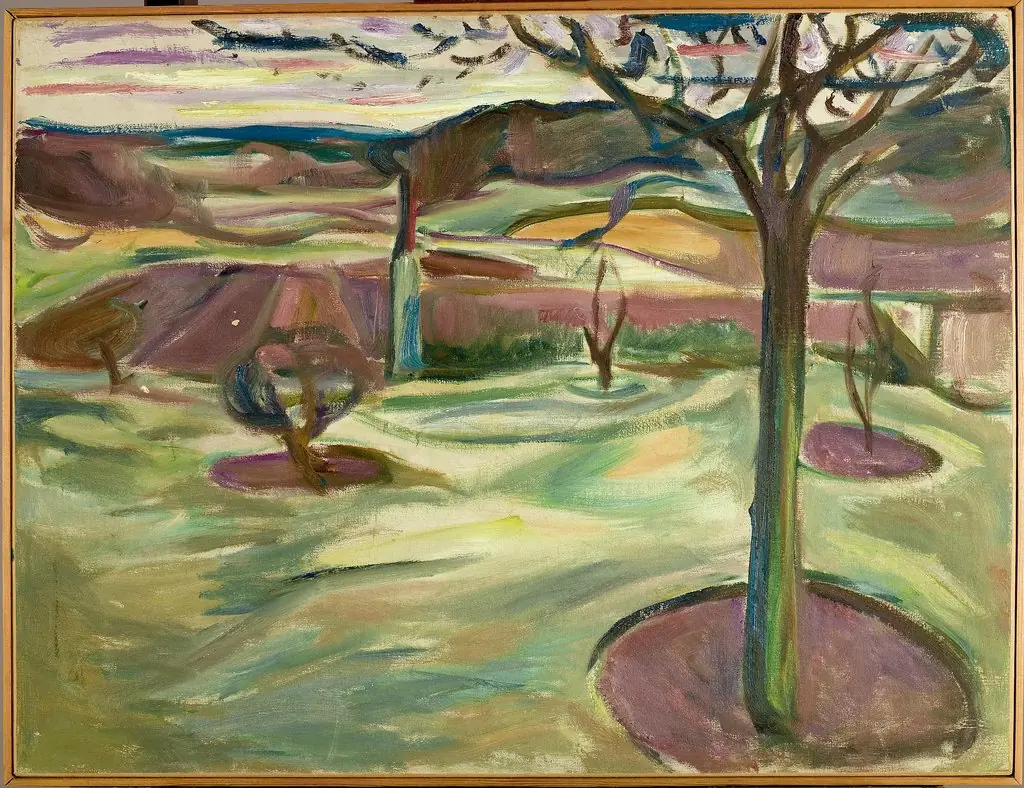
The painting presents a dense stand of spruce trees, their vertical forms rising like silent sentinels. There is no human presence, no clear light source, and no discernible path, only the overwhelming weight of the forest. Munch conveys solitude and quiet unease through the compression of space and the somber palette.
The scene evokes introspection rather than description, aligning with his broader preoccupation with isolation and the psychological weight of nature.
Technique & Style
Munch applied oil paint with deliberate, visible brushwork, building texture through layered strokes that suggest both foliage and shadow. Colors range from deep olive greens to muted browns, with subtle shifts in tone creating atmospheric depth. Foreground trees are sharply defined, while those receding into the distance soften into indistinct masses. This technique avoids realism, favoring emotional resonance through simplified form and rhythmic repetition of vertical lines.
History & Provenance
Created in 1916, Dark Spruce Forest was retained by Munch throughout his life and later entered the collection of the Munch Museum upon its founding in 1963. The museum, established in Oslo, holds the largest public collection of his works, assembled largely from his personal archive. The painting’s provenance is well-documented, with no known exhibitions or ownership changes outside institutional custody.
Context
In the years surrounding 1916, Munch increasingly turned to nature as a subject, often painting forests, beaches, and mountains near his home in Ekely. These works emerged after his recovery from a mental breakdown and reflect a quieter, more contemplative phase. While still aligned with Expressionist sensibilities, they move away from psychological symbolism toward a more meditative engagement with the natural world.
Legacy
Dark Spruce Forest exemplifies Munch’s late-period shift toward landscape as a conduit for mood rather than metaphor. It influenced later Scandinavian artists who sought to express inner states through natural forms. Though less widely known than The Scream, this painting remains a key example of how Munch transformed the Norwegian forest into a space of psychological stillness, bridging Romantic tradition and modern emotional abstraction.
Artist & collection
Artist
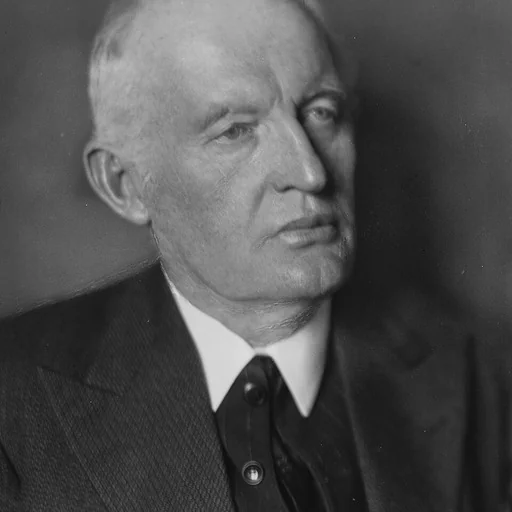
Edvard Munch ( MUUNK; Norwegian:; 12 December 1863 – 23 January 1944) was a Norwegian painter.