Artwork
Haymaking
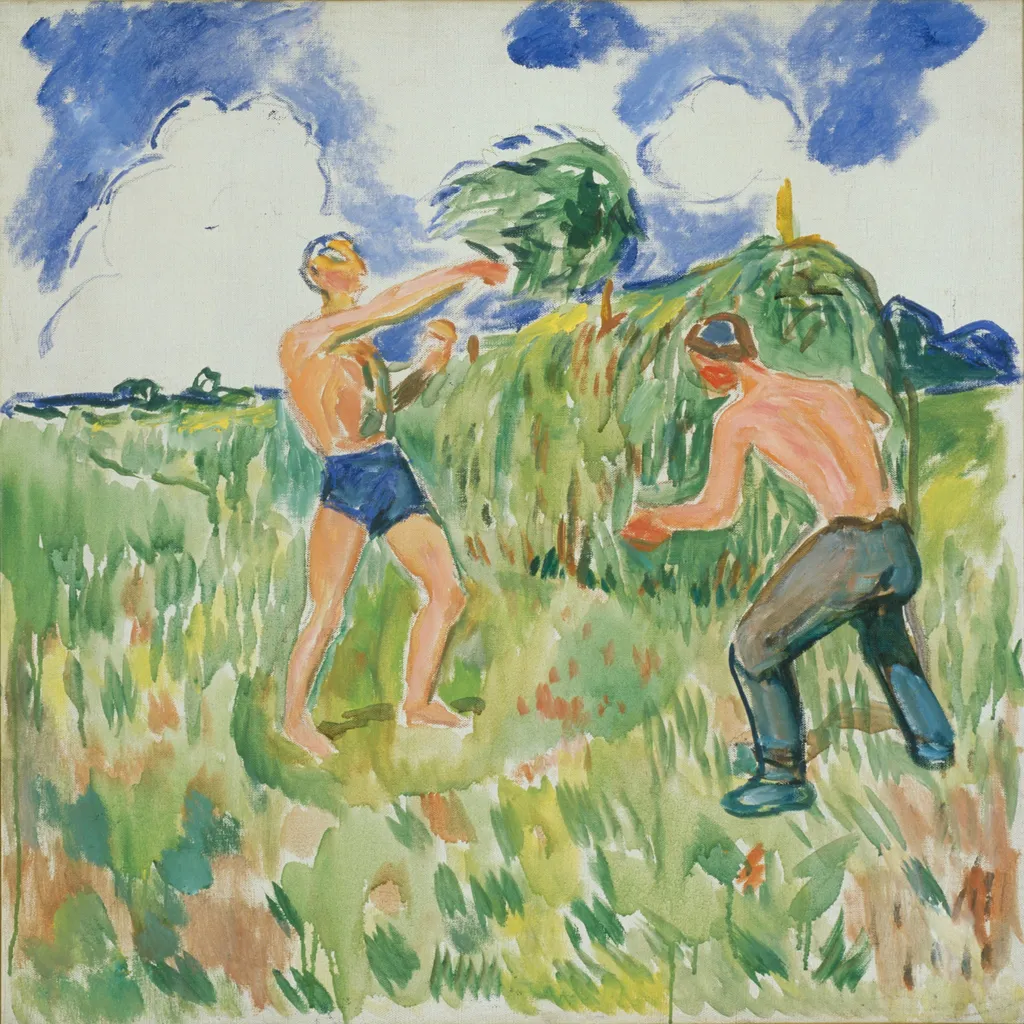
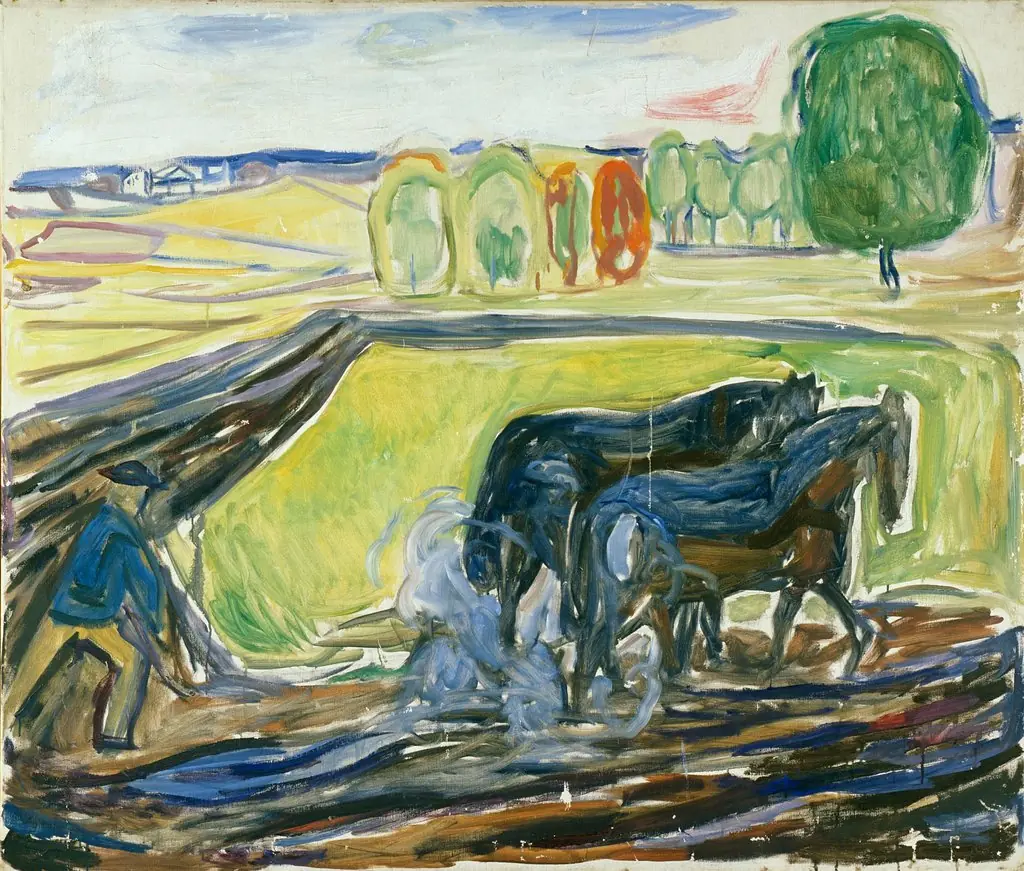
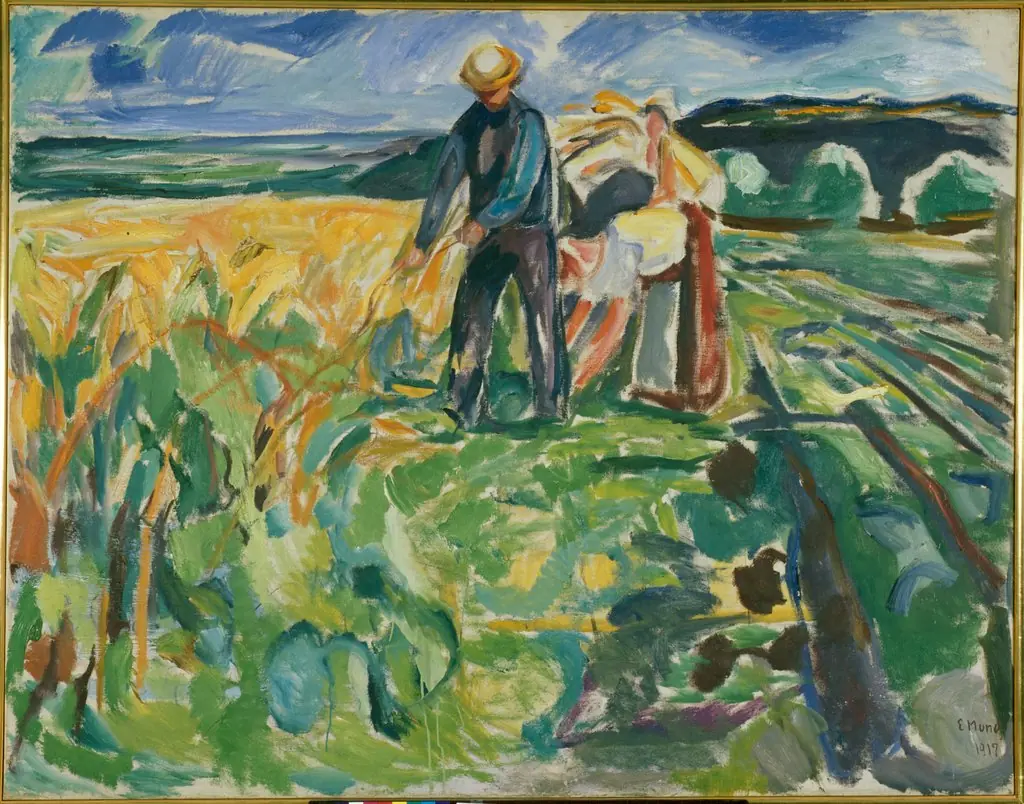
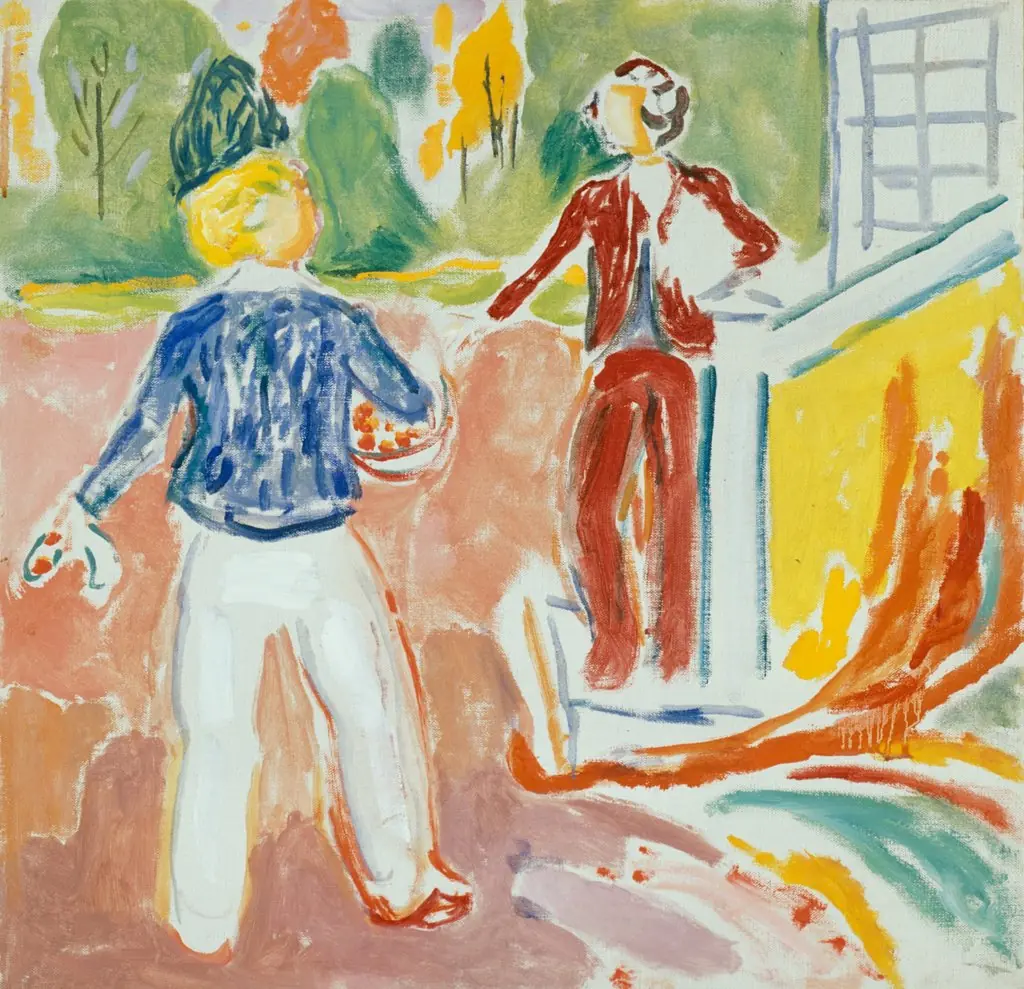
Haymaking is an oil painting by the Post-Impressionist artist Edvard Munch. It dates from 1942 and is held in the collection of the Munch Museum.
About this work
Overview
Created in 1942, Haymaking is an oil painting by Norwegian artist Edvard Munch. The work shows a rural tableau in which two laborers are engaged in cutting and gathering hay under an open sky. It is held in the collection of the Munch Museum, reflecting the artist’s later period of production.
Subject & Meaning
The composition focuses on two figures, a standing man in blue shorts and a crouching companion in gray trousers and a hat, working amid green grass. The scene captures the physicality of agricultural labor, suggesting both the rhythm of seasonal work and the quiet dignity of countryside life.
Technique & Style
Munch employs a palette of greens, blues, and yellows, applied with loose, expressive brushwork that conveys movement and immediacy. The handling of paint aligns with post‑impressionist tendencies, emphasizing color modulation and dynamic strokes over precise detail, while retaining the artist’s characteristic emotional resonance.
History & Provenance
After its completion, the painting entered the holdings of the Munch Museum in Oslo, where it remains on display. The work belongs to the final phase of Munch’s career, produced shortly before his death in 1944, and illustrates his continued interest in everyday subjects.
Context
Haymaking reflects a broader late‑19th and early‑20th‑century interest in rural labor, a theme explored by many contemporaries of Munch. While the artist is best known for psychologically charged urban scenes, this piece demonstrates his capacity to render the natural world and its working people with comparable intensity.
Own this work as a print
Artist & collection
Artist
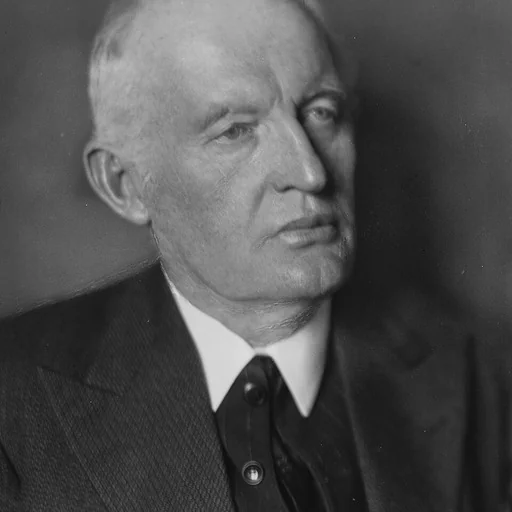
Edvard Munch ( MUUNK; Norwegian:; 12 December 1863 – 23 January 1944) was a Norwegian painter.