Artwork
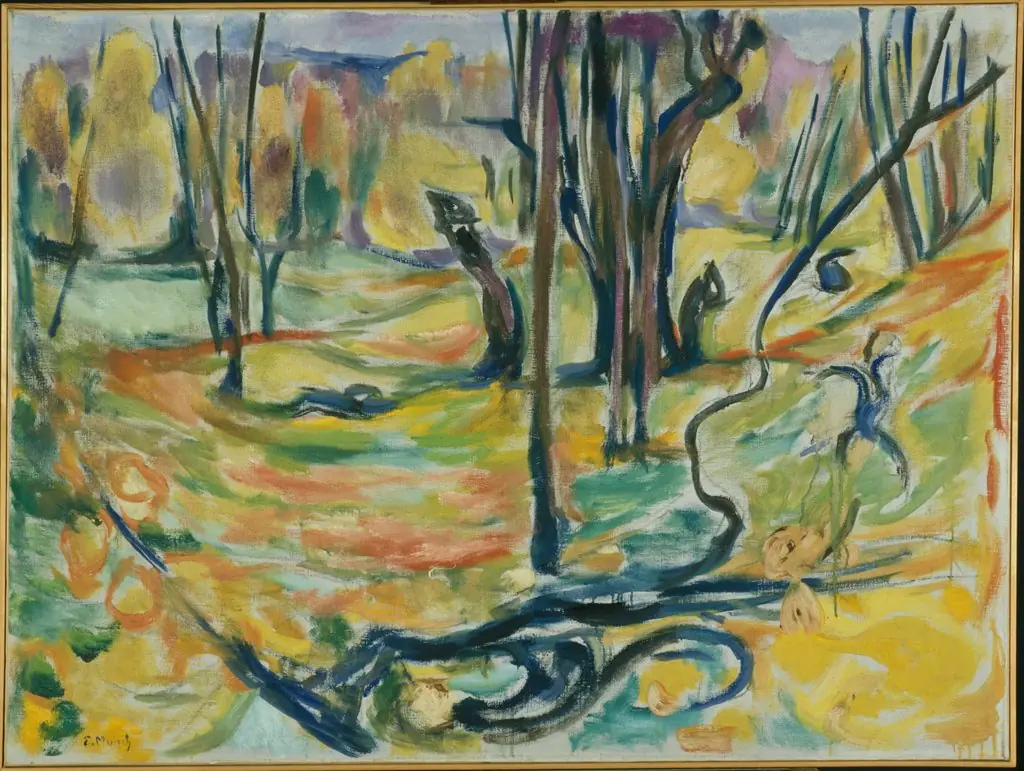
The Arbour in Late Autumn
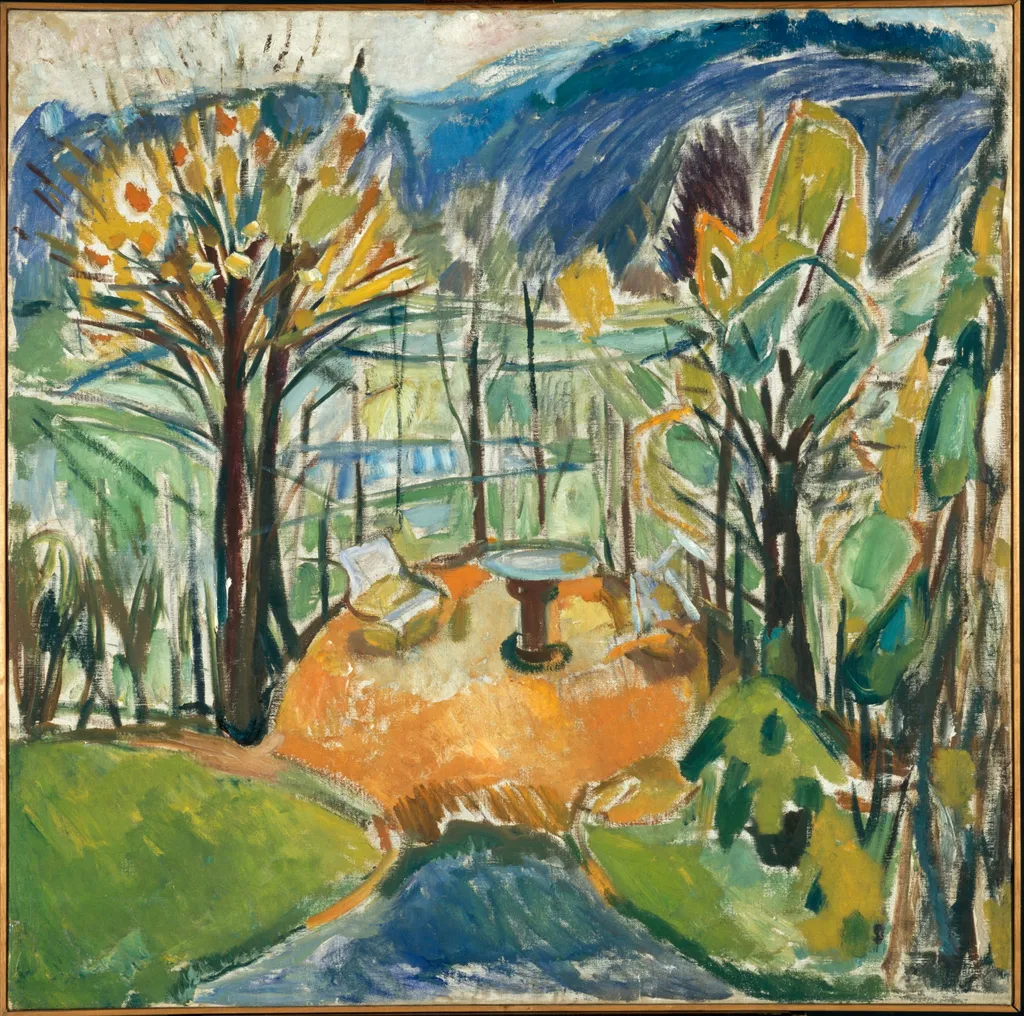
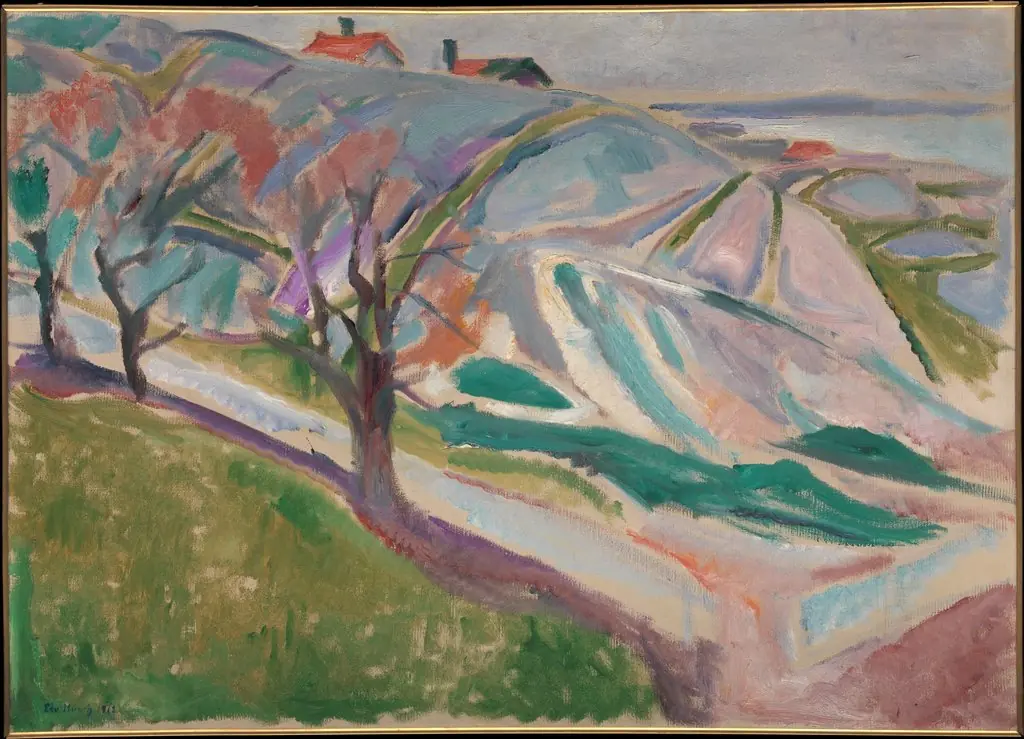
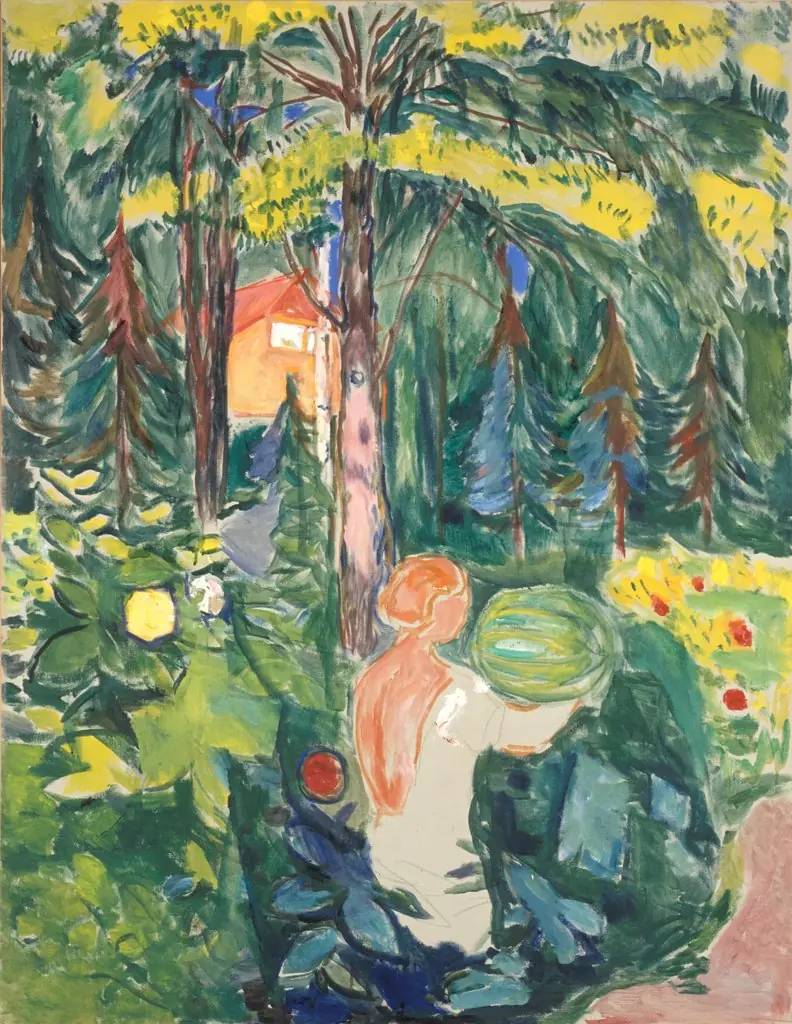
The Arbour in Late Autumn is an oil painting by the Post-Impressionist artist Edvard Munch. It dates from 1926 and is held in the collection of the Munch Museum.
About this work
Overview
Painted in 1926, The Arbour in Late Autumn is an oil on canvas work by Norwegian artist Edvard Munch. It captures a quiet outdoor space during the season’s transition, reflecting his enduring interest in nature as a vessel for inner states. The piece resides in the Munch Museum in Oslo, where it is part of a broader collection documenting his late-period landscapes and introspective scenes.
Subject & Meaning
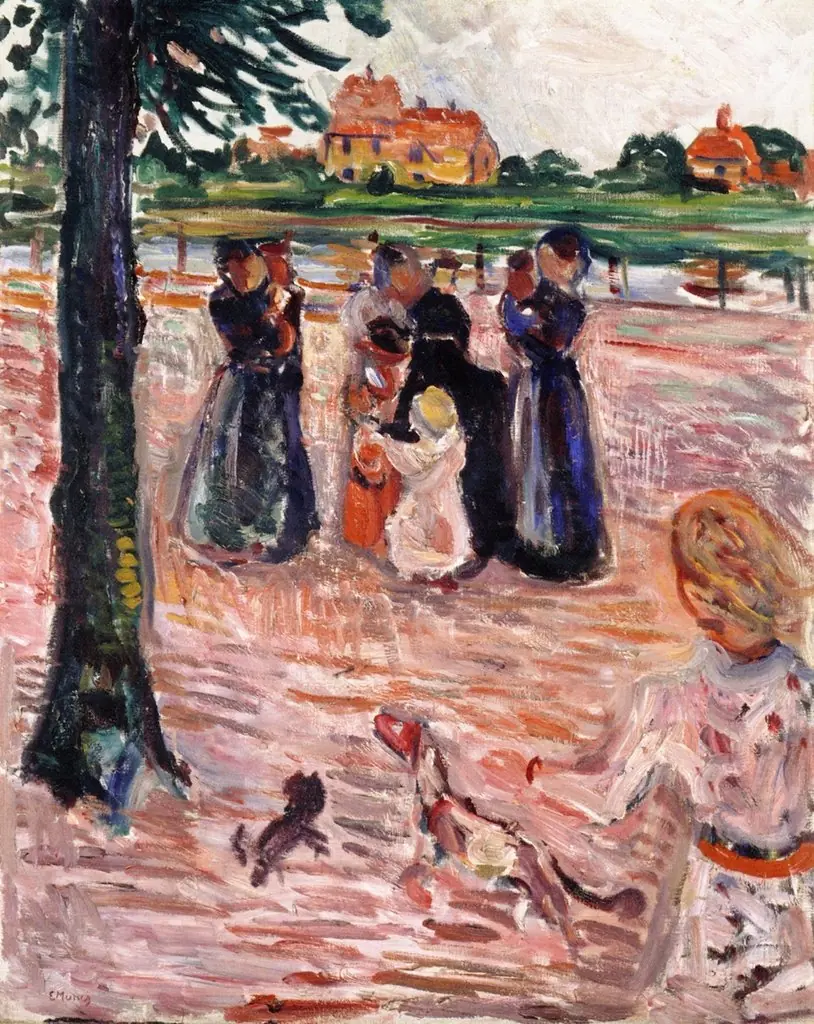
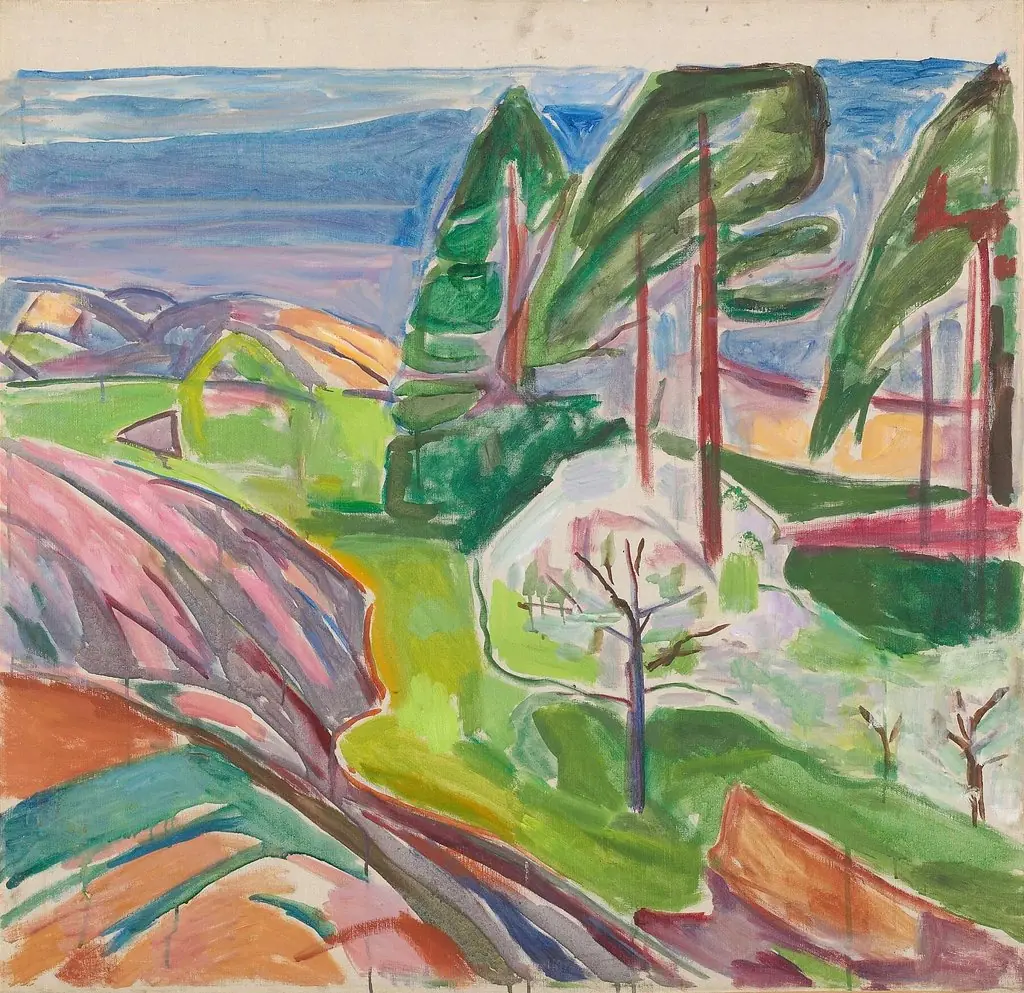
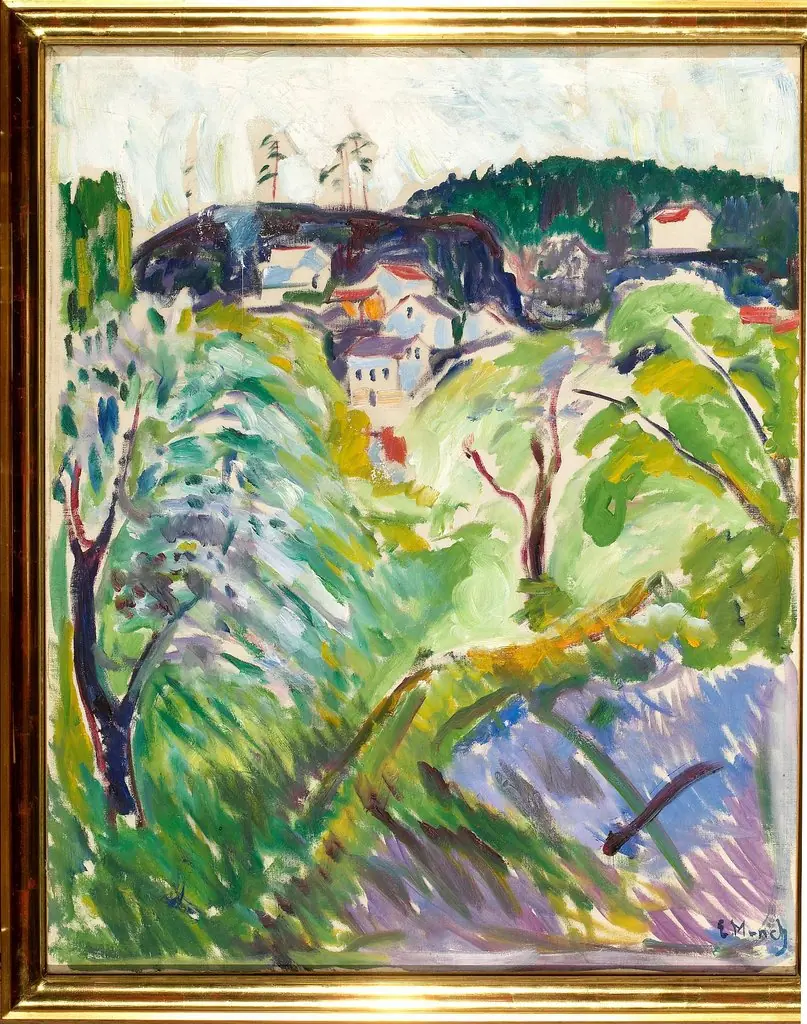
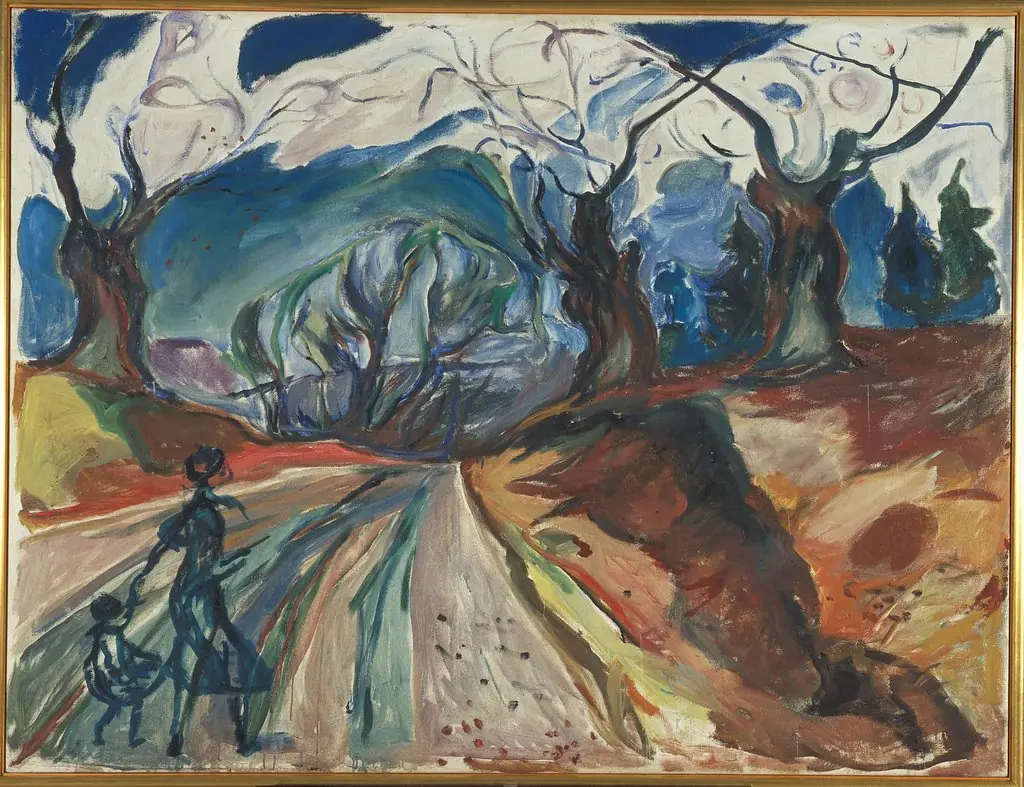
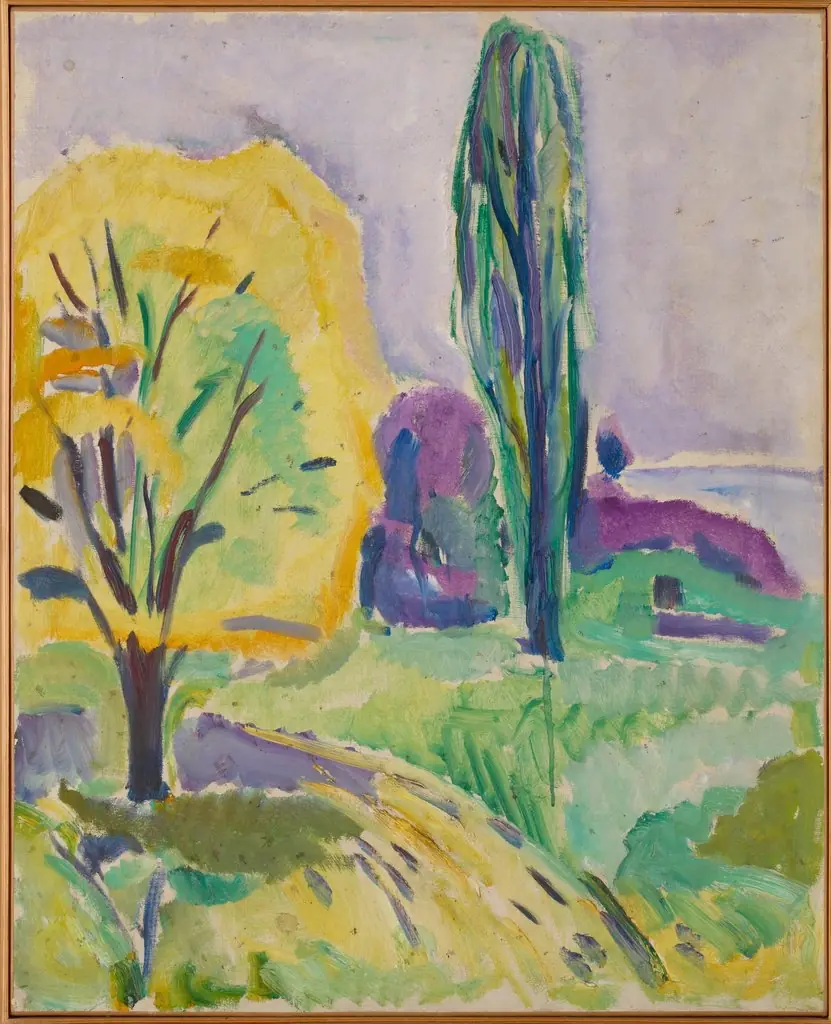
The painting centers on a wooden arbour enveloped by autumnal foliage, suggesting a place of solitude or reflection. The lingering leaves and fading colors imply the passage of time, a recurring theme in Munch’s work. Rather than dramatizing emotion, the scene conveys stillness, an invitation to observe the quiet resignation of nature’s decline without overt sorrow or celebration.
Technique & Style
His approach remains expressive yet restrained, aligning with post-impressionist tendencies toward emotional resonance over realism.
Munch applied oil paint with deliberate, textured brushwork, building layers that give the foliage a tactile presence. Warm earth tones dominate the arbour, contrasting with the vivid yellows and oranges of the surrounding leaves. The sky, rendered in soft blues, recedes gently behind the branches, creating depth without perspective distortion. His approach remains expressive yet restrained, aligning with post-impressionist tendencies toward emotional resonance over realism.
History & Provenance
Created during Munch’s later years, the painting emerged from a period when he increasingly turned to nature for subject matter after decades of psychological themes. It was retained by the artist until his death in 1944 and later entered the collection of the Munch Museum, established to preserve his legacy. The work has remained in institutional hands since, with no documented private ownership.
Context
In the 1920s, Munch lived in relative seclusion near Oslo, painting landscapes as a counterpoint to his earlier, more turbulent imagery. While his fame rested on works like The Scream, his late oeuvre reveals a sustained engagement with seasonal cycles and quiet environments. The Arbour in Late Autumn reflects this shift, situating him within a broader Nordic tradition of nature-focused painting that valued mood over narrative.
Legacy
Though less widely known than his symbolic figures, Munch’s late landscapes like this one have gained recognition for their emotional subtlety. They demonstrate his ability to convey introspection through color and texture alone, influencing later generations of Nordic painters who sought to express inner life through natural forms. The work remains a quiet anchor in the Munch Museum’s collection, offering a contemplative counterpoint to his more dramatic pieces.
Own this work as a print
Artist & collection
Artist
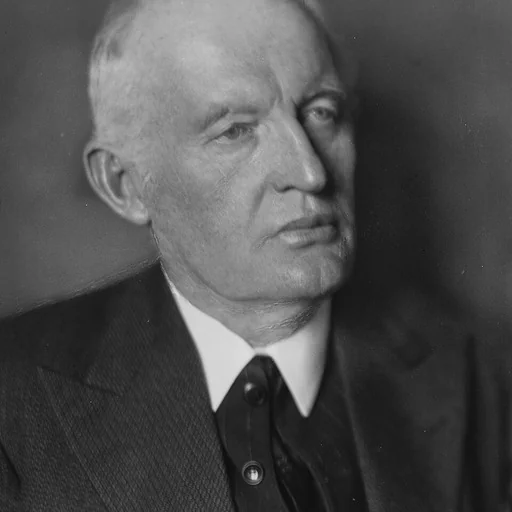
Edvard Munch ( MUUNK; Norwegian:; 12 December 1863 – 23 January 1944) was a Norwegian painter.