Artwork
"King Lear," Act I, Scene I
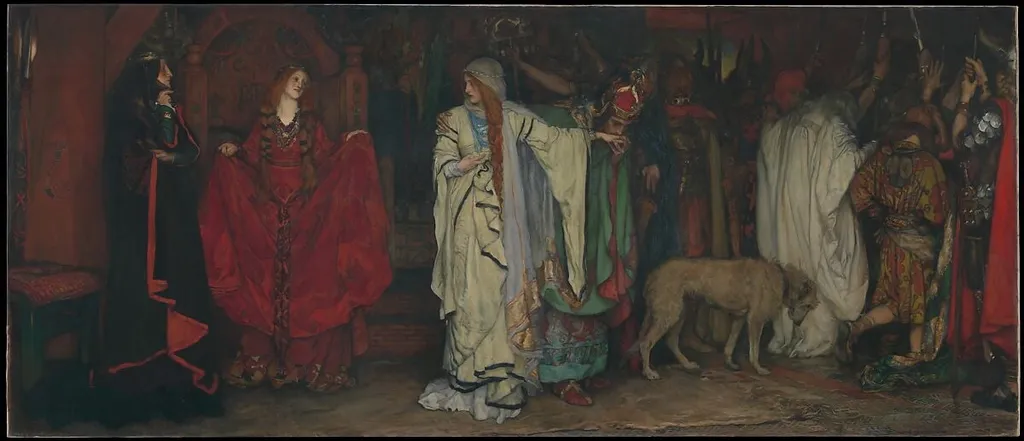
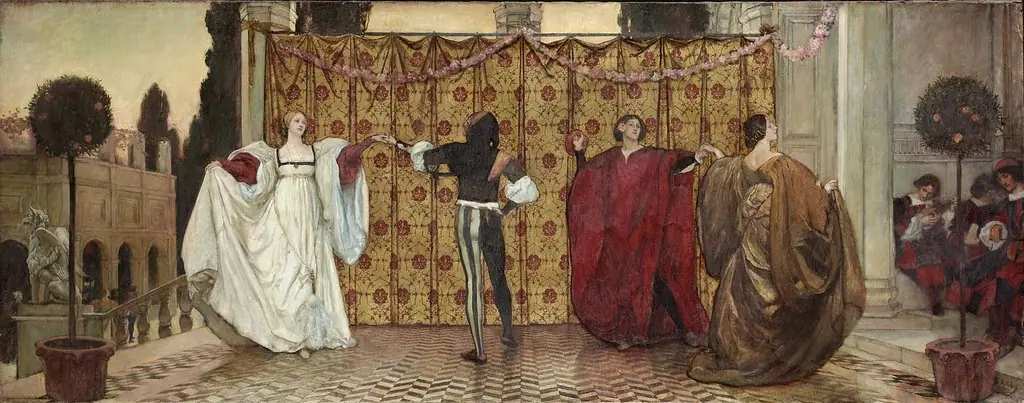
"King Lear," Act I, Scene I is an oil painting by the American Impressionist artist Edwin Austin Abbey. It dates from 1898 and is held in the collection of the Metropolitan Museum of Art.
About this work
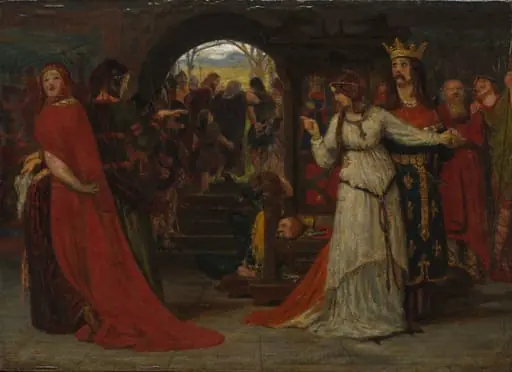
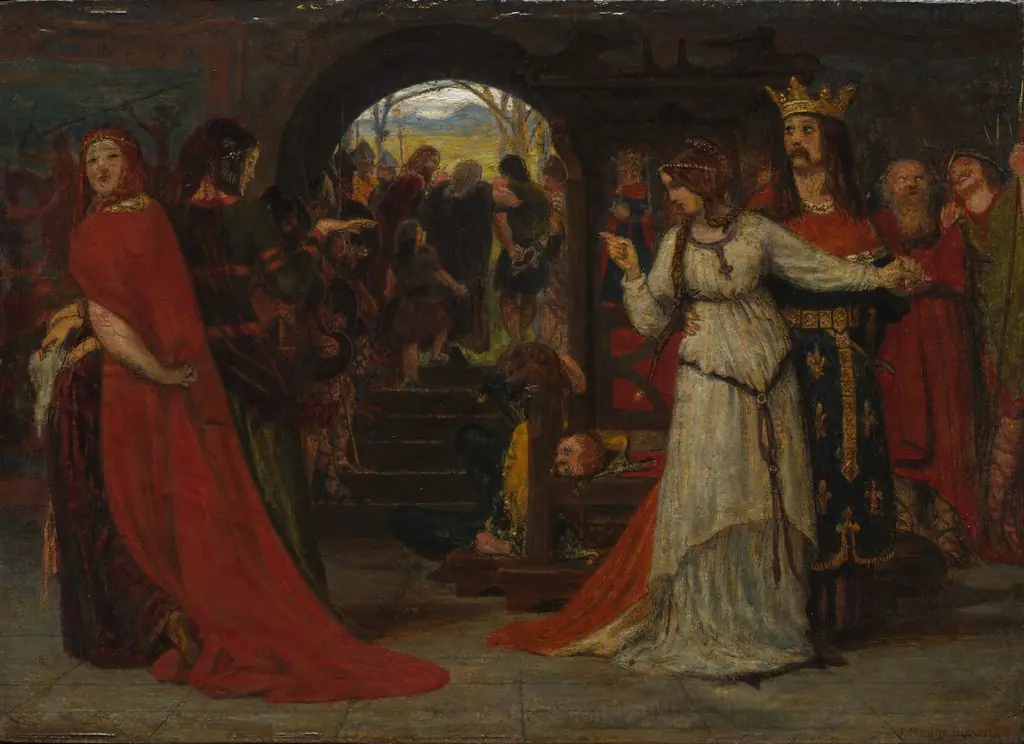
Edwin Austin Abbey sets King Lear in a grand hall, arms raised as he divides his kingdom between two daughters. One kneels with a crown in hand, the other watches coldly. The third has already left, her face tight with anger. Abbey painted it in 1898, using bright color and sharp contrast to make every face stand out.
Subject & Meaning
The painting presents King Lear as a regal man within a domestic interior, accompanied by a woman and a dog.
The painting presents King Lear as a regal man within a domestic interior, accompanied by a woman and a dog. The composition draws directly from Shakespeare's drama, identifying the central figure as the titular monarch and situating him with a female counterpart and a canine. Executed in oil on canvas in 1898, the work functions as a history painting that visualizes a pivotal moment from the narrative, emphasizing the king's status and the surrounding relational dynamics.
Technique & Style
The painting is executed with oil pigments on canvas, the support typical of late-19th-century American history paintings, and measures roughly 138 cm by 323 cm, as recorded in the Metropolitan Museum of Art records. Its classification as a history painting reflects the narrative focus on Shakespeare's King Lear, with the composition arranging the central monarch amid surrounding figures including a dog, a woman, and a courtier. The use of oil pigments on canvas allows for rich tonal modulation and chiaroscuro that Abbey employs to dramatize the moment of royal authority.
History & Provenance
The oil-on-canvas painting titled "King Lear," Act I, Scene I, was created by the American artist Edwin Austin Abbey in 1898. This history painting illustrates the opening scene of Shakespeare's tragedy, depicting King Lear together with attendant figures including a woman and a dog. It measures 137.8 centimeters in height and 323.2 centimeters in width and is housed in the collection of the Metropolitan Museum of Art, where it is classified within The American Wing.
While the specific details regarding the original commissioning party or the precise chain of ownership prior to its museum acquisition are not detailed in the available records, the artwork's inception is firmly dated to 1898. It stands as a significant example of Abbey's work illustrating scenes from Shakespeare's plays.
Legacy
The 1898 oil on canvas by Edwin Austin Abbey, titled "King Lear," Act I, Scene I, entered the Metropolitan Museum of Art's American Wing and is classified as a history painting, a categorization that has reinforced Abbey's standing as a leading illustrator of literary subjects. The work's depiction of the Shakespearean monarch with his attendants, a woman and a dog, reflects the play's dramatic tension and has been cited in scholarship on 19th-century visual interpretations of the Bard. Its presence in a major museum collection has contributed to ongoing appreciation of Abbey's role in bringing theatrical narratives to the visual arts.
Overview
Edwin Austin Abbey's 1898 oil on canvas, "King Lear," Act I, Scene I, captures a pivotal moment from Shakespeare's tragedy. The artist depicts the monarch in a grand chamber, in the act of dividing his kingdom among his daughters. This work highlights the dramatic tension and emotional intensity of the play's opening act, rendered with a striking visual clarity that emphasizes the characters' expressions and the unfolding drama.

Artist & collection

Artist
Edwin Austin Abbey (April 1, 1852 – August 1, 1911) was an American muralist, illustrator, and painter.