Artwork
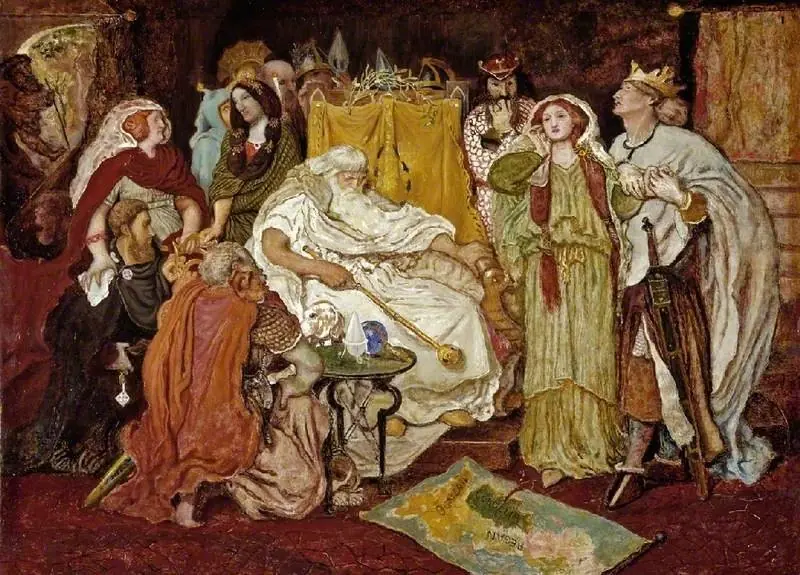
Cordelia Parting from her Sisters
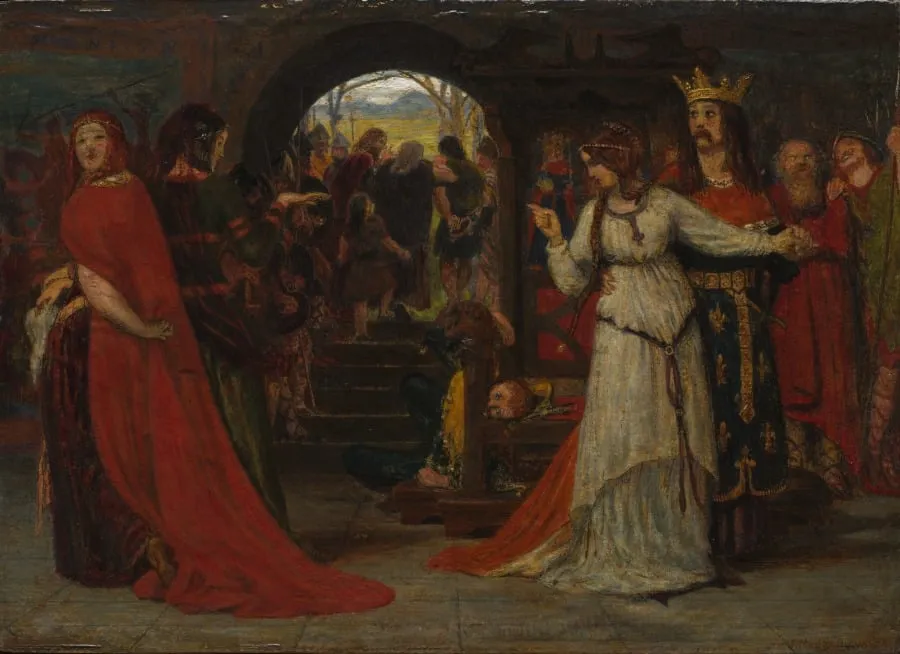
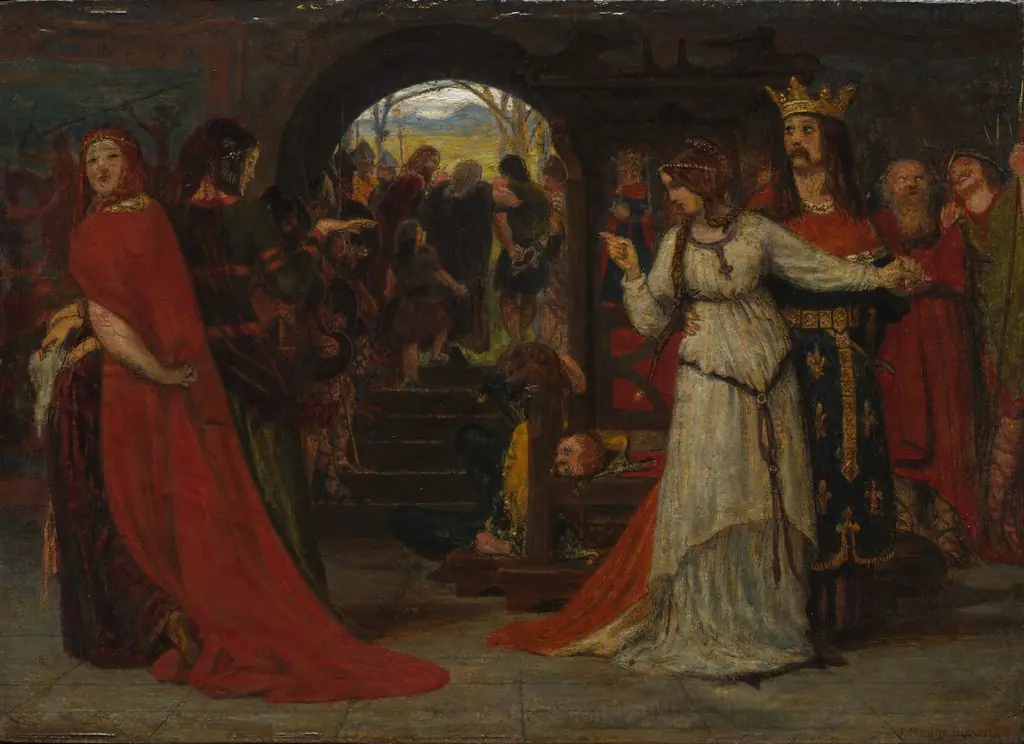
Cordelia Parting from her Sisters is an unspecified painting by the Impressionist artist Ford Madox Brown. It dates from 1854 and is held in the collection of the Cleveland Museum of Art.
- Accession no.
- 2013.261
- Credit line
- Gift in memory of Helen Borowitz
About this work
This painting shows a scene from Shakespeare’s King Lear, the moment Cordelia refuses to flatter her father like her sisters do.
A young woman in a red dress stands between two older sisters, her arms outstretched as if saying goodbye. The room is dim, but her face glows with emotion. Behind them, a servant holds a lantern, casting long shadows.
This painting shows a scene from Shakespeare’s King Lear, the moment Cordelia refuses to flatter her father like her sisters do. Brown painted it as a study for a larger work that was never finished. The raw feeling in Cordelia’s face makes the story feel real, not just a play.
If you like how Brown mixes drama and history, look up subject: england, 19th century, mod euro.
Overview
Ford Madox Brown created this oil sketch as a preparatory study for an ambitious, unfinished painting. It captures a pivotal moment from Shakespeare’s King Lear, focusing on Cordelia’s quiet defiance as she departs from her sisters. Though intended as part of a larger composition, the work stands as a self-contained exploration of emotional intensity and moral clarity within a domestic setting.
Subject & Meaning
The scene depicts Cordelia’s refusal to perform empty flattery before her father, King Lear, a choice that leads to her exile. Brown isolates her in a moment of solitary resolve, contrasting her stillness with the looming presence of her sisters. The lighting and posture emphasize her moral integrity, framing her not as a tragic figure but as one who upholds truth over political expediency.
Technique & Style
Brown employs rich, saturated hues, particularly the red of Cordelia’s dress, to draw attention amid the dim interior. Brushwork is loose yet deliberate, conveying movement and emotion without polished finish. The lantern held by a servant casts dramatic shadows, heightening the psychological tension and isolating Cordelia’s illuminated face as the emotional core of the composition.
History & Provenance
Painted in the 1850s, this sketch was part of Brown’s broader interest in literary subjects as vehicles for moral inquiry. Though the planned full-scale painting was never completed, the study remained in his possession and later entered a private collection before being acquired by a public institution. Its survival offers insight into Brown’s working process and thematic preoccupations.
Context
During the Victorian era, artists frequently turned to Shakespeare to navigate questions of duty, family, and national identity amid industrialization and social upheaval. Brown’s focus on Cordelia reflects a wider cultural fascination with female moral agency and the tension between personal conviction and societal expectation, positioning art as a space for ethical reflection.
Legacy
Though never realized as a large-scale work, this sketch influenced later Victorian painters interested in psychological realism and literary narrative. Its emphasis on emotional authenticity over theatrical spectacle helped shift the focus of historical painting toward intimate, human moments, contributing to a broader evolution in British art toward interiority and moral nuance.
Artist & collection
Artist
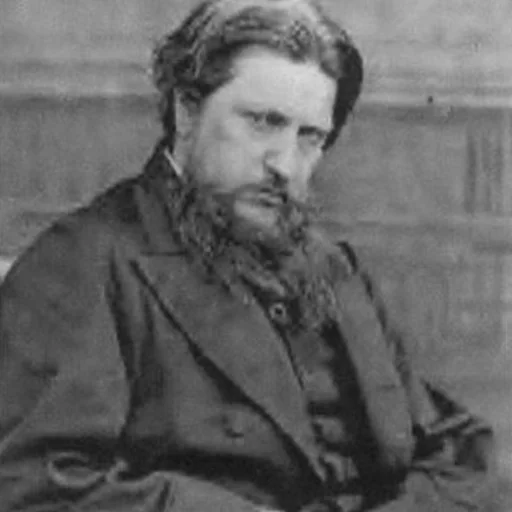
Ford Madox Brown (16 April 1821 – 6 October 1893) was a British painter of moral and historical subjects, notable for his distinctively graphic and often Hogarthian version of the Pre-Raphaelite style.

![The Virgin Swooning [recto], by Ford Madox Brown](https://artifactworldgallery.com/img/ford-madox-brown--the-virgin-swooning-recto--474c0d247da3d304-w320.webp)
![Two Drapery Studies [verso], by Ford Madox Brown](https://artifactworldgallery.com/img/ford-madox-brown--two-drapery-studies-verso--ed4e964fa4716ed7-w320.webp)
 "King Lear," Act I, Scene I
 Leopold the Glorious as patron of the arts and sciences
 The Two Crowns
 The Seeds and Fruits of English Poetry
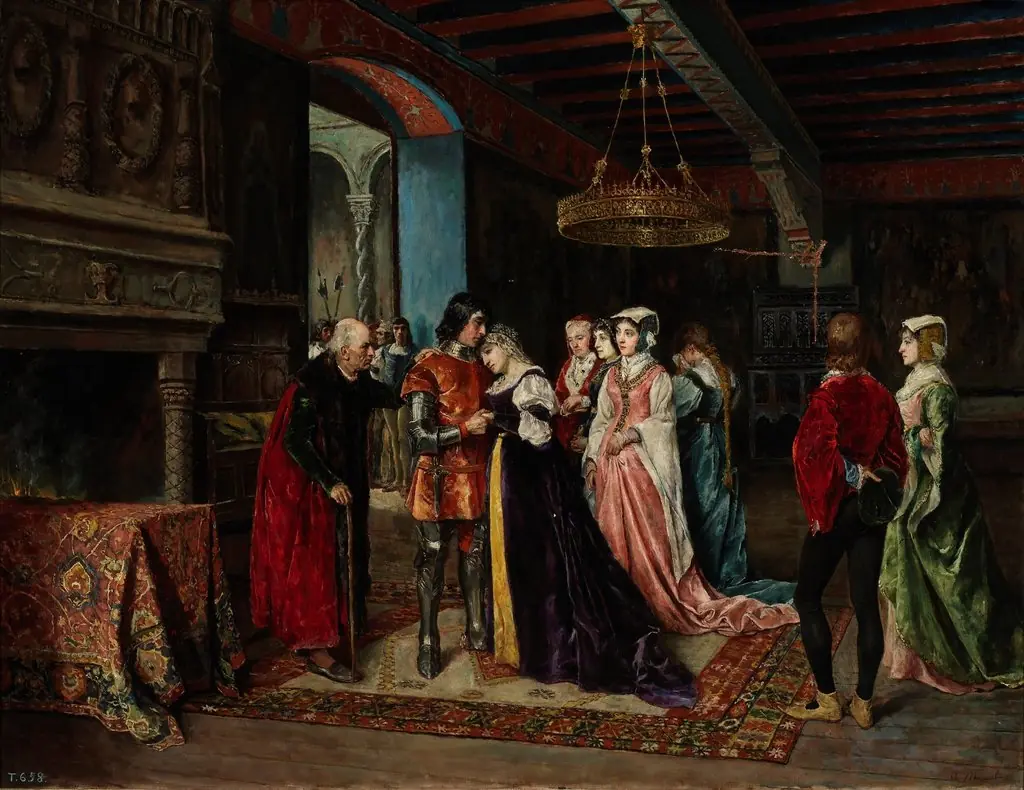 La despedida
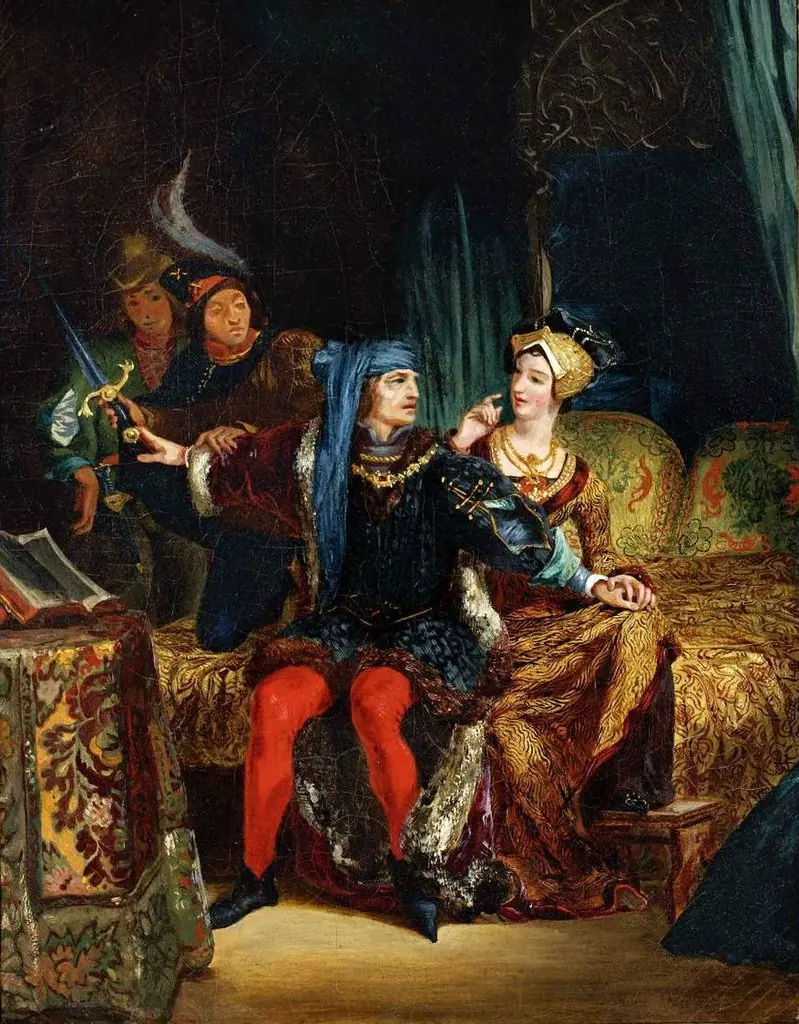 Charles VI et Odette de Champdivers
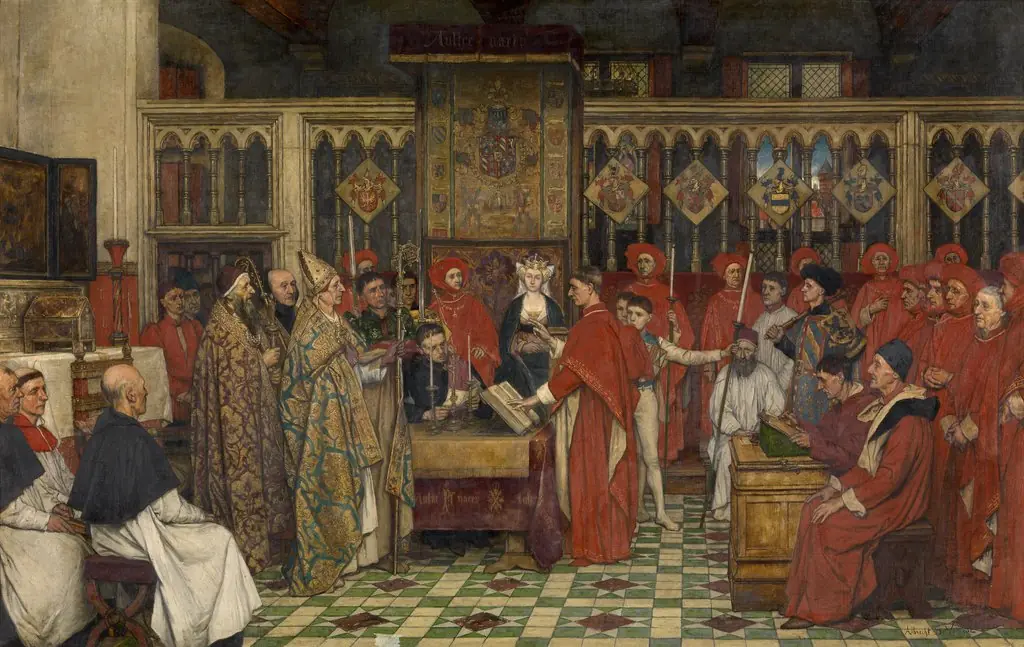 The First Chapter of the Order of the Golden Fleece
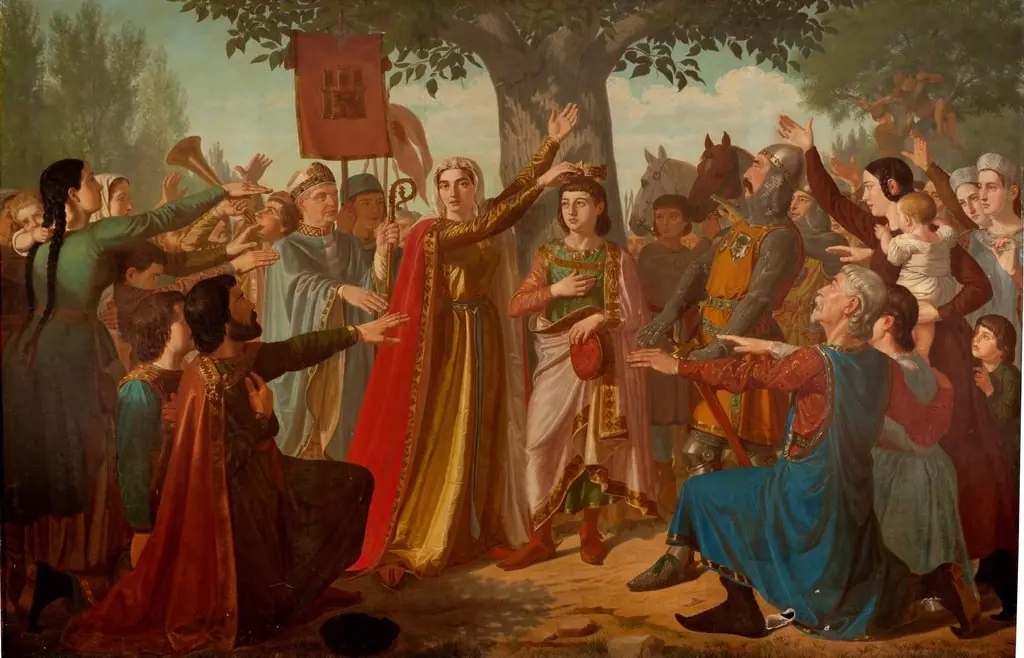 Doña Berenguela coronando a su hijo don Fernando
 Bloody feast of Count Gero