Artwork
The Mill
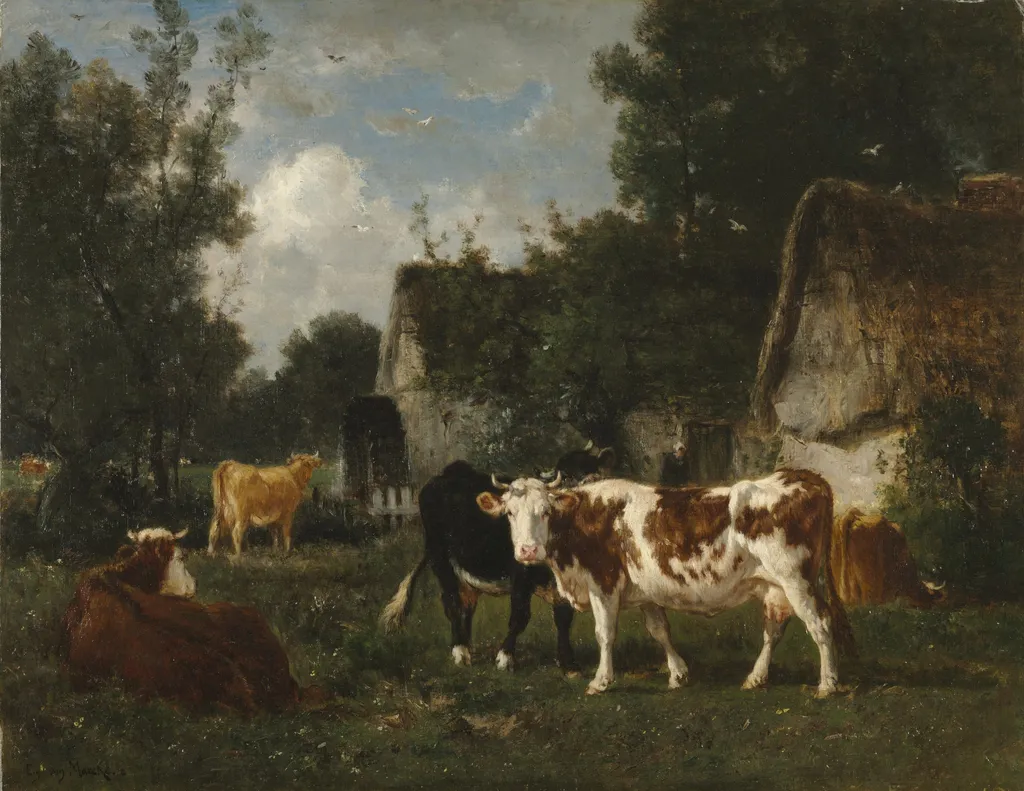
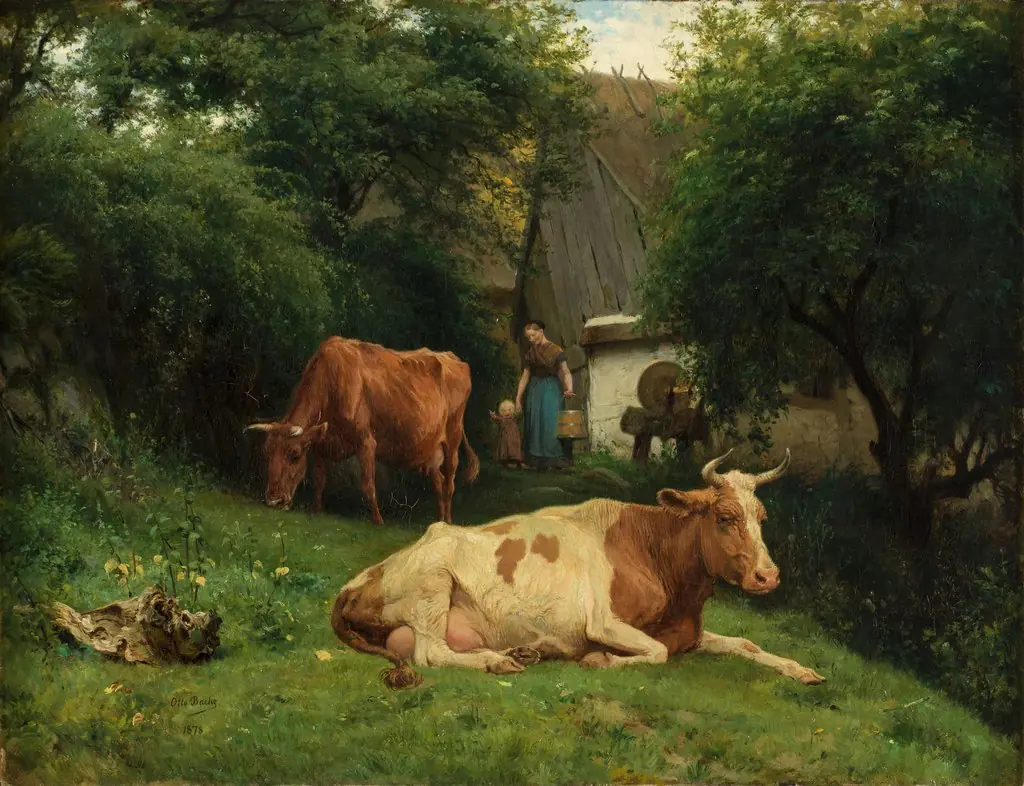
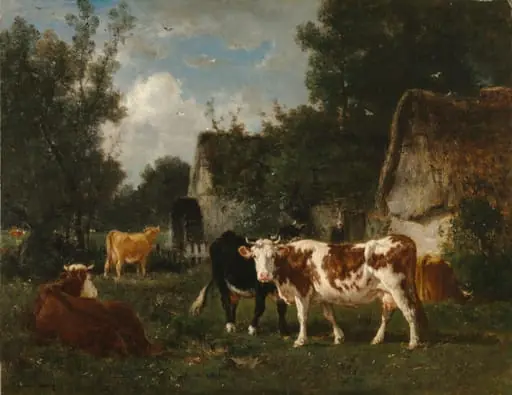
The Mill is an unspecified painting by the Barbizon school artist Emile van Marcke. It dates from 1873 and is held in the collection of the Cleveland Museum of Art.
About this work
Technique & Style
The painting is part of the Cleveland Museum of Art's collection, where it is cataloged under the accession number 1916.
The Mill is an oil painting on canvas created by Emile van Marcke in 1873 in France. The work measures 70.6 cm in height and 91.0 cm in width, reflecting a naturalistic approach to landscape composition.
The painting is part of the Cleveland Museum of Art's collection, where it is cataloged under the accession number 1916.1035. Its condition and handling history are not detailed in the available sources, and thus no specific claims can be made regarding conservation status or technical interventions.
History & Provenance
The Mill was painted in 1873 by the French artist Émile van Marcke. Created in France, the work dates specifically to that year according to museum records. The painting eventually entered the collection of the Cleveland Museum of Art, where it is held under the accession number 1916.1035.
No further details regarding the original commission, intermediate owners, or the specific circumstances of its creation prior to its museum acquisition are provided in the available sources.
The Mill, painted by Emile van Marcke in 1873, is housed in the Cleveland Museum of Art, where it is cataloged under inventory number 1916.1035. It has been part of the museum's collection since its acquisition and was featured in the exhibition "European Paintings: A Concise History," displayed at the Cleveland Museum of Art from March 15 to June 30, 2018.
Context
Emile van Marcke's 1873 painting The Mill, depicting a Dutch windmill scene, was created during the late 19th century in France. It is part of the Cleveland Museum of Art's collection, accessioned in 1916 under the reference 1916.1035. Scholarly attention focuses on van Marcke's role within the Barbizon-influenced landscape tradition and his contribution to 19th-century French naturalism, situating The Mill within broader artistic movements of the period.
Legacy
The Mill by Emile van Marcke influenced later French landscape painters who adopted its atmospheric tonalism and rural subject matter. Exhibitions at the Cleveland Museum of Art highlighted its role in shaping 19th-century pastoral traditions. The work remains part of the museum's permanent collection.
Overview
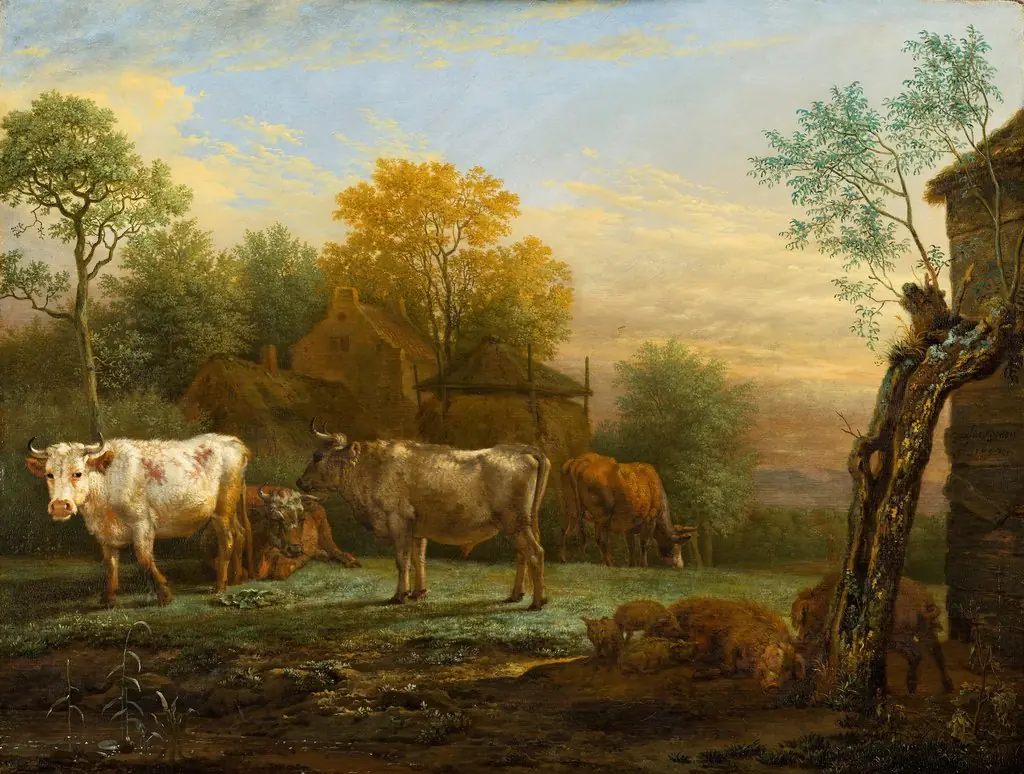
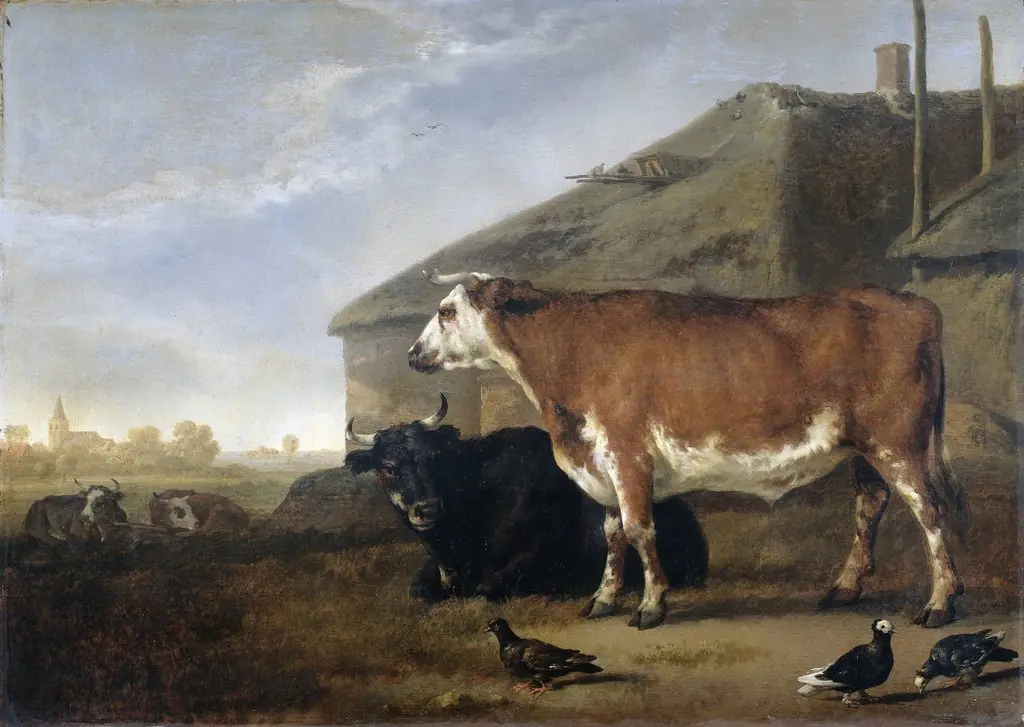
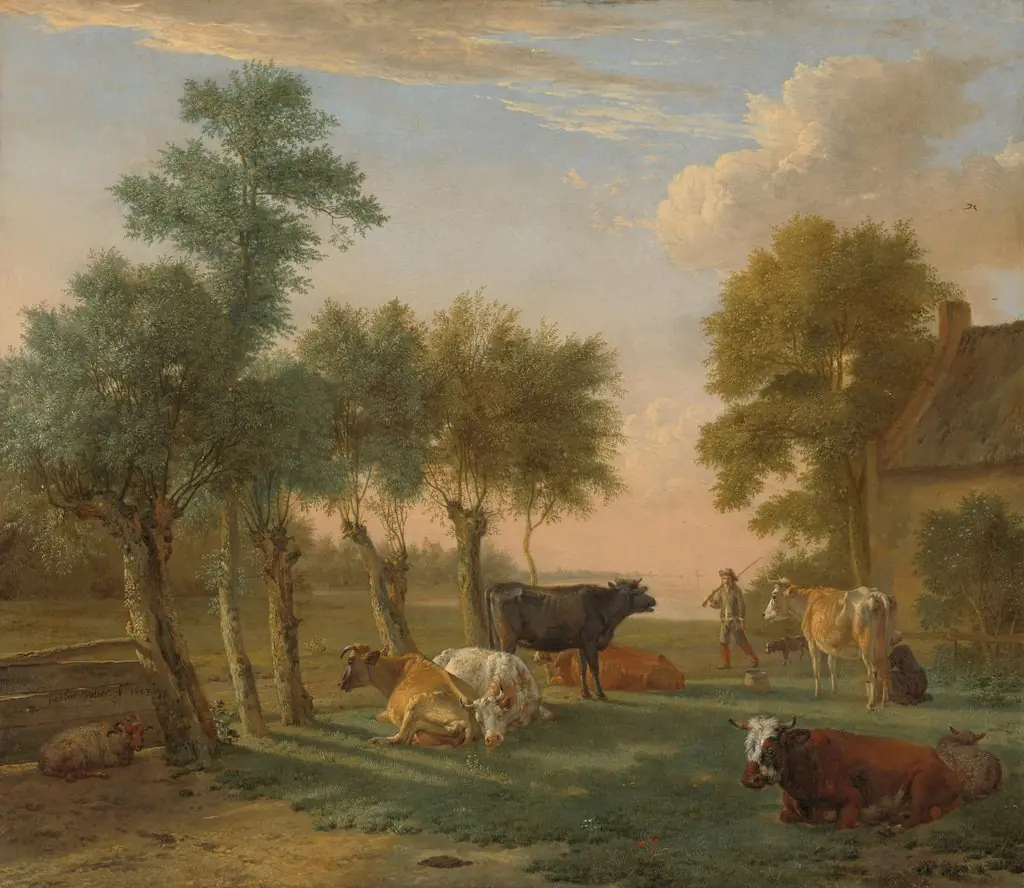
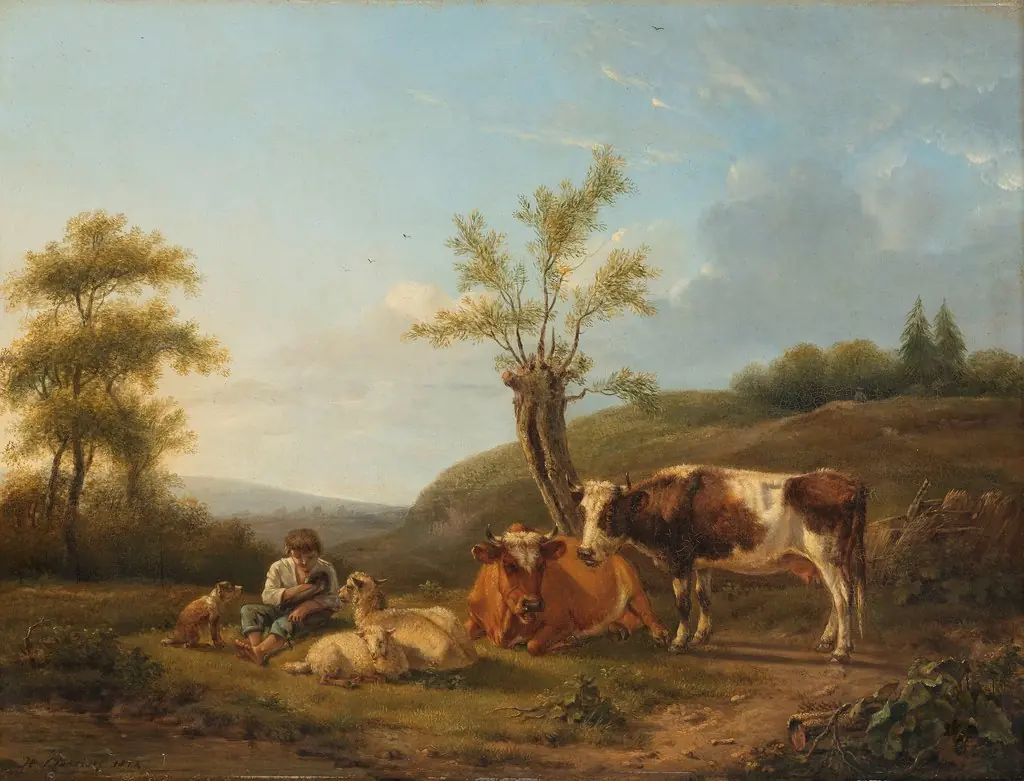
Created in 1873, The Mill presents a tranquil rural tableau where three cows occupy a verdant meadow before a modest wooden fence. A black‑and‑white cow stands prominently in the foreground, while two companions graze farther back and a calf rests nearby. Beyond the pasture, a haystack and scattered trees rise under a lightly clouded sky, conveying a calm, bucolic atmosphere.
Subject & Meaning
The composition centers on livestock, reflecting the artist’s enduring interest in the everyday life of farm animals. By placing the cows in a natural setting rather than a stylized studio, the work emphasizes the harmony between domesticated creatures and their environment, suggesting a quiet dignity in ordinary pastoral labor.
Own this work as a print
Artist & collection
Artist
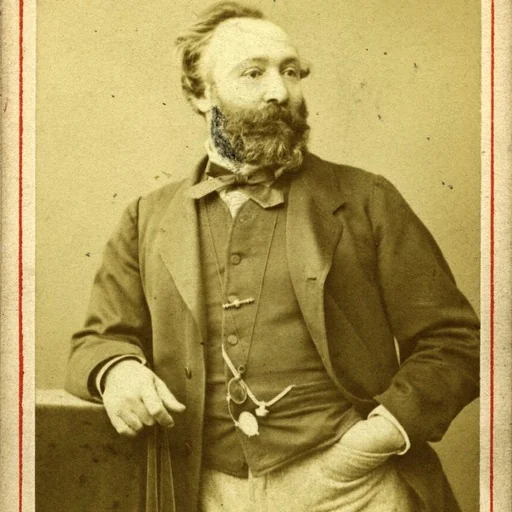
Émile van Marcke, born Charles Émile van Marcke de Lummen (15 August 1827 in Sèvres – 24 December 1890 in Hyeres), was a French cattle painter.