Artwork
Grandfather's Armor
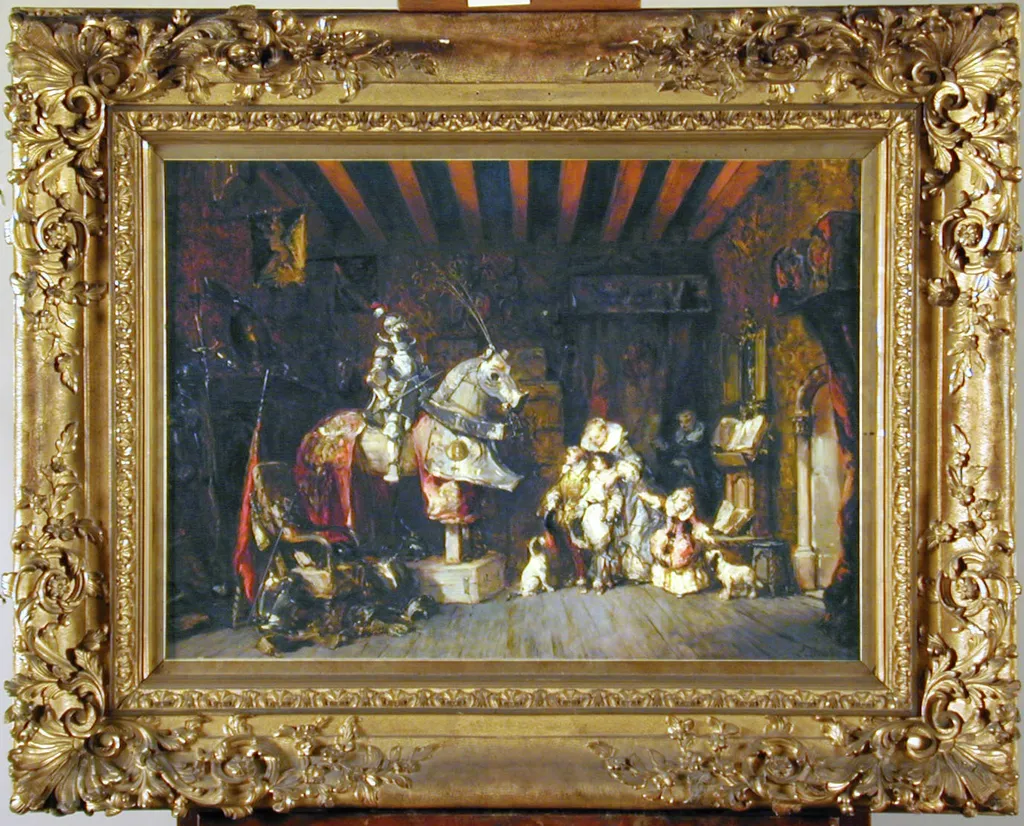
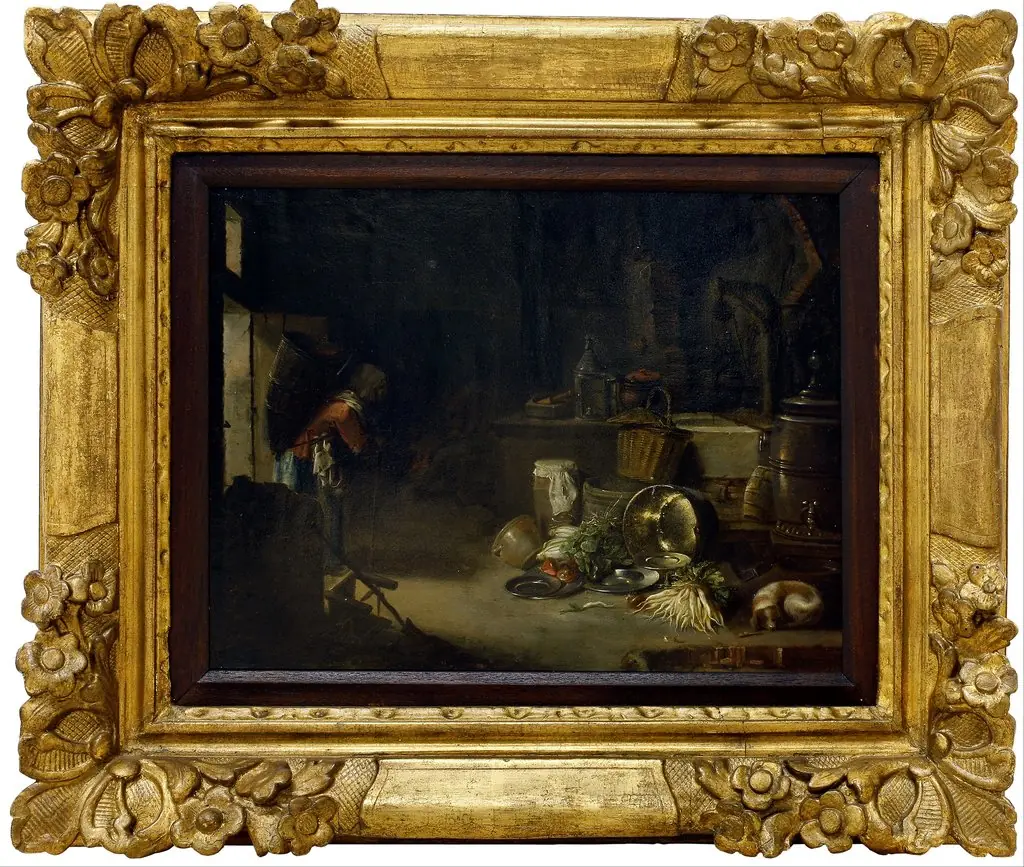
Grandfather's Armor is an unspecified painting by Eugène Isabey. It is held in the collection of the Detroit Institute of Arts.
About this work
The painting is characterized by its use of warm colors, with the armor and surrounding objects rendered in shades of gold, brown, and red.
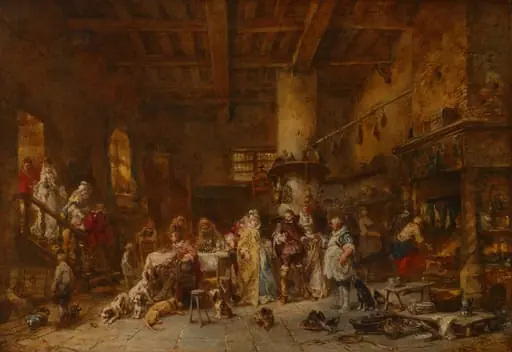
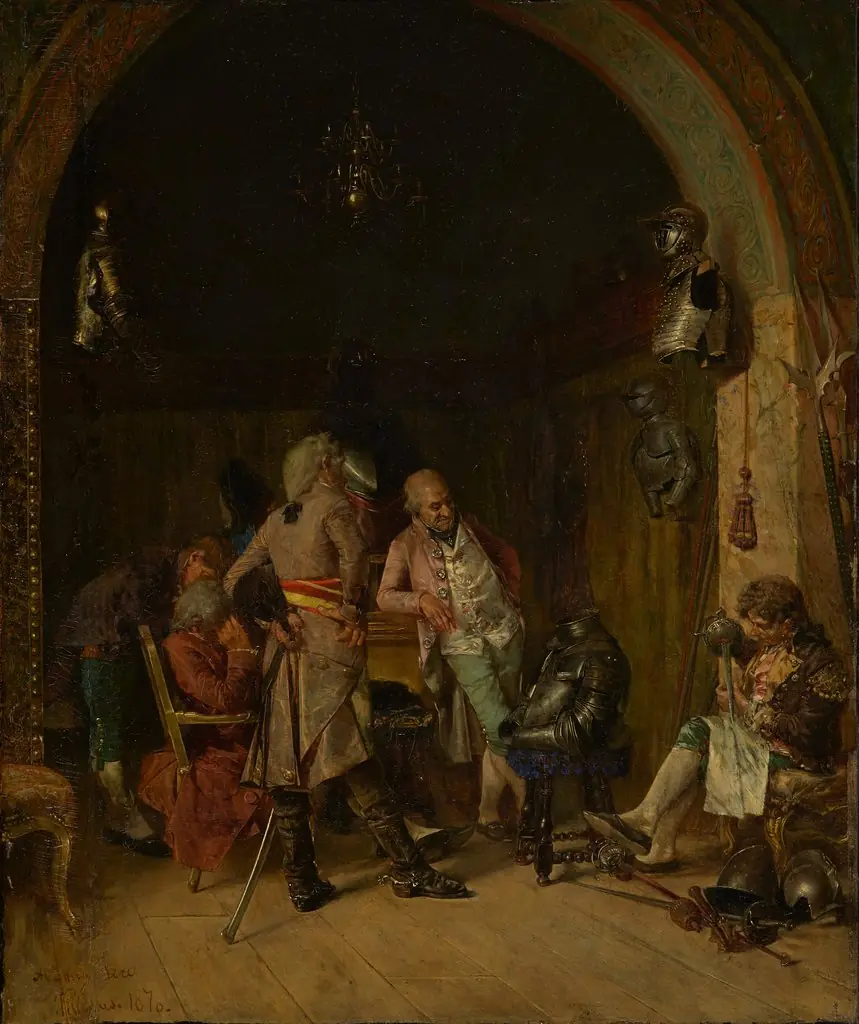
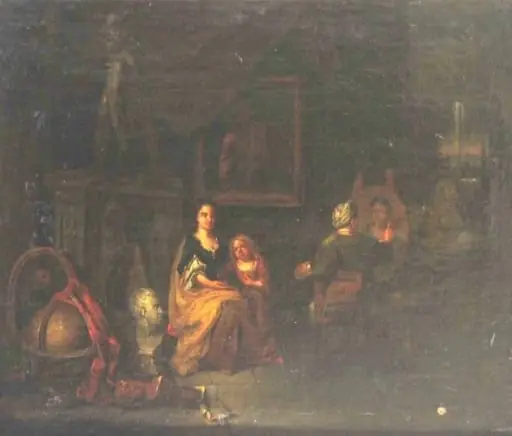
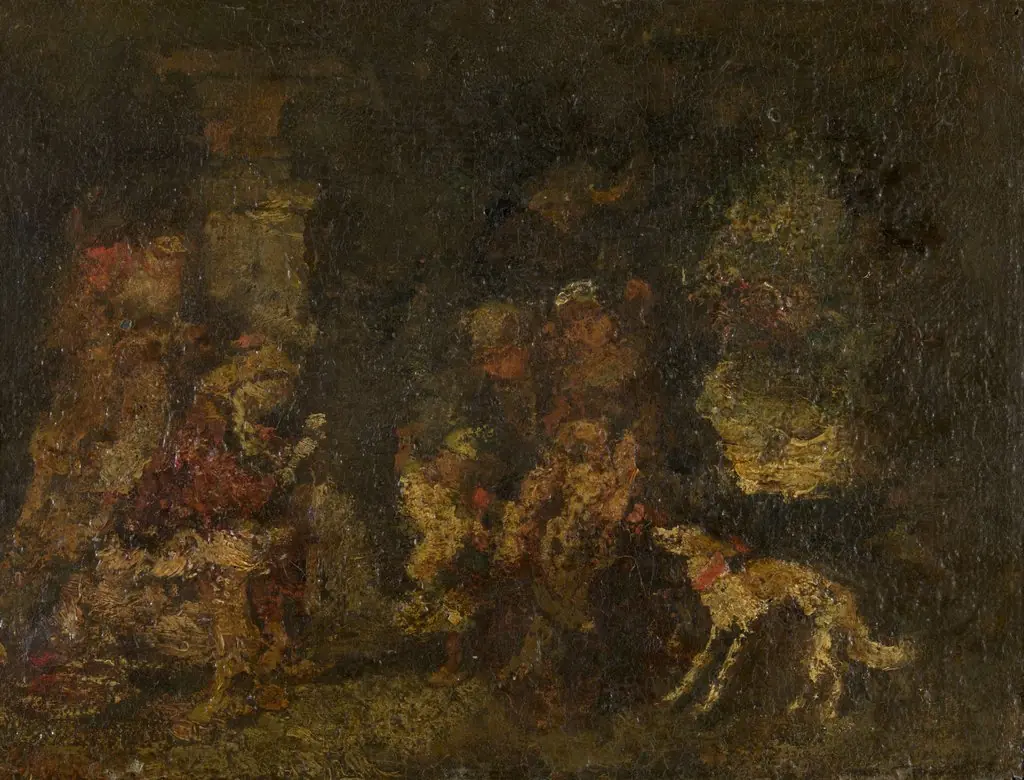
This painting depicts a scene of a family gathered around a suit of armor. The armor is the central focus, with a man, woman, and child standing nearby, accompanied by two dogs. The setting appears to be a room with a high ceiling, featuring wooden beams and a stone wall.
The painting is characterized by its use of warm colors, with the armor and surrounding objects rendered in shades of gold, brown, and red. The overall atmosphere is one of nostalgia and reverence, as the family seems to be admiring the armor with a sense of pride and respect.
If you're interested in learning more about the artist behind this work, you might want to look up Eugène Isabey (French, 1803–1886).
Overview
Painted in 1888 by French artist Eugène Isabey, Grandfather's Armor is a quiet domestic scene rendered in oil. Though Isabey is better known for maritime and historical subjects, this work turns inward, focusing on a family’s contemplative engagement with a relic of the past. The painting resides in the Detroit Institute of Arts, where it stands as a rare example of his late domestic imagery.
Subject & Meaning
The painting centers on a suit of armor displayed in a dimly lit interior, surrounded by three family members, a man, a woman, and a child, along with two dogs. Their postures suggest quiet reverence rather than active interaction. The armor, no longer functional, becomes a symbol of lineage and memory.
The scene evokes the passage of time and the emotional weight carried by inherited objects within a household.
Technique & Style
Isabey employs a muted palette dominated by golds, deep browns, and russets, enhancing the warmth of the wooden beams and stone walls. Light falls softly on the armor, highlighting its surface texture and metallic sheen. Brushwork is precise yet unobtrusive, favoring atmospheric tone over dramatic contrast. The composition directs the viewer’s eye to the armor as both physical object and emotional anchor.
History & Provenance
Created near the end of Isabey’s life, the painting reflects his personal engagement with domestic themes in his final years. It entered the Detroit Institute of Arts’ collection in the 20th century, though its earlier ownership remains undocumented. Its survival as a private, non-commissioned work suggests it may have held personal significance to the artist or his circle.
Context
In late 19th-century France, Romanticism gave way to Realism and Impressionism, yet Isabey retained a sentimental approach to subject matter. Grandfather's Armor aligns with a broader cultural interest in familial heritage and historical memory, particularly among the middle class. The armor, likely from an earlier century, represents a bridge between generations amid rapid social change.
Legacy
Though not widely exhibited or studied, the painting offers insight into Isabey’s quieter, introspective side. It stands as a gentle counterpoint to his more public works, revealing how personal history could inform artistic expression. Its preservation in a major American institution ensures continued access to this understated meditation on time and memory.
Artist & collection
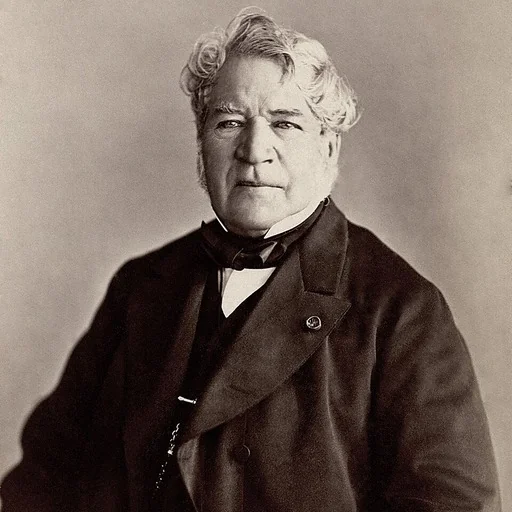
Artist
Eugène Louis Gabriel Isabey (French pronunciation:; 22 July 1803 – 25 April 1886) was a French painter, lithographer and watercolorist in the Romantic style.