Artwork
Still Life: The Smell
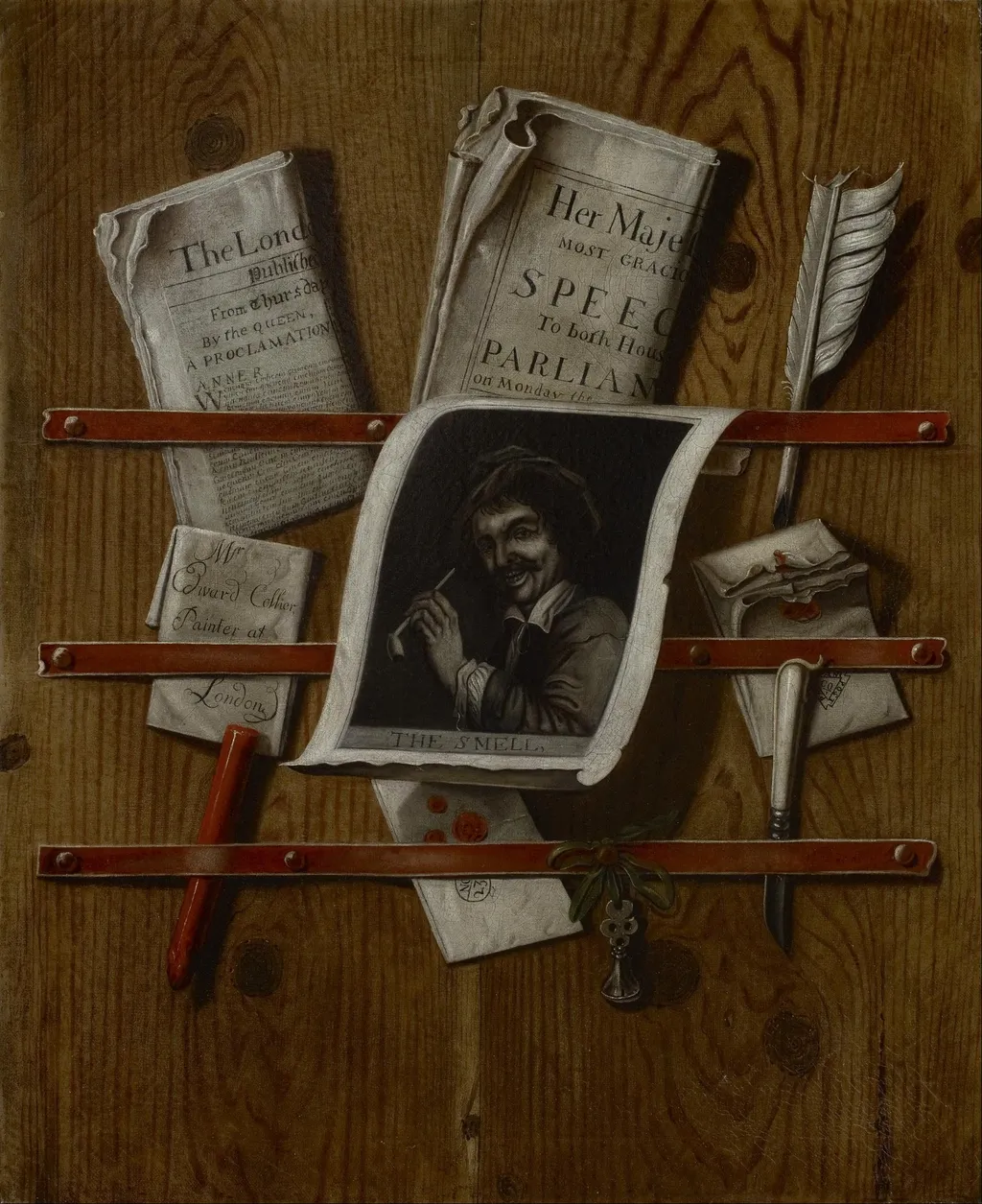
Still Life: The Smell is an oil painting by the Dutch Golden Age artist Evert Collier. It dates from 1701 and is held in the collection of the Museum of Fine Arts, Houston.
About this work
Subject & Meaning
Evert Collier's 1701 painting, Still Life: The Smell, is a trompe-l'œil work that depicts a specific arrangement of intellectual and administrative objects.
Evert Collier's 1701 painting, Still Life: The Smell, is a trompe-l'œil work that depicts a specific arrangement of intellectual and administrative objects. The composition features a newspaper, a quill, a drawing, a letter, and sealing wax scattered across a surface. Within the context of the five senses, these items symbolize the sense of smell, likely referencing the scent of ink, paper, or wax associated with the act of reading and writing.
As a genre painting, the work functions as a visual metaphor, using everyday stationery to evoke a sensory experience that cannot be directly seen, thereby engaging the viewer's imagination to complete the sensory representation.
Technique & Style
Created in 1701, Still Life: The Smell by Evert Collier is an oil painting executed on a canvas support. The work measures 62.5 cm in height and 52.1 cm in width. Collier employs the trompe-l'œil technique to create a highly realistic illusion of depth and texture, a style characteristic of his genre work.
The composition depicts specific objects including a newspaper, a quill, a drawing, a letter, and sealing wax, all rendered to deceive the eye into perceiving physical presence on a flat surface.
History & Provenance
Evert Collier’s Still Life: The Smell is dated 1701, as recorded in the artist’s internal documentation and confirmed by the work’s Wikidata entry. The painting belongs to the Museum of Fine Arts, Houston, where it is currently held. No record of a private commission or an early provenance beyond the artist’s creation has been identified in the cited sources.
The painting Still Life: The Smell by Evert Collier, created in 1701, is held in the collection of the Museum of Fine Arts, Houston. The work is an oil on canvas measuring 62.5 cm in height and 52.1 cm in width. As a trompe-l'œil still life, it depicts objects such as a newspaper, quill, drawing, letter, and sealing wax.
The provided sources do not list a specific inventory or accession number for the work, nor do they document any exhibition history.
Context
Evert Collier's 1701 painting Still Life: The Smell exemplifies Dutch Golden Age trompe-l'œil, a technique he mastered alongside portraiture. The work features meticulously rendered objects, a newspaper, quill, drawing, letter, and sealing wax, symbolizing literacy and communication, reflecting broader scholarly interest in Dutch still-life iconography. Collier, active in London from 1662 to 1689 and later in the Netherlands, navigated between market demand for vanitas motifs and Dutch realism, positioning his work within debates on artistic authenticity in 17th-century Northern Europe.
The painting resides in the Museum of Fine Arts, Houston, where it is studied as a key example of Dutch still-life innovation and its influence on later European genre painting.
Legacy
Evert Collier's Still Life: The Smell, painted in 1701, contributed to the development of trompe-l'oeil painting through its meticulous rendering of objects such as newspaper, quill, drawing, letter, and sealing wax. The work's precise illusionism influenced later artists in the genre, including William Harnett and John F. Peto, who similarly elevated mundane items into subjects of visual deception. Its inclusion in the collection of the Museum of Fine Arts, Houston, has ensured continued scholarly attention to Collier's role in shaping American trompe-l'oeil traditions.
The painting is recognized for its technical mastery and contribution to the trompe-l'oeil genre, though it is not noted for major market records or auction history in the provided sources.
Overview
Still Life: The Smell is a 1701 painting by Evert Collier, a Dutch Golden Age artist known for still-life works. The canvas depicts a collection of everyday objects arranged on a wooden wall.
Own this work as a print
Artist & collection

Artist
Evert Collier (26 January 1642 – few days before 8 September 1708) was a Dutch Golden Age still-life painter known for vanitas and trompe-l'œil paintings.

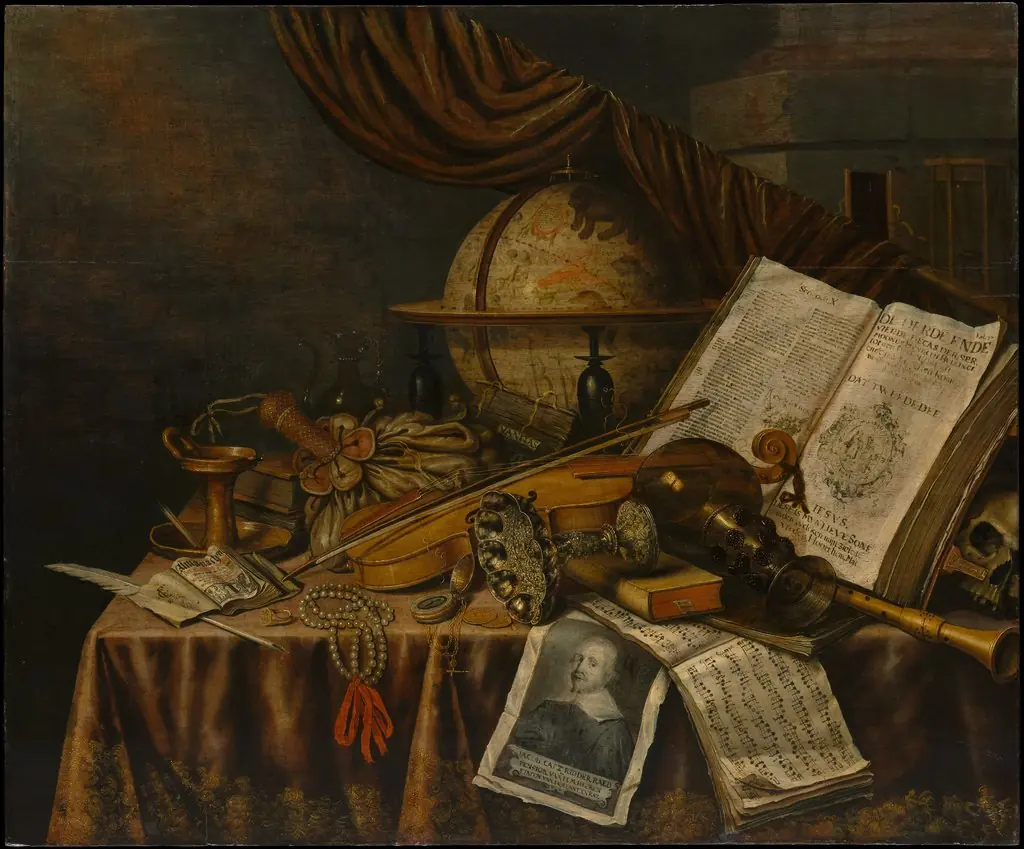 Vanitas Still Life
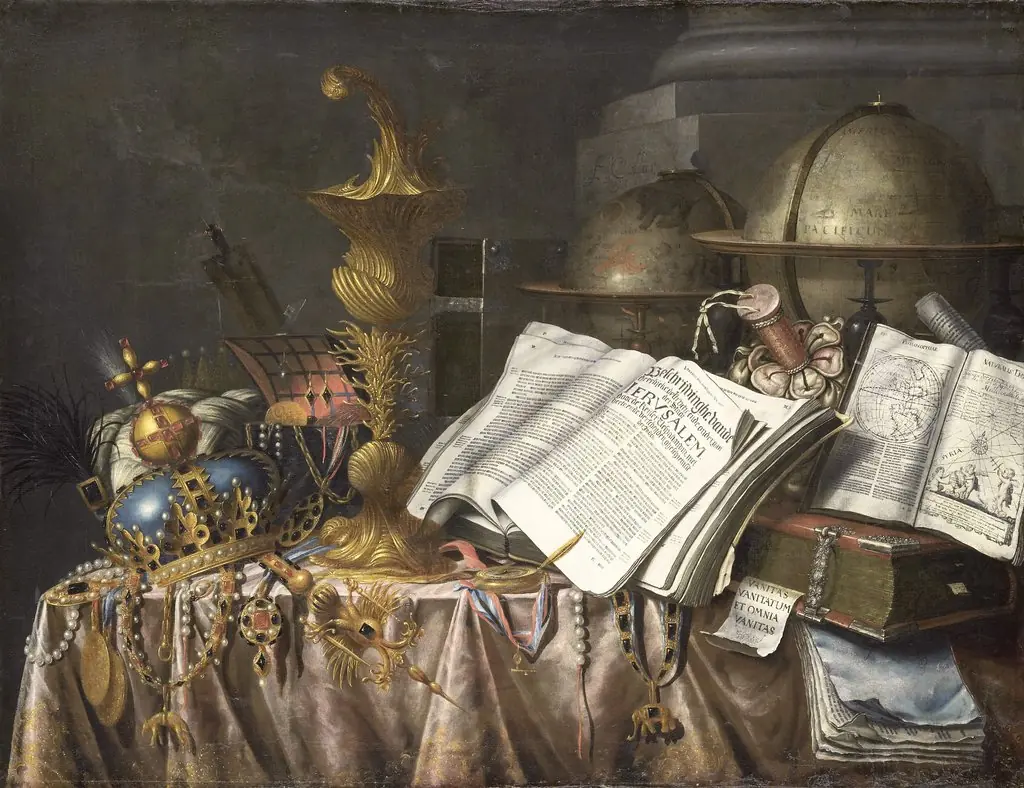 Vanitas still life
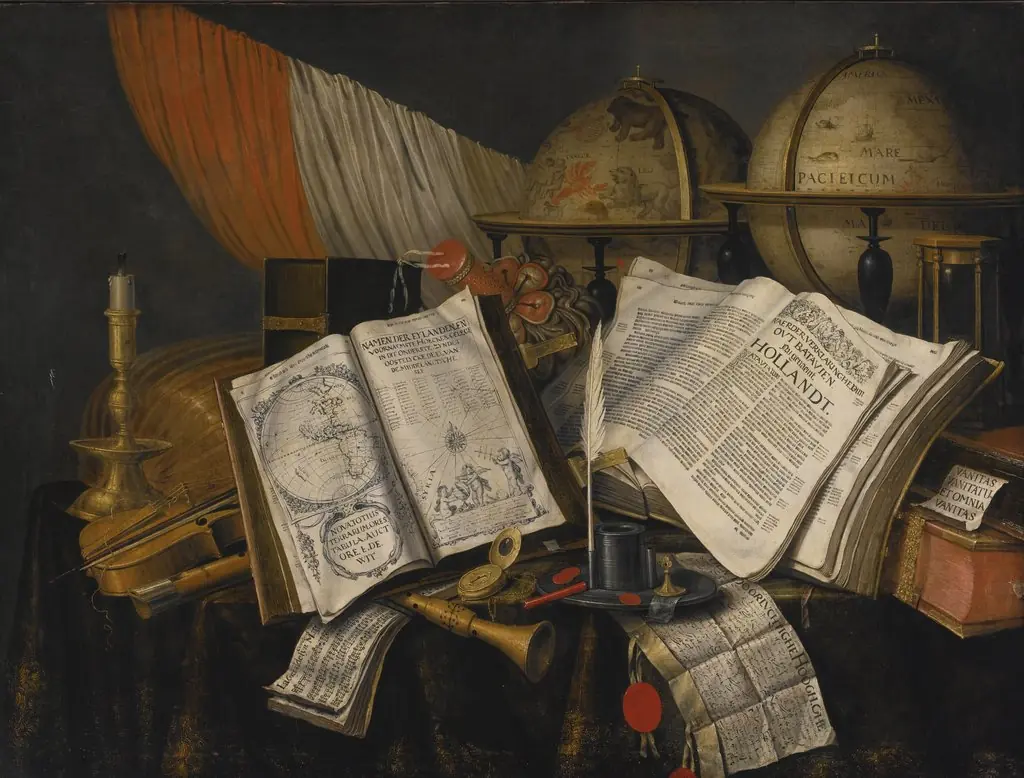 Vanitas Still Life with a Candlestick, Musical Instruments, Dutch Books, a Writing Set, an Astrological and a Terrestial Globe and an Hourglass, All on a Draped Table
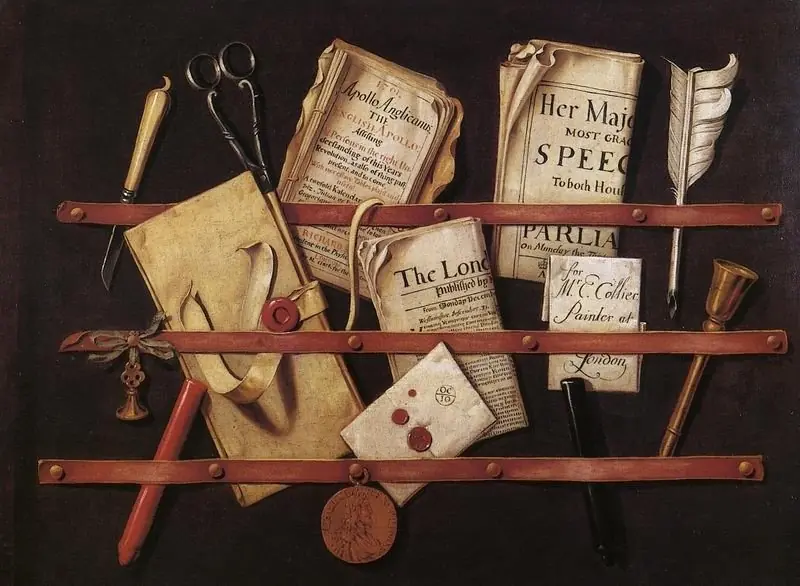 Trompe l'œil with Writing Materials
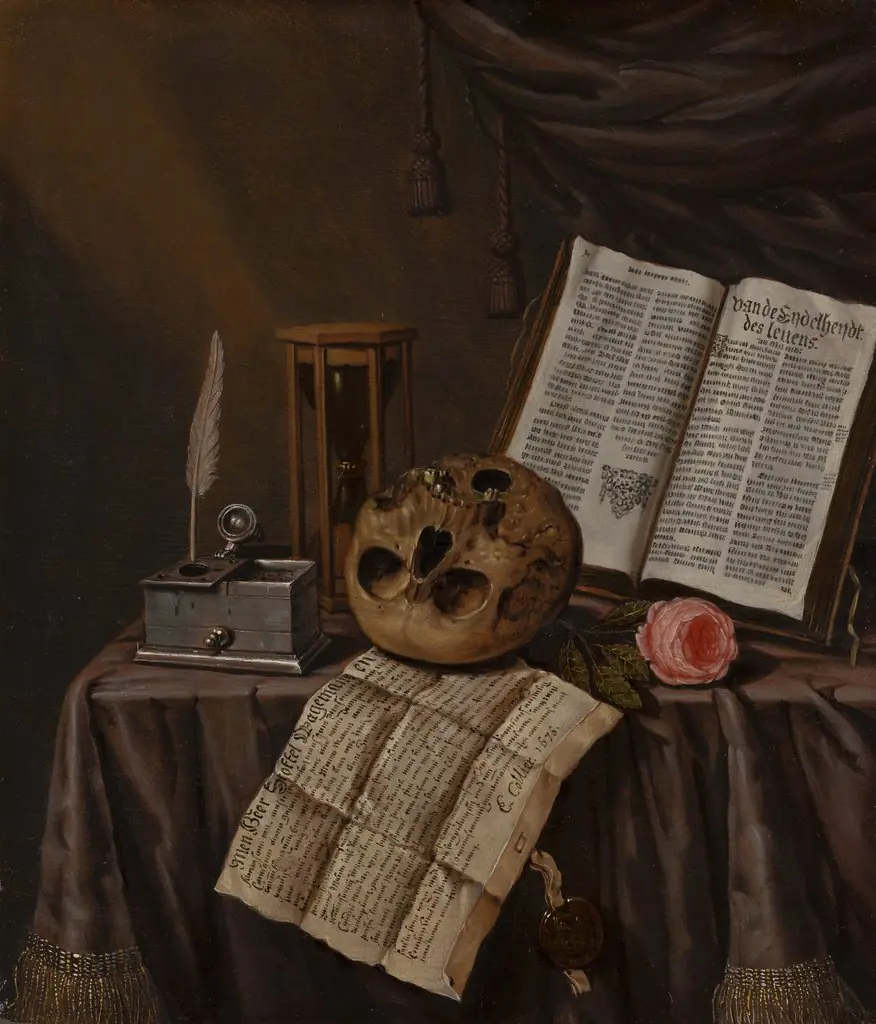 Vanitas Still Life
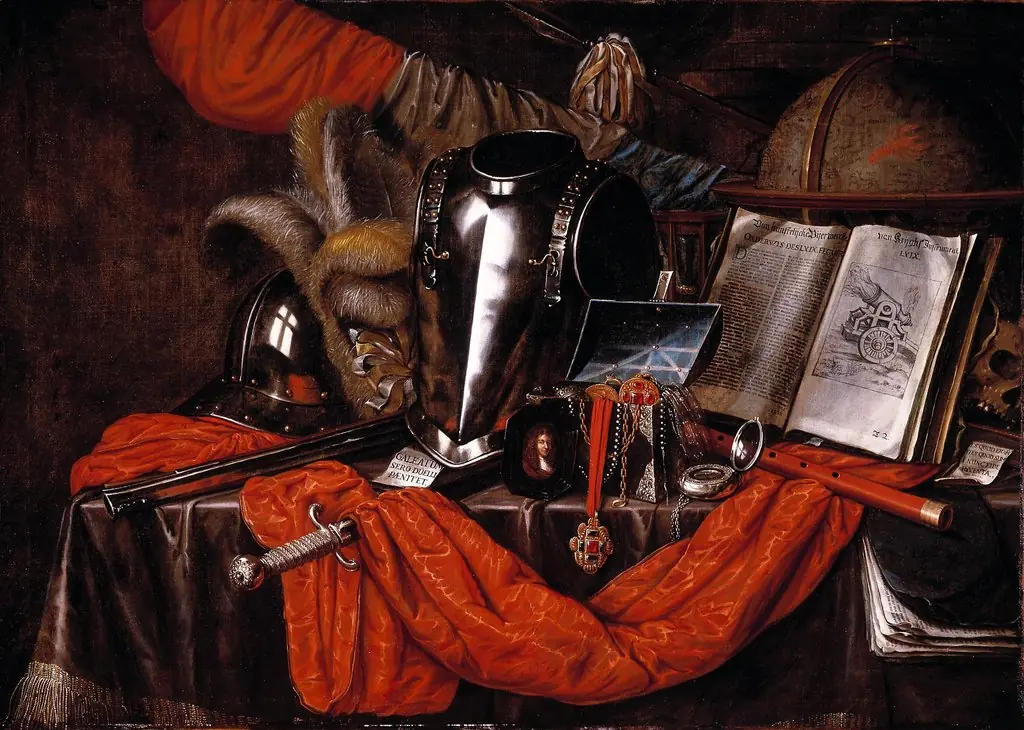 A Vanitas
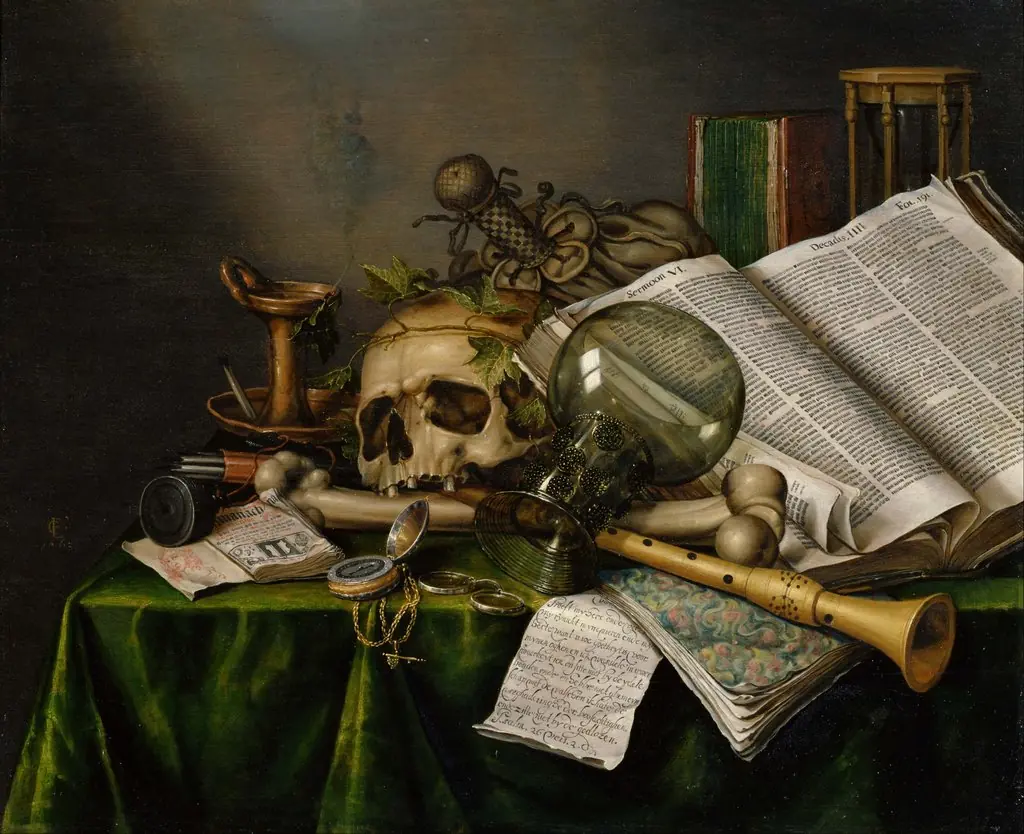 Vanitas, Still Life with Books and Manuscripts and a Skull
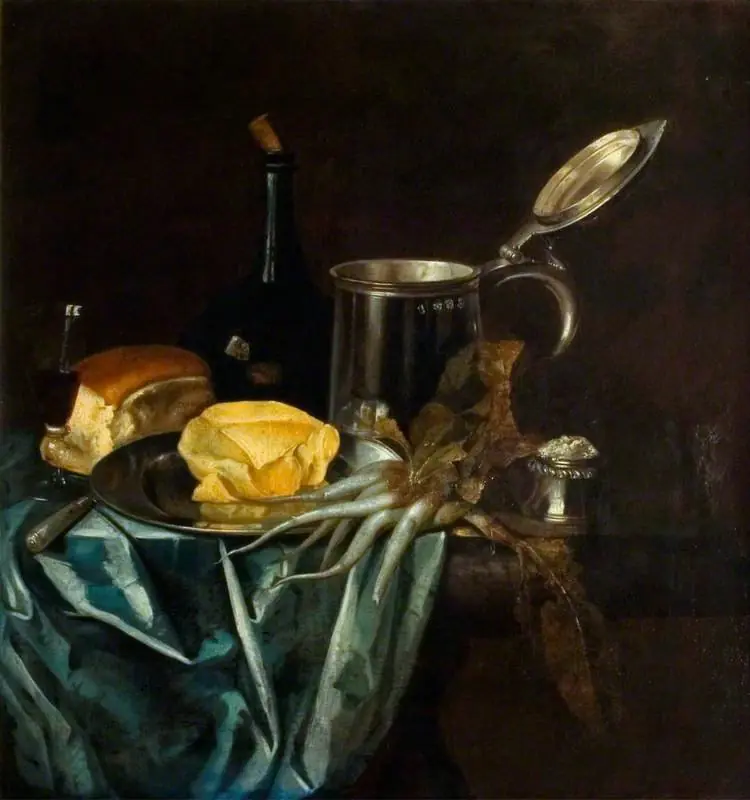 Still Life
- Still Life
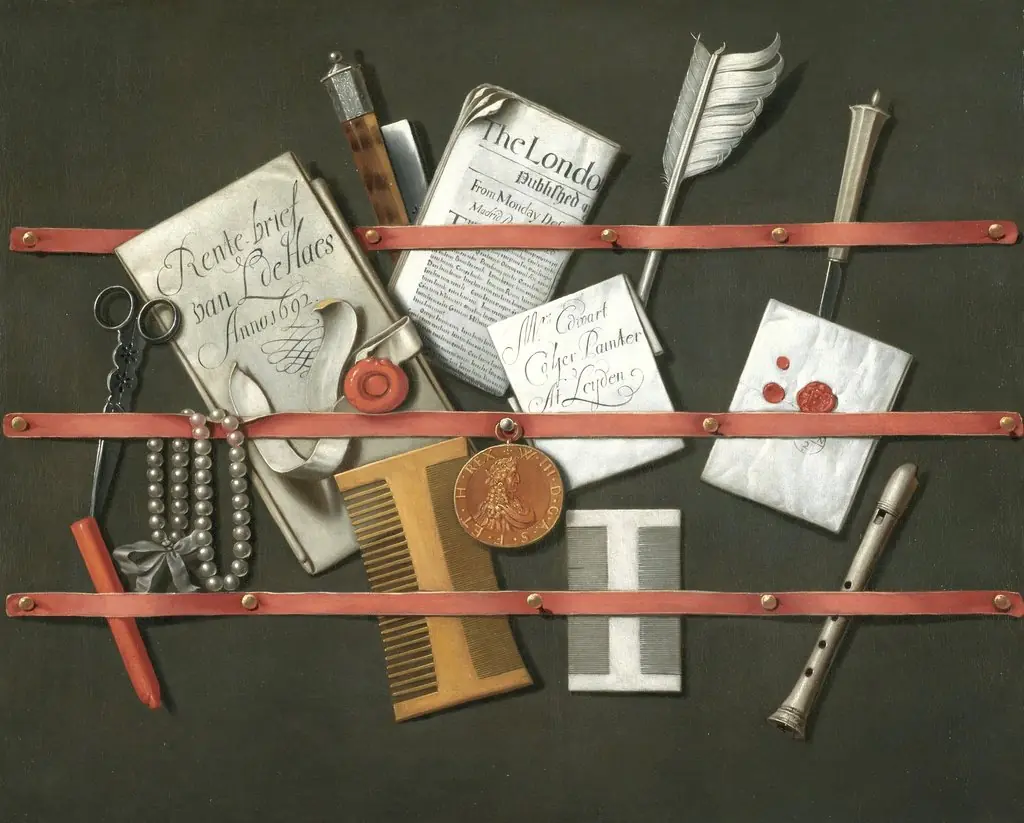 Still Life: A Letter Rack
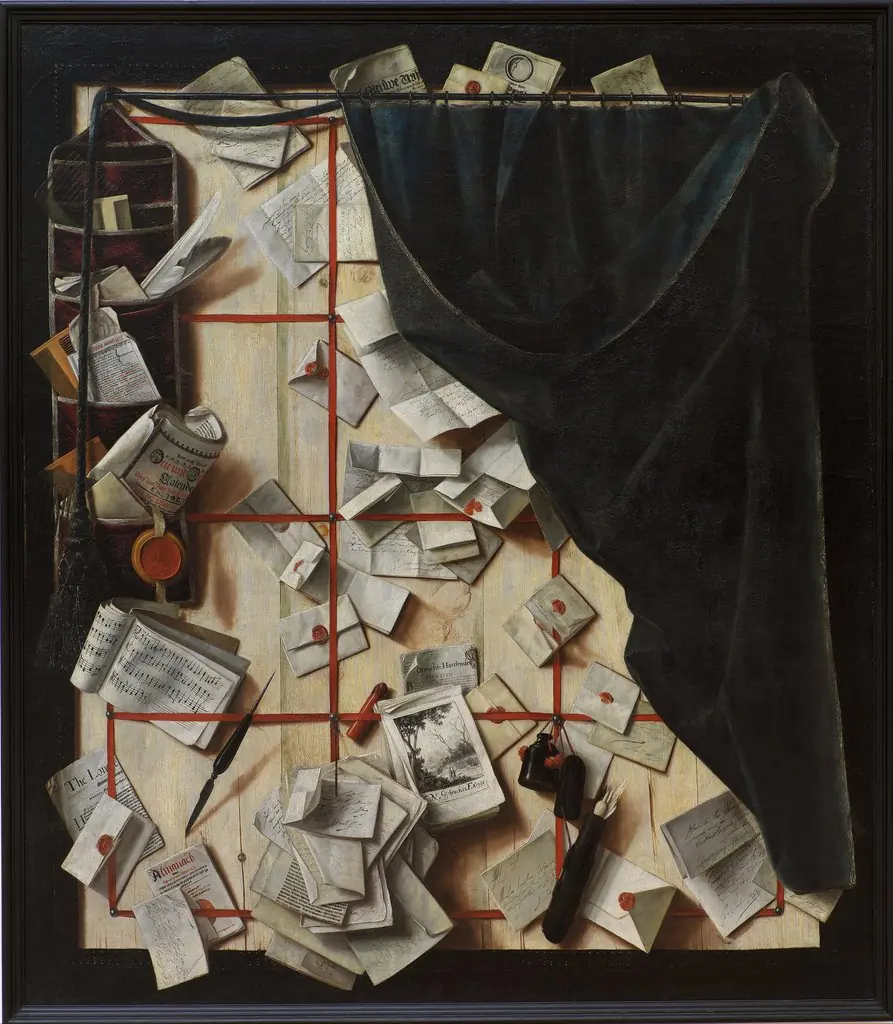 Trompe l'oeil. Board Partition with Letter Rack and Music Book
 Trompe l'oeil. Letter Rack with a Barber-Surgeon's Instruments
 Trompe l'oeil. Letter Rack with a Barber-Surgeon's Instruments
 Trompe l'oeil of a Letter Rack with Christian V's Proclamation
 Trompe l'oeil of a Letter Rack with Christian V's Proclamation
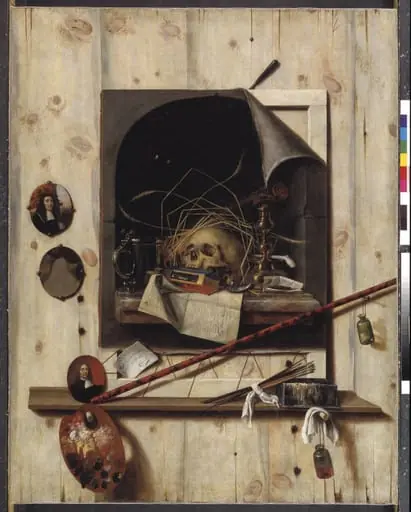 Trompe l'oeil with Studio Wall and Vanitas Still Life
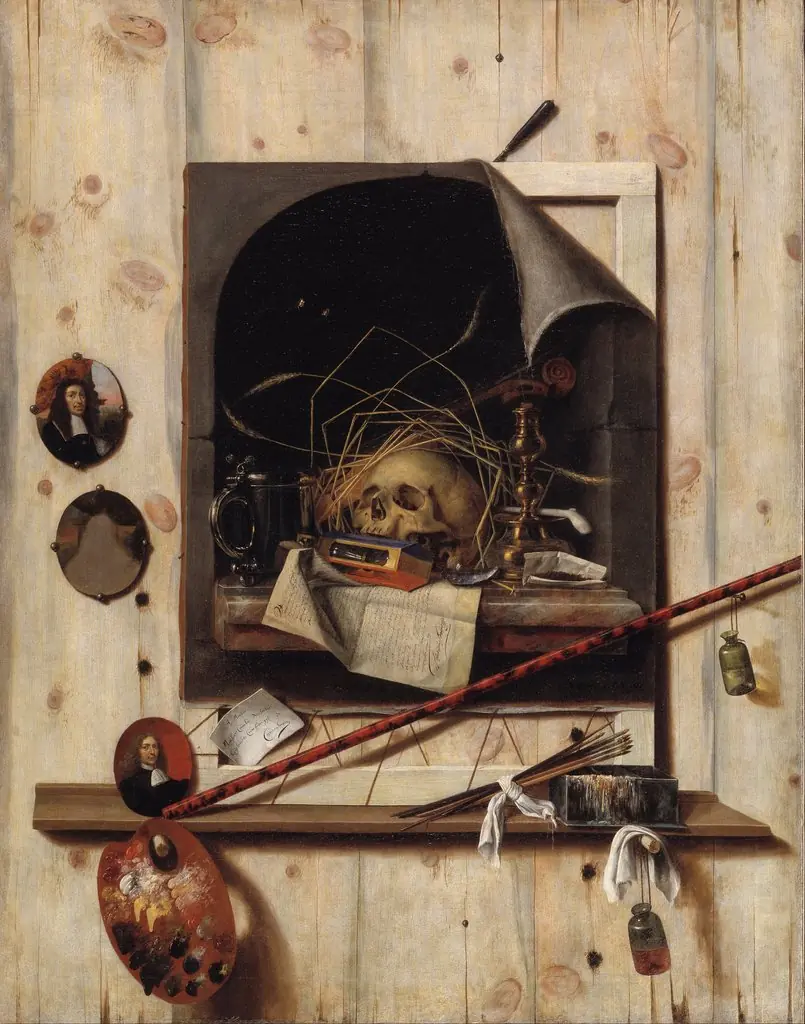 Trompe l'oeil with Studio Wall and Vanitas Still Life
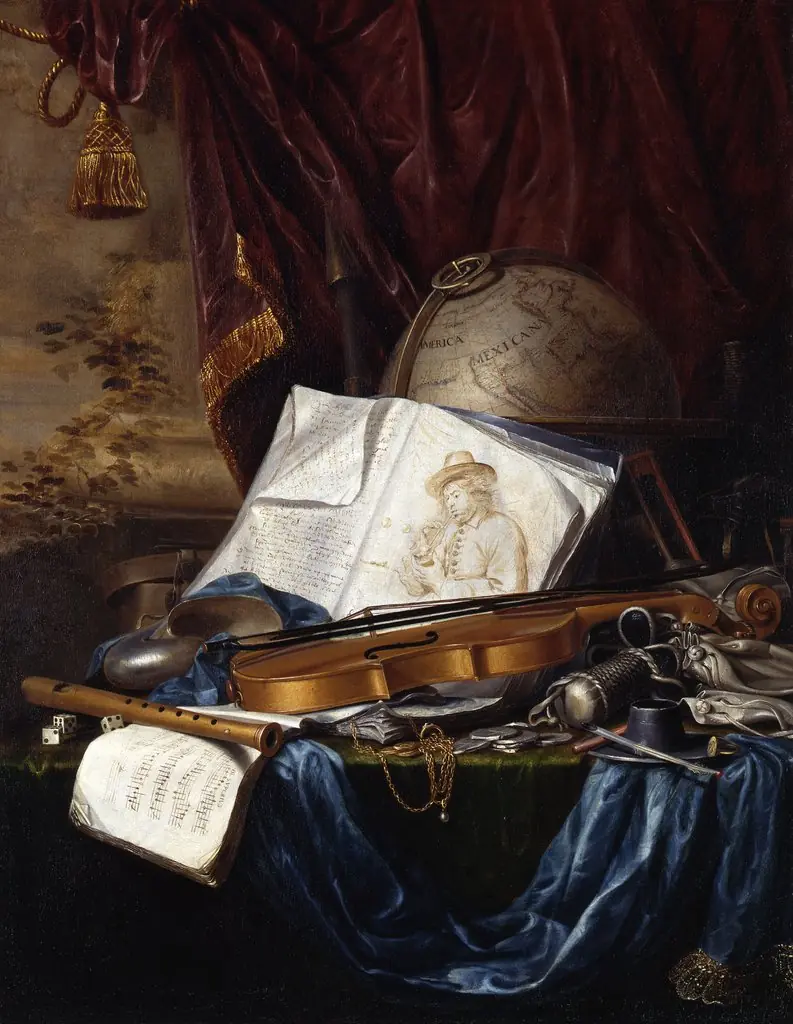 Still Life with Musical Instruments