Artwork
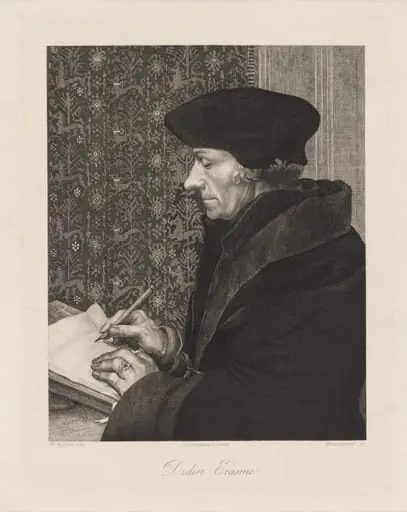
Erasmus, after Holbein
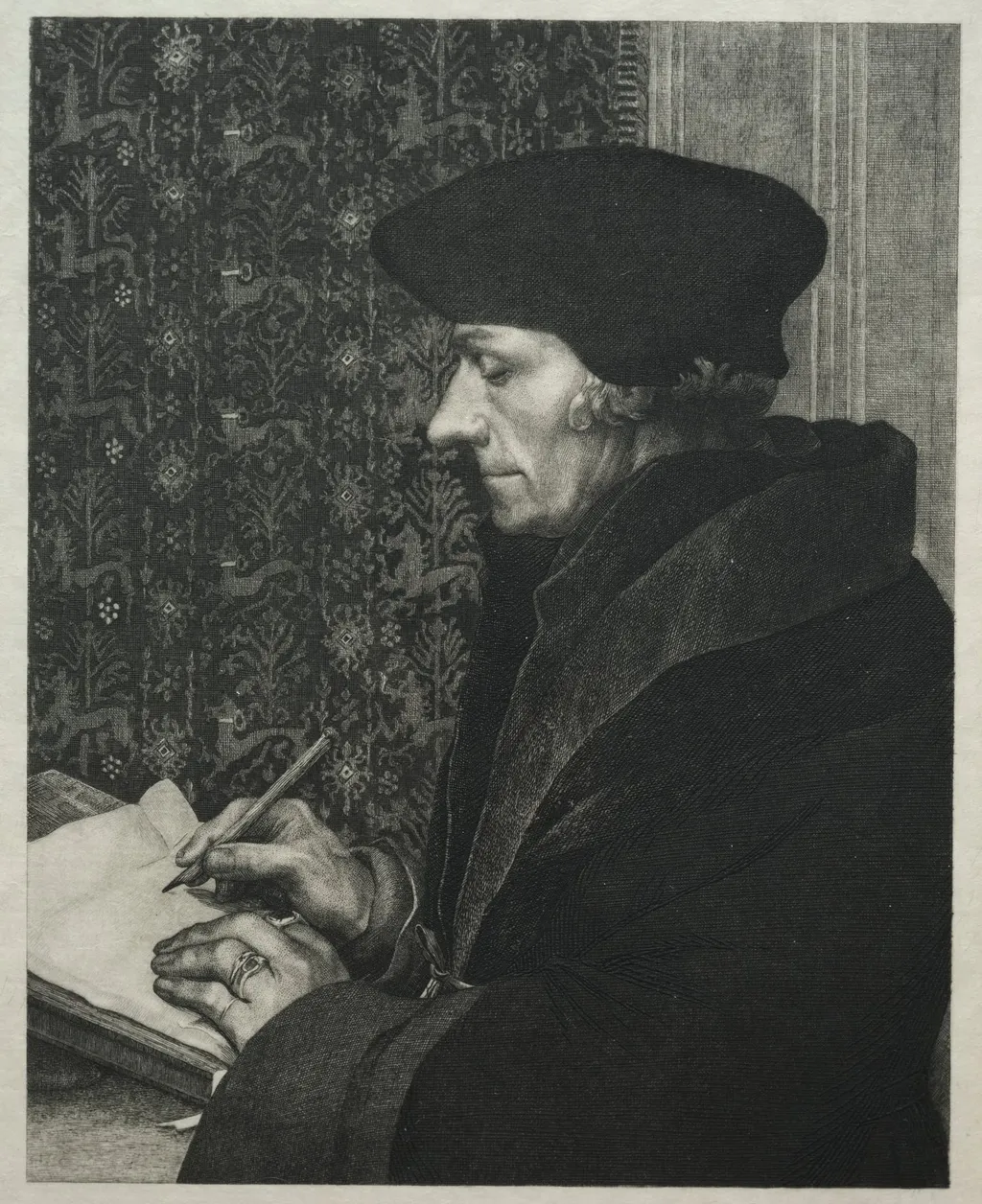
Erasmus, after Holbein is a print by the Impressionist artist Félix Bracquemond. It dates from 1863 and is held in the collection of the Cleveland Museum of Art.
- Accession no.
- 2005.232
- Credit line
- Gift of John Bonebrake
About this work
Overview
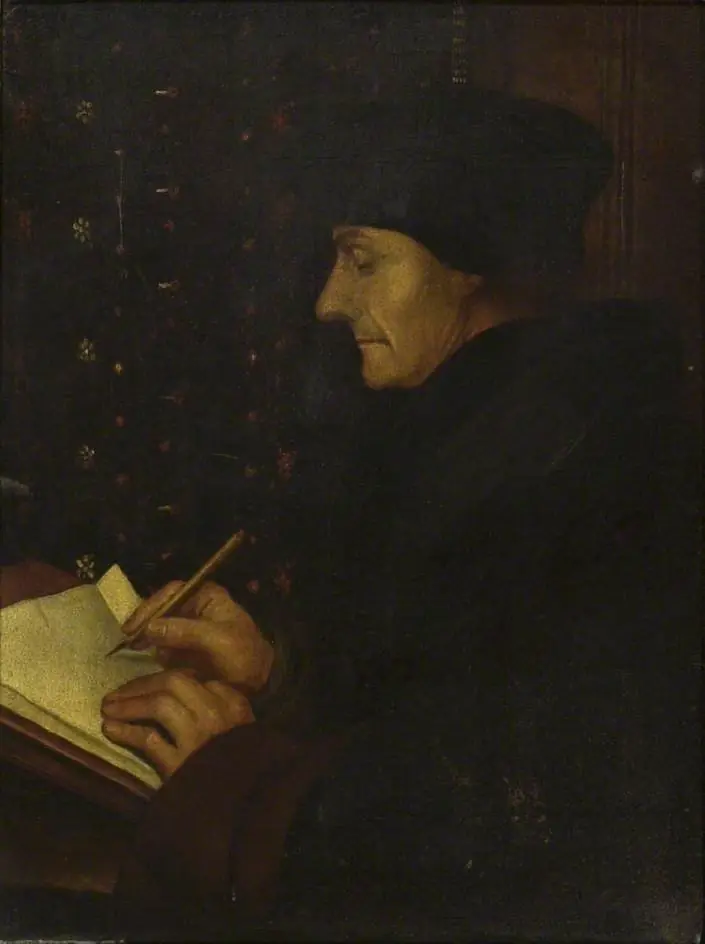
Félix Bracquemond’s 1863 print, titled Erasmus, after Holbein, presents a monochrome study of the Dutch humanist scholar. The image shows a man in a dark hat and coat, absorbed in writing with a quill, his left hand supporting an open book. A patterned curtain with leaf motifs forms a textured backdrop, framing the figure within a modest interior.
Subject & Meaning
The work depicts Desiderius Erasmus, the influential Renaissance scholar, emphasizing his dedication to learning and textual work. By focusing on the act of writing, Bracquemond highlights Erasmus’s role as a conduit of ideas, while the subdued setting underscores the contemplative nature of his intellectual pursuits.
Technique & Style
Bracquemond adapts Hans Holbein’s earlier portrait, translating it into a print that balances chiaroscuro with a softer tonal range. The interplay of light and shadow across the face and hands creates depth, while the linear treatment of the curtain’s foliage adds decorative contrast, giving the piece a more contemporary, less rigid feel than the original.
History & Provenance
Created in 1863, the print entered the collection of the Cleveland Museum of Art, where it remains on view. Bracquemond’s decision to reinterpret Holbein’s image reflects a 19th‑century interest in revisiting Renaissance figures through modern graphic techniques.
Context
The mid‑19th century saw a revival of interest in Renaissance humanism and in the works of masters like Holbein. Bracquemond, known for his contributions to French engraving, engaged with this trend by re‑imagining a canonical portrait, thereby linking historical scholarship with contemporary printmaking practices.
Own this work as a print
Artist & collection
Artist
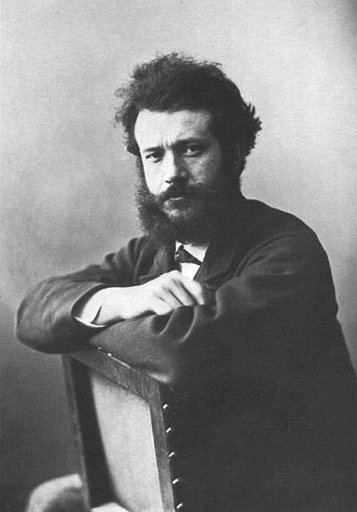
Félix Henri Bracquemond was a French painter, etcher, and printmaker. He played a key role in the revival of printmaking, encouraging artists such as Édouard Manet, Edgar Degas and Camille Pissarro to use this technique.