Artwork
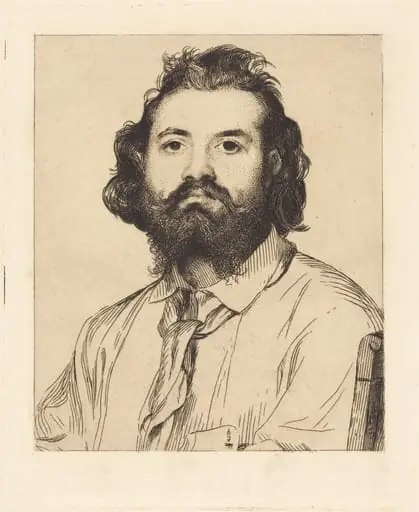
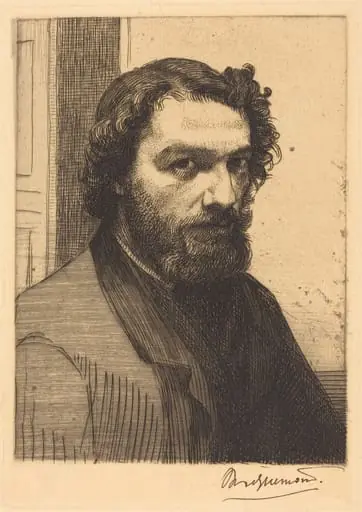
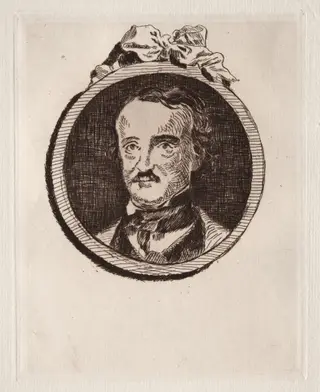
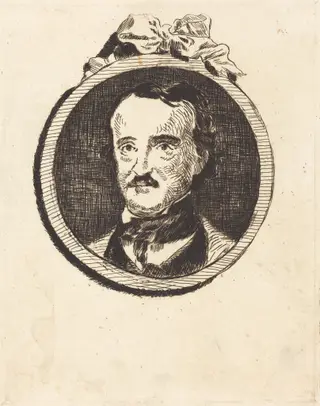
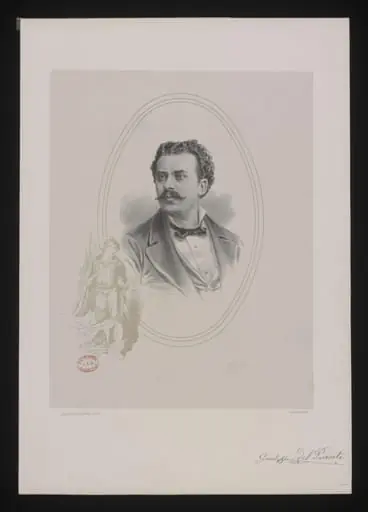
Frontispiece for "New Works of Champfleury, The Friends of Nature:" Portrait of Champfleury, after Gustave Courbet
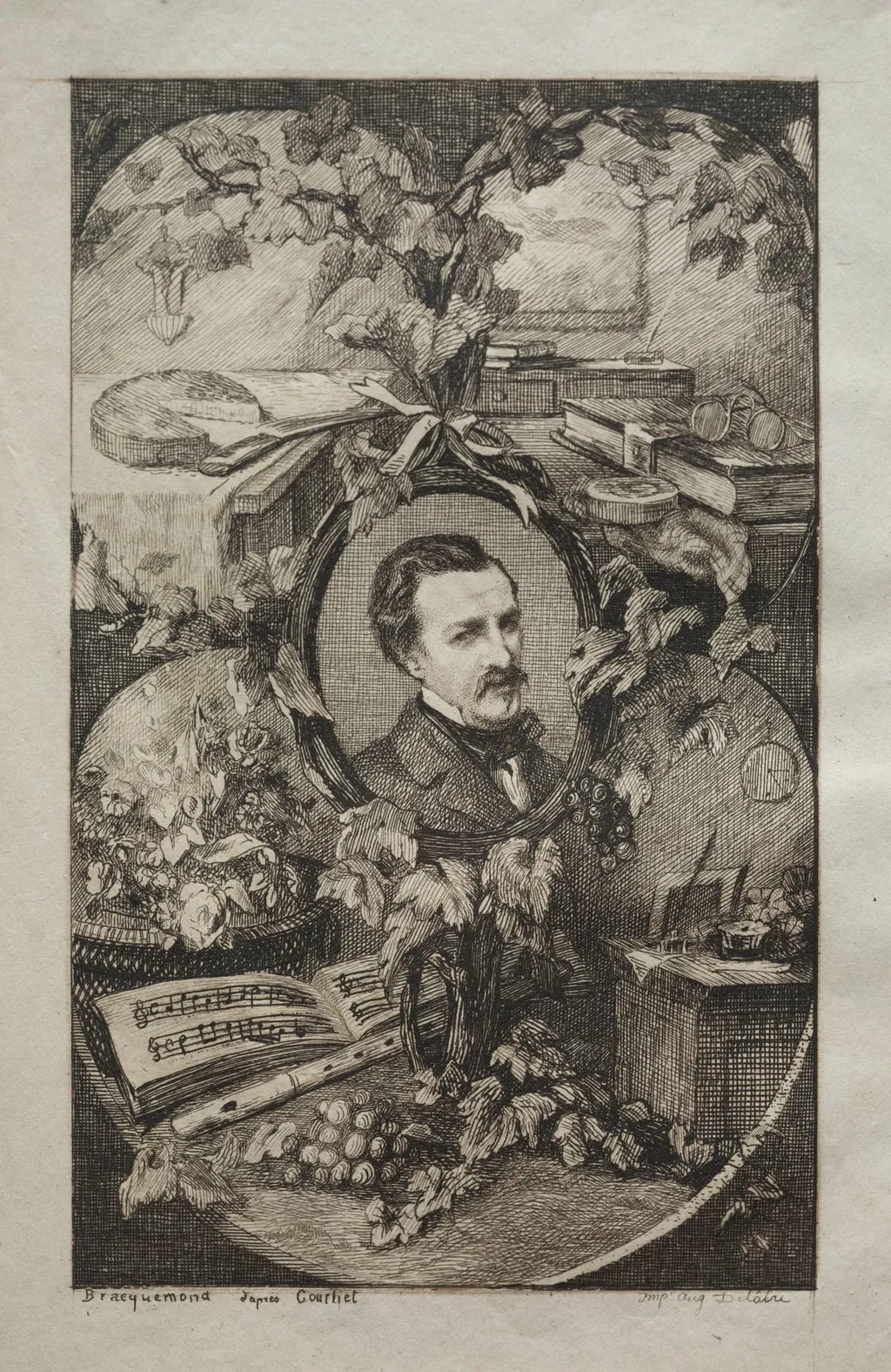
Frontispiece for "New Works of Champfleury, The Friends of Nature:" Portrait of Champfleury, after Gustave Courbet is a print by the Impressionist artist Félix Bracquemond. It dates from 1859 and is held in the collection of the Cleveland Museum of Art.
- Accession no.
- 2005.247
- Credit line
- Gift of John Bonebrake
About this work
Overview
' Rendered in fine-line engraving, it presents a portrait of the writer framed by an ornate botanical wreath.
This 1859 etching by Félix Bracquemond serves as the frontispiece for a collection of writings by Champfleury, titled 'New Works of Champfleury, The Friends of Nature.' Rendered in fine-line engraving, it presents a portrait of the writer framed by an ornate botanical wreath. The work was produced as an illustrated introduction to Champfleury’s literary output, blending portraiture with symbolic elements to convey his intellectual and artistic affiliations.
Subject & Meaning
The portrait depicts Champfleury, a French writer and critic associated with Realism, rendered with a solemn expression and dressed in dark attire. Surrounding him are objects linked to music, literature, and nature, a violin, a book with musical notation, and a small boat, suggesting his engagement with the arts and his alignment with the natural world. The leafy wreath frames him as both a thinker and a figure of cultural cultivation, reinforcing his role as a bridge between literature and the broader artistic movement of his time.
Technique & Style
Bracquemond employed etching with meticulous line work to achieve fine detail and atmospheric depth. He used chiaroscuro to model the face and coat, creating strong contrasts between light and shadow that draw focus to Champfleury’s features. The background, densely populated with foliage, rocks, and organic forms, is rendered in delicate, interwoven strokes, enhancing the sense of a natural, almost encroaching environment that surrounds the subject without overwhelming him.
History & Provenance
Created in 1859 for the publication of Champfleury’s literary collection, the print was part of a broader trend in mid-century French publishing to integrate fine art into literary works. Bracquemond, a printmaker closely connected to Courbet and the Realist circle, translated Courbet’s original portrait into this etched form. The print entered the collection of The Cleveland Museum of Art, where it remains as a testament to the intersection of print culture and literary patronage in 19th-century France.
Context
This print emerged during a period when Realist writers and artists sought to elevate everyday life and intellectual labor as worthy subjects. Champfleury was a vocal advocate for this movement, and his association with Courbet made him a symbolic figure. Bracquemond’s inclusion of musical and natural motifs reflects the Realists’ interest in holistic cultural expression, where art, nature, and literature were seen as interconnected domains of truth and observation.
Legacy
Though not widely reproduced today, the etching exemplifies the collaborative nature of 19th-century French print culture, where artists, writers, and engravers worked in tandem. Bracquemond’s skill in translating a painterly portrait into the nuanced language of etching influenced later illustrators. The work endures as a quiet but precise document of intellectual networks and the visual language used to honor literary figures within the Realist milieu.
Own this work as a print
Artist & collection
Artist
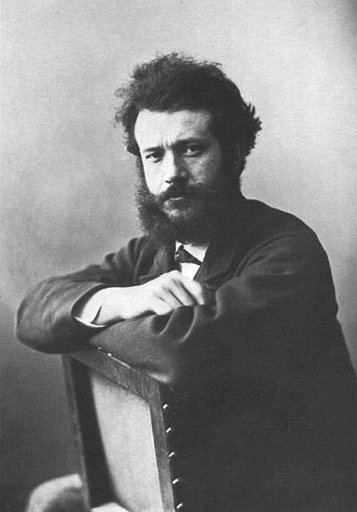
Félix Henri Bracquemond was a French painter, etcher, and printmaker. He played a key role in the revival of printmaking, encouraging artists such as Édouard Manet, Edgar Degas and Camille Pissarro to use this technique.