Artwork
Edgar Poe
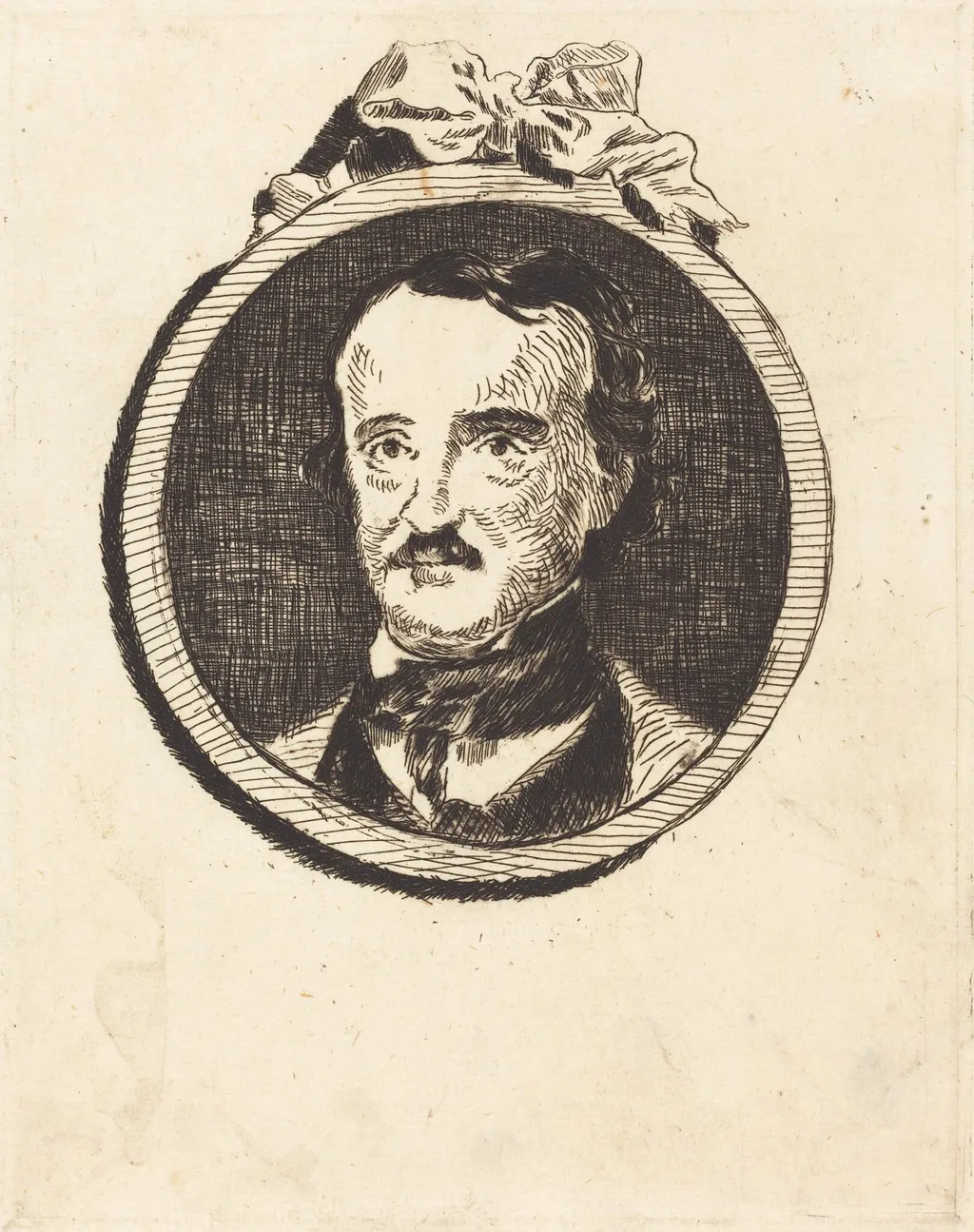
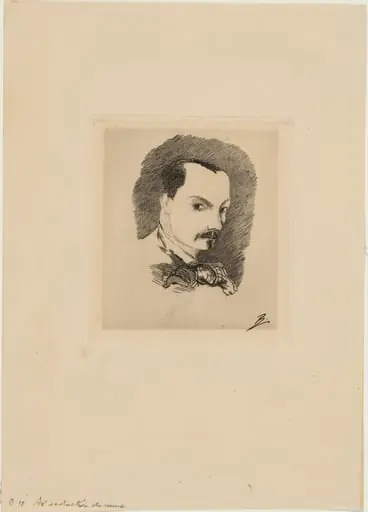
Edgar Poe is an ink print by the Impressionist artist Édouard Manet. It dates from 1860 and is held in the collection of the National Gallery of Art. Edouard Manet created this etching in 1860, depicting the American writer Edgar Allan Poe.
About this work
Overview
Rendered in monochrome, the portrait captures Poe’s face within a circular border, emphasizing his distinctive facial features.
Edouard Manet created this etching in 1860, depicting the American writer Edgar Allan Poe. Rendered in monochrome, the portrait captures Poe’s face within a circular border, emphasizing his distinctive facial features. The composition is restrained, focusing on the head and upper torso, with minimal background.
A small sketch of a feathered hat floats above the frame, adding a subtle, almost whimsical counterpoint to the solemn visage.
Subject & Meaning
The portrait presents Poe as a figure of literary gravity, his thick mustache and high collar reinforcing a sense of solemnity. Manet does not idealize; instead, he renders Poe with psychological immediacy, suggesting introspection or melancholy. The floating hat above may hint at Poe’s public persona or literary mystique, serving as a symbolic appendage rather than a literal detail, inviting reflection on identity and reputation.
Technique & Style
Manet employed etching to achieve fine linear detail, using acid to bite into a metal plate and create delicate textures in Poe’s hair, collar, and skin. The contrast between bold outlines and subtle hatching gives volume without heavy shading. The style is direct and unembellished, aligning with Manet’s interest in modern portraiture and his rejection of academic polish in favor of observational clarity.
History & Provenance
The etching was made during Manet’s early career, likely as a personal or editorial commission, though its original context remains unclear. It was not widely circulated at the time and appears to have been produced in a small edition. Later collectors recognized its significance as one of the few portraits of Poe by a major European artist, contributing to its gradual ascent in art historical interest.
Context
In 1860, Poe was a revered but controversial figure in Europe, admired by French Symbolists like Baudelaire, who had translated his works. Manet, engaged with literary circles, may have been drawn to Poe’s dark romanticism. The portrait reflects a broader European fascination with American literature and the emerging image of the tormented genius, filtered through the lens of French modernism.
Legacy
This etching stands as one of the earliest visual representations of Poe by a prominent European artist. Its quiet intensity influenced later portrait prints and contributed to the visual canon surrounding Poe’s image. Though not widely known in Manet’s lifetime, it now serves as a key example of how 19th-century artists engaged with literary figures through intimate, non-idealized portraiture.
Own this work as a print
Artist & collection
Artist
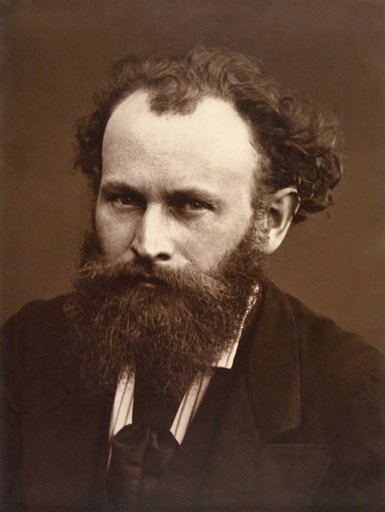
Édouard Manet was a French modernist painter. He was one of the first 19th-century artists to paint modern life, as well as a pivotal figure in the transition from Realism to Impressionism.