Artwork
Don Pedro I de Castilla consulta su horóscopo a un moro sabio de Granada llamado Ben-Agatim
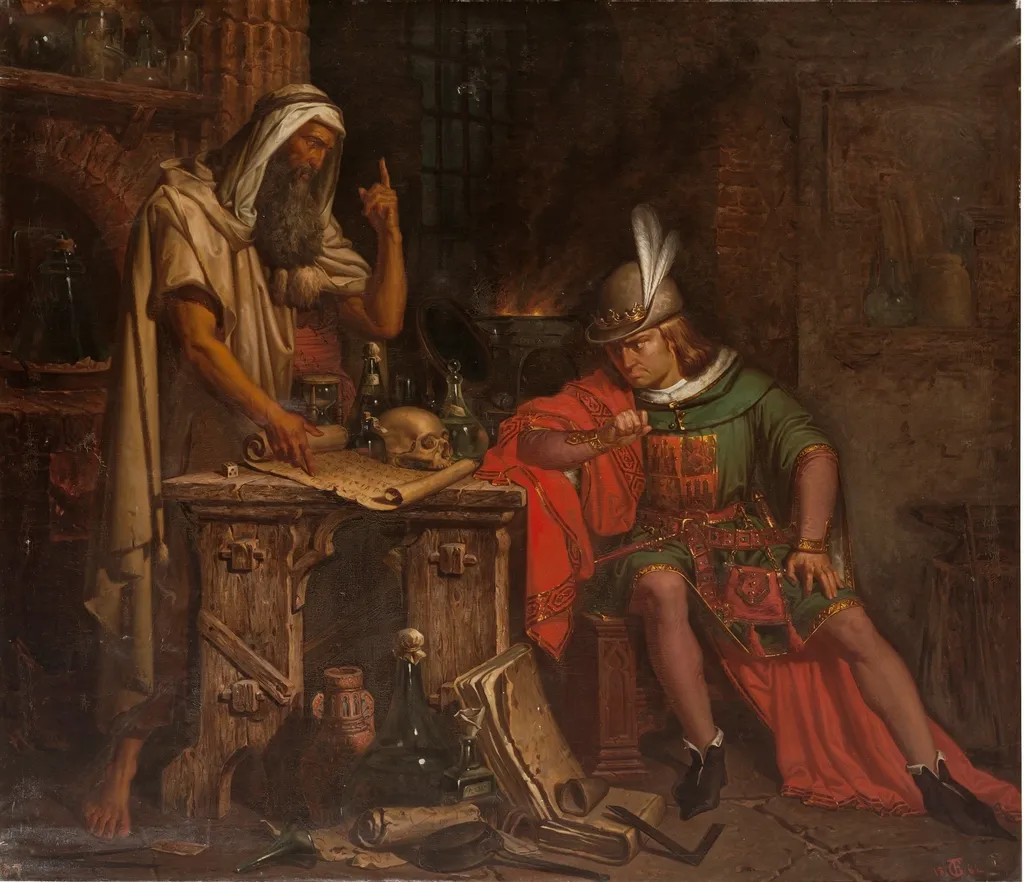
Don Pedro I de Castilla consulta su horóscopo a un moro sabio de Granada llamado Ben-Agatim is an oil painting by Federico González y Tave. It dates from 1864 and is held in the collection of the Museo del Prado.
About this work
Subject & Meaning
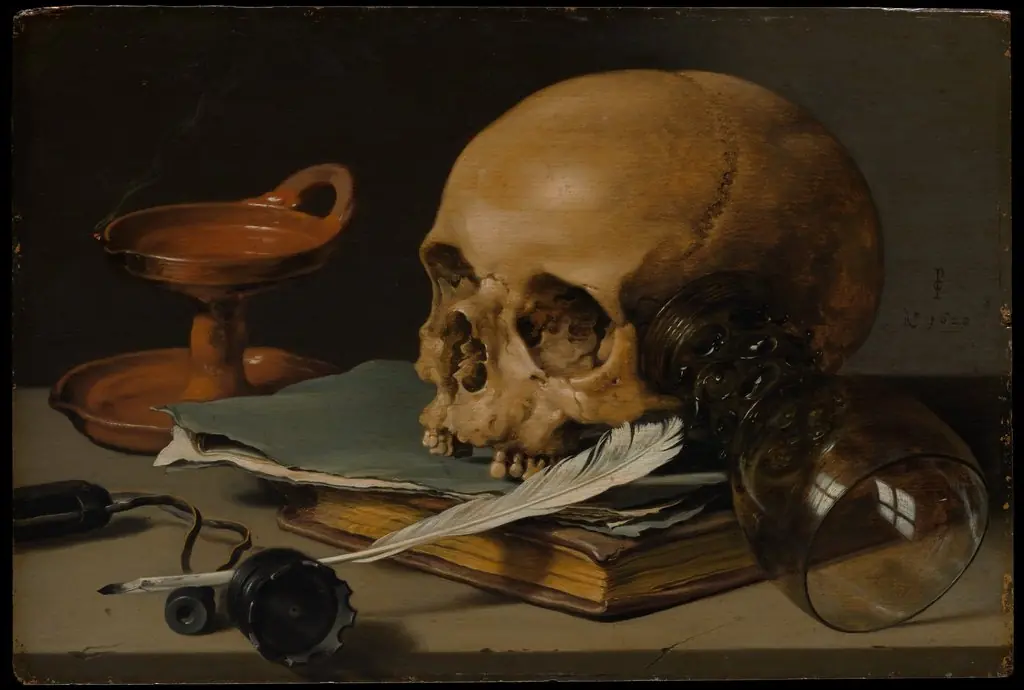
Beyond the primary figures, the composition incorporates distinct symbolic objects including a skull, an hourglass, a book, and a bottle.
The painting illustrates a specific historical narrative in which King Peter I of Castile consults his horoscope with Ben-Agatim, described as a wise Moor from Granada. This scene establishes a cross-cultural interaction centered on astrology and royal destiny. Beyond the primary figures, the composition incorporates distinct symbolic objects including a skull, an hourglass, a book, and a bottle.
These elements function as vanitas motifs, visually underscoring themes of mortality, the fleeting nature of time, and the limits of human knowledge despite attempts to predict the future through celestial means.
Technique & Style
The painting is executed in oil on canvas, measuring 145 cm by 170 cm. It depicts a skull, a bottle, a book, and an hourglass, reflecting symbolic themes often associated with mortality and the passage of time. The work is stylistically rooted in 19th-century academic realism, with careful attention to detail and chiaroscuro to model forms. The composition balances narrative clarity with symbolic abstraction, characteristic of academic historical painting of the period.
History & Provenance
The oil painting titled Don Pedro I de Castilla consulta su horóscopo a un moro sabio de Granada llamado Ben-Agatim was created by Federico González y Tave in 1864. Executed on canvas, the work measures 145 cm in height and 170 cm in width. It was originally held in the collection of the Museo de la Trinidad before entering the holdings of the Museo del Prado in Madrid.
The artwork depicts a historical scene involving King Pedro I of Castile consulting an astrologer from Granada. While the specific commission details are not recorded in the available sources, the piece is firmly dated to 1864, aligning with the artist's active period in the mid-19th century.
The painting is held at the Museo del Prado. It is associated with two collections in the records: the Museo del Prado and the Museo de la Trinidad. No specific inventory or accession number is provided in the available sources, and no exhibition history is documented.
Overview
Federico González y Tave’s 1864 oil on canvas presents a nocturnal interior where a Castilian monarch consults a learned Moor. The composition centers on a wooden table strewn with a skull, a bottle and an hourglass, while the two figures dominate the cramped space.
Context
The scene reflects 19th‑century Spanish interest in historical and moral narratives, portraying a moment when a Christian king seeks counsel from a Muslim intellectual. The inclusion of the skull and hourglass aligns with contemporary allegorical traditions warning of the transience of power.
Own this work as a print
Artist & collection
Artist
Federico González y Tave (1823–1867) was an artist, born in Cádiz Province.

- The Alchemist
 Ludwig der Bayer verkündet Friedrich dem Schönen 1314 seine Freilassung und bietet ihm die Mitregentschaft an
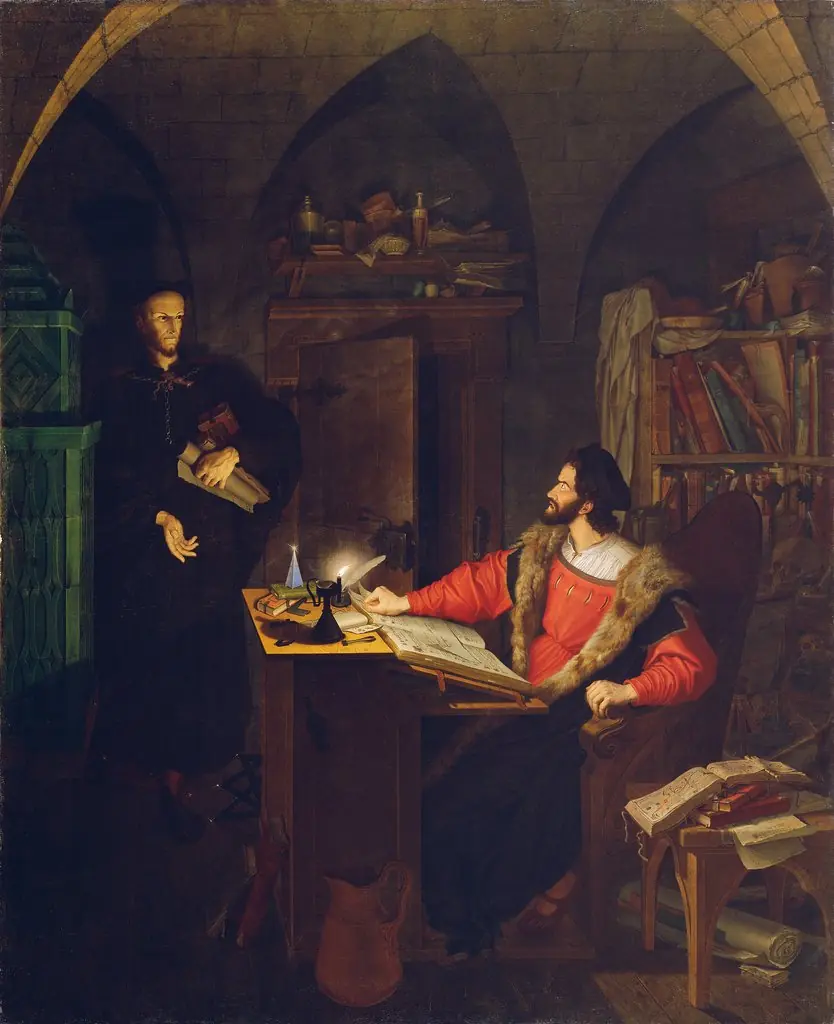 Faust und Mephisto in der Studierstube
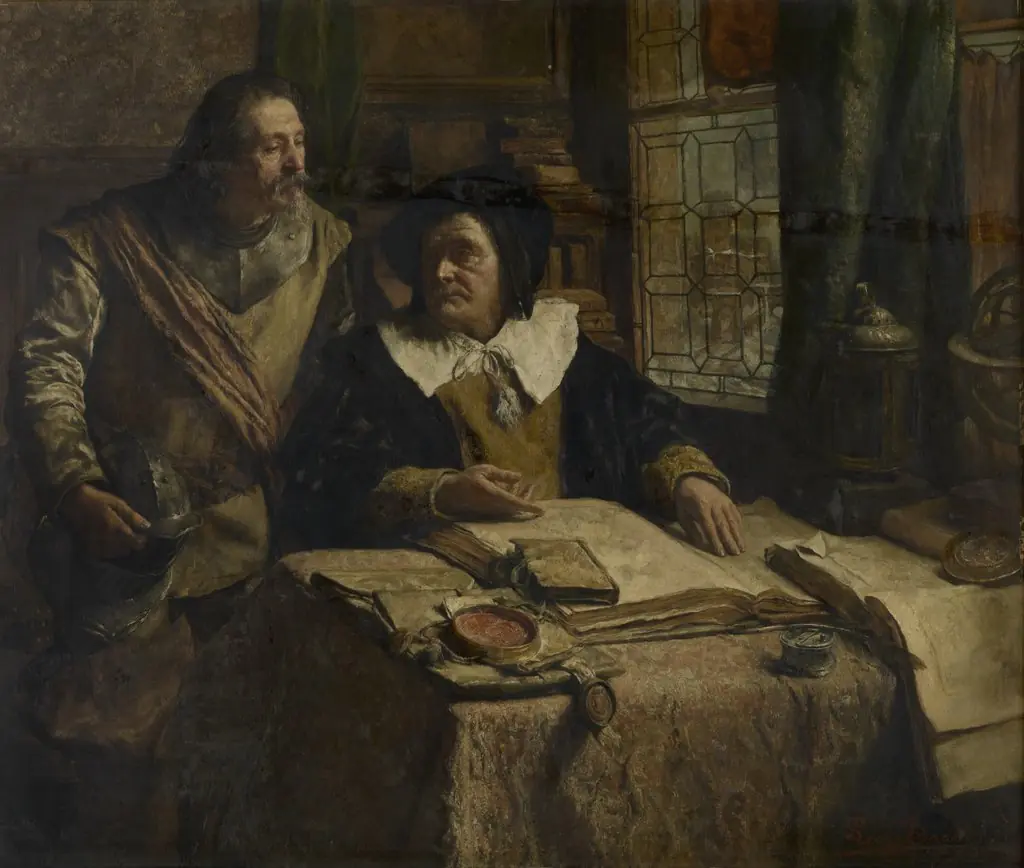 The Geographer
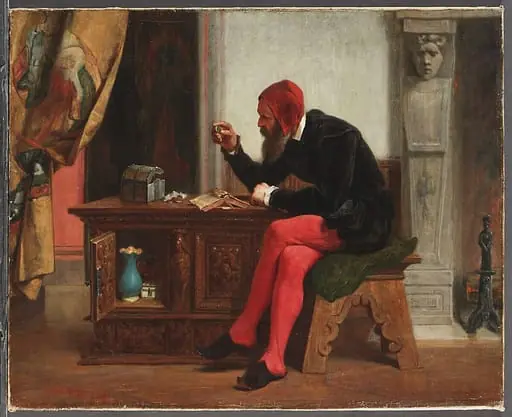 The Antiquary
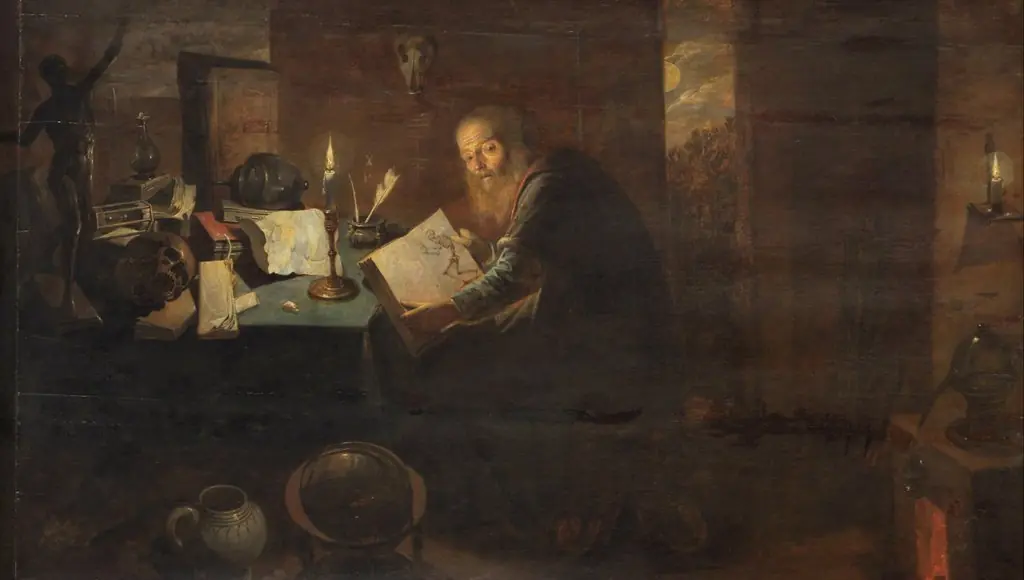 The alchimist
 Mephisto Appears to Faust
 Macbeth instructing the murderers employed to kill Banquo
 Domestic Scenery
 Charlemagne reprimands the neglectful students
 The Alchemist
 King Christian II in Prison