Artwork
John the Baptist
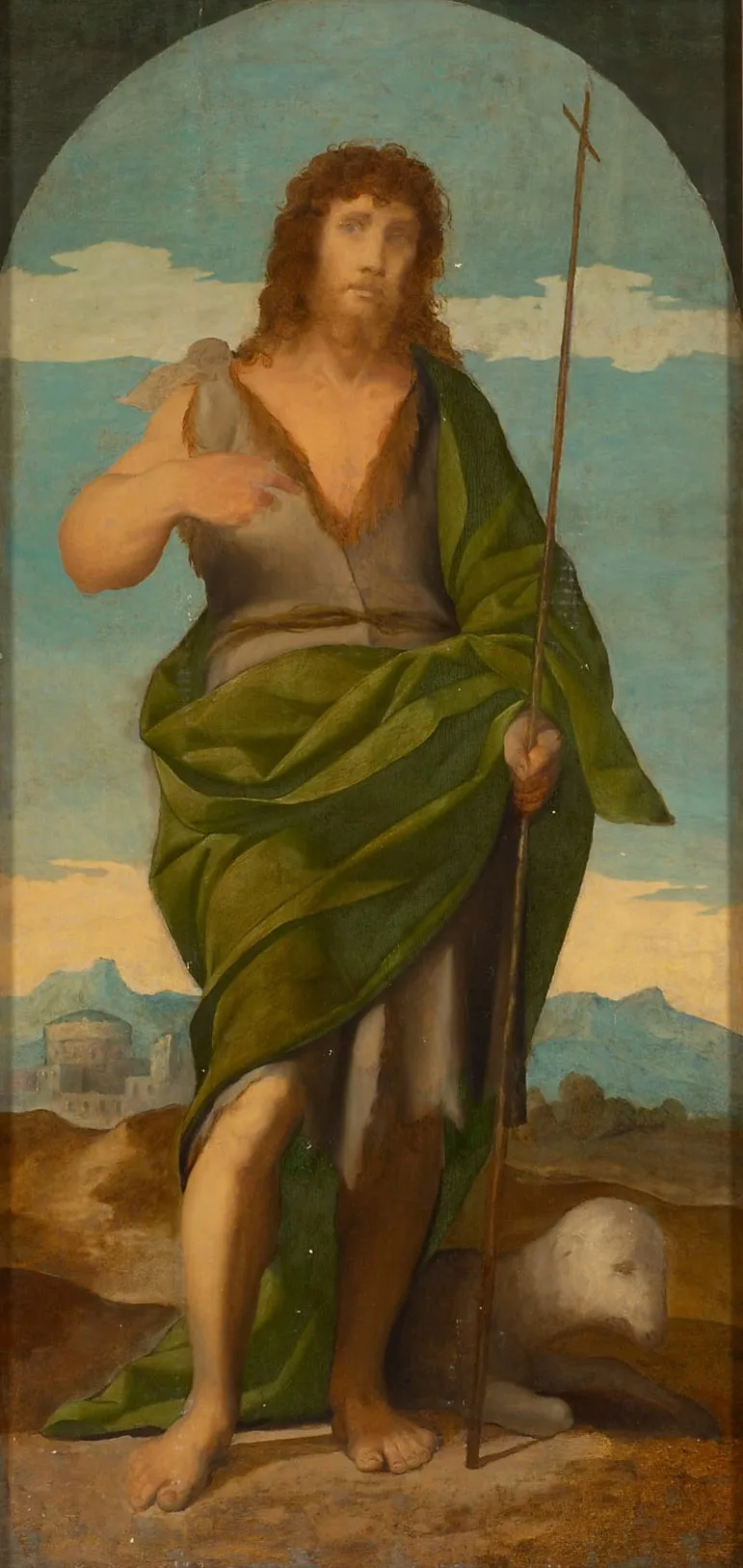
John the Baptist is an oil painting by the High Renaissance artist Palma Vecchio. It dates from 1528 and is held in the collection of the Kunsthistorisches Museum.
About this work
Subject & Meaning
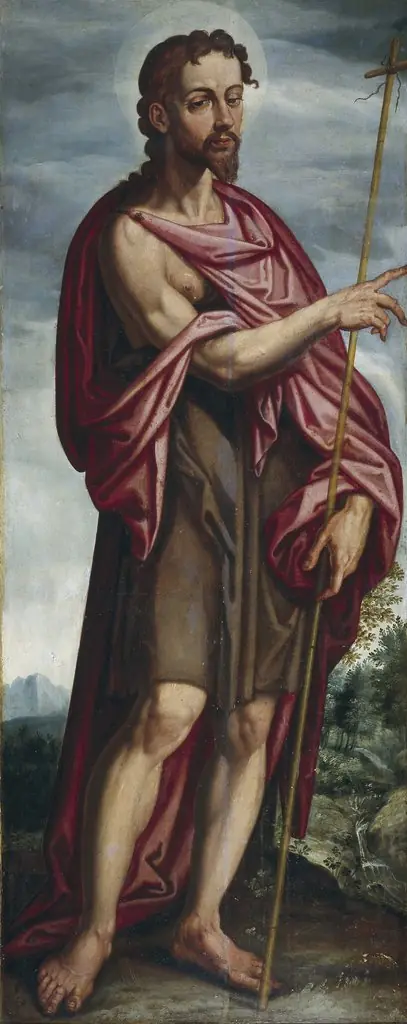
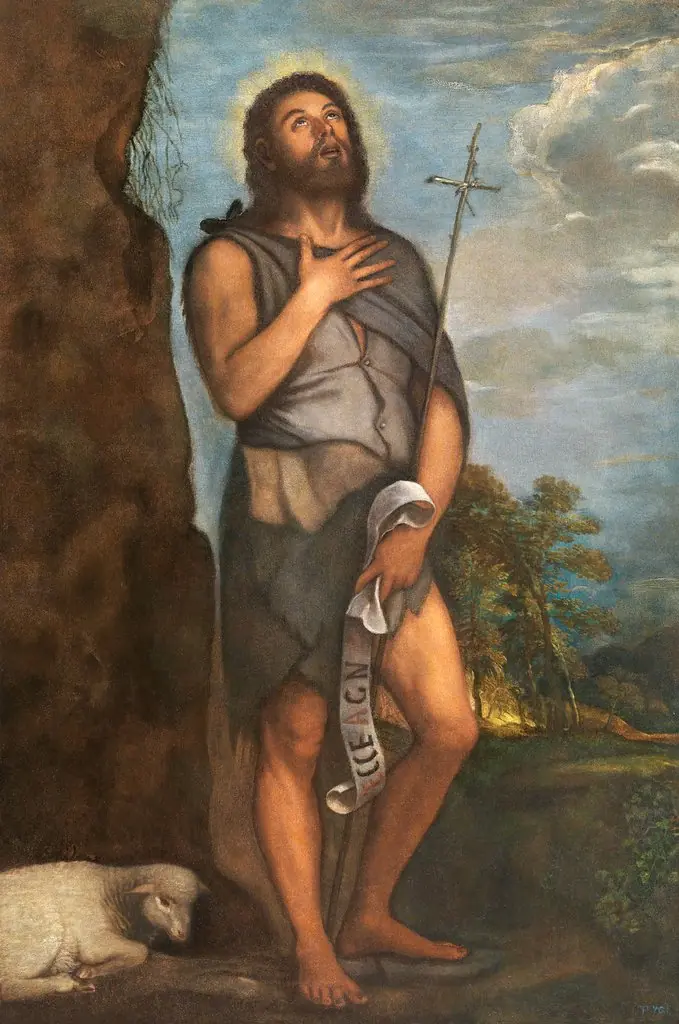
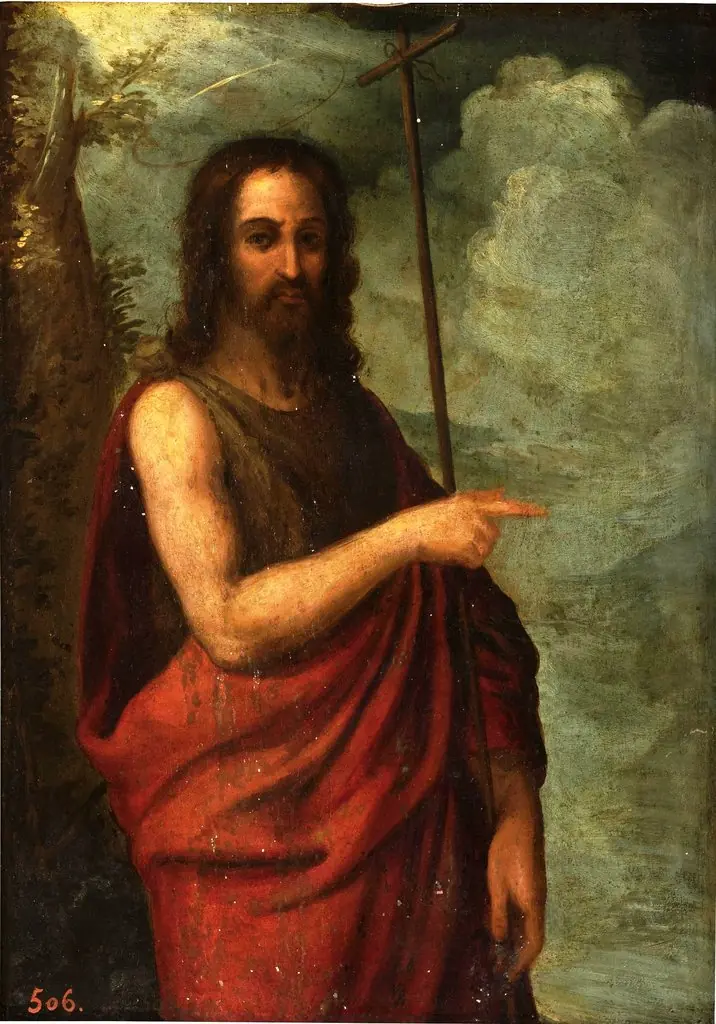
The composition emphasizes his contemplative gaze and the gesture of pointing toward the heavens, reinforcing his prophetic mission.
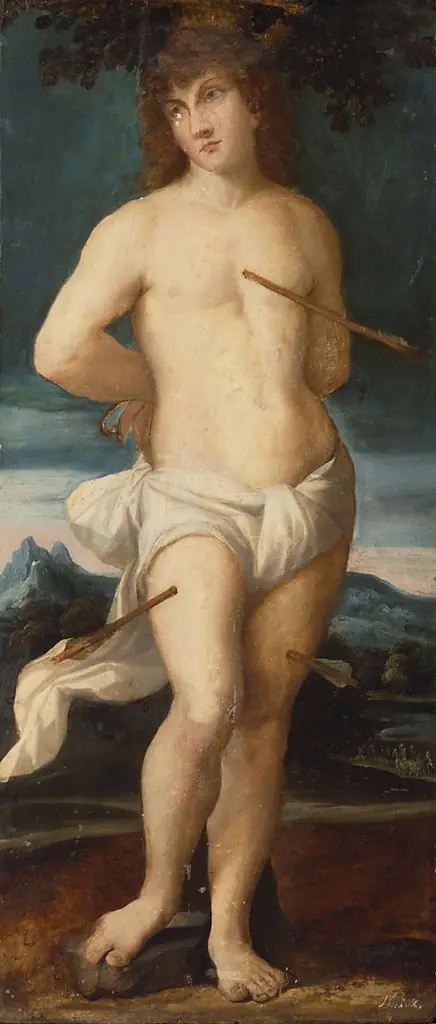
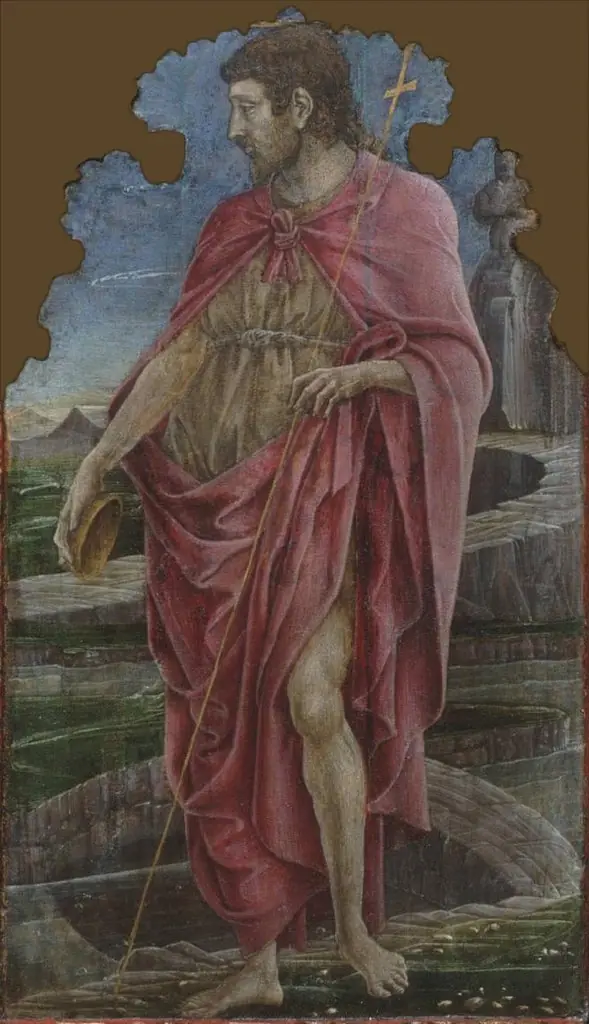
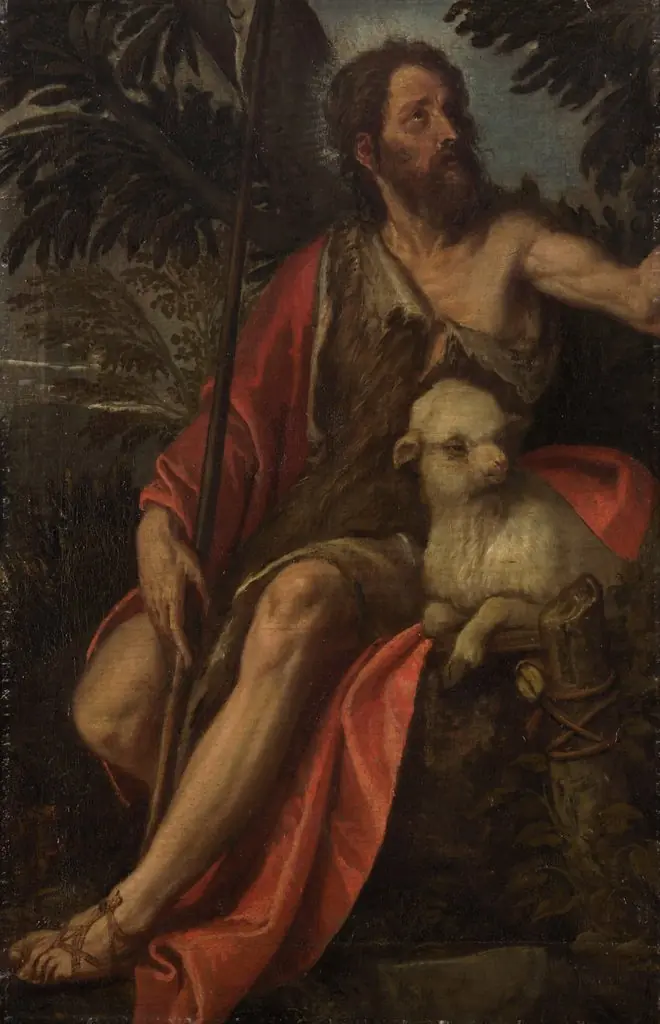
The painting portrays John the Baptist, a central figure in Christian tradition recognized as the forerunner of Jesus. In this work, the saint is shown holding a cross, a standard attribute that signifies his role as a herald of Christ and underscores themes of sacrifice and spiritual preparation. The composition emphasizes his contemplative gaze and the gesture of pointing toward the heavens, reinforcing his prophetic mission.
The iconography aligns with Counter-Reformation ideals that highlighted personal devotion and martyrdom, reflecting the religious tensions of early 16th‑century Italy.
The artwork originates from the workshop of Palma Vecchio and was commissioned by the Venetian patrician Bartolomeo della Nave before entering the collection of Archduke Leopold Wilhelm, eventually finding its home at the Kunsthistorisches Museum in Vienna. Its dimensions measure 110 cm by 53 cm, and it remains displayed as part of the museum’s religious art holdings.
Technique & Style
John the Baptist is an oil painting executed on a wooden panel, a standard support for Venetian works of this period. The composition is organized as a tall, narrow vertical format, measuring 110 cm in height by 53 cm in width. The restricted width relative to the height gives the panel an elongated, almost columnar proportion suited to its devotional function.
Stylistically, the work is attributed to Palma Vecchio and his workshop, situating it within the late Venetian tradition of religious painting. The use of oil paint on panel allowed for the layered, luminous handling characteristic of the Venetian school, though specific details of the brushwork and surface condition are not documented in the available sources.
History & Provenance
The painting John the Baptist by Palma Vecchio and his workshop was created in 1528. Executed in oil on panel, the work depicts the religious subject of John the Baptist. Its provenance begins with the collector Bartolomeo della Nave, from whom it entered the collection of Archduke Leopold Wilhelm of Austria.
The artwork subsequently passed into the holdings of the Kunsthistorisches Museum, where it remains part of the permanent collection.
The painting John the Baptist by Palma Vecchio is held in the collection of the Kunsthistorisches Museum. The work, created in 1528, was historically owned by Bartolomeo della Nave before entering the collection of Archduke Leopold Wilhelm of Austria. It currently resides at the Kunsthistorisches Museum, where it is maintained as part of their holdings of religious art.
No specific exhibition history or inventory accession numbers for this work are provided in the available sources.
Overview
Painted in 1528, the year of his death, Palma Vecchio’s John the Baptist is an oil-on-canvas work from the Venetian High Renaissance. It portrays the biblical prophet in a quiet, contemplative moment, set against a softly lit landscape. The painting resides in the Kunsthistorisches Museum, Vienna, and reflects the artist’s mature style, calm, luminous, and grounded in naturalistic observation rather than dramatic intensity.
Context
In early 16th-century Venice, religious subjects were often rendered with a humanizing tenderness, distinct from the grandeur of Roman or Florentine counterparts. Palma’s approach reflects this regional preference for intimate, lyrical piety. The landscape background, though modest, echoes Venetian landscape traditions, grounding sacred figures in a tangible, earthly world.
Legacy
Though not among Palma Vecchio’s most frequently cited works, John the Baptist exemplifies his late style, calm, luminous, and emotionally restrained. It contributes to the understanding of how Venetian painters adapted religious iconography to suit contemplative, rather than didactic, ends. The painting remains a quiet testament to the region’s distinctive approach to sacred imagery.
Artist & collection
Artist
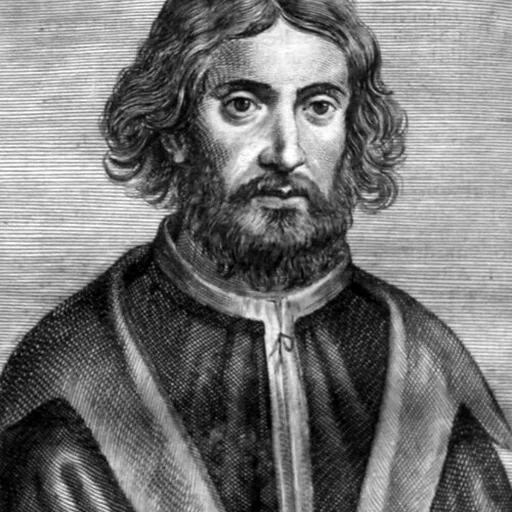
Palma Vecchio (c. 1480 – 30 July 1528), born Jacopo Palma, also known as Jacopo Negretti, was a Venetian painter of the Italian High Renaissance. He is called Palma Vecchio in English and Palma il Vecchio in Italian…