Artwork
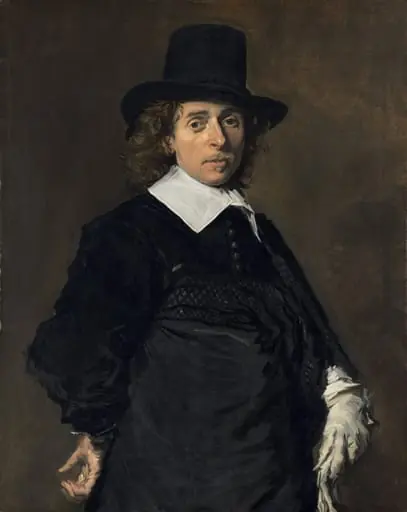
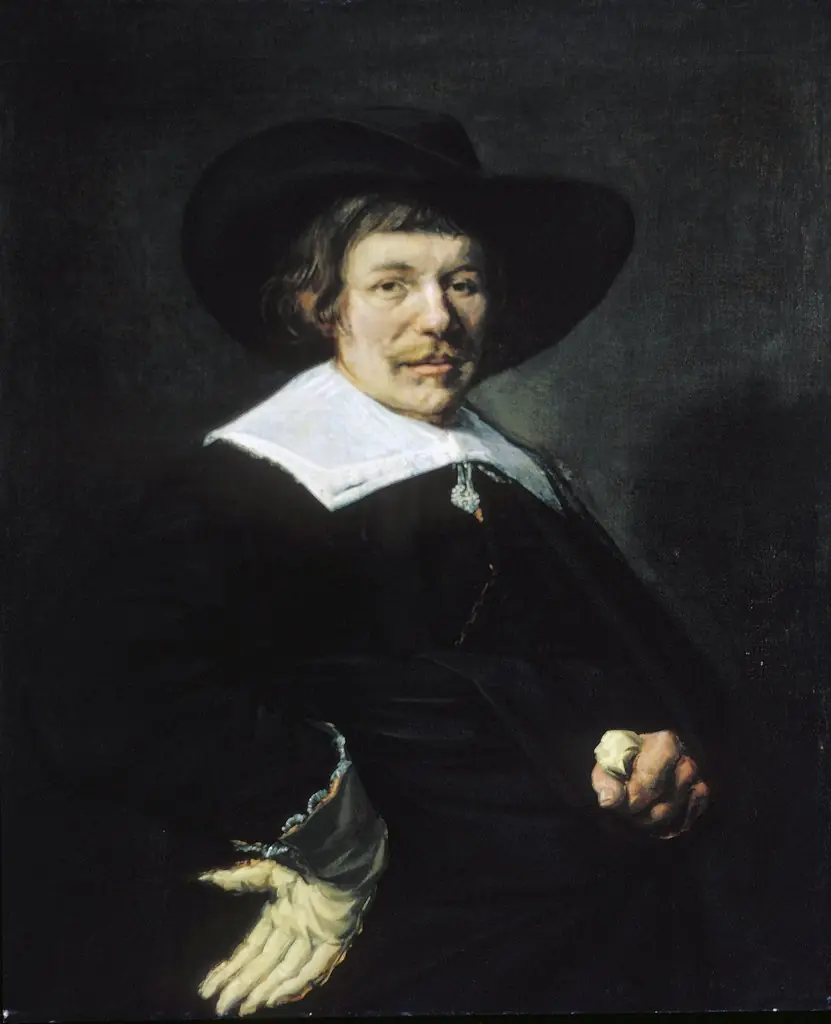
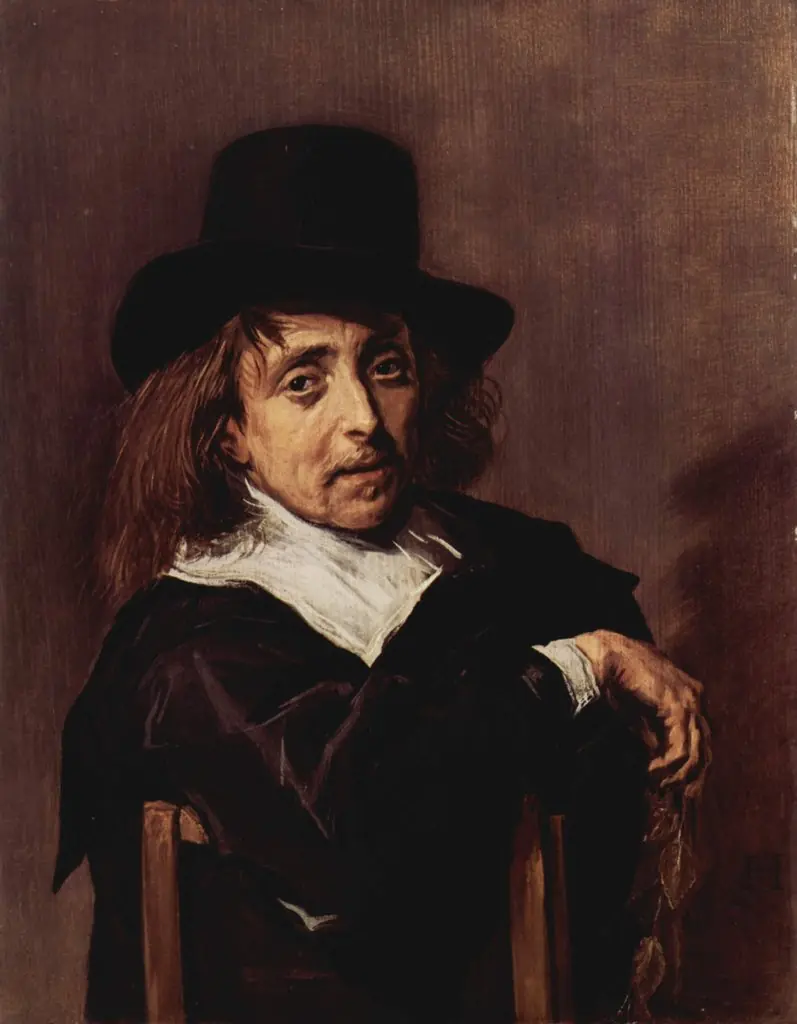
Portrait of a Man
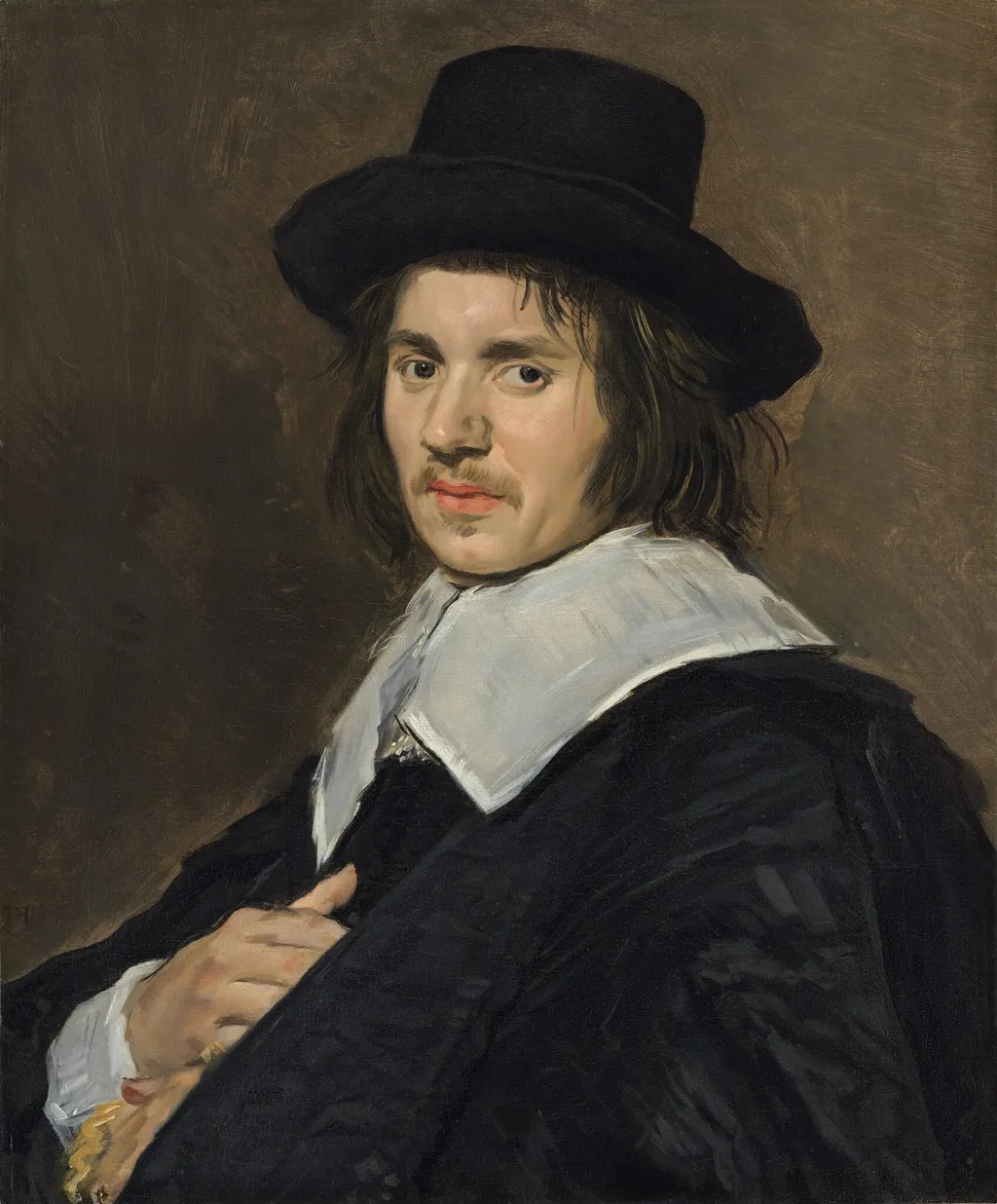
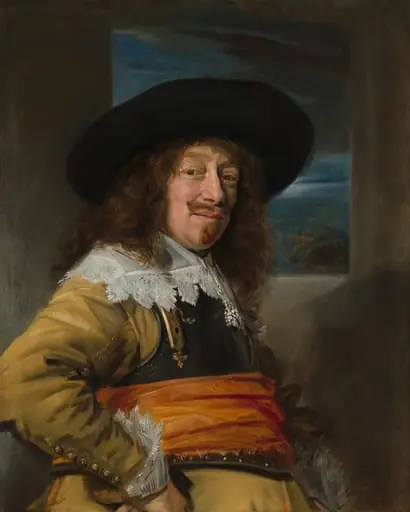
Portrait of a Man is an oil painting by the Baroque artist Frans Hals. It dates from 1649 and is held in the collection of the National Gallery of Art.
- Inscription
- Inscribed:lower left in monogram: FH
About this work
Technique & Style
The painting is classified as a portrait genre piece depicting a man, and is held in the collection of the National Gallery of Art in Washington, D.
Portrait of a Man is executed in oil on canvas, a standard support for Frans Hals's portrait practice. The canvas measures 63.5 by 53.5 centimeters, a modest, half-length format well suited to a single sitter. The work was produced in Haarlem in 1648, during the mature phase of Hals's career, when his loose, fluid brushwork and economical handling of paint were defining characteristics of his style.
The painting is classified as a portrait genre piece depicting a man, and is held in the collection of the National Gallery of Art in Washington, D.C. No specific condition report is recorded in the available documentation.
History & Provenance
Frans Hals created Portrait of a Man in 1648 in Haarlem, utilizing oil on canvas. The early history of the work is undocumented until the 19th century, when the painting was recorded in the possession of the Dutch painter Remi van Haanen in Vienna by 1873; Van Haanen lent the work to an exhibition that year. By March 1898, it was with Mssrs.
Lawrie & Co. in London, subsequently passing to Bourgeois Frères in Paris that same year. Leo Nardus then acquired the painting, selling it in 1898 to Peter A.B. Widener of Elkins Park, Pennsylvania. Although Widener's files listed a prior owner named Roo van Westmaas, no supporting evidence for this individual has been found.
Following Peter A.B. Widener's death, the artwork was inherited by Joseph E. Widener, who gifted it to the National Gallery of Art in 1942.
Portrait of a Man by Frans Hals is held by the National Gallery of Art in Washington, D.C., having entered the collection in 1942 as a gift from Joseph E. Widener of Elkins Park, following inheritance from the Estate of Peter A. B. Widener. The painting's documented provenance traces back to the Dutch painter Remi van Haanen (1812–1894) in Vienna by 1873, when he lent it to an exhibition there. It subsequently passed through Lawrie & Co. in London by March 1898, Bourgeois Frères in Paris, and the dealer Leo Nardus (1868–1955) of Suresnes and New York, before being sold in 1898 to Peter A. B. Widener at Lynnewood Hall, Elkins Park, Pennsylvania.
Context
Scholarly attention to the portrait stems from its appearance in Hofstede de Groot’s catalogue raisonné, which documents the work as a 1648 portrait by Frans Hals and traces its ownership from Remi van Haanen’s 1873 Vienna exhibition to Peter A. B. Widener’s collection [1]. The painting’s provenance, recorded in the National Gallery of Art files, reflects 19th‑century European circulation and early 20th‑century American philanthropy, culminating in its 1942 donation to the museum [1]. Documentation in Wikidata confirms its creation in Haarlem, oil on canvas, and dimensions, underscoring its significance within Hals’s oeuvre and the broader Dutch Golden Age portrait tradition [2]
Overview
Frans Hals the Elder painted Portrait of a Man in 1649, utilizing oil on canvas. This work exemplifies the artist's skill during the Dutch Golden Age, a period of significant artistic and economic growth in the Netherlands. The painting presents a single male figure, a common subject in Hals's extensive output of commissioned portraits for the affluent citizens of Haarlem.
Subject & Meaning
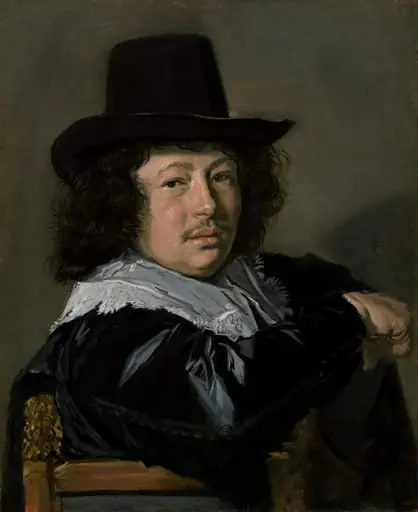
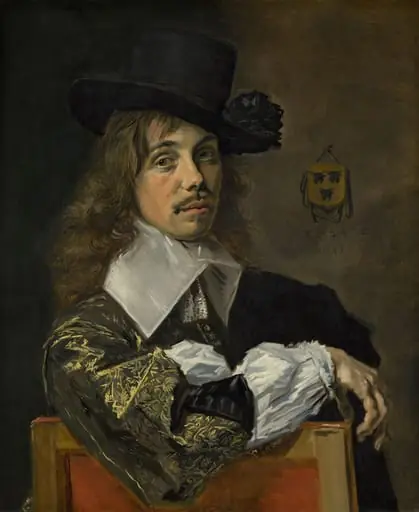
The painting features a man seated, his gaze directed outward toward the viewer, fostering an immediate connection. He is depicted wearing a substantial hat and a cloak, yet his face remains the primary focal point. His expression is composed and serene, imbuing the portrait with a sense of personal introspection and intimacy, inviting quiet contemplation from the observer.
Own this work as a print
Artist & collection
Artist
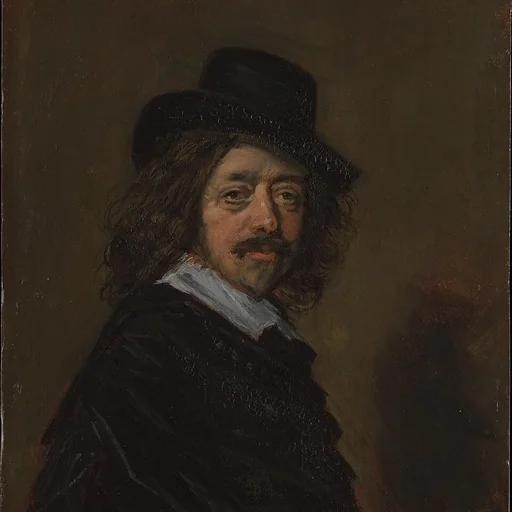
Frans Hals the Elder (UK: US:; Dutch:; c. 1582 – 26 August 1666) was a Dutch Golden Age painter. He lived and worked in Haarlem, a city in which the local authority of the day frowned on religious painting in places of…