Artwork
Antoine Watteau
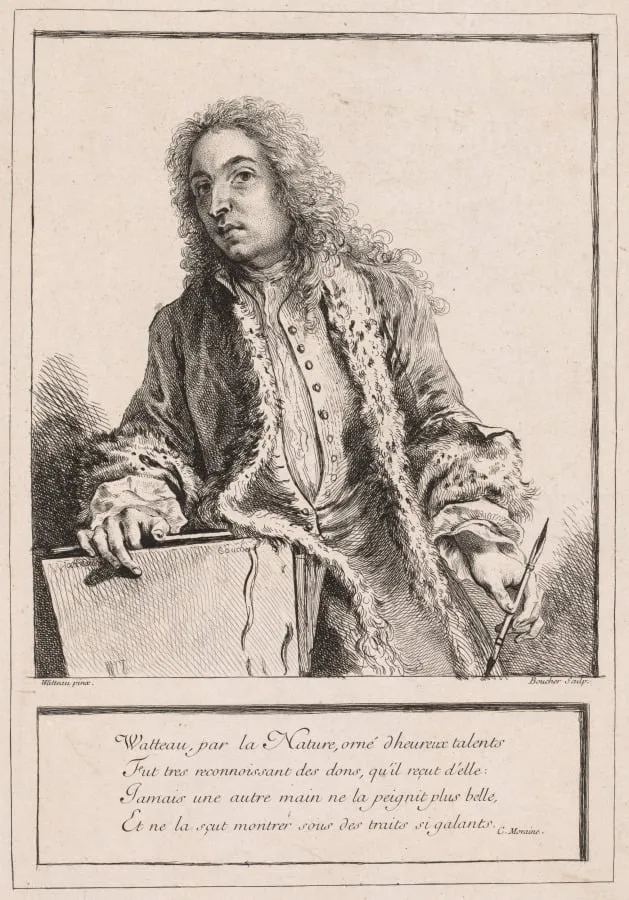
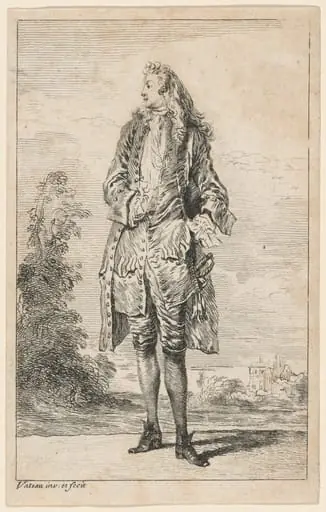
Antoine Watteau is a print by the Baroque artist François Boucher. It dates from 1727 and is held in the collection of the Cleveland Museum of Art.
- Accession no.
- 1925.1217
- Credit line
- Gift of P. & D. Colnaghi Co.
About this work
The artist used fine lines to shade her face and hands, making them look soft.
This etching shows a woman standing in a garden under a leafy tree. She wears an 18th-century dress with a loose scarf around her neck. The artist used fine lines to shade her face and hands, making them look soft.
Boucher made this when he was young. He copied over 100 etchings of Watteau’s art for a book. That practice shaped his own style later.
His work here feels light and graceful. If you like this, check out François Boucher (French, 1703–1770).
Overview
This etching was created as the frontispiece for Jean de Jullienne’s 1735 publication documenting Antoine Watteau’s oeuvre. Executed by François Boucher during his early career, it reproduces a portrait of Watteau, likely based on a lost painting. Boucher’s role in producing over a hundred such prints for the volume placed him at the center of Watteau’s posthumous legacy, shaping his own artistic development through meticulous emulation.
Subject & Meaning
The image depicts a woman standing in a garden beneath a tree, her posture relaxed and attire suggestive of the Rococo era. Though not a direct portrait of Watteau, the figure embodies the poetic grace associated with his subjects. The inscription beneath honors Watteau as a painter uniquely attuned to nature’s beauty, framing the print as both tribute and artistic manifesto, aligning Boucher’s practice with Watteau’s ideals of elegance and sensitivity.
Technique & Style
Boucher employed fine, delicate lines to model the figure’s face and hands, creating a soft, luminous effect that mimics the subtlety of Watteau’s pastels. The composition avoids heavy shadows, favoring light, flowing contours that suggest movement and airiness. The rendering of the scarf and foliage is restrained yet evocative, reflecting the influence of Watteau’s delicate draftsmanship and the printmaker’s growing command of tonal nuance.
History & Provenance
Created around 1726–1728, this etching was part of a series commissioned by Jean de Jullienne to preserve and disseminate Watteau’s legacy after his death. Boucher, then in his early twenties, was entrusted with reproducing over a hundred of Watteau’s works for the project. The prints became essential to the dissemination of Watteau’s style across Europe and marked Boucher’s transition from apprentice to independent artist.
Context
In early 18th-century France, printmaking served as a primary medium for spreading artistic influence. Jullienne’s publication was among the first major posthumous monographs of a living artist, reflecting a new cultural interest in preserving artistic legacy. Boucher’s participation placed him within a network of artists and patrons invested in defining the Rococo aesthetic, with Watteau as its foundational figure.
Legacy
Boucher’s engagement with Watteau’s imagery through these etchings profoundly shaped his own visual language, evident in his later works’ lightness and lyrical composition. While his style eventually grew more ornate, the foundational grace seen here remained. The prints helped cement Watteau’s reputation and established Boucher as a key transmitter of Rococo sensibility to subsequent generations.
Artist & collection
Artist
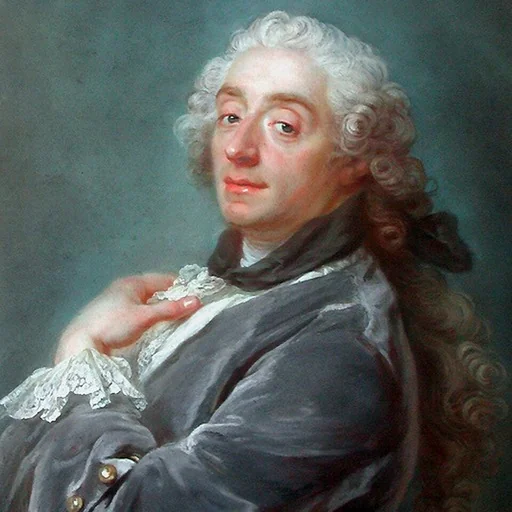
François Boucher was a French painter, draughtsman and etcher, who worked in the Rococo style.