Artwork
Lot and his Daughters
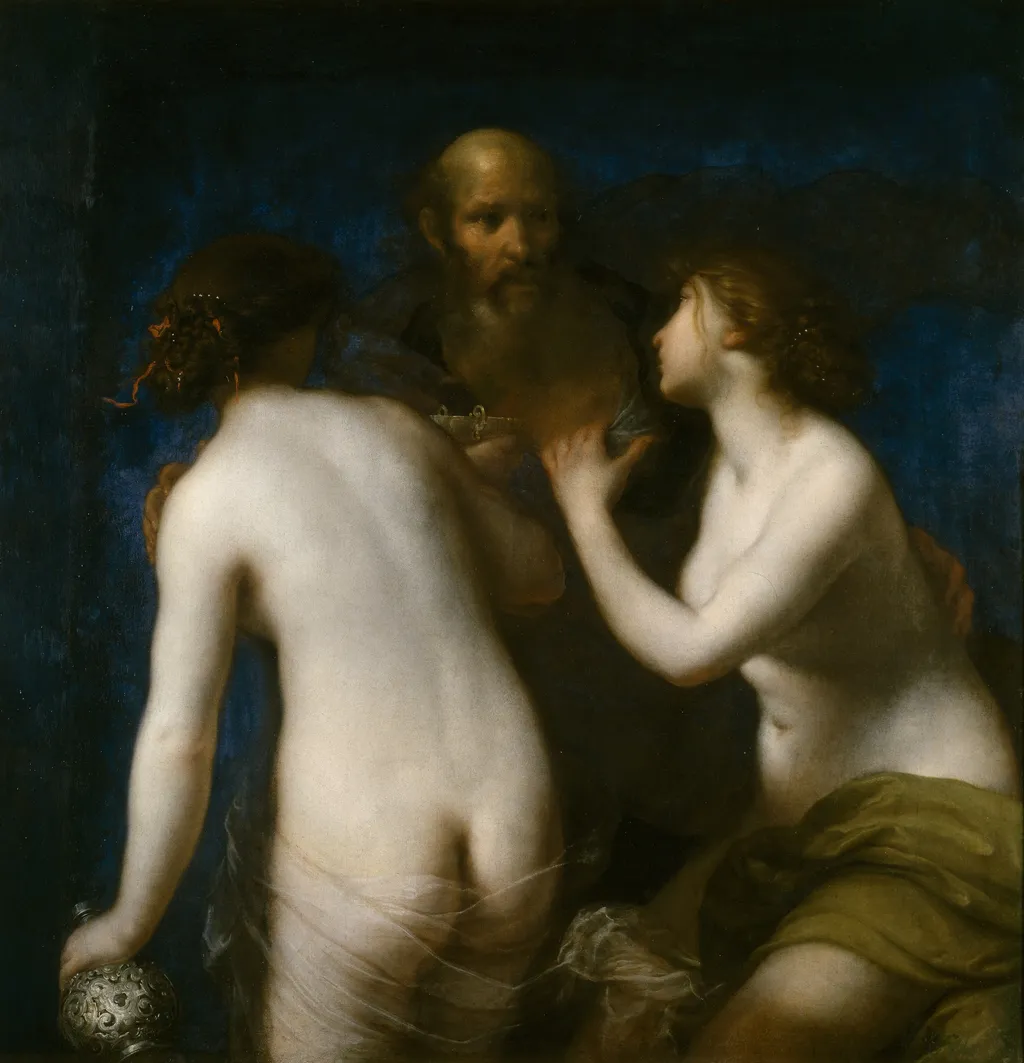
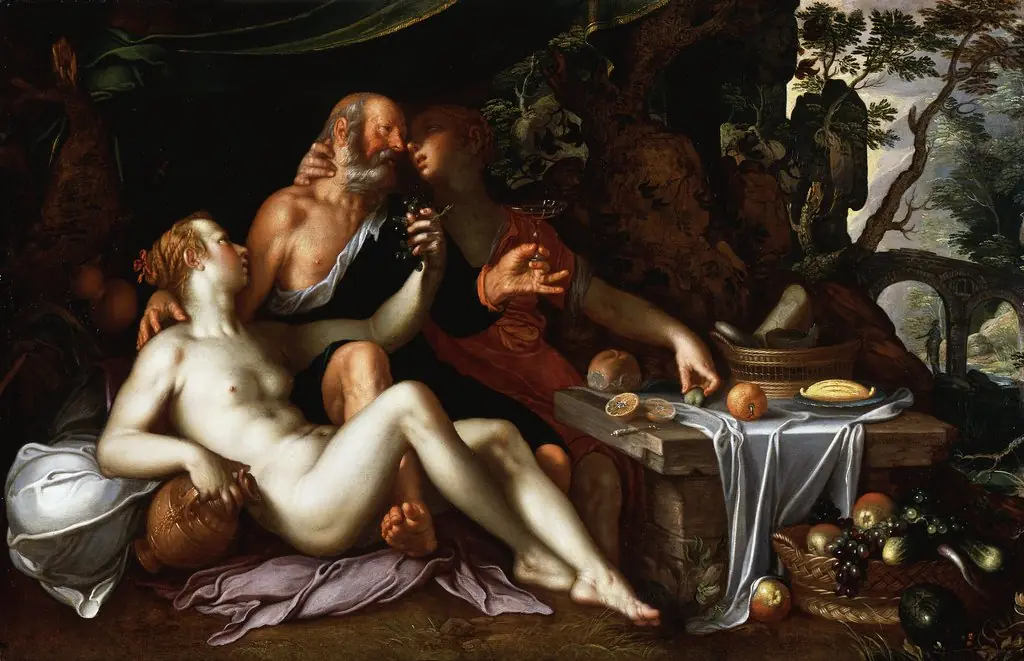
Lot and his Daughters is an oil painting by the Early Baroque Italian artist Francesco Furini. It dates from 1634 and is held in the collection of the Museo del Prado.
About this work
Subject & Meaning
The painting illustrates the biblical episode in which Lot departs with his daughters after the destruction of Sodom, a scene drawn from Genesis.
The painting illustrates the biblical episode in which Lot departs with his daughters after the destruction of Sodom, a scene drawn from Genesis. Furini emphasizes the moment of departure, capturing Lot and his daughters in a gesture of reluctant obedience, underscoring themes of divine judgment and familial duty. Symbolic details such as the lingering gaze toward the burning city and the inclusion of a sacrificial altar highlight the tension between worldly attachment and spiritual obedience.
The work functions as a moralizing image, inviting contemplation of the consequences of disobedience and the fragile nature of salvation.
Technique & Style
Executed in 1634, this religious painting by Francesco Furini utilizes oil paint applied to a canvas support. The work measures 123 cm in height and 120 cm in width. As a depiction of the biblical narrative concerning Lot and his daughters, the piece exemplifies the artist's engagement with religious subject matter through traditional pictorial materials of the seventeenth century.
History & Provenance
Francesco Furini's 1634 oil painting Lot and his Daughters is held in the collection of the Museo del Prado in Madrid. The work, executed on canvas, depicts the biblical figures of Lot and his daughters within a religious context.
The provided sources confirm the artwork's location and creation date but do not contain specific inventory or accession numbers, nor do they list any exhibitions in which the painting has been displayed.
Context
Francesco Furini painted Lot and his Daughters in 1634, a work classified as a religious painting within the corpus of his religious art production. The composition depicts Lot alongside his daughters, reflecting biblical narratives surrounding the aftermath of the destruction of Sodom. Furini's treatment of this subject aligns with Counter-Reformation emphases on narrative clarity and emotional intensity characteristic of 17th-century religious art.
The work is housed in the Museo del Prado, where it remains part of the museum's collection of religious artworks. Scholarly attention to Furini's oeuvre situates this painting within the context of Baroque-era depictions of Lot's story, emphasizing its role in the artist's exploration of divine judgment and familial consequence.
Overview
Created in 1634 by Francesco Furini, an Italian painter who also served as a priest, this oil on canvas portrays a scene from the biblical narrative of Lot and his daughters. Executed during the early Baroque period, the work is part of the Museo del Prado’s collection and exemplifies the period’s interest in dramatic storytelling through intimate composition.
Own this work as a print
Artist & collection
Artist
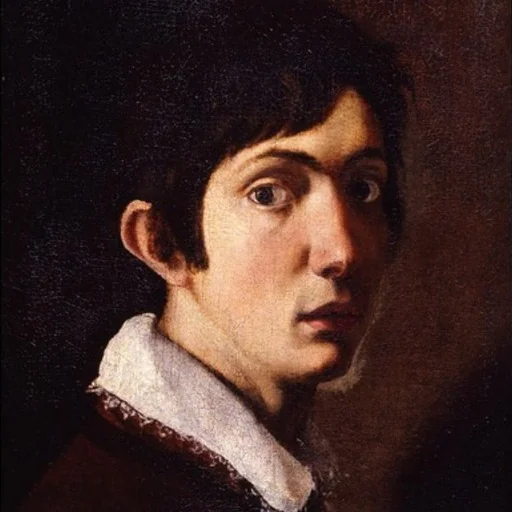
Francesco Furini ( 10 apr. 1603 – 19 August 1646) was an Italian Baroque painter, poet and priest. He was a leading painter in Florence in the second quarter of the 17th century and also worked in Rome. He was noted…