Artwork
Angelica and Medoro
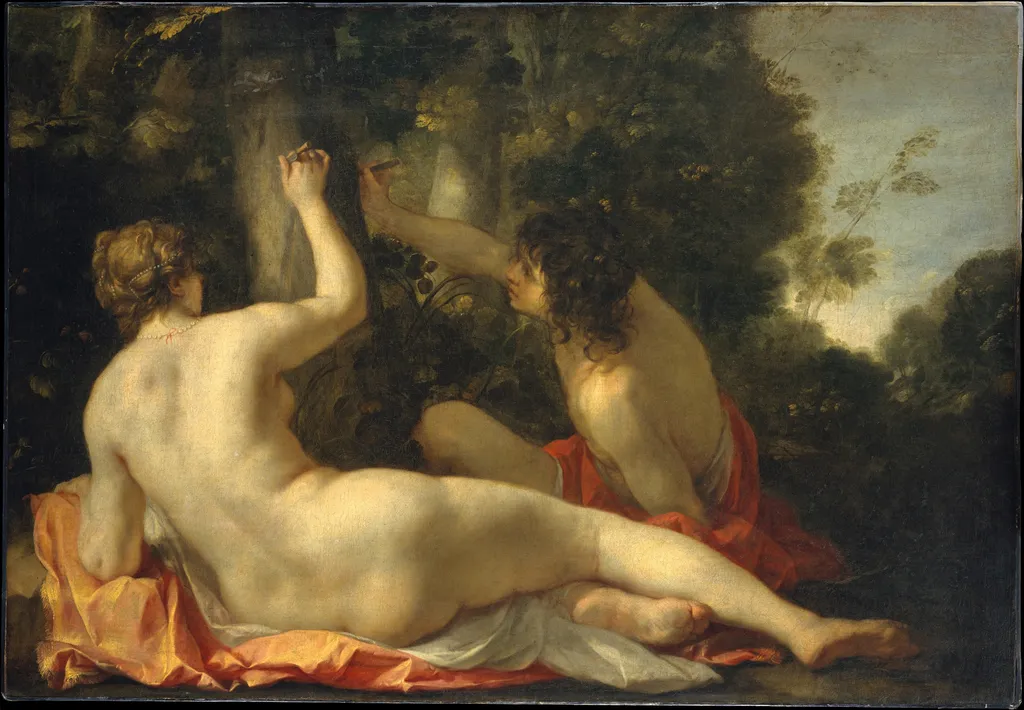
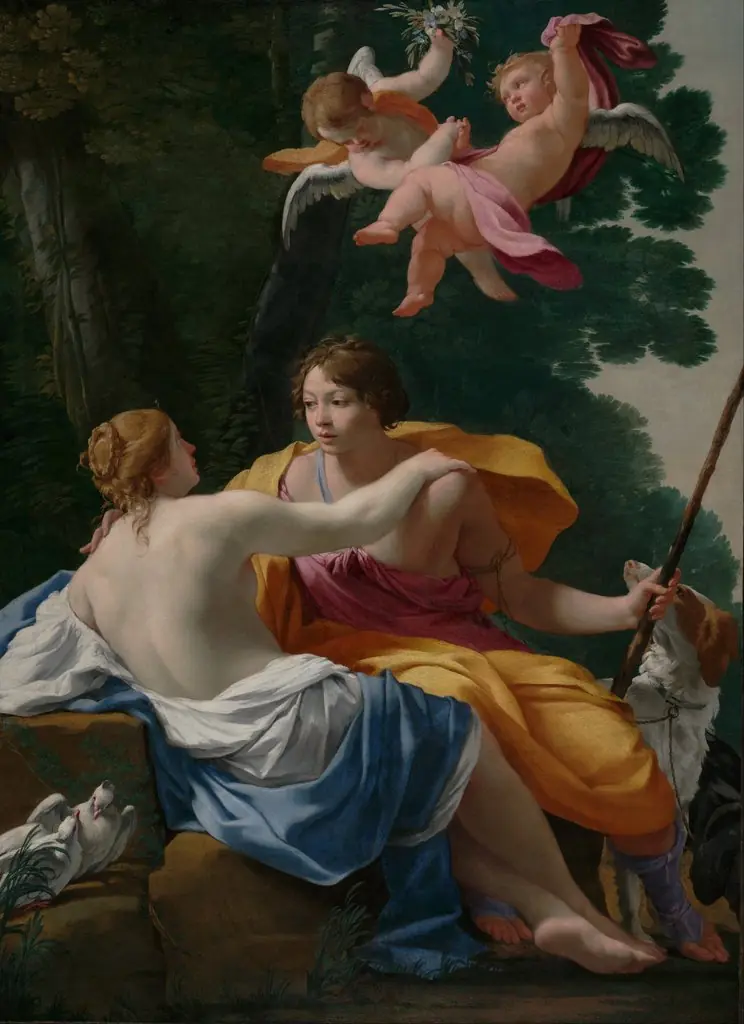
Angelica and Medoro is an oil painting by the French Classical Baroque artist Jacques Blanchard. It dates from 1630 and is held in the collection of the Metropolitan Museum of Art.
About this work
Subject & Meaning
The depiction of the lovers as nude aligns the subject with the conventions of mythological painting, where idealized bodies convey passion and devotion.
The painting illustrates the mythological lovers Angelica and Medoro, a couple drawn from the chivalric romance tradition. Blanchard renders the pair as a nude, embracing couple, emphasizing their physical intimacy and tender union. Classified as a mythological painting, the work treats the episode as an amorous vignette rather than a narrative battle scene, focusing on the emotional bond between the two figures.
The depiction of the lovers as nude aligns the subject with the conventions of mythological painting, where idealized bodies convey passion and devotion.
Technique & Style
Angelica and Medoro is executed in oil paint on canvas, a standard support for seventeenth-century French easel painting. The work measures 121.6 by 175.9 centimeters, a horizontal format suited to its multi-figure mythological narrative. Blanchard employs oil as the medium, allowing for the layered glazes and tonal blending characteristic of his handling of flesh and drapery.
The painting depicts a couple, including the nude figure of Angelica alongside Medoro, rendered in the manner typical of mythological compositions of the period. The canvas support and oil technique are consistent with the work's early provenance and its present housing at the Metropolitan Museum of Art.
History & Provenance
Jacques Blanchard created the oil-on-canvas painting Angelica and Medoro in 1630. This mythological work, depicting the nude figures of Angelica and Medoro, measures 121.6 by 175.9 centimeters. The specific commission details and the full ownership chain prior to the 20th century are not detailed in the available records, though the work was historically associated with the collector Antoine Poullain.
Currently, the painting is held in the collection of the Metropolitan Museum of Art. The date of 1630 marks the inception of the piece, situating it within Blanchard's mature period of mythological painting.
Angelica and Medoro by Jacques Blanchard, dated 1630, is held in the collection of the Metropolitan Museum of Art. The painting, executed in oil paint on canvas, measures 121.6 cm in height by 175.9 cm in width. Its documented provenance includes ownership by Antoine Poullain before its accession into the museum's holdings. No specific exhibition history is recorded in the available sources.
Overview
Jacques Blanchard's 1630 oil painting, Angelica and Medoro, exemplifies French Classical Baroque art. This mythological scene, rendered in oil, depicts characters from Ludovico Ariosto's epic poem, Orlando Furioso. The work is currently part of The Metropolitan Museum of Art's collection, representing a key moment in 17th-century French painting.
Context
Born in Paris, Jacques Blanchard received his artistic training from his uncle, Nicolas Bollery. His artistic lineage was notable, as both his brother and his son also pursued careers as painters. This familial tradition placed Blanchard within a network of artists, contributing to the development of painting in France during a period of significant stylistic evolution.
Own this work as a print
Artist & collection
Artist
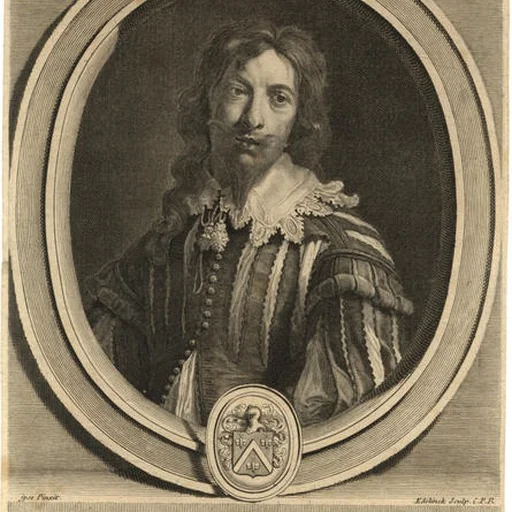
Jacques Blanchard (1600 – 1638), also known as Jacques Blanchart, was a French baroque painter who was born in Paris.