Artwork
Still Life with a Helmet
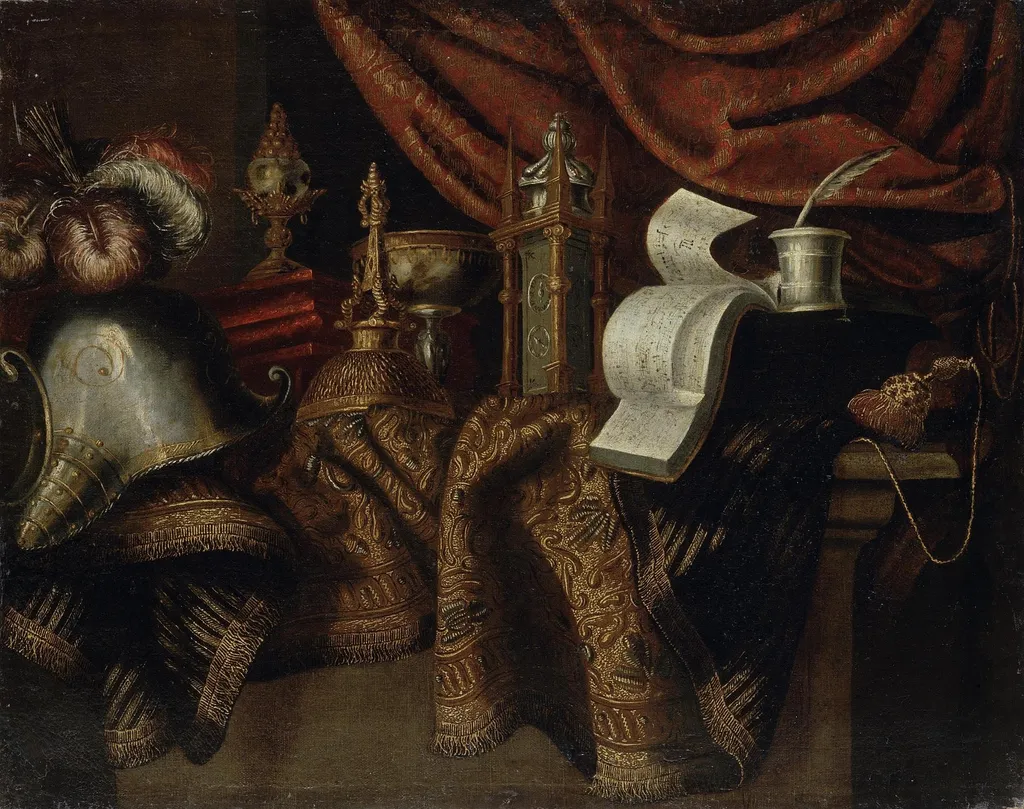
Still Life with a Helmet is an oil painting by the High Baroque Italian artist Francesco Maltese. It dates from 1650 and is held in the collection of the Hermitage Museum.
About this work
Overview
Painted around 1650 by Francesco Maltese, known as Il Maltese, this oil-on-canvas still life presents a group of military objects arranged with quiet formality.
Painted around 1650 by Francesco Maltese, known as Il Maltese, this oil-on-canvas still life presents a group of military objects arranged with quiet formality. Maltese, a Maltese-born artist active in Rome, focused on the material presence of everyday and ceremonial items. The painting’s subdued palette and controlled lighting reflect the Roman Baroque interest in tangible detail, placing it within a broader tradition of Italian still-life painting that emphasized texture over narrative.
Subject & Meaning
The composition centers on a polished helmet, flanked by folded armor, a small metal vessel, and a plumed crest. These objects suggest a moment of pause, perhaps after use or before display, rather than active warfare. The absence of human figures shifts focus to the objects themselves, inviting contemplation of their craftsmanship and the quiet dignity of martial gear.
The arrangement implies function and ritual, not violence, aligning with Baroque still-life conventions that elevated the mundane to the contemplative.
Technique & Style
Maltese employs chiaroscuro to model the metallic surfaces, using sharp contrasts between light and shadow to emphasize the weight and polish of the helmet and armor. Brushwork is precise, capturing the sheen of silvered metal, the soft fold of fabric, and the fine texture of the plume. The dark, almost black background isolates the objects, enhancing their three-dimensionality. The red, leafy motif in the distance adds subtle decorative contrast without distracting from the central forms.
History & Provenance
The painting entered the collection of the State Hermitage Museum in Saint Petersburg, where it remains today. While its early ownership is undocumented, its style and subject align with Roman still-life circles of the mid-17th century. Maltese’s known activity in Rome between 1630 and 1654 situates the work within a network of artists who specialized in object-focused compositions, often commissioned by collectors drawn to the tactile realism of such scenes.
Context
In mid-17th century Rome, still-life painting gained prominence as collectors sought works that celebrated material culture without religious or mythological narratives. Artists like Maltese responded to this demand by rendering objects with heightened realism, often incorporating armor, ceramics, and glass. These paintings reflected broader cultural interests in science, collecting, and the aesthetics of craftsmanship, mirroring the era’s fascination with the physical world’s order and detail.
Legacy
Maltese’s work, though not widely known today, contributes to the understanding of regional variations within Italian Baroque still life. His focus on military paraphernalia distinguishes his output from floral or banquet scenes common in other parts of Europe. The Hermitage’s preservation of this piece ensures its continued role as a reference for the study of material representation in 17th-century Italian painting, particularly in how light and texture convey presence without narrative.
Own this work as a print
Artist & collection
Artist
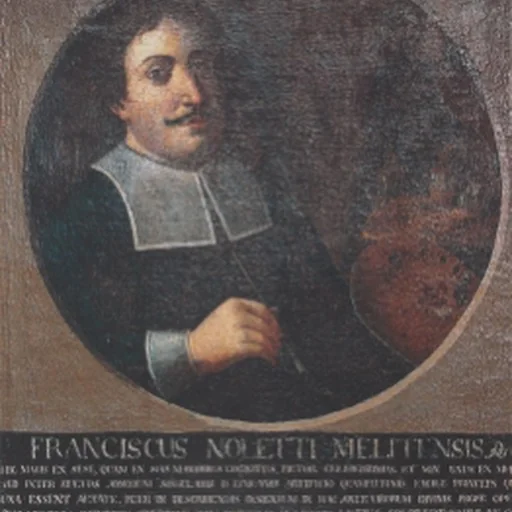
Francesco Noletti, also known as Francesco Fieravino (1611, Valletta? – 4 December 1654, Rome) was an Italian still-life painter. He was often referred to by his nickname, Il Maltese.

 Vanitas Still Life
 Vanitas still life
 Stilleben mit Musikinstrumenten, Notenblättern, Himmelsglobus und Muschel
 Still Life with Musical Instruments
 Still life with candlestick of the "Labours of Hercules" series and two ewers
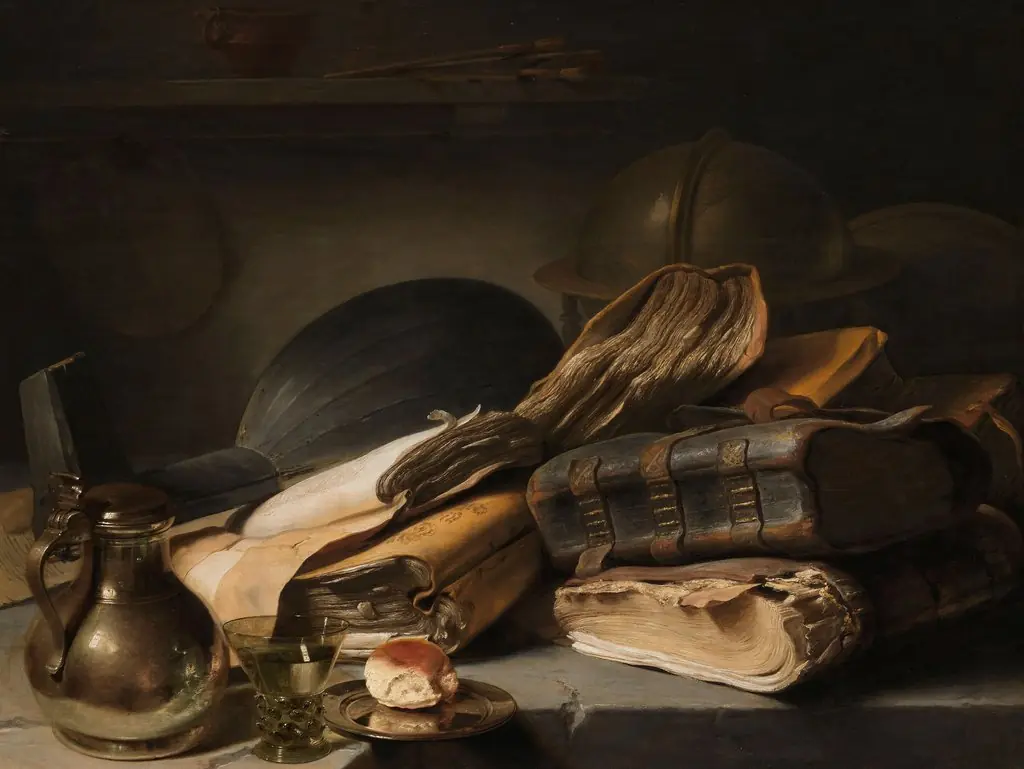 Still Life with Books
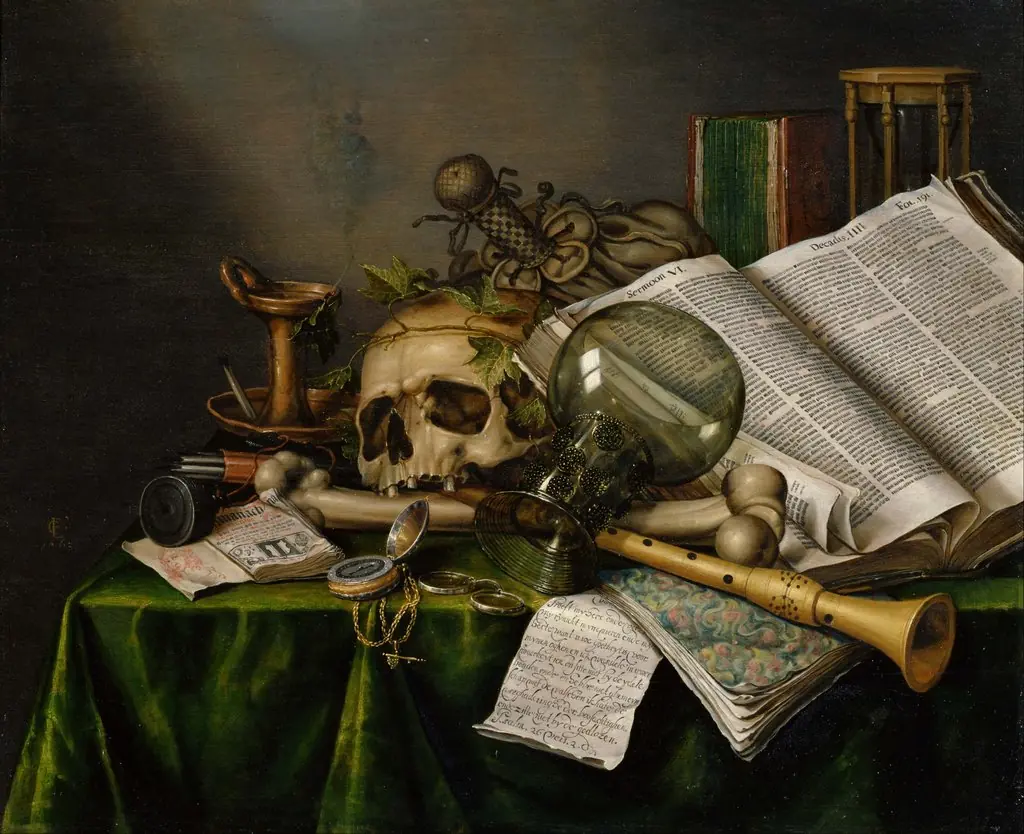 Vanitas, Still Life with Books and Manuscripts and a Skull
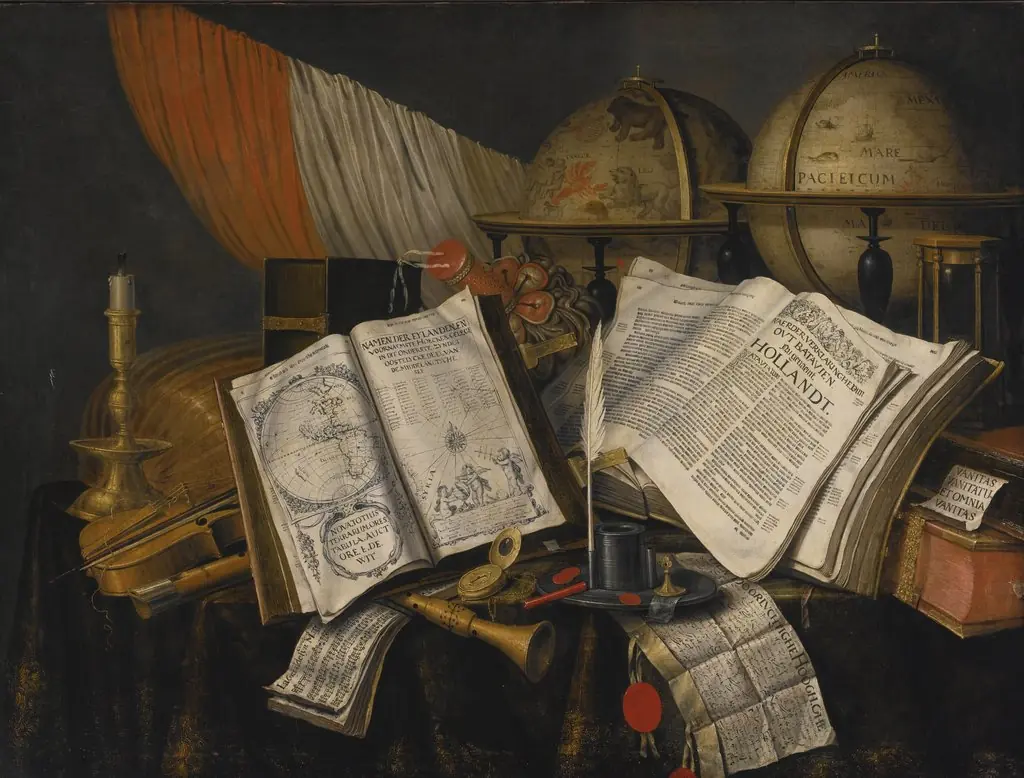 Vanitas Still Life with a Candlestick, Musical Instruments, Dutch Books, a Writing Set, an Astrological and a Terrestial Globe and an Hourglass, All on a Draped Table
 Still Life with Ostrich Egg Cup and the Whitfield Heirlooms
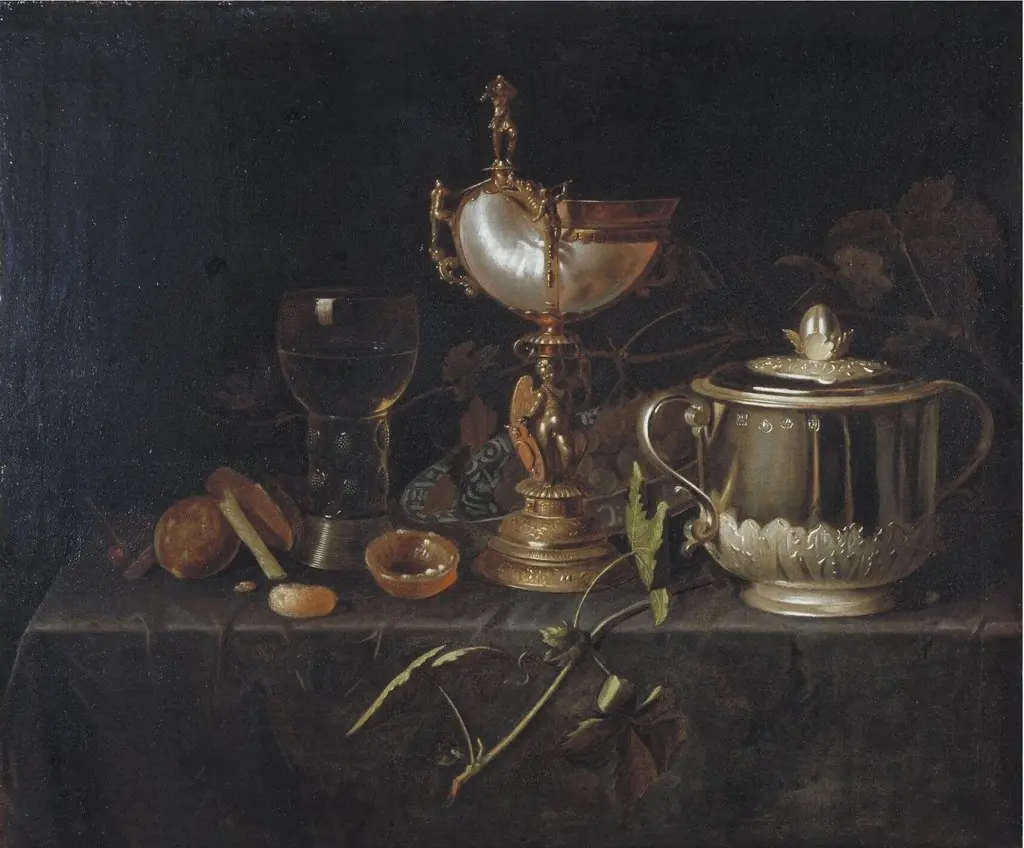 Porringer and Nautilus Cup
- still-life