Artwork
Holy Family with Saint Catherine
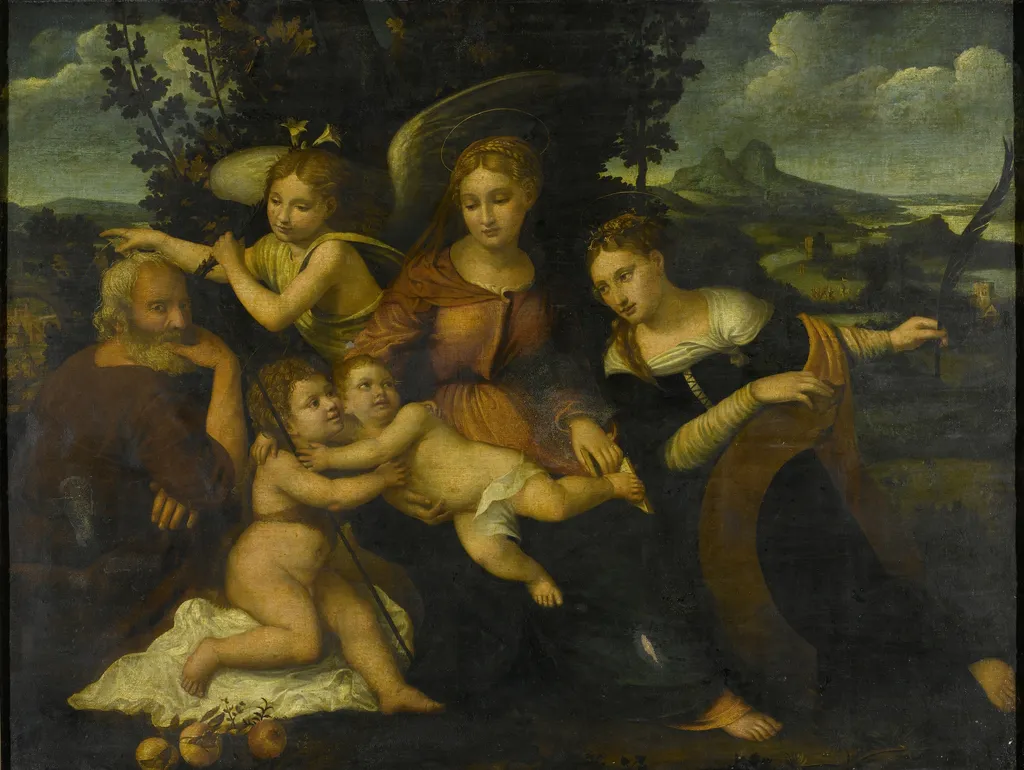
Holy Family with Saint Catherine is an oil painting by the Mannerist artist Francesco Torbido. It dates from 1525 and is held in the collection of the Rijksmuseum.
About this work
Technique & Style
Francesco Torbido executed this religious painting in 1525 using oil paint on a canvas support. The artwork measures 136.5 by 179 centimeters. The composition depicts the Holy Family alongside Catherine of Alexandria, aligning with the religious genre conventions of the period.
History & Provenance
Its provenance traces from the artist's workshop to van der Hoop's ownership, establishing a clear chain of custody within Dutch religious art circles.
The painting Holy Family with Saint Catherine was created in 1525 by Francesco Torbido. It is executed in oil paint on canvas and measures 136.5 cm in height by 179 cm in width. The work entered the collection of Adriaan van der Hoop, who later bequeathed it to the Rijksmuseum and Amsterdam Museum.
Its provenance traces from the artist's workshop to van der Hoop's ownership, establishing a clear chain of custody within Dutch religious art circles.
The work is held by the Rijksmuseum in Amsterdam, where it is part of the collection assembled by Adriaan van der Hoop. It carries the inventory or accession designation associated with that collection. The painting was exhibited in the museum’s 19th‑century retrospective of Dutch religious works, as recorded in the institution’s exhibition catalogue.
Legacy
Later scholarship highlights Holy Family with Saint Catherine as a notable example of early 16th-century Dutch religious painting that contributed to the evolution of domestic devotional imagery. The work's composition influenced subsequent depictions of the Holy Family within Dutch and Flemish workshops throughout the 1500s, particularly in how saints such as Catherine of Alexandria were integrated into intimate family scenes. Its presence in prominent private collections, including that of Adriaan van der Hoop, helped preserve the painting through periods of stylistic shift and later informed studies of Torbido's role in transitional Renaissance aesthetics.
The painting remains part of the Rijksmuseum and Amsterdam Museum collections, underscoring its enduring significance in the narrative of Northern European religious art.
Overview
Created in 1525, the oil painting Holy Family with Saint Catherine is attributed to Francesco Torbido, known as il Moro. Executed during the Italian Renaissance, the work aligns with the Mannerist style that followed the High Renaissance. It is part of the Rijksmuseum’s collection and presents a serene religious tableau set in a gently illuminated landscape.
Subject & Meaning
The composition brings together the Virgin Mary, the infant Jesus, Saint Catherine of Alexandria, and two additional figures, a youthful attendant and an older male observer. The inclusion of Saint Catherine, identifiable by her traditional attributes, underscores themes of piety and martyrdom, while the surrounding figures suggest a domestic, devotional atmosphere.
Context
The work reflects the period’s interest in integrating sacred narratives within natural settings, a trend popularized by artists such as Raphael and later adapted by Mannerist painters. By placing the Holy Family in an open, pastoral environment, Torbido aligns with contemporary efforts to make divine subjects more approachable to viewers.
Own this work as a print
Artist & collection
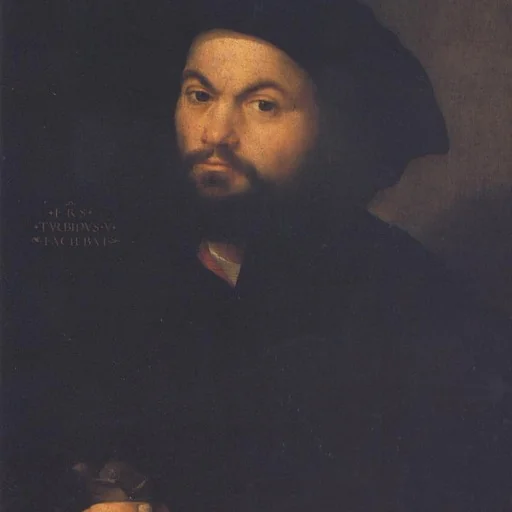
Artist
Francesco Torbido (Venice 1486–1562) was an Italian painter of the Renaissance period, active mainly in Verona and Venice. He is also known as il Moro.

 Holy Family with Saint Catherine
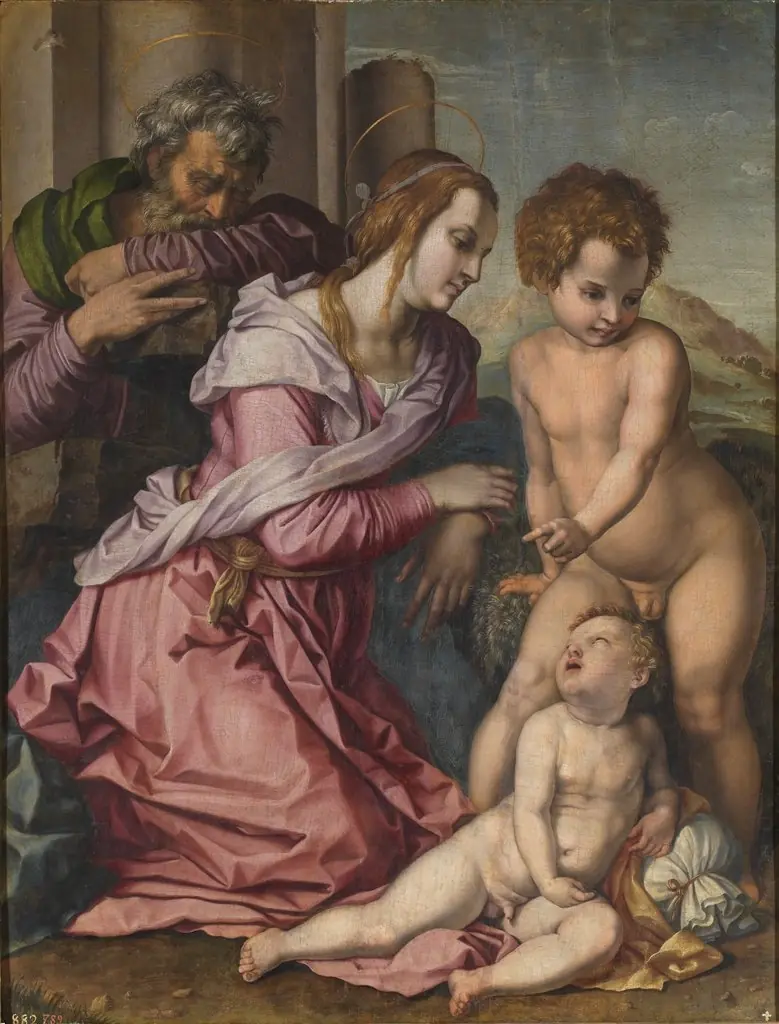 The Holy Family with the Infant Saint John the Baptist
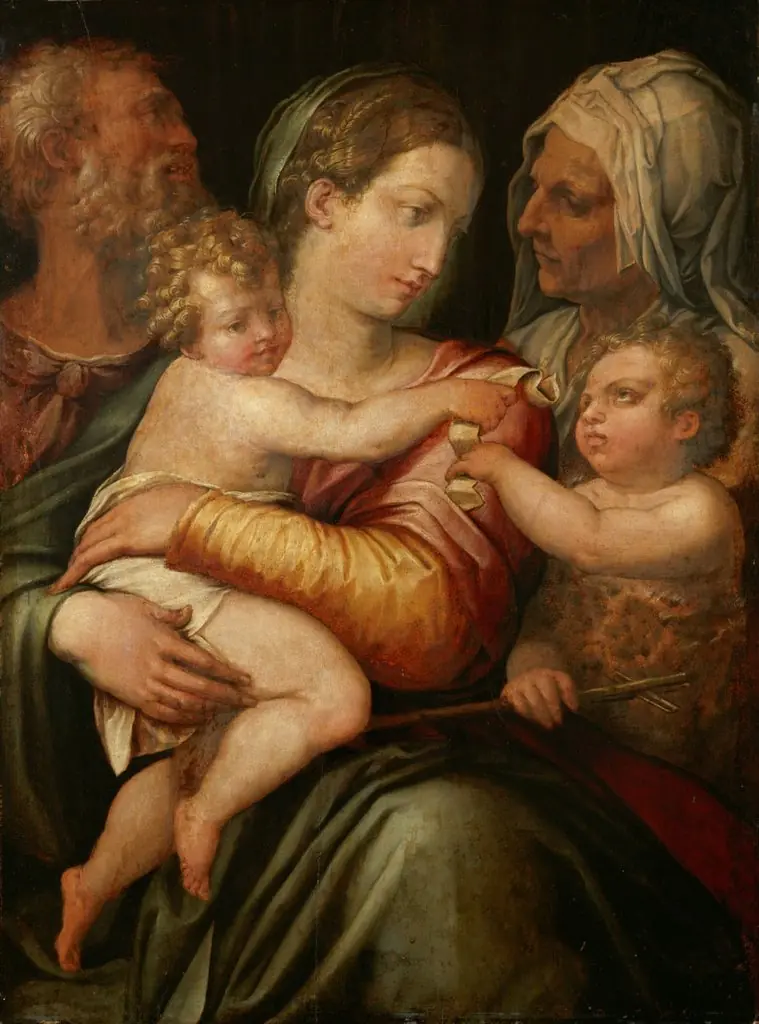 Heilige Familie
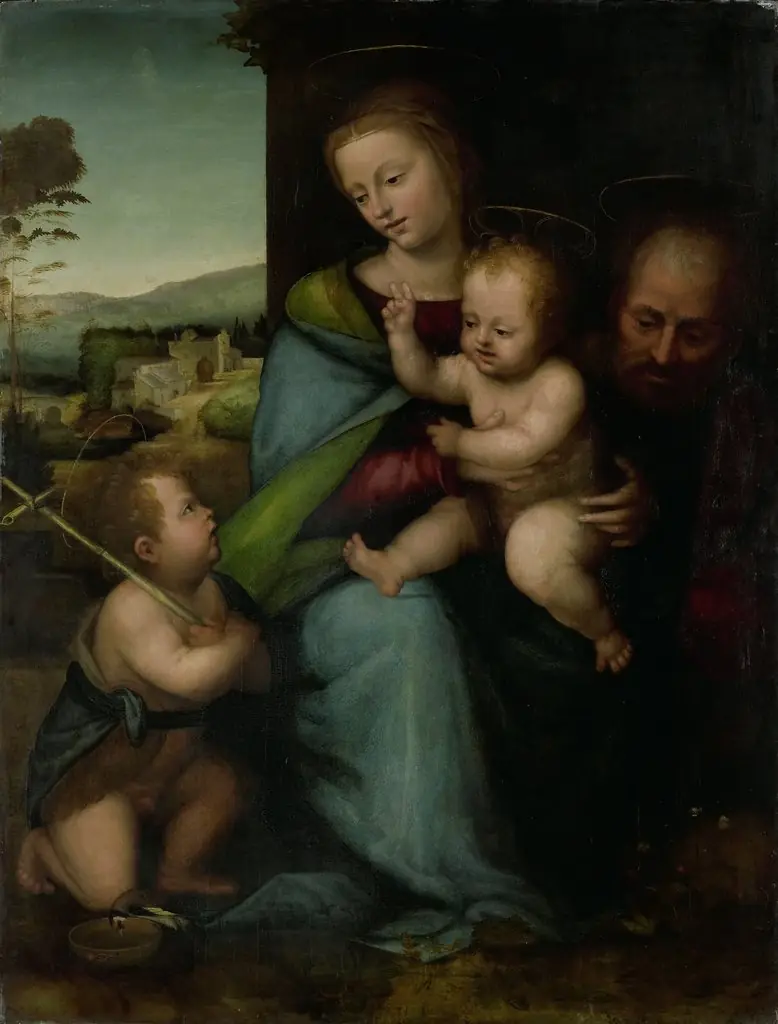 The Holy Family with the Infant John the Baptist
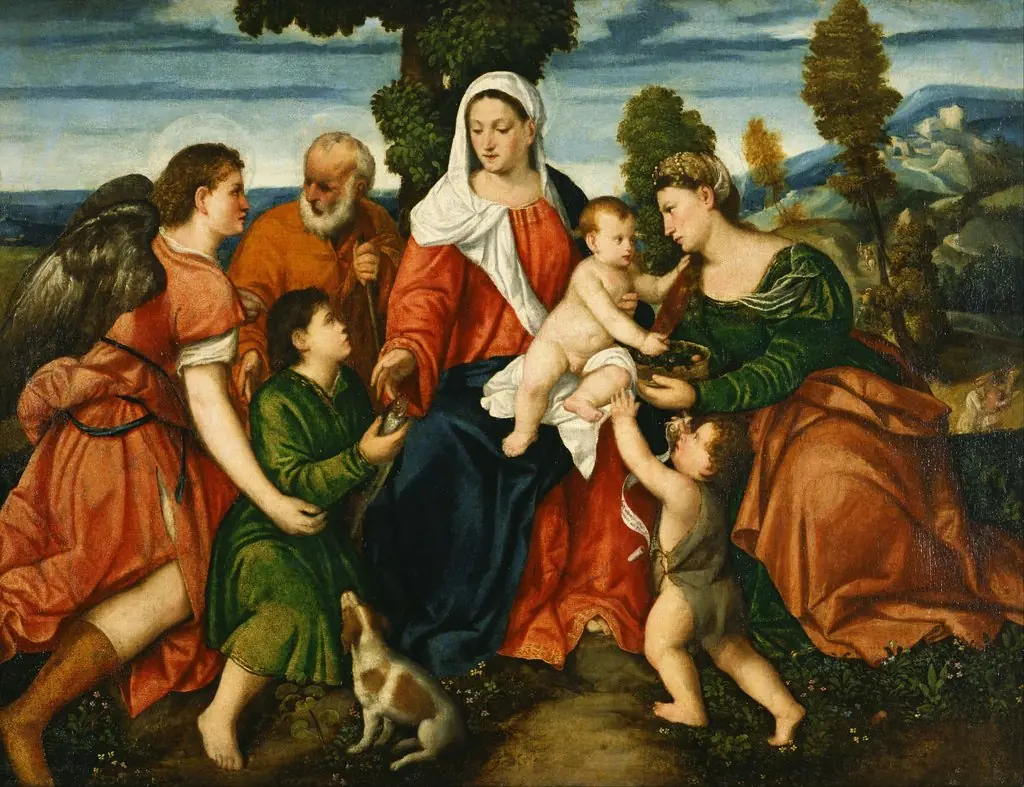 The Holy Family with Tobias and the Angel, Saint Dorothy, Giovannino, and the Miracle of the Corn beyond
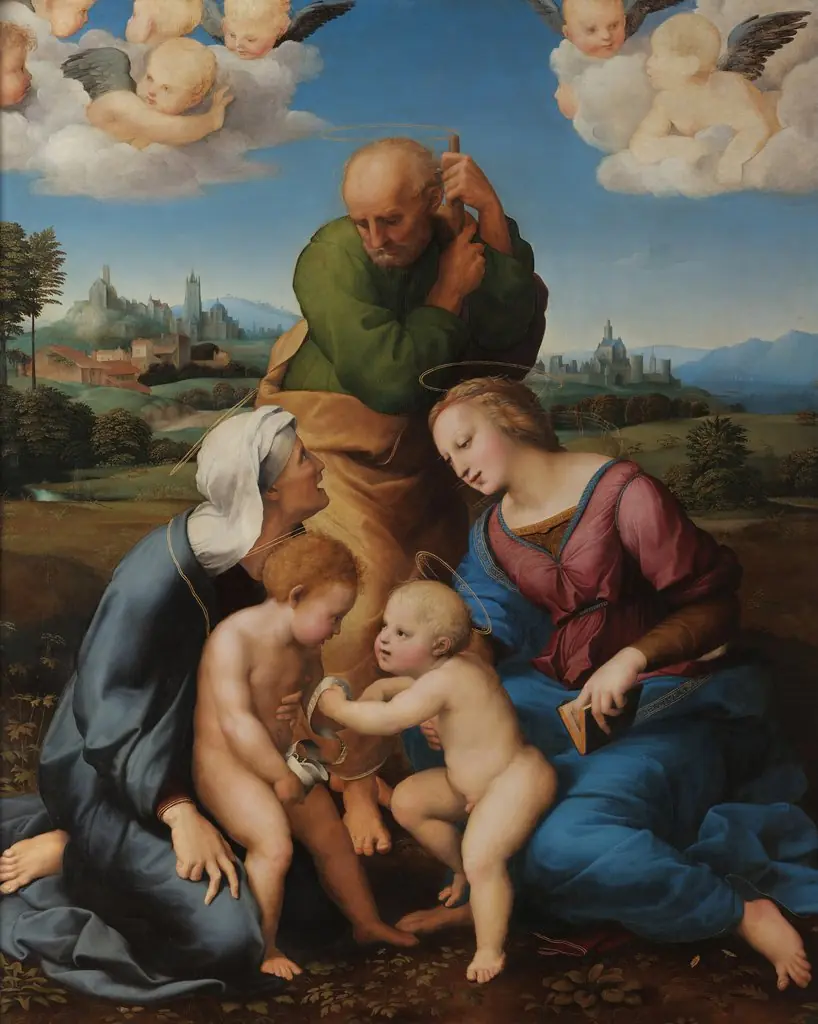 Canigiani Holy Family
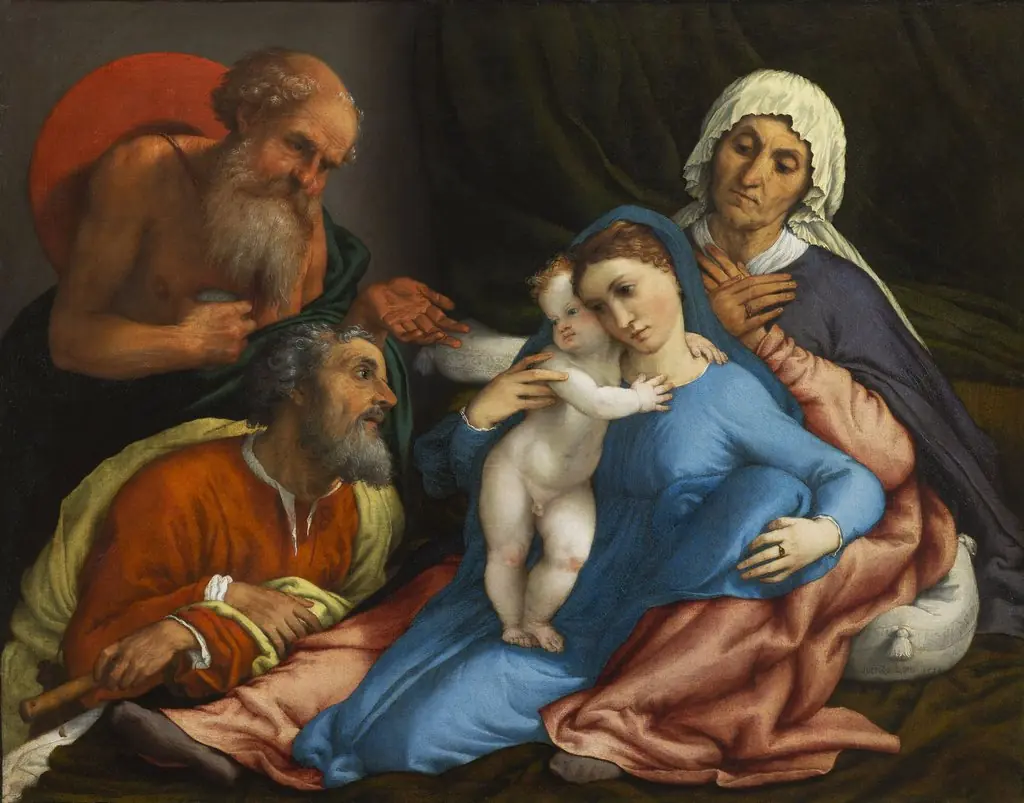 Madonna and Child with Saints
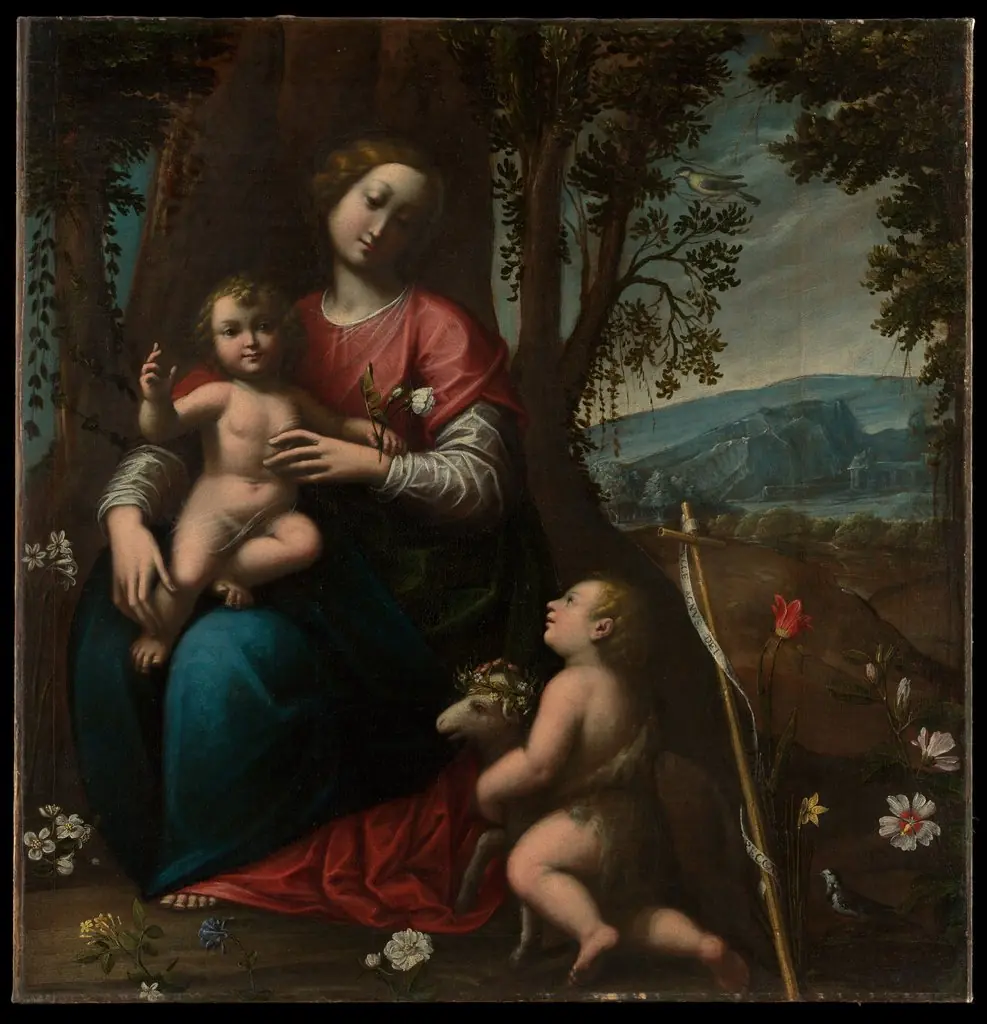 Madonna and Child with the Infant Saint John the Baptist