Artwork
Madonna and Child with the Young Saint John the Baptist
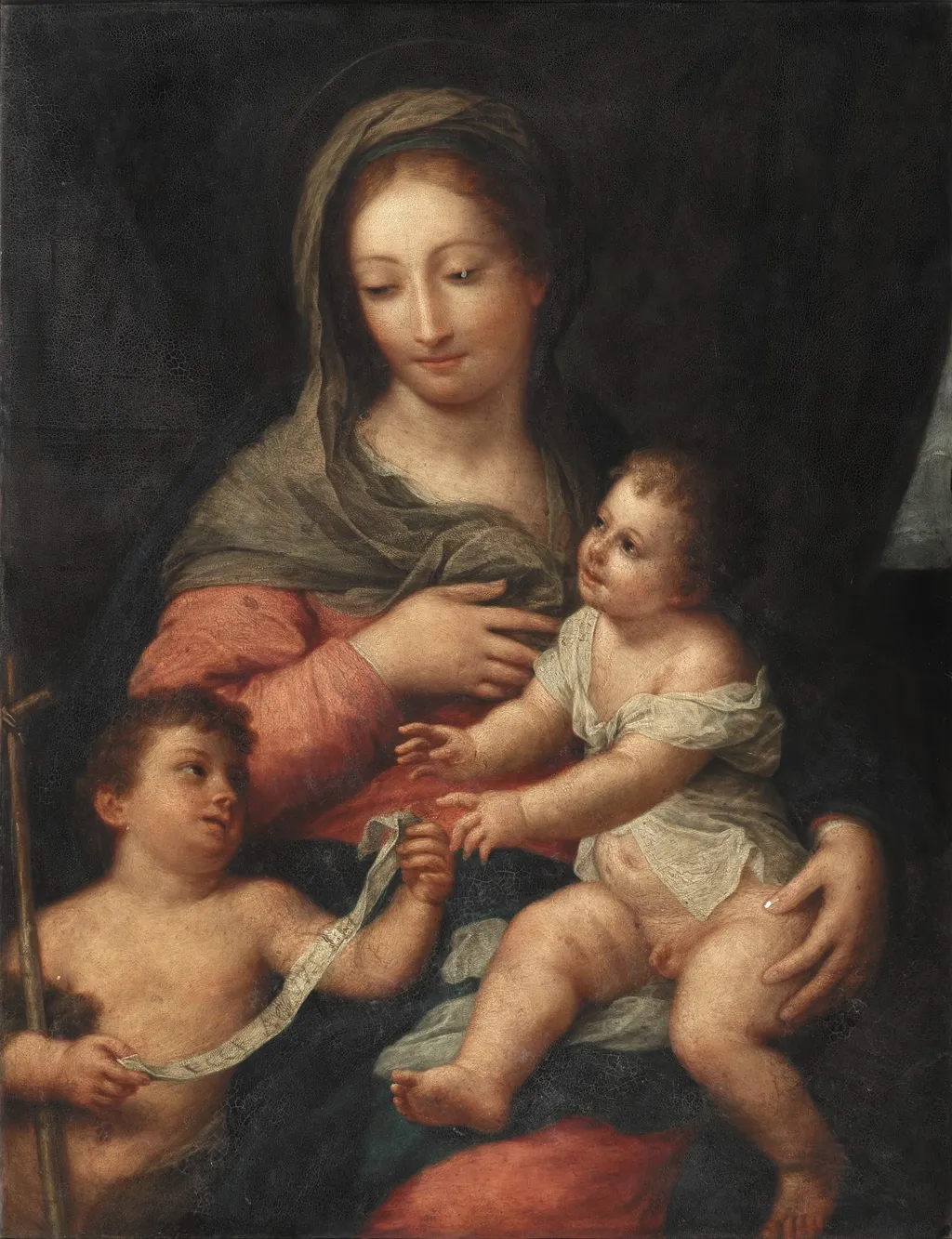
Madonna and Child with the Young Saint John the Baptist is an unspecified painting by the High Baroque Italian artist Carlo Maratta. It dates from 1675 and is held in the collection of the Detroit Institute of Arts.
About this work
Subject & Meaning
The reed cross held by John prefigures Christ’s Passion, while Mary’s tender gesture toward the Child evokes maternal protection and the Incarnation.
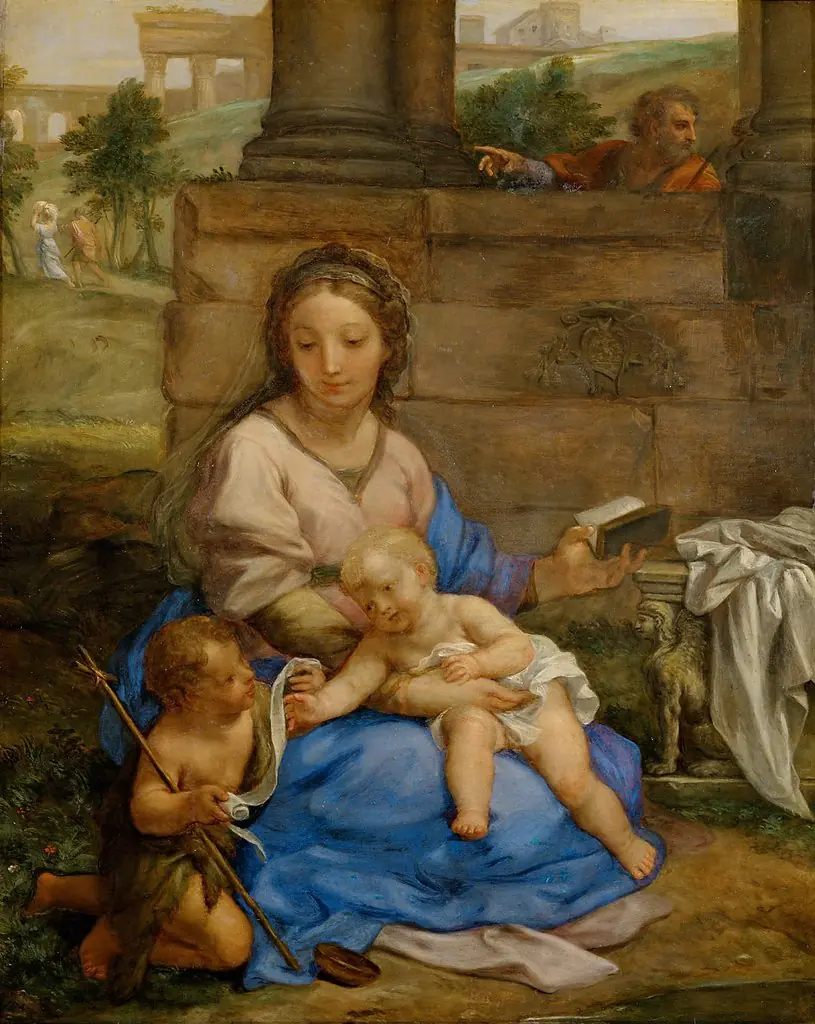
The painting depicts the Virgin Mary holding the Christ Child while the young Saint John the Baptist kneels beside them, clasping a reed cross, a common attribute signaling his future role as the Baptist of Christ. The composition centers on the Madonna and Child, with John positioned to the left as an intercessor, emphasizing the sacred lineage and the theological bond between the figures.
The iconography underscores themes of salvation and divine maternity. The reed cross held by John prefigures Christ’s Passion, while Mary’s tender gesture toward the Child evokes maternal protection and the Incarnation. The work’s religious genre aligns with Counter-Reformation devotional imagery, reinforcing veneration of the Madonna and the promise of redemption through Christ.
History & Provenance
The work was created by Carlo Maratta as a religious painting in the tradition of the Madonna and Child motif, depicting the Virgin Mary with the infant Christ and the young Saint John the Baptist. It entered the collection of the Detroit Institute of Arts, where it remains on display in the European paintings galleries.
The painting is held in the collection of the Detroit Institute of Arts, as recorded in its institutional and Wikidata records. Its present location is the Detroit Institute of Arts.
No specific inventory or accession number is documented in the available sources, and no exhibition history is recorded for the work.
Legacy
The painting is recognized for shaping devotional imagery in 17th-century religious art, particularly through its tender portrayal of the Madonna and Child accompanied by Saint John the Baptist. Its composition influenced later interpretations of familial holiness in Catholic iconography, reinforcing the narrative of youthful spiritual kinship. The work remains part of the permanent collection at the Detroit Institute of Arts, where it continues to be studied within the context of Baroque mastery.
Scholars cite its balanced use of light and gesture as a model for subsequent artists exploring sacred intimacy.
Overview
Created circa 1675 by the Roman painter Carlo Maratta, this oil painting presents a devotional scene typical of the late Baroque period. The work is part of the Detroit Institute of Arts’ collection and exemplifies the artist’s reputation for serving elite ecclesiastical patrons, including several popes, during the final decades of the 17th century.
Technique & Style
Maratta employs a restrained classicism within a Baroque framework, using chiaroscuro to model the figures against a dark backdrop. Soft illumination highlights Mary’s serene face and the warm flesh tones of the children, while the contrast of a dark cloak over a red dress adds depth and a sense of three‑dimensional presence.
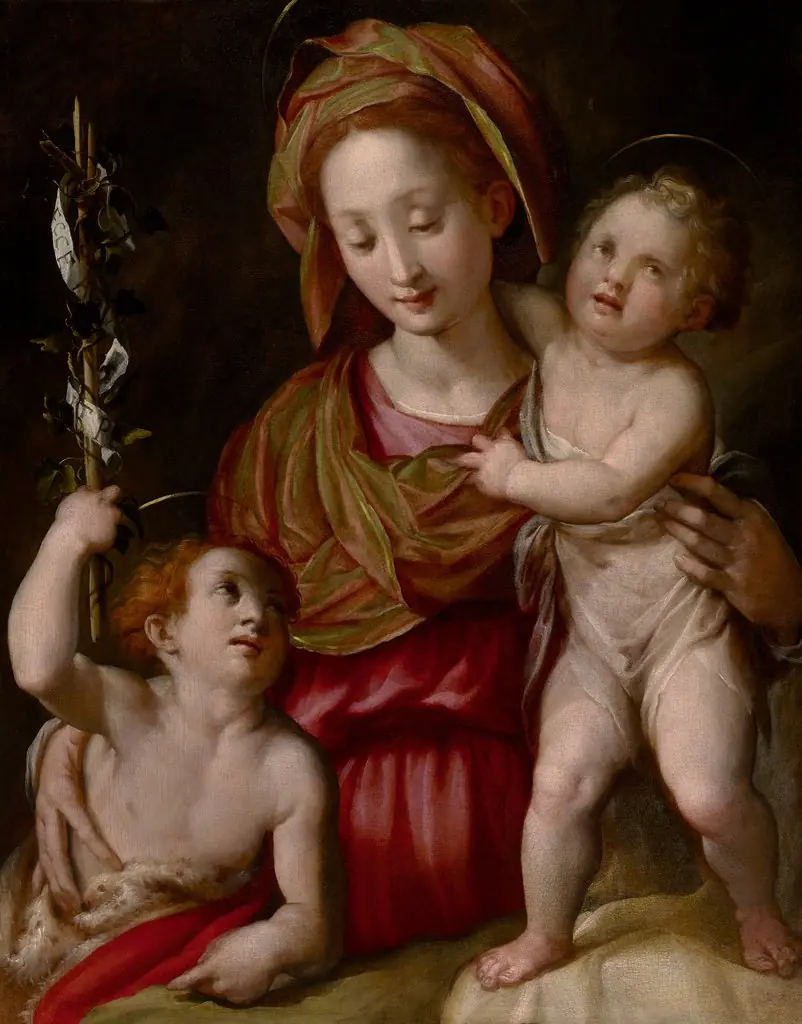
Own this work as a print
Artist & collection
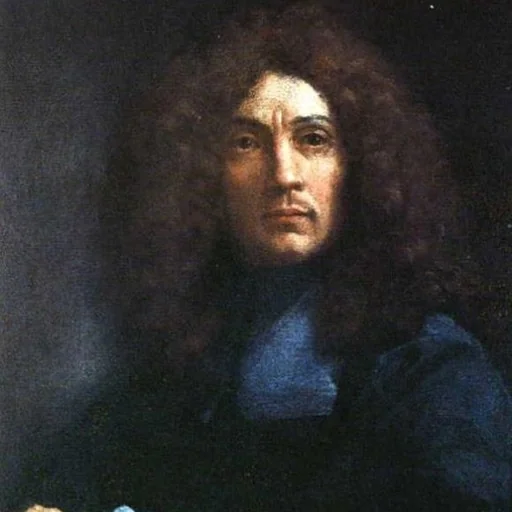
Artist
Carlo Maratta or Maratti (18 May 1625 – 15 December 1713) was an Italian Baroque painter and draughtsman, active principally in Rome where he was the leading painter in the second half of the 17th century.

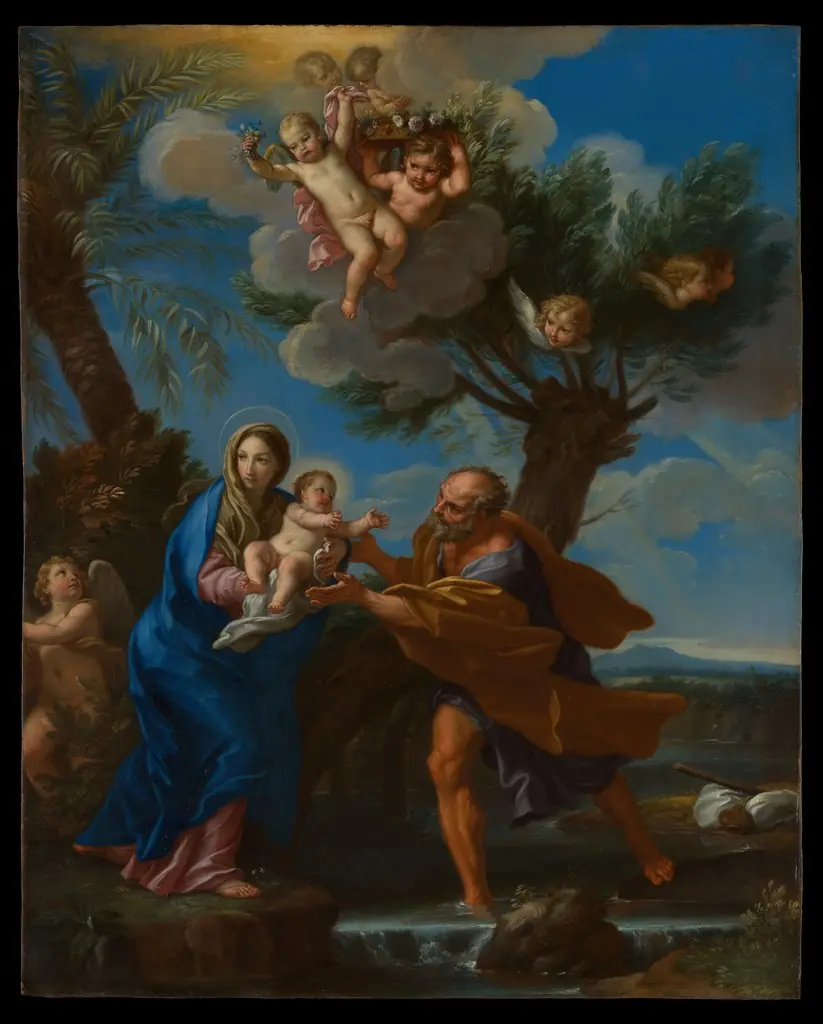

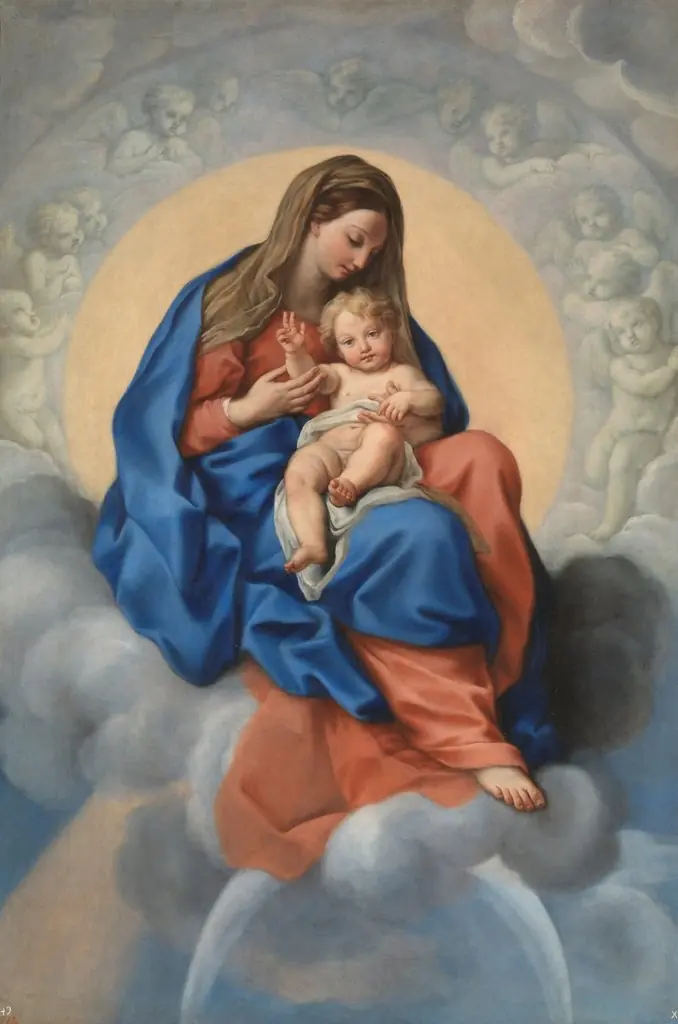
- Madonna and Child with the Young St. John the Baptist
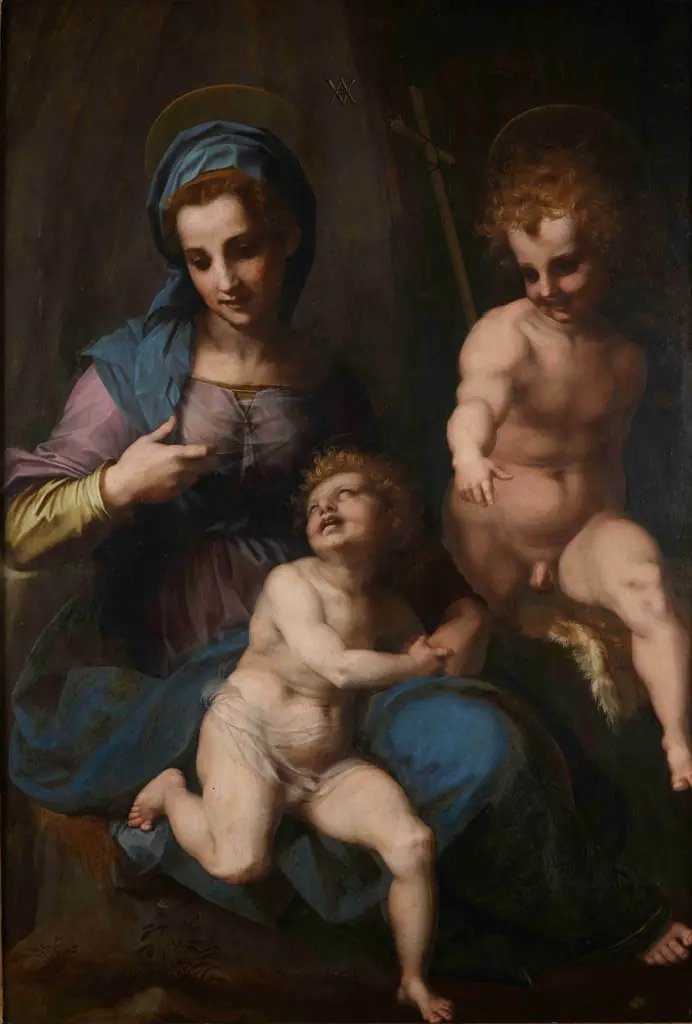 Madonna and Child with Young St John
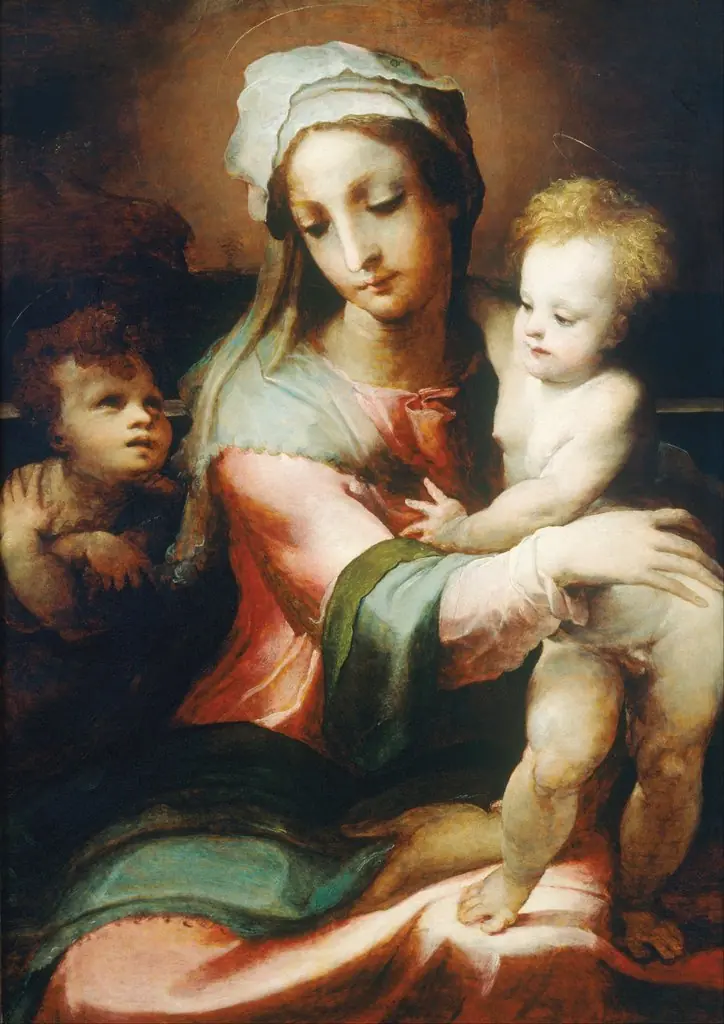 Madonna and child with infant John the Baptist
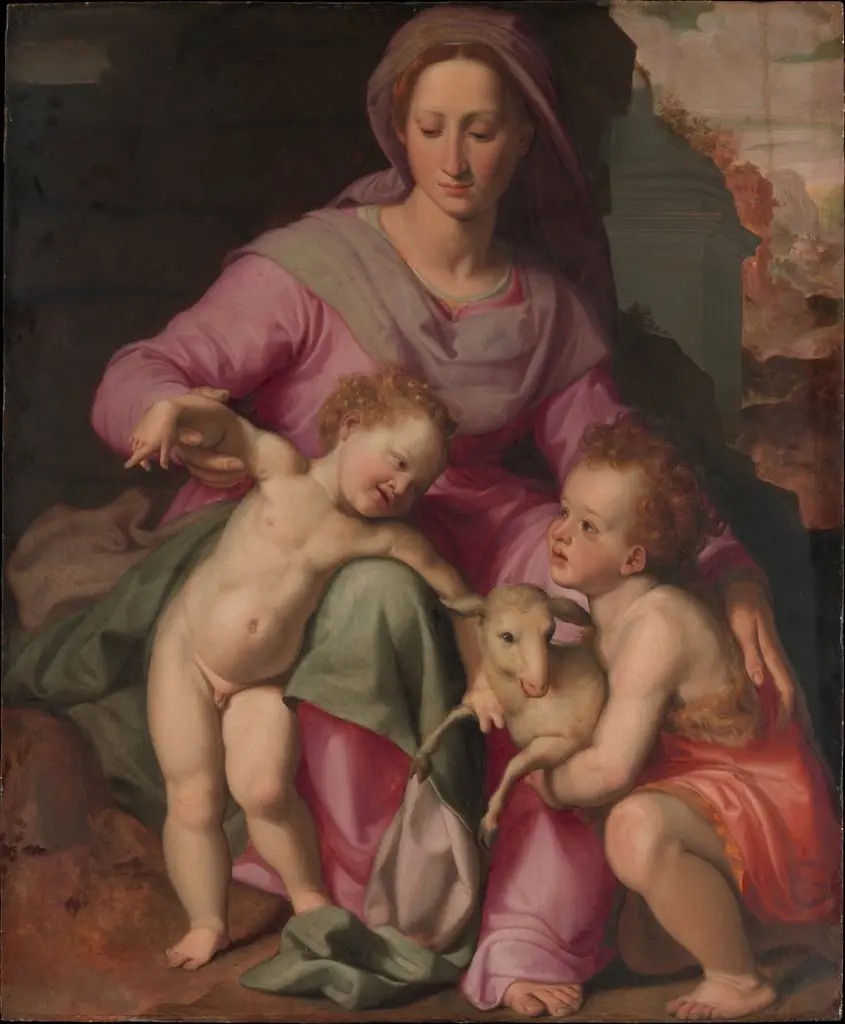 Madonna and Child with the Infant Saint John the Baptist
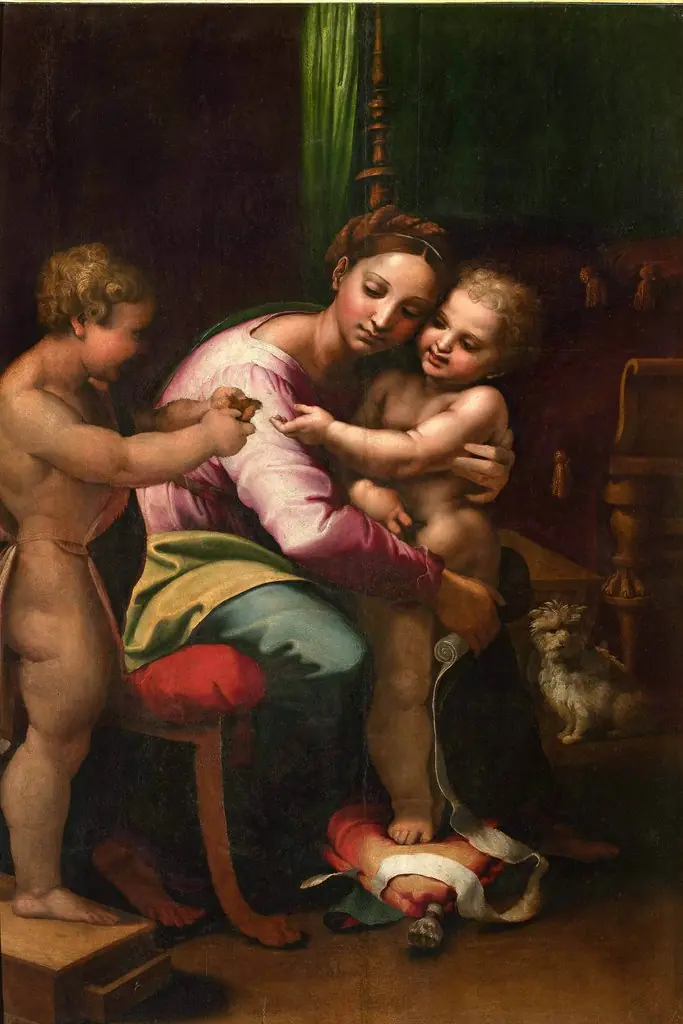 Madonna and Child with The Infant Saint John the Baptist
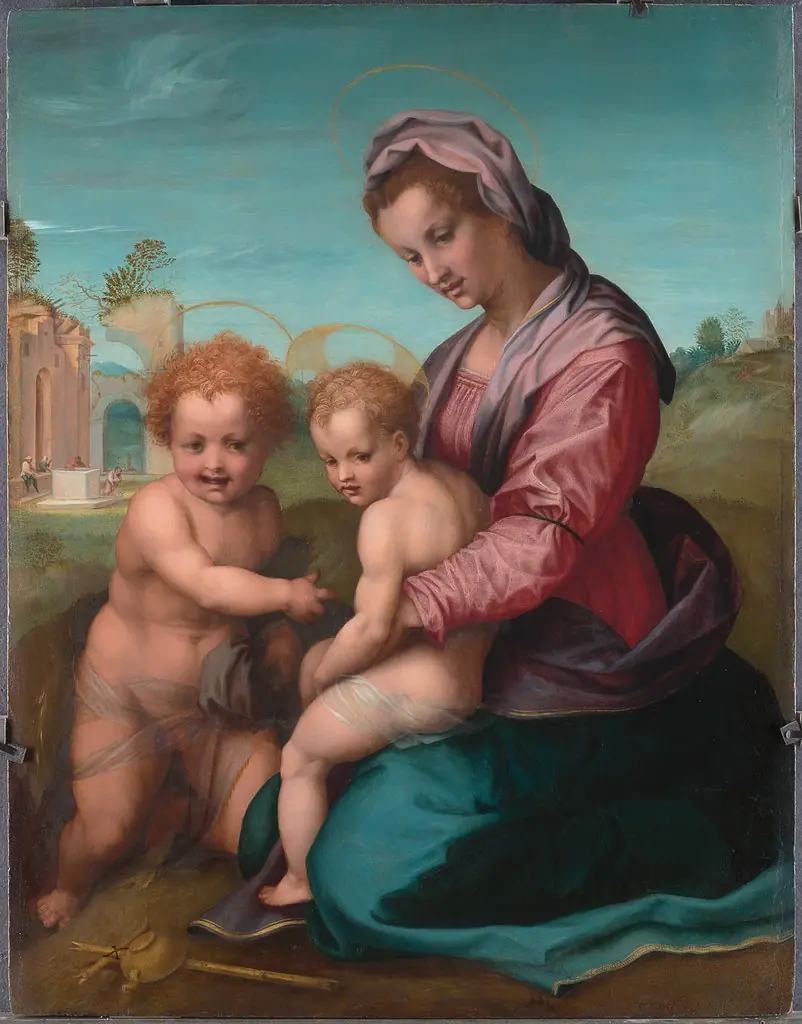 Madonna and Child with John the Baptist
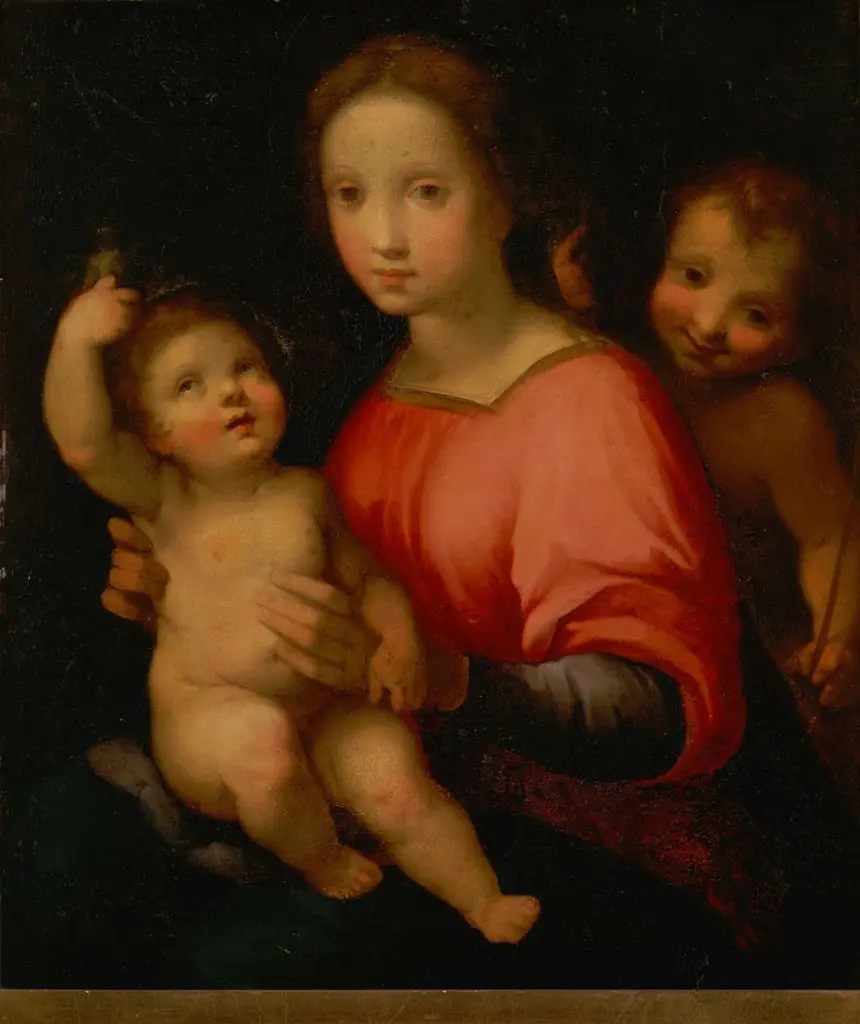 Madonna and Child with Saint John
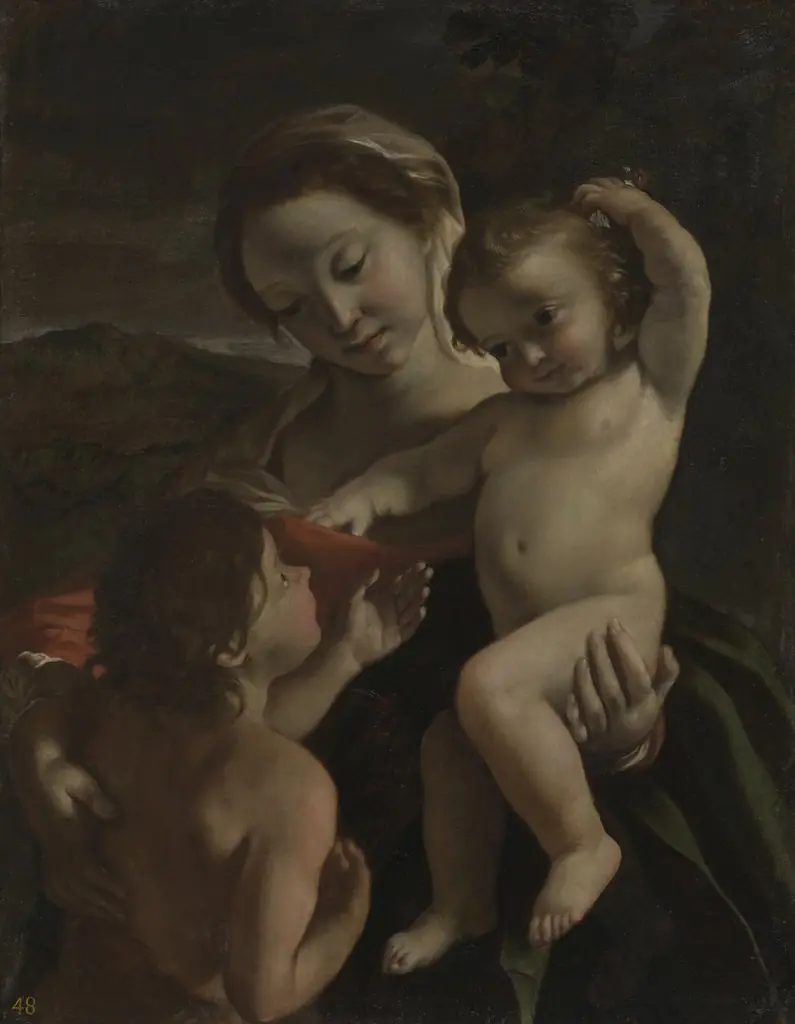 Madonna and Child with the Infant Saint John the Baptist