Artwork
Madonna and Child with Saint John the Baptist
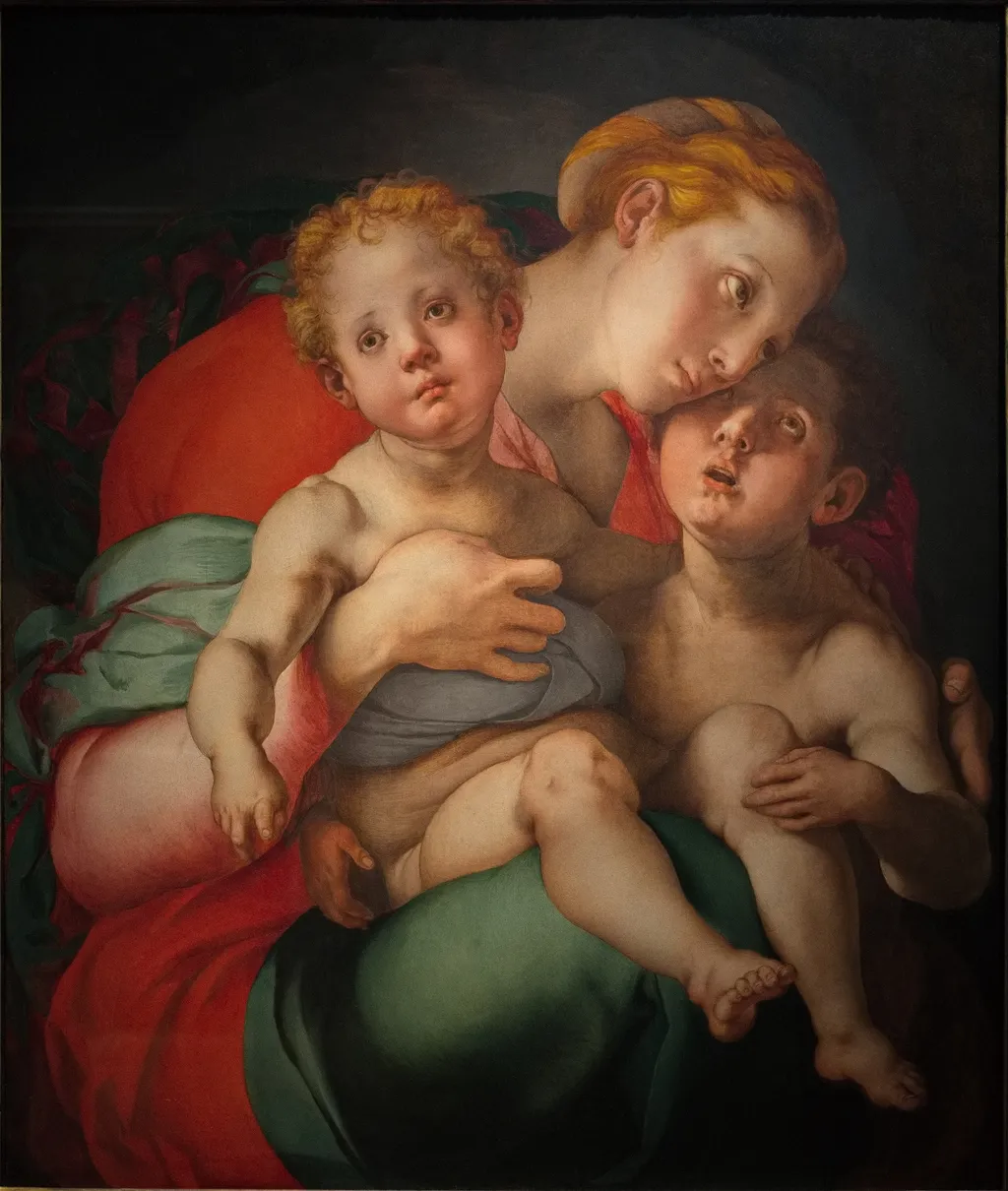
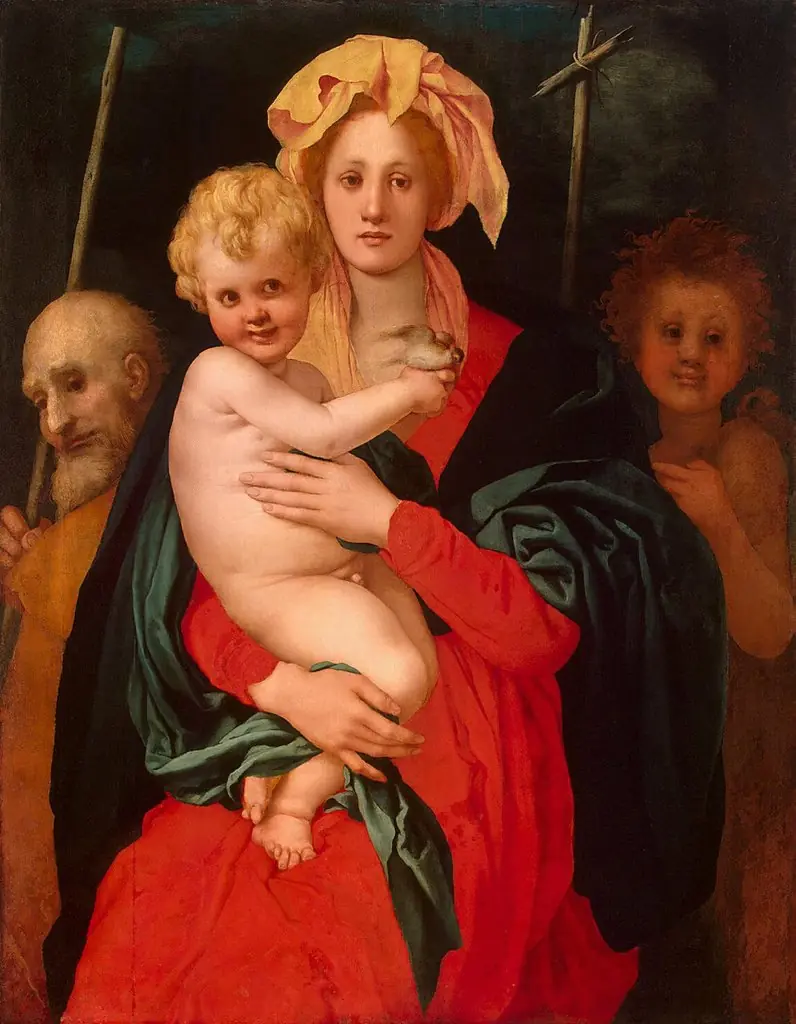
Madonna and Child with Saint John the Baptist is an oil painting by the Mannerist artist Pontormo. It dates from 1529 and is held in the collection of the Uffizi Gallery. The work depicts the Virgin Mary with the infant Christ and a young Saint John the Baptist, rendered in oil on panel.
About this work
This painting is called Madonna and Child with Saint John the Baptist. It's an oil paint work.
The painting has been dated to different time periods by art historians. Some think it was made between 1534 and 1536, while others believe it was created earlier, between 1529 and 1530.
You can learn more about the artist who made this work by looking up the artist: Pontormo.
Subject & Meaning
The refined color palette, dominated by reds and greens, lends the scene a contemplative, almost enigmatic quality consistent with Pontormo’s mature style.
The painting depicts the Virgin Mary cradling the Christ Child on her lap while the young Saint John the Baptist leans forward, his cheek nearly touching Mary’s forehead. The composition unfolds in a vertical format against a dark ground, emphasizing intimate physical contact and emotional proximity among the figures.
Scholars note that the muscular modeling of the children’s bodies and the twisting posture of the figures reflect Pontormo’s study of Michelangelo’s Medici Madonna, underscoring a deliberate engagement with High Renaissance ideals. The work’s iconography aligns with Florentine devotional traditions, merging maternal tenderness with the Baptist’s role as precursor to Christ. The refined color palette, dominated by reds and greens, lends the scene a contemplative, almost enigmatic quality consistent with Pontormo’s mature style.
Technique & Style
Executed in oil on wood panel, the painting measures 89 cm in height and 74 cm in width. Pontormo employed a restricted palette dominated by reds and greens, with areas of enamel-like brilliance and subtle iridescence in the handling of flesh and drapery.
The composition is arranged vertically against a dark ground, with the Virgin’s robust form bending forward to enfold the Christ Child seated on her lap; Saint John the Baptist leans in from the right, his body twisted in a pronounced contrapposto. The figures’ pronounced musculature, especially in the articulation of the Child’s knee and the Baptist’s shoulder, reflects a studied engagement with Michelangelo’s anatomical exaggerations. Brushwork is smooth yet incisive, yielding sharply defined contours and softly modeled volumes that remain legible under raking light.
History & Provenance
Scholarly debate surrounds the dating of this oil on panel, with proposals ranging from 1529-1530, supported by Antonio Natali, to a later period of 1534-1536. Historical accounts by Vasari suggest the work originated as payment from the artist to a bricklayer named Rossino for renovations on the painter's residence, a project initiated in 1529 and completed around 1535. Following this initial transaction, the painting was likely acquired by Alessandro di Ottaviano de' Medici before entering the collections of the Grand Dukes of Tuscany. The artwork remained in storage until its rediscovery by the scholar Gamba, who reinforced its attribution to Pontormo and confirmed its autograph status. A preparatory drawing for the composition is currently held in the Uffizi's print and drawing department. The work Madonna and Child with Saint John the Baptist is held in the Uffizi Gallery in Florence, where it is listed under the inventory number 1890, n. 712. It entered the collection through the patronage of the Medici family, specifically Alessandro di Ottaviano de' Medici, and later became part of the Grand Dukes of Tuscany's holdings. The painting was rediscovered in the gallery's storage by Gamba, which solidified its attribution to Pontormo. Its exhibition history includes displays within the Uffizi's main collection and references in scholarly catalogues such as those by Elisabetta Marchetti Letta. A preparatory drawing for the work is held in the Gabinetto dei Disegni e delle Stampe (inventory no. 6629 r and v).
Context
Scholarly discourse emphasizes the painting's complex engagement with Michelangelo's influence, particularly evident in the muscular rendering of the Child and Saint John, which scholars interpret as a deliberate artistic dialogue with the Medici Madonna. The work's provenance is linked to Alessandro di Ottaviano de' Medici and later the Grand Dukes of Tuscany, reflecting its significance within Medici collections. Its rediscovery by Gamba and subsequent attribution to Pontormo solidified its autograph status, though dating remains debated between 1529-1530 (Natali) and 1534-1536. The painting's innovative composition, blending emotional intensity with refined stylization, has been analyzed as emblematic of Pontormo's mature synthesis of High Renaissance ideals and Mannerist experimentation, positioning it as a key example of 16th-century devotional art in Florence.
Legacy
The painting has been recognized as a significant influence on later religious imagery, particularly through its innovative composition and emotional depth. Its attribution to Pontormo was solidified through archival research and stylistic analysis, with Vasari's account of the artist exchanging a similar work for housing in 1529-1535 providing key provenance context. The work's rediscovery in the Uffizi's storage by Gamba confirmed its autograph status, reinforcing its standing in art historical discourse. The composition, noted for its Michelangelo-inspired figure torsion and expressive rendering of Saint John, has been cited as a bridge between High Renaissance ideals and Mannerist experimentation. Scholars have highlighted its refined use of color and enigmatic execution as emblematic of Pontormo's intellectual approach to sacred subjects. The painting remains a focal point in studies of Florentine art and Renaissance influence on religious art across Europe.
Own this work as a print
Artist & collection
Artist
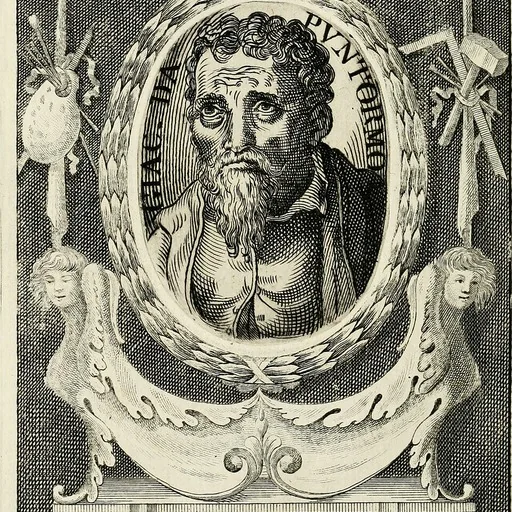
Jacopo Carucci or Carrucci (IPA:; May 24, 1494 – January 2, 1557), usually known as Jacopo (da) Pontormo or simply Pontormo (IPA: ), was an Italian Mannerist painter and portraitist from the Florentine School.

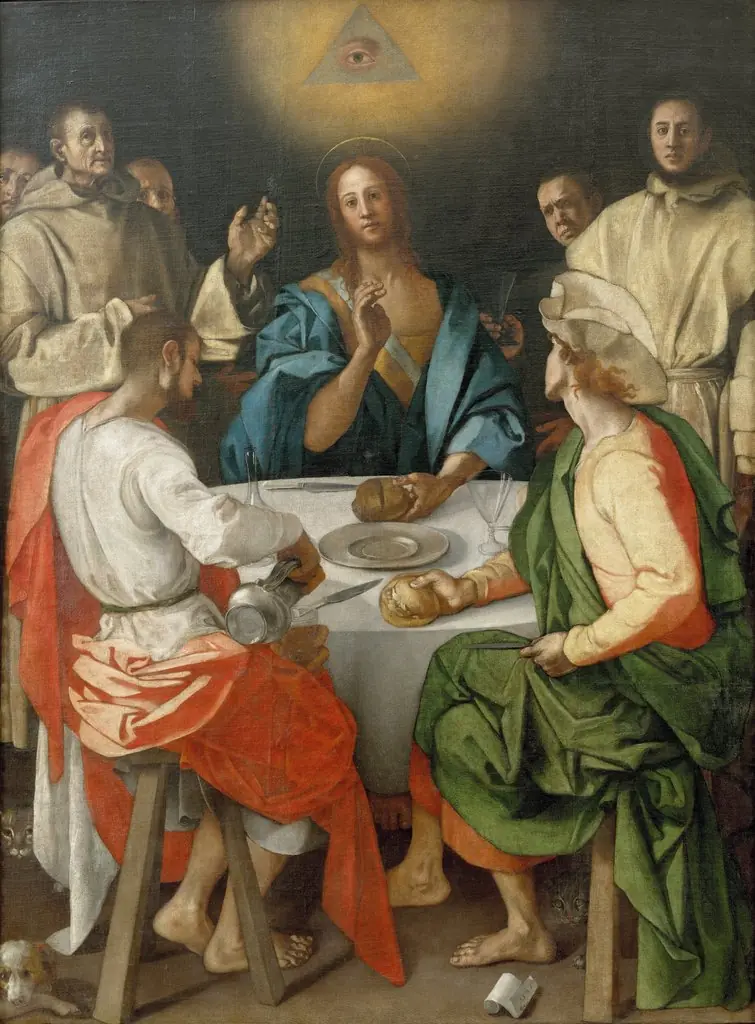
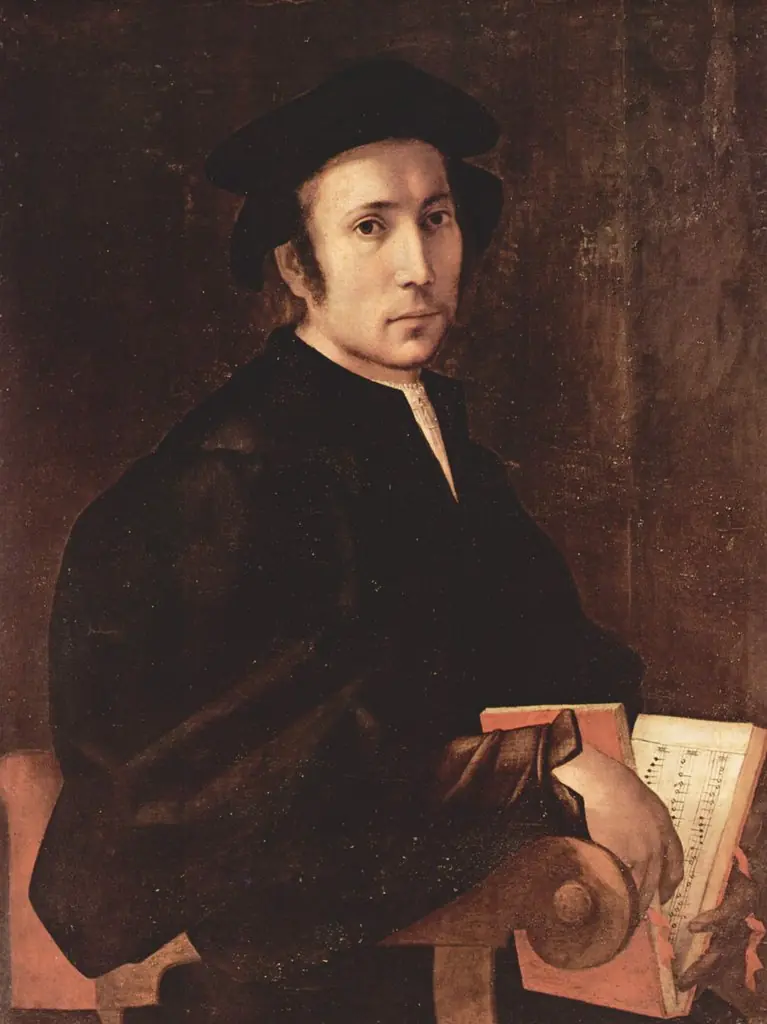
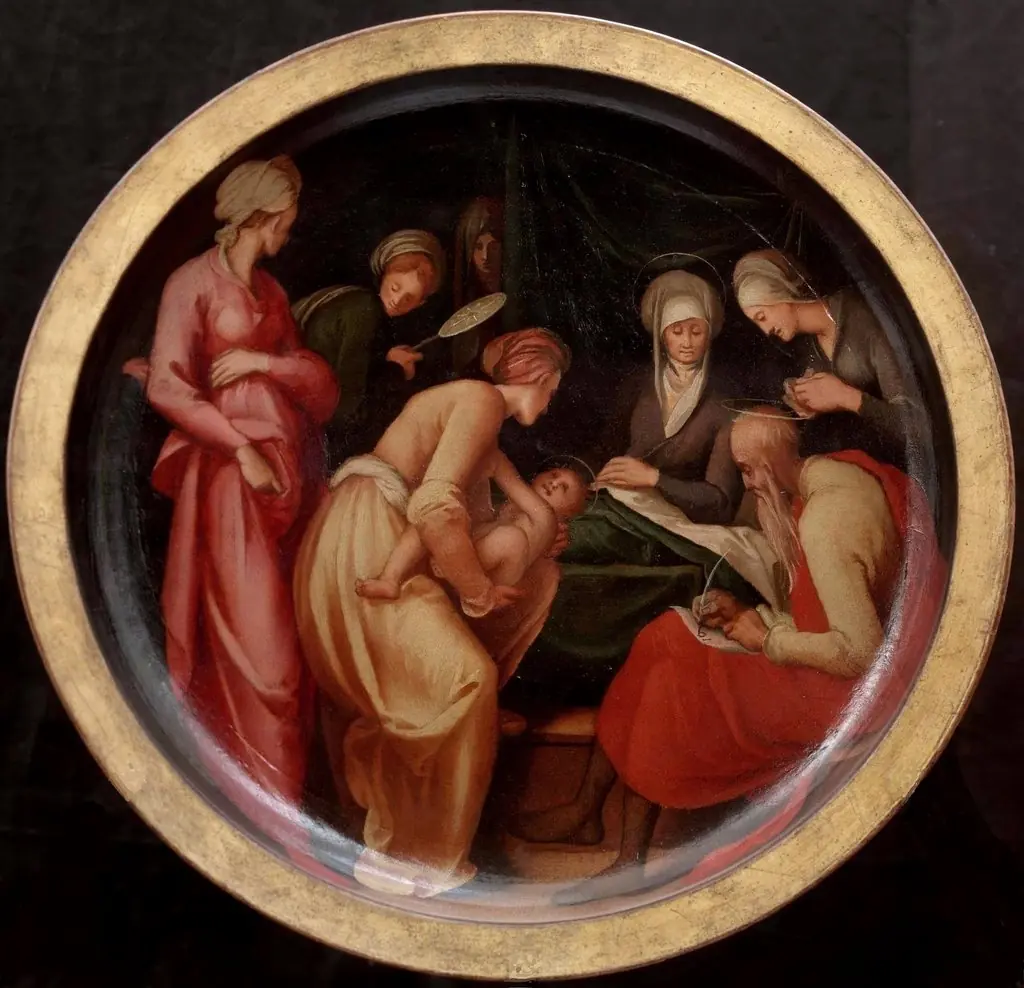
- Madonna and Child with John the Baptist
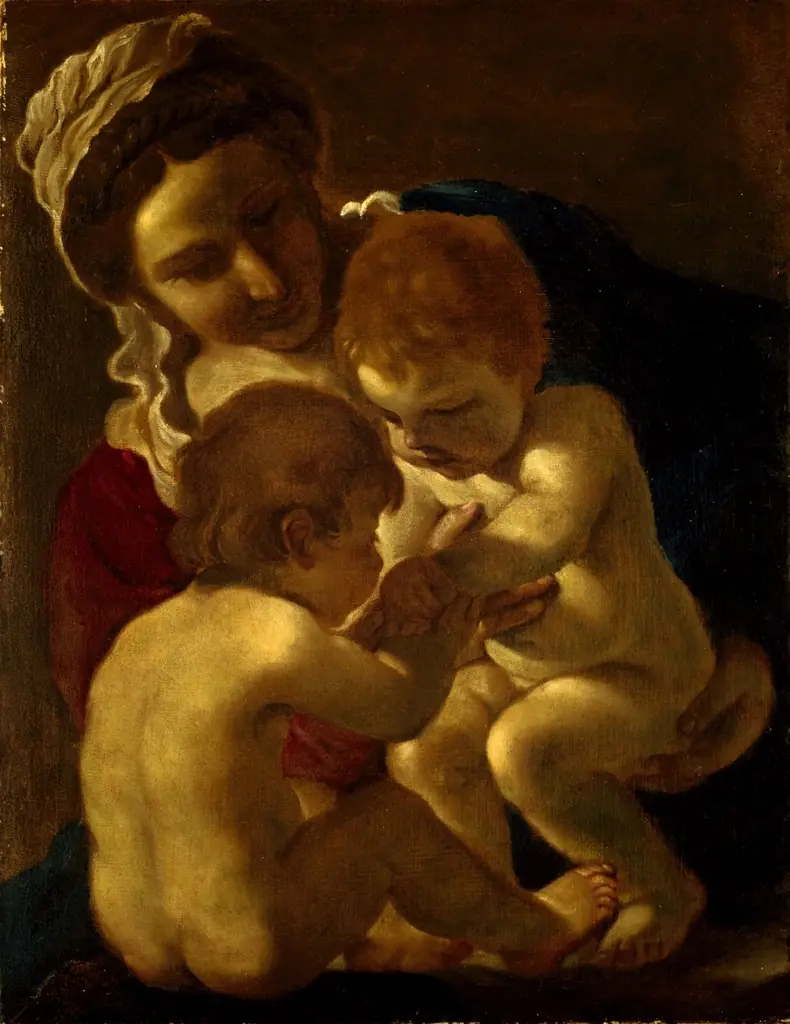 Madonna and Child with Saint John The Baptist
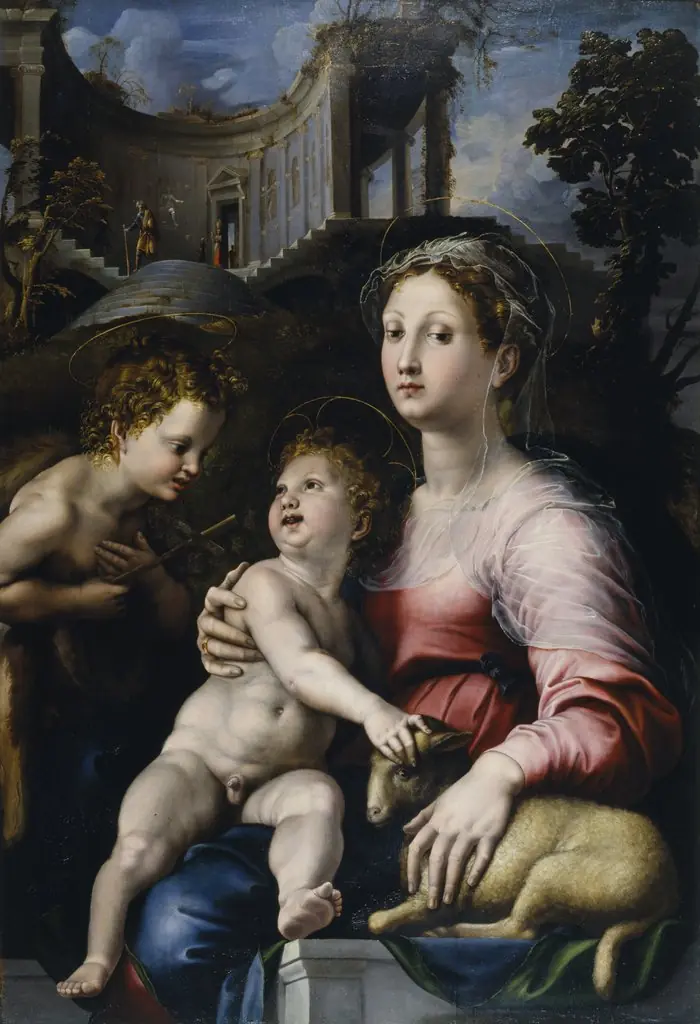 The Madonna and Child with Saint John the Baptist
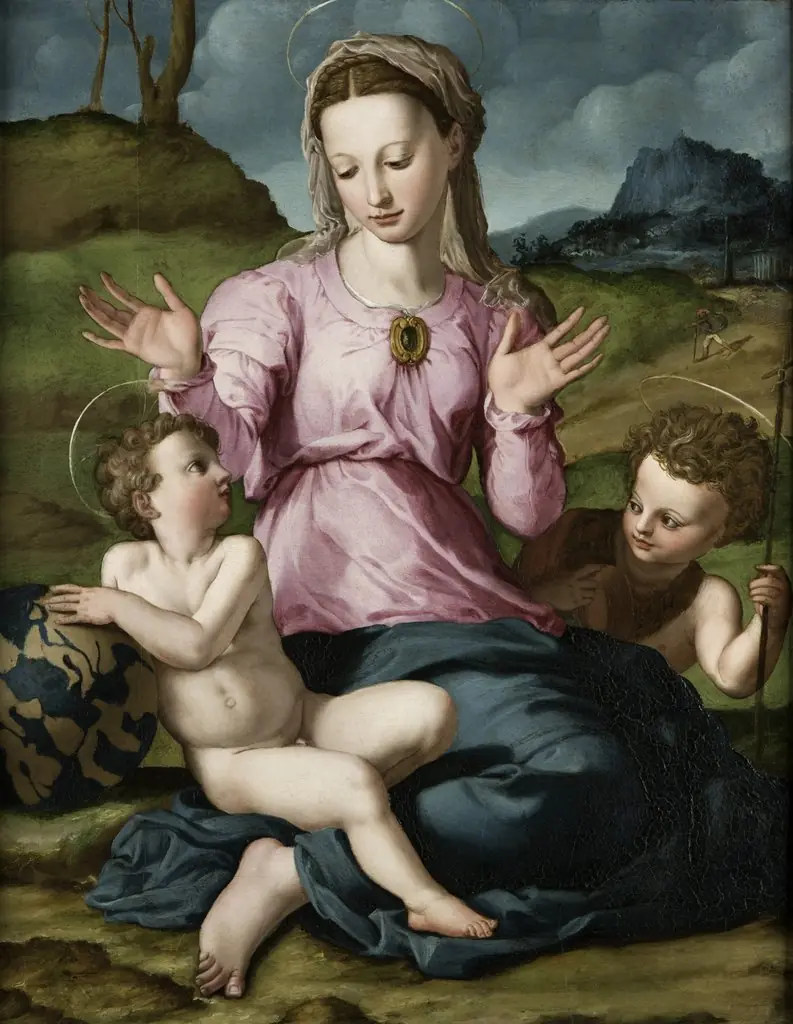 Madonna and Child with Saint John the Baptist
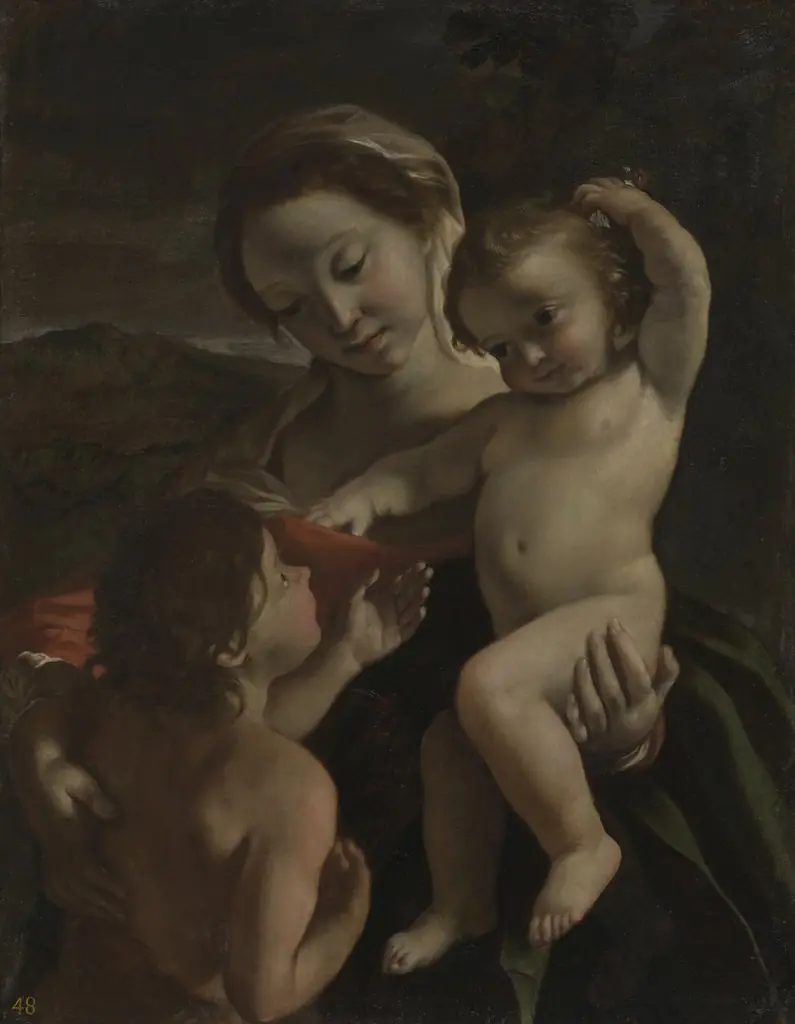 Madonna and Child with the Infant Saint John the Baptist
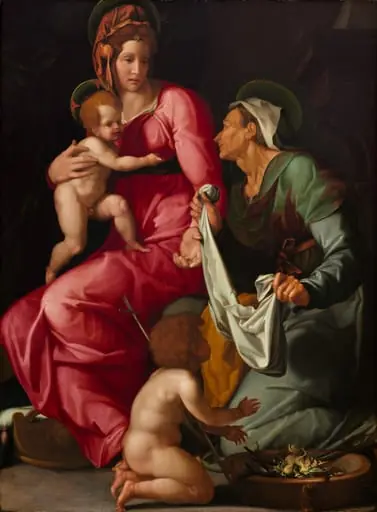 Madonna and Child with Saint Elizabeth and Saint John the Baptist
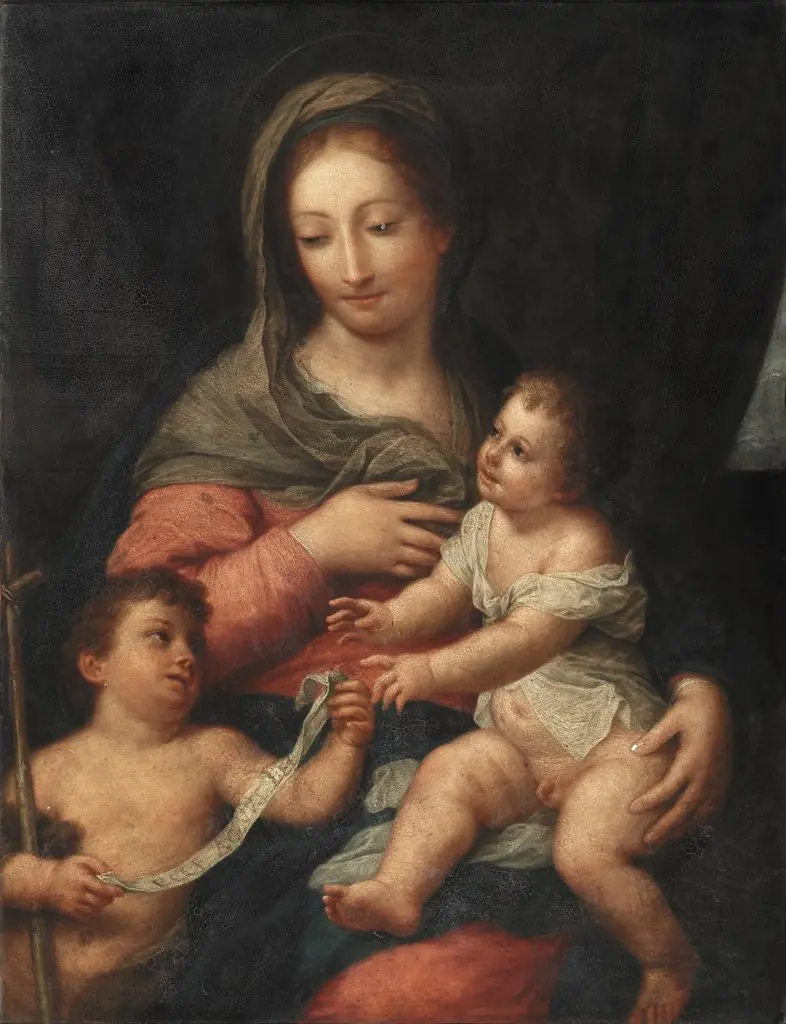 Madonna and Child with the Young Saint John the Baptist
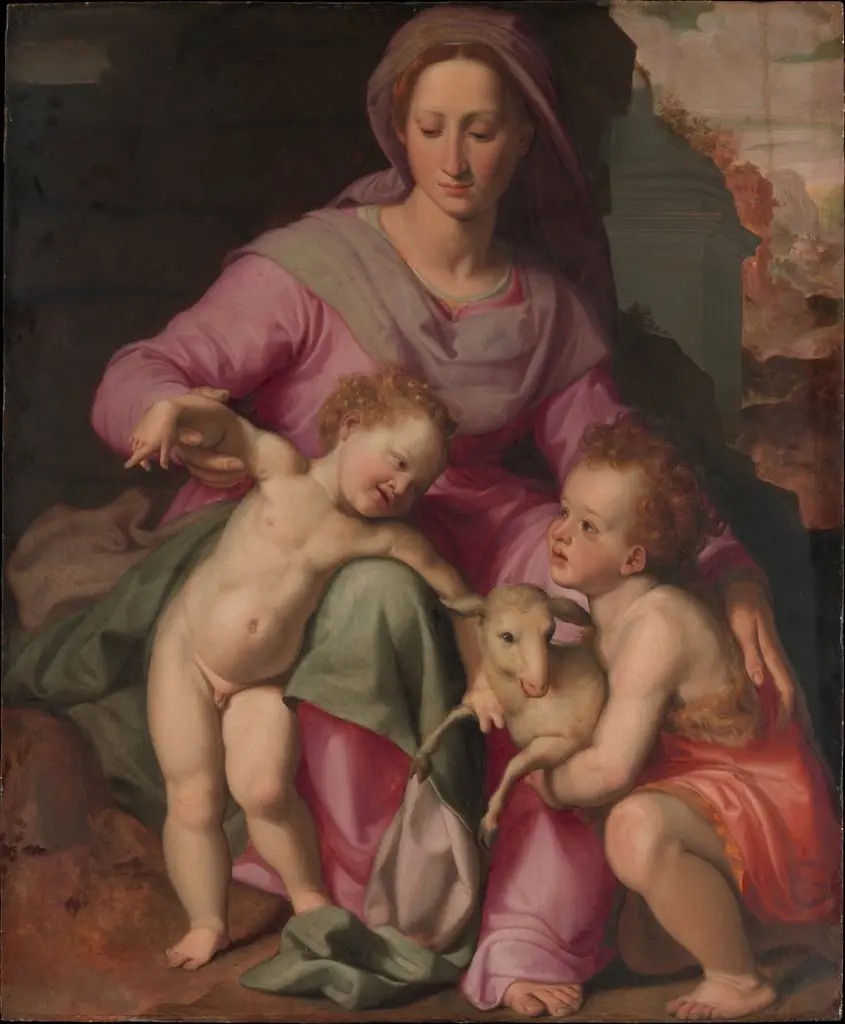 Madonna and Child with the Infant Saint John the Baptist
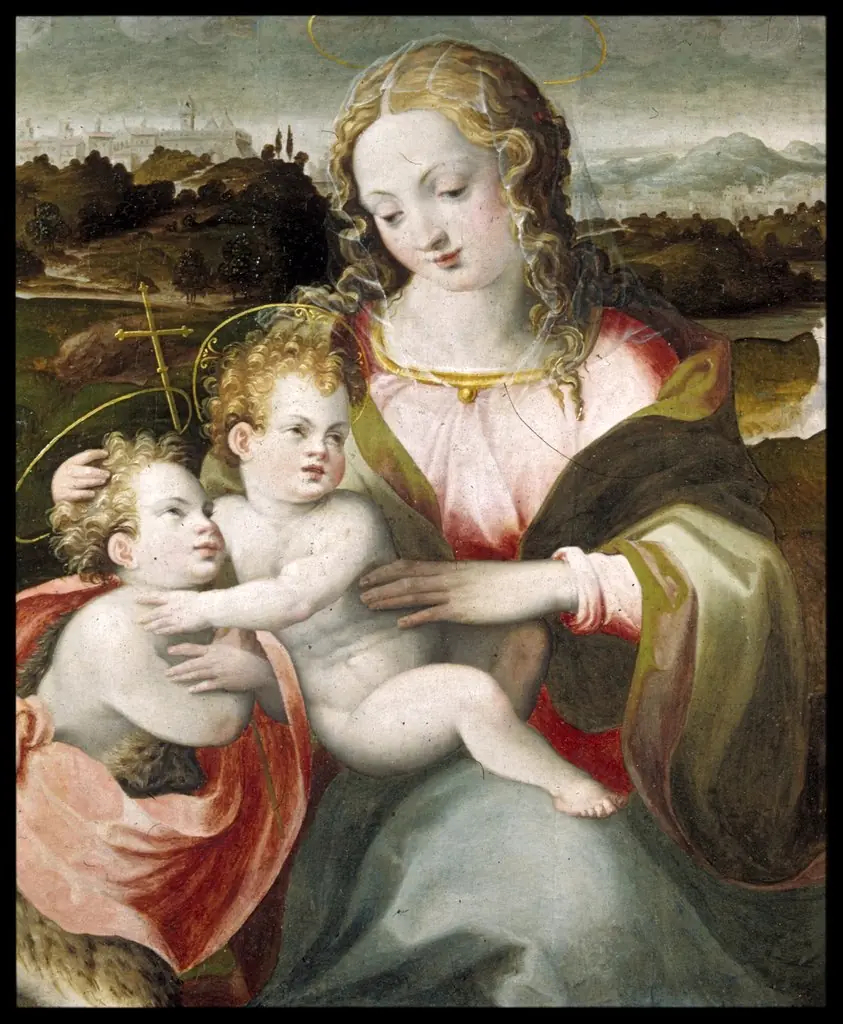 Madonna and Child with the Young Saint John the Baptist
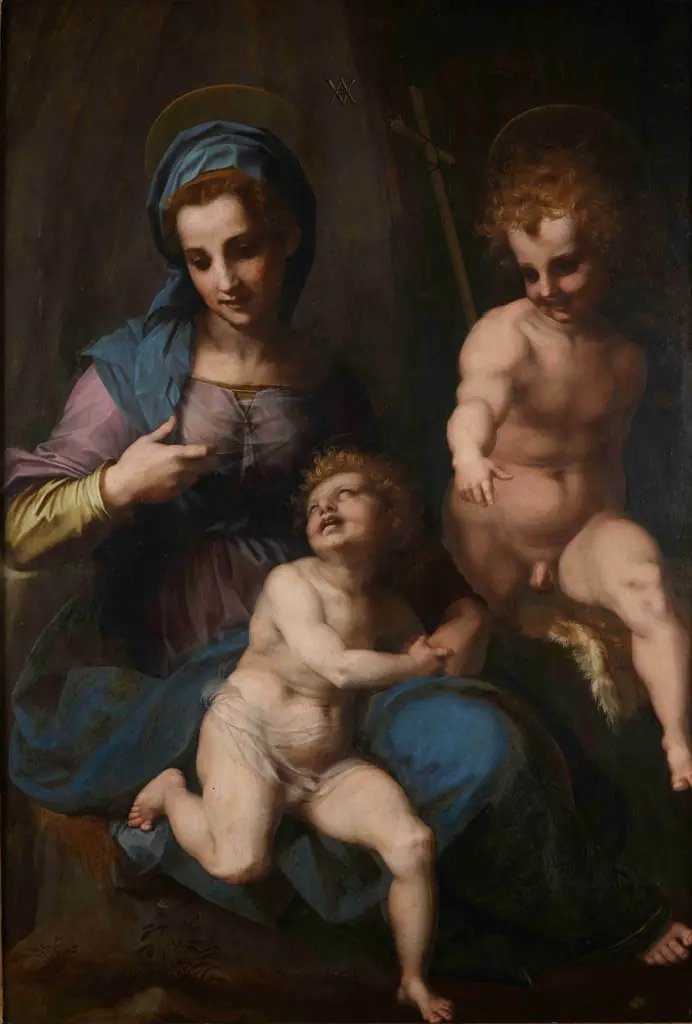 Madonna and Child with Young St John
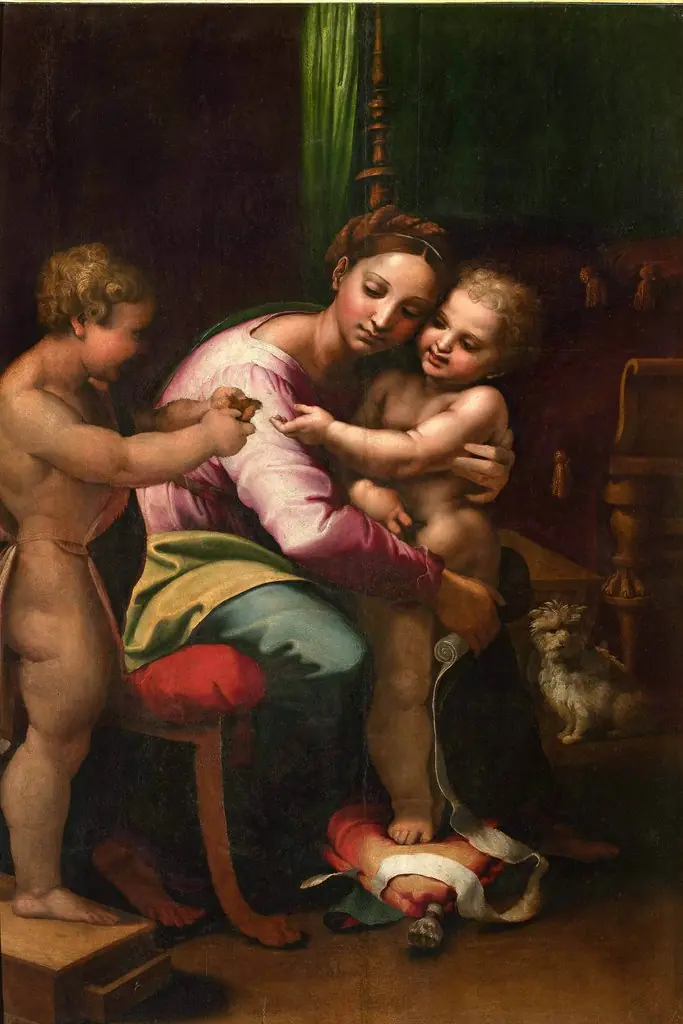 Madonna and Child with The Infant Saint John the Baptist
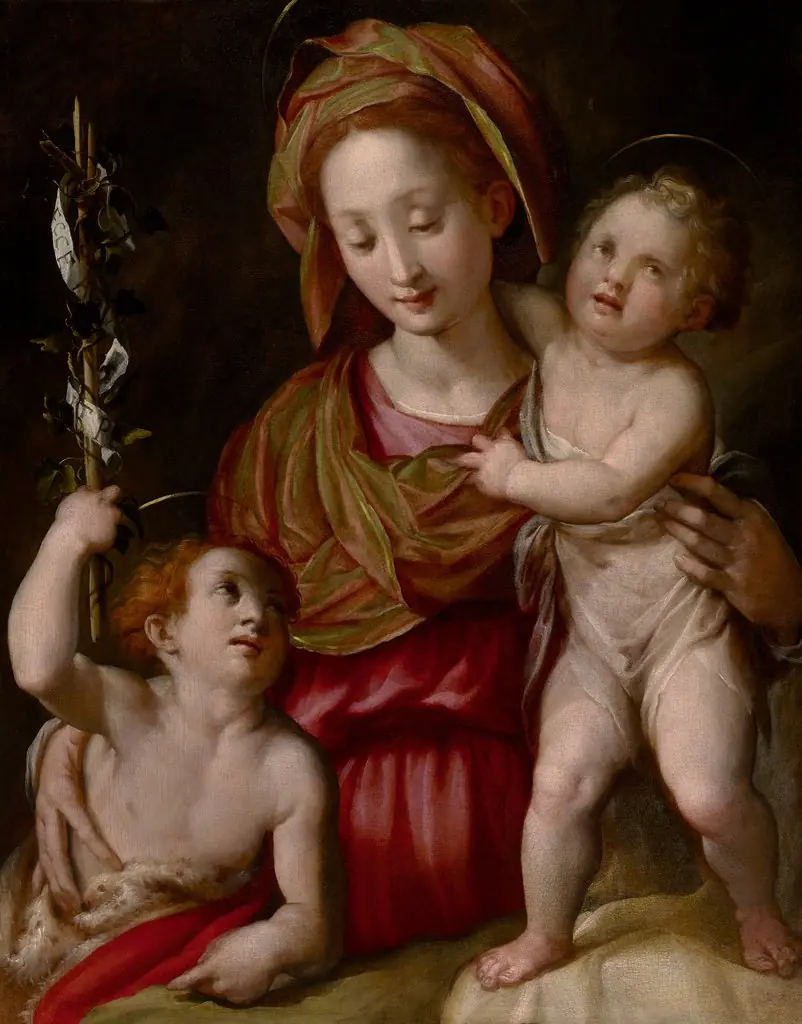 Madonna and Child with the Young St. John the Baptist