Artwork
Madonna and Child with the Young Saint John
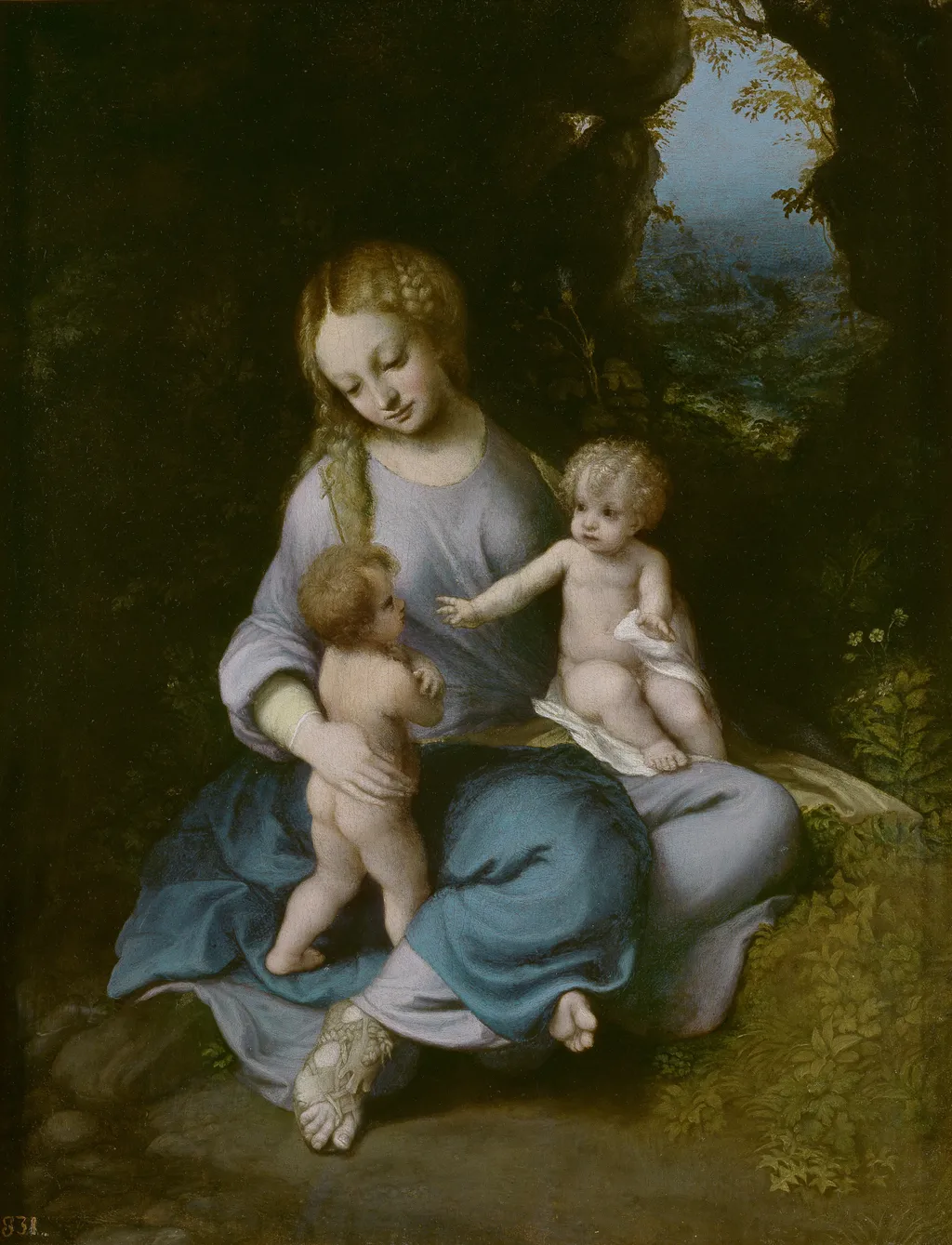
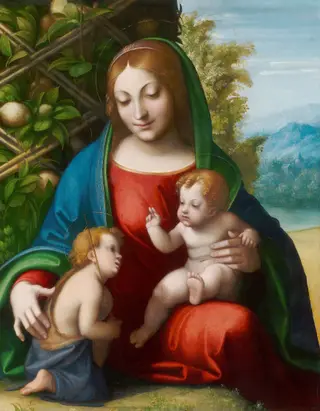
Madonna and Child with the Young Saint John is an oil painting by the Early Renaissance artist Antonio da Correggio. It dates from 1515 and is held in the collection of the Museo del Prado.
About this work
Mary with the baby Jesus and a young John the Baptist, painted by Correggio in oil on wood around 1515. Sources disagree on the date, with one listing 1518 and the museum giving 1515. It was among his first attempts at this common scene, which gives it a fresh, personal feel.
Subject & Meaning
The painting shows the Virgin Mary holding the infant Jesus while the young John the Baptist stands beside them, identified by a sandal and a pigtail.
The painting shows the Virgin Mary holding the infant Jesus while the young John the Baptist stands beside them, identified by a sandal and a pigtail. It is an oil-on-panel work (48 × 37 cm, c. 1515–1518) now in the Prado Museum, originally documented in the Spanish royal collections. Iconographically the composition places the three figures in a pyramidal arrangement within a grotto, a motif that recalls Leonardo's Virgin of the Rocks and emphasizes a divine light illuminating the scene.
The sandal, the cave setting, and the gentle interaction of the children convey themes of humility, the meeting of the Old and New Testaments, and the anticipation of Christ's salvation. Correggio's free adaptation of Leonardo's composition demonstrates his deliberate engagement with High Renaissance models while creating an original devotional image.
Technique & Style
Executed circa 1515–1518, this work is an oil painting originally created on a wooden panel measuring 48 by 37 centimetres, though later transferred to canvas. The composition features a pyramidal arrangement of the Virgin, Christ Child, and young John the Baptist, set within a grotto that opens to a blue-toned landscape. Stylistically, the piece demonstrates a profound engagement with Leonardo da Vinci's influence, particularly through the application of sfumato to soften contours and the depiction of the Virgin's subtle smile.
The lighting is characterized as supernatural, illuminating the figures from above and frontally to highlight the vibrant gold of their hair. The Virgin's iconography combines humility and divinity, shown through her mixed hairstyle and the contrast between her bare foot and a precious sandal. The Child's full-cheeked physiognomy aligns with Correggio's other early productions, while the intimate interaction between the children reflects a free variation on Leonardo's Virgin of the Rocks.
History & Provenance
Attributed to Antonio da Correggio and dated variously between 1515 and 1518, this oil painting on panel (later transferred to canvas) was stylistically linked to the artist's frescoes in the Camera di San Paolo, suggesting it was executed in Parma. The painting demonstrates significant Leonardesque influence, functioning as a free variation on Leonardo da Vinci's The Virgin of the Rocks. Its provenance traces to the Spanish royal collection, having been transported from Parma to Madrid by Elisabeth Farnese upon her marriage to King Philip V of Spain.
The work was recorded among Farnese's possessions at the Royal Palace of La Granja de San Ildefonso in 1746, and subsequently entered the holdings of Charles III and Ferdinand VII before becoming part of the Museo del Prado's permanent collection.
Context
Within Correggio's oeuvre, the Madrid panel is regarded as the work in which Leonardo da Vinci's influence is most openly acknowledged, functioning as a free variation on the Tuscan master's Virgin of the Rocks. The cave setting, the lowered gaze of the Virgin, and the tender encounter between the two children within a landscape all recall Leonardo, and the motif itself circulated widely among the so-called Leonardeschi of the early Cinquecento. Stylistically the painting is closely linked to Correggio's frescoes for the Camera di San Paolo in Parma, and because it served as a model for Michelangelo Anselmi, scholars locate its execution in that city.
Compared with other Leonardesque painters, Correggio is credited with absorbing and reinventing Leonardo's proposals in an entirely original manner, integrating them into a softer, more youthful idiom. The pyramidal composition of the three figures also recalls Raphael's treatments of the same subject.
Overview
Correggio's Madonna and Child with the Young Saint John is an oil painting on wood, created around 1515-1518. This work presents a tender depiction of the Virgin Mary with the infant Jesus and the young John the Baptist. It represents an early exploration by the artist of this frequently depicted religious subject, conveying a sense of intimacy and quiet contemplation.
Own this work as a print
Artist & collection

Artist
Antonio Allegri da Correggio, usually known as just Correggio, was an Italian Renaissance painter who was the foremost painter of the Parma school of the High Renaissance, who was responsible for some of the most…

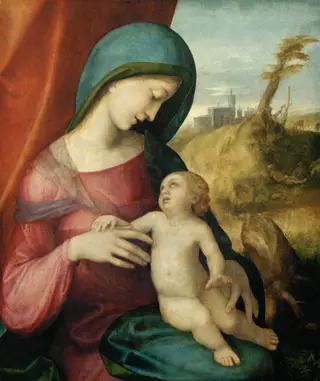
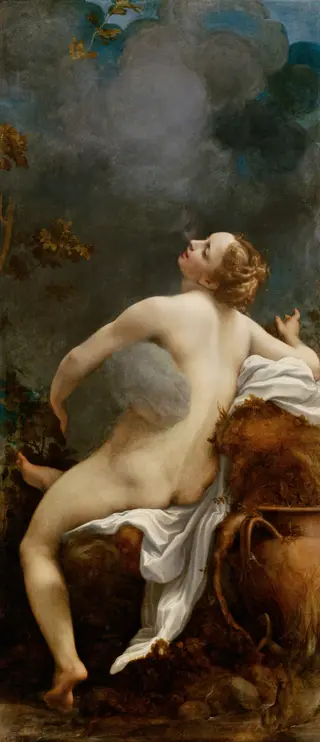
- Madonna and Child with the Infant Saint John
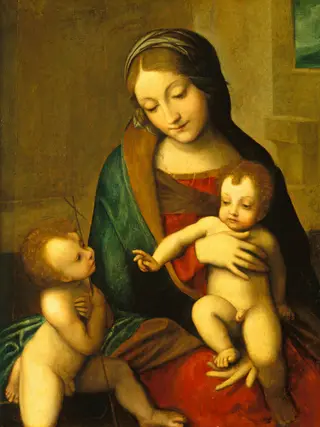 Madonna and Child with the Infant Saint John
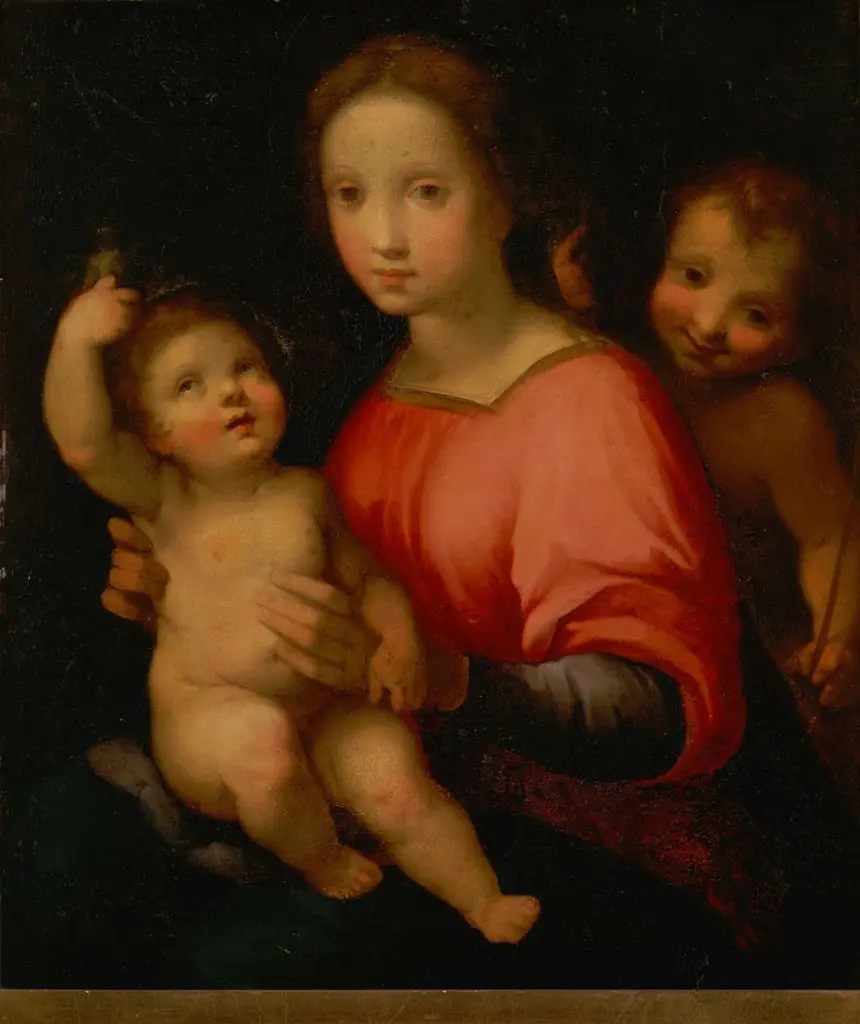 Madonna and Child with Saint John
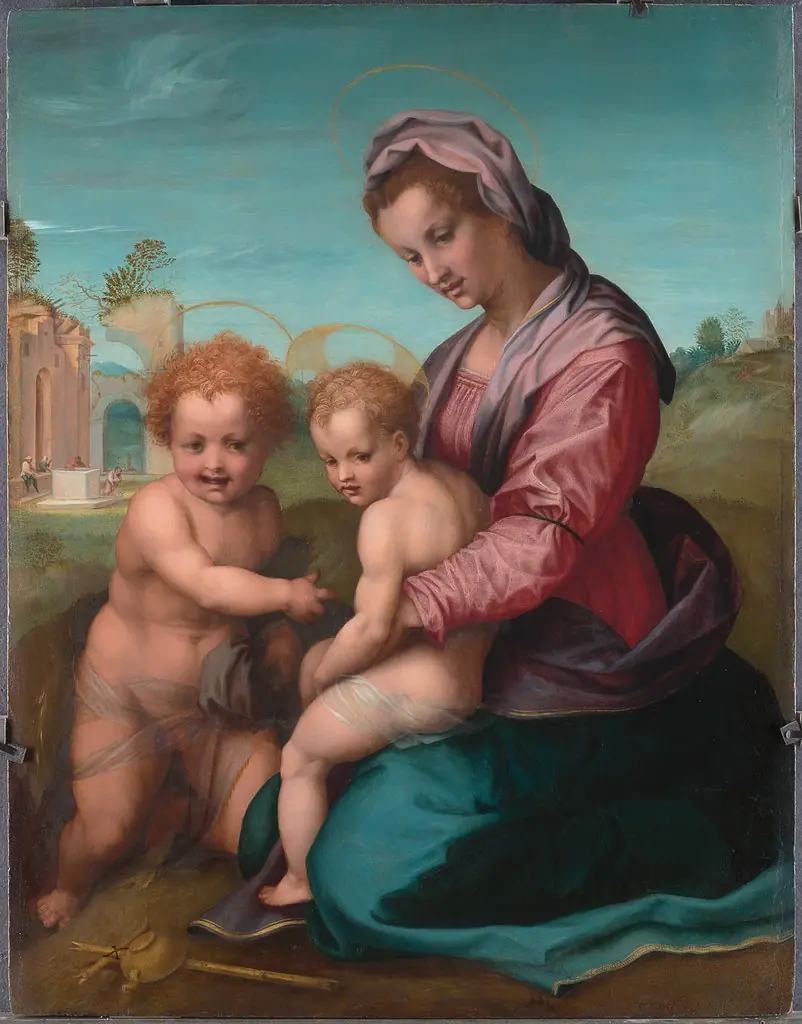 Madonna and Child with John the Baptist
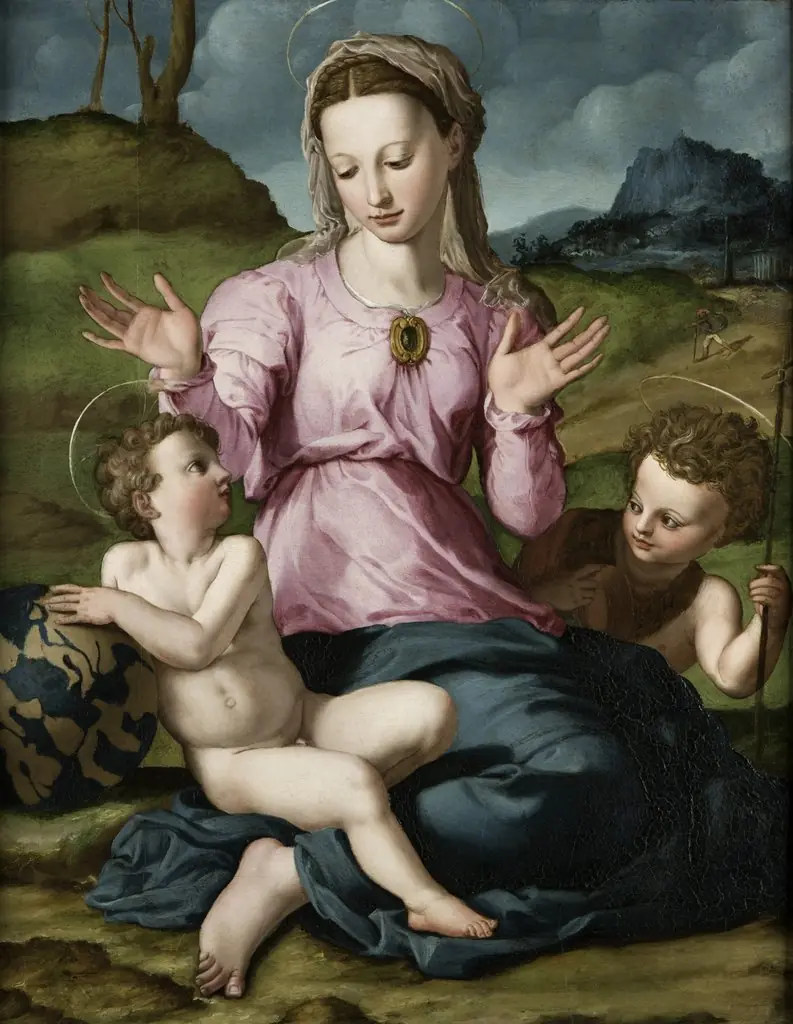 Madonna and Child with Saint John the Baptist
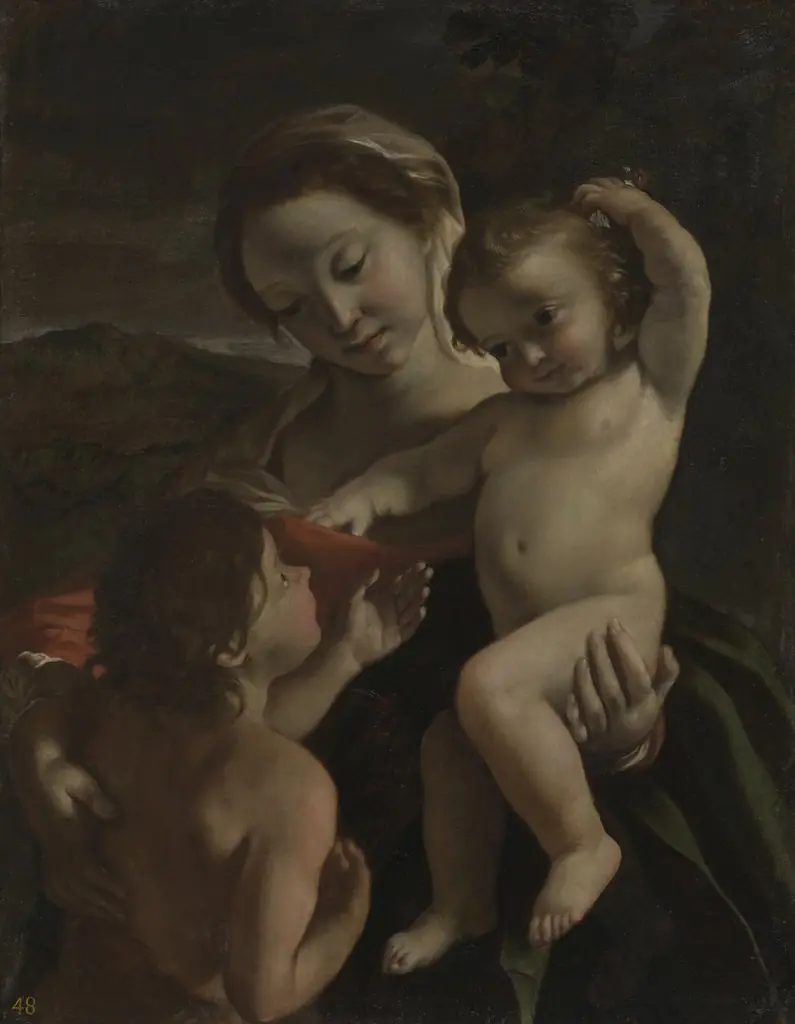 Madonna and Child with the Infant Saint John the Baptist
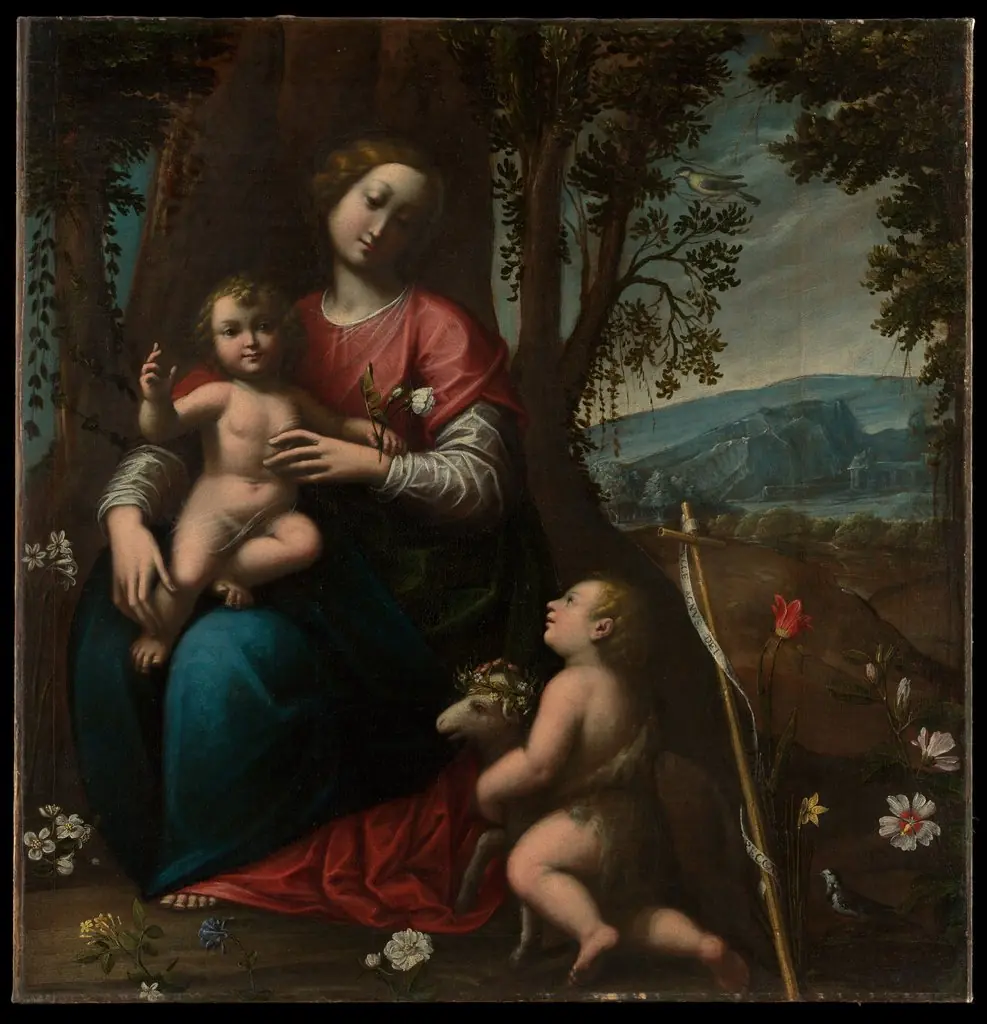 Madonna and Child with the Infant Saint John the Baptist