Artwork
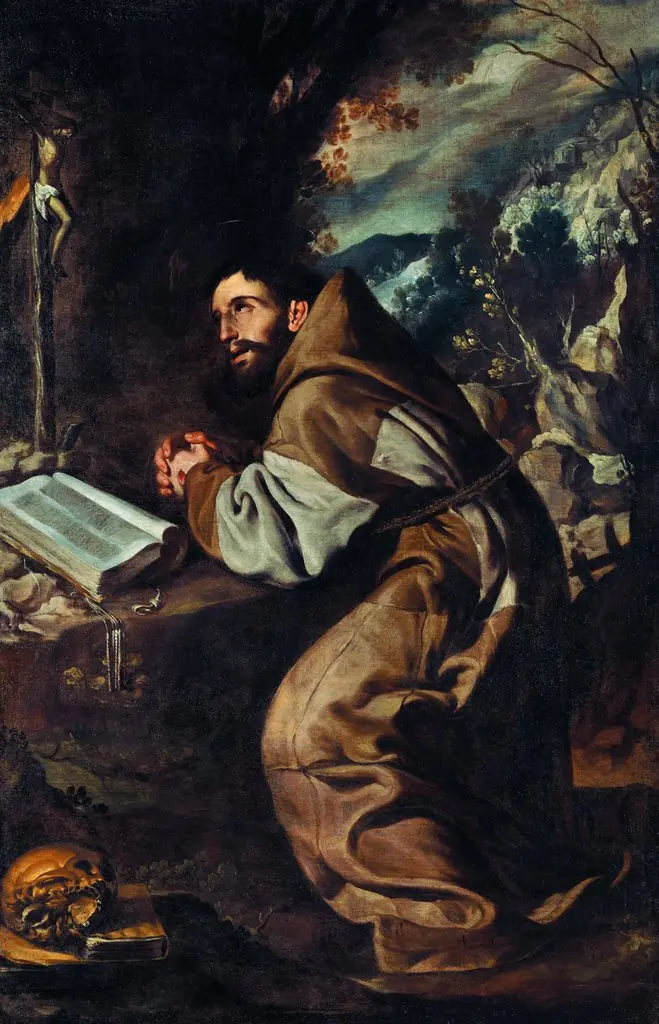
Saint Francis at Prayer
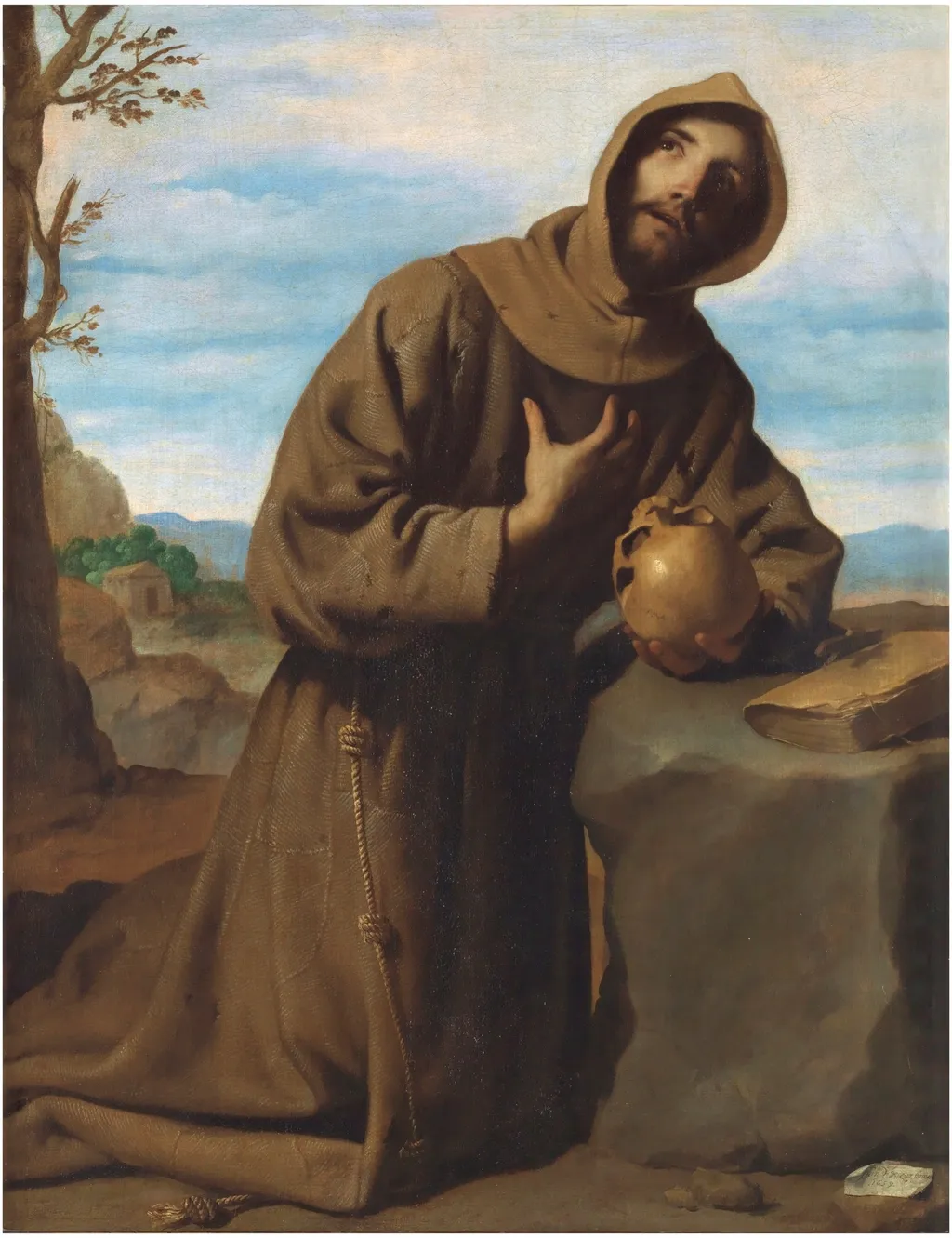
Saint Francis at Prayer is an oil painting by the Baroque artist Francisco de Zurbarán. It dates from 1659 and is held in the collection of the Museo del Prado.
About this work
Subject & Meaning
The skull functions as a memento mori, reminding viewers of the fleeting nature of earthly life, while the book suggests scholarly contemplation of the divine.
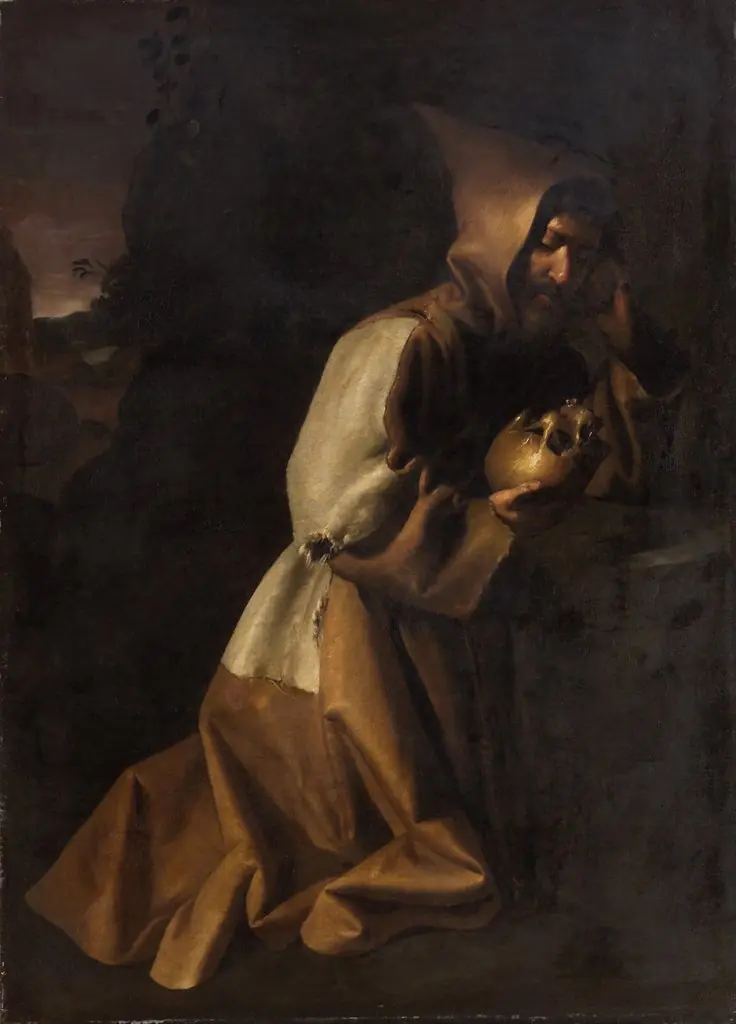
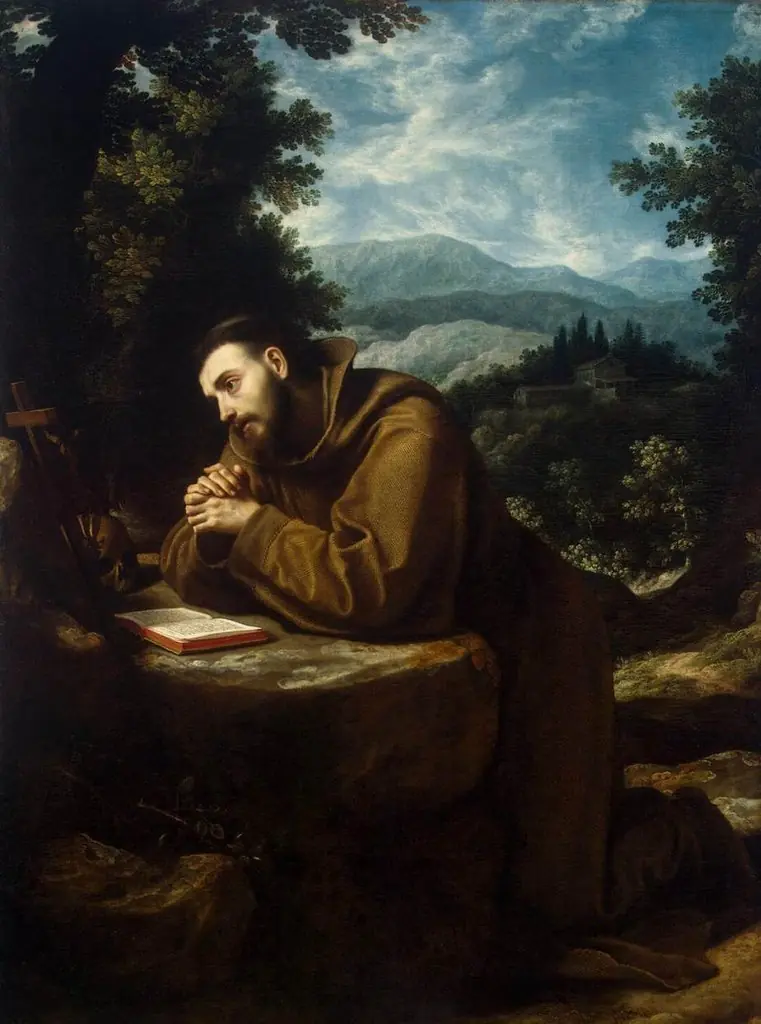
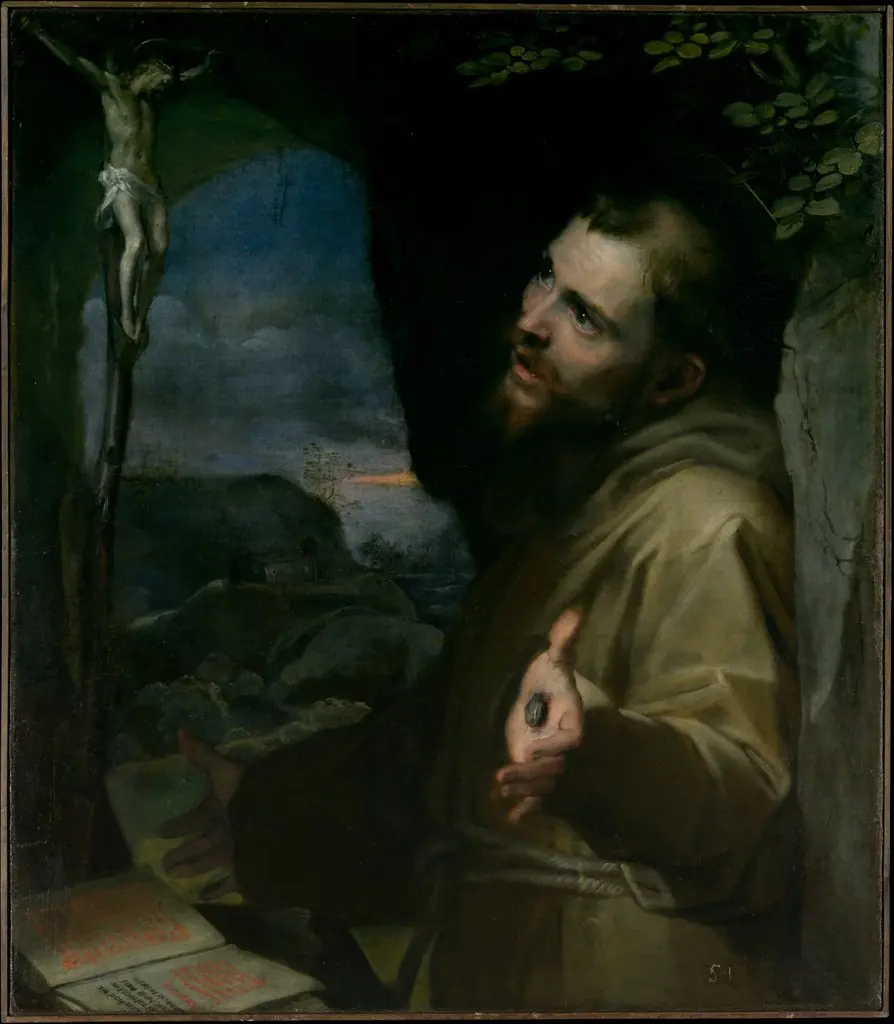
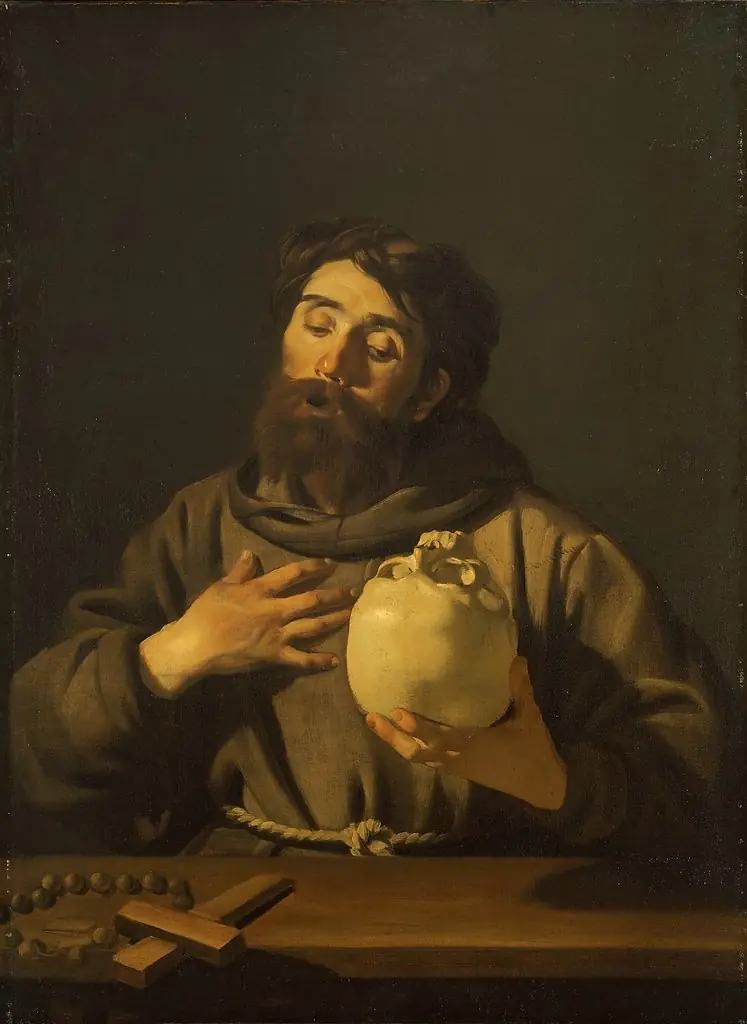
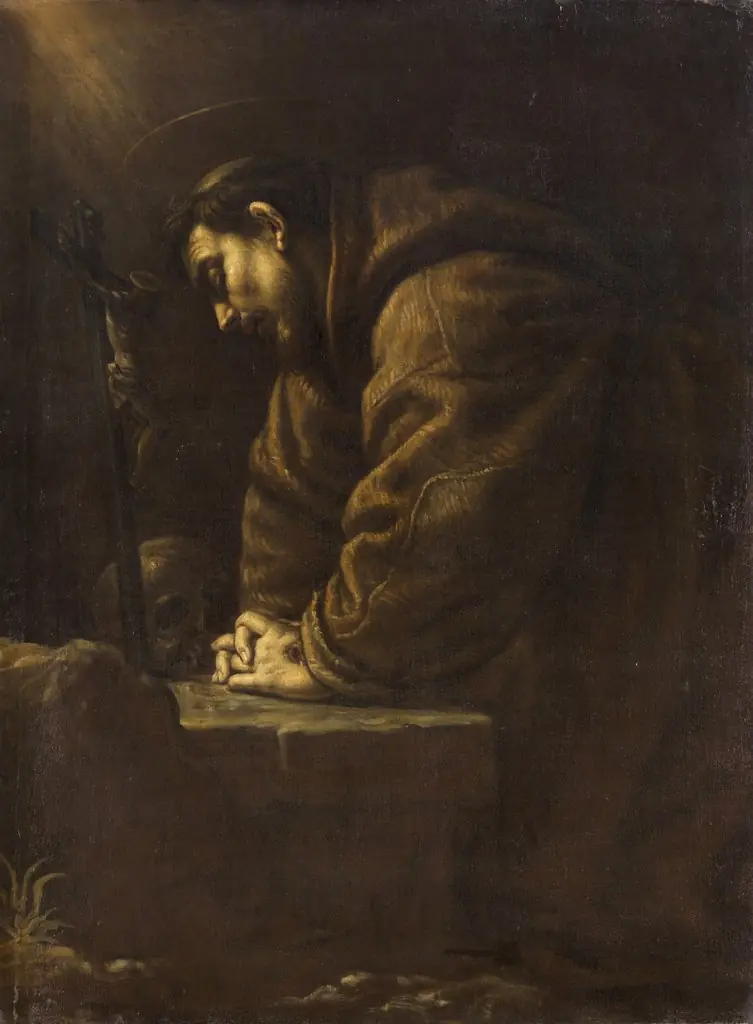
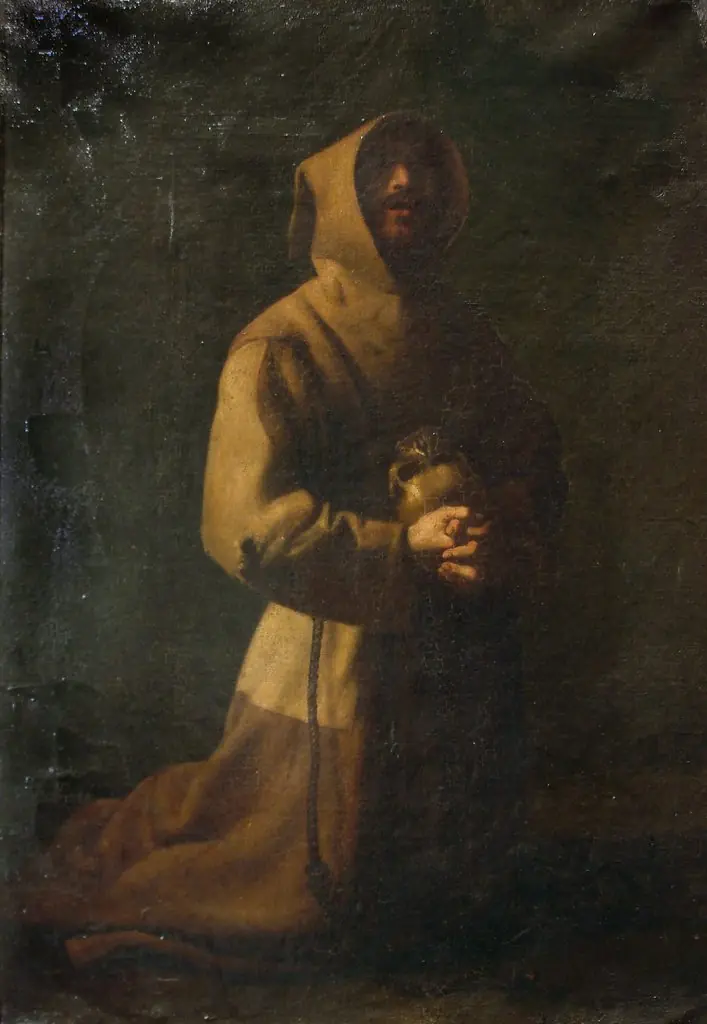
The painting depicts Saint Francis of Assisi in a moment of personal prayer, kneeling before a rock that holds a skull, a book, and a small crucifix. These objects form a still life that underscores themes of mortality and contemplative devotion. The skull functions as a memento mori, reminding viewers of the fleeting nature of earthly life, while the book suggests scholarly contemplation of the divine.
The modest crucifix emphasizes his devotion to Christ. Zurbarán renders the saint’s habit with meticulous realism, and the soft, late‑afternoon light bathes the scene, creating a spiritual atmosphere that highlights Francis’s interior dialogue with God without overt mystical rapture. The composition blends naturalistic detail with a refined Baroque aesthetic, reflecting the artist’s mature style after his move to Madrid.
The work is housed in the Museo del Prado and was acquired by the museum in 2015 after a series of private collections and purchases.
Technique & Style
The work is an oil painting on canvas, measuring 126 cm by 97.1 cm according to the Museo del Prado, and it was created in 1659. The composition shows Saint Francis kneeling before a rock that holds a skull, a book and a small crucifix, rendered with meticulous realism. Light falls from the setting sun, giving the scene a tenebrist quality softened by a refined, later‑period style.
The saint’s habit, hand gestures and expressive face convey interior spirituality without overt mysticism, while background elements such as a distant hermitage reinforce the contemplative mood. The painting is signed and dated in the lower right corner, and its provenance traces from private collections in Madrid and Bilbao to a purchase by Plácido Arango in 1983 and a bequest to the Museo del Prado in 2015.
History & Provenance
Executed in 1659 and signed on the lower right, the work belongs to Zurbarán’s late Madrid period, marked by refined handling and a less stark tenebrism than his earlier Sevillian works.
The painting’s provenance traces from Madrid collector Ambrosio Serrano Beltrán before 1716, passing via his daughter’s dowry to the Urbina y Pimentel collection in Guadalajara. By 1815 it resided in the Madrid collection of Pablo Recio y Tello, later moving to the marquises of Astorga (counts of Altamira). It was held by Aureliano de Beruete by 1905, then by Félix Valdés around 1945 in Bilbao.
In 1983 Plácido Arango acquired it, and it was bequeathed to the Museo del Prado in 2015, where it is inventoried as P008207.
The work is held by the Museo del Prado, Madrid, with inventory number P008207.
It was exhibited in 1927 at the Exhibition of the Works of Francisco de Zurbarán in Madrid and in 1988 at the Zurbarán exhibition held at the Museo del Prado from May to July. It also appeared in the Altspanische Ausstellung (Old Spanish Exhibition) and the Exhibition of Spanish Paintings, both in Madrid in 1929, and in the Franciscan Exhibition: Seventh Centennial of the Death of Saint Francis of Assisi, held in 1926.
Context
Painted in 1659, Saint Francis at Prayer belongs to the final phase of Francisco de Zurbarán's career, after his definitive move from Seville to Madrid. In this late period the pronounced tenebrism of his earlier works gave way to a more refined style, and the canvas is regarded as one of his most accomplished renderings of the saint, depicting Francis's dialogue with God with great naturalism. The figure's flexible posture, elegant right hand, and softly illuminated face, free of ascetic severity, reflect the patrons' desire for a spiritualized portrait rather than austere earlier treatments.
The work is catalogued as number 267 in Odile Delenda's critical catalogue of Zurbarán and as number 484 by Tiziana Frati, and has been included in major exhibitions devoted to the painter and to Saint Francis, including the Franciscan Exhibition marking the seventh centenary of the saint's death. It entered the Museo del Prado through a 2015 bequest.
Overview
Created in 1659 by the Spanish painter Francisco de Zurbarán, this oil on canvas depicts a solitary figure in a moment of devotion. The work is part of the collection of the Museo del Prado, where it is displayed among other Baroque religious compositions.
Own this work as a print
Artist & collection
Artist
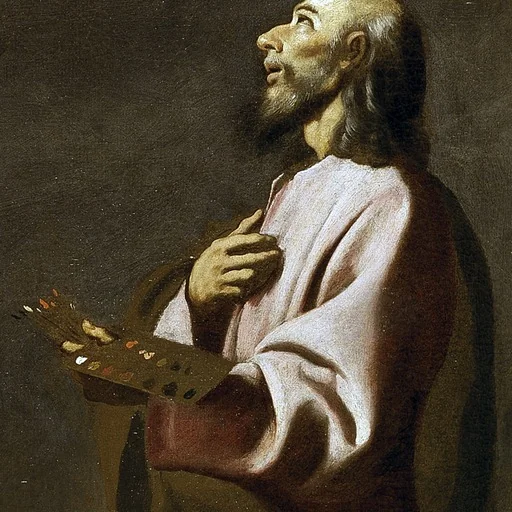
Francisco de Zurbarán was a Spanish Baroque painter. He is known primarily for his religious paintings depicting monks, nuns, and martyrs, and for his still-lifes. Zurbarán gained the nickname "Spanish Caravaggio",…