Artwork
The Defense of Cadiz Against the English
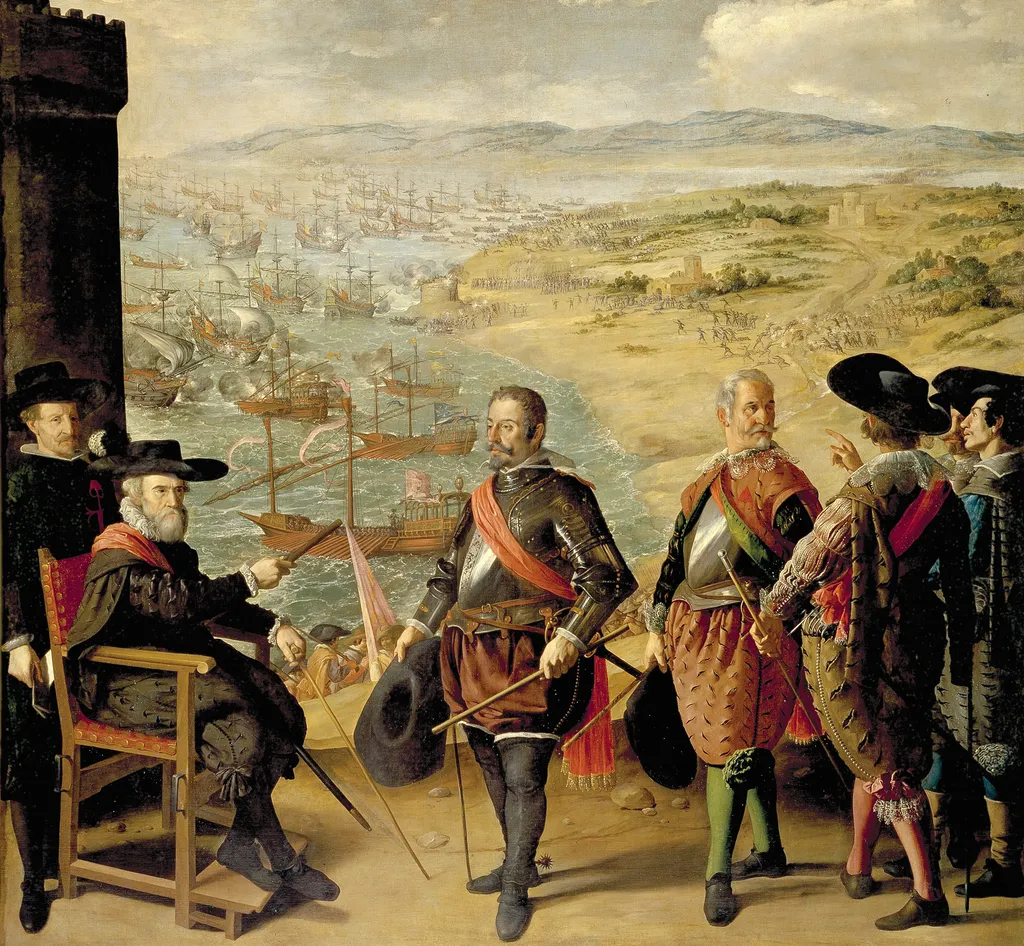
The Defense of Cadiz Against the English is an oil painting by the Early Baroque Italian artist Francisco de Zurbarán. It dates from 1634 and is held in the collection of the Museo del Prado.
About this work
A large oil battle scene by the Spanish painter Francisco de Zurbarán. He made it in 1634 for the king's palace in Madrid, picturing an event from decades earlier, when Spain defended the city of Cádiz against an English attack.
Subject & Meaning
The composition is divided into two distinct zones: a theatrical foreground featuring dignitaries and a maritime background showing the enemy landing.
The painting depicts the 1625 Cádiz Expedition, illustrating the Spanish defense against an Anglo-Dutch fleet commanded by Edward Cecil. The composition is divided into two distinct zones: a theatrical foreground featuring dignitaries and a maritime background showing the enemy landing. In the front, Governor Fernando Girón, depicted with gout and using a walking stick, issues orders to subordinates like Diego Ruiz, surrounded by elegantly dressed officers.
Their detailed armor and specific gestures emphasize Spanish command and resilience. The background portrays the hostile landing of English troops near the El Puntal fort in the Bay of Cádiz. Originally part of a decorative scheme for the Hall of Realms at the Buen Retiro Palace, the work functions as a piece of political propaganda celebrating Spanish military strength and the successful repulsion of foreign invaders during the reign of Philip IV.
Technique & Style
Executed in oil on canvas, this large-scale history painting measures 302 by 323 centimeters. Zurbarán constructed the composition with a theatrical division between a detailed foreground and a conventional maritime background, separated visually by a tower on the left. The foreground features meticulously rendered portraits of Spanish dignitaries, characterized by excellent coloration, precisely drawn hands, and armor that gleams under the light.
While the figures are animated through varied postures and the handling of props like hats and swords, critics note a lack of full spatial integration between the foreground group and the distant landscape depicting the English landing. Although the weaker background elements were historically attributed to Jusepe Leonardo, current scholarship assigns them to Zurbarán and his assistants, acknowledging a slight disconnect in the overall spatial unity.
History & Provenance
The Defense of Cádiz Against the English was commissioned by the Spanish Royal Family for the Hall of Realms in the Buen Retiro Palace, where Zurbarán painted it in 1634 (or 1634‑1635) as part of a decorative program that also included the Hercules labors and other battle scenes. Although initially attributed to Eugenio Caxés, a 1945 payment document identified Zurbarán as the artist. The work remained in the Buen Retiro until 1794, then was taken to the Musée Napoléon (Louvre) between 1813 and 1815, transferred to the Real Academia de San Fernando in 1818, and entered the Museo del Prado in 1824, where it has remained; Ferdinand VII of Spain is recorded as an early owner.
The painting is housed in the Museo del Prado in Madrid, where it is recorded under inventory number P006656. Its provenance traces the work from the Hall of Realms at the Buen Retiro Palace, where it was installed in 1634, to a period in Paris when it was held by the Musée Napoléon (now the Louvre) between 1813 and 1815, and later to the Real Academia de San Fernando before its incorporation into the Prado’s collection in 1824. The Prado has exhibited it as part of the show “The Palace of the Planet King: Philip IV and the Buen Retiro,” a presentation documented in the museum’s exhibition history.
Context
Initially misattributed to Eugenio Caxés, the work was definitively reattributed to Francisco de Zurbarán in 1945 by María Luisa Caturla, who identified a 1634 payment record for two large battle canvases. The painting was created for the Hall of Realms at the Buen Retiro Palace, functioning as part of a broader decorative cycle alongside works by Velázquez and Maino that celebrated Spanish military prowess. Art historical analysis notes its theatrical composition, which separates dignitary portraits in the foreground from a conventional maritime background depicting the 1625 Cádiz expedition.
While the background was once thought to be the work of Jusepe Leonardo, scholars now attribute it to Zurbarán and his assistants, though they observe a lack of full integration between the figures and the landscape. The piece remains a significant example of Spanish Baroque history painting within the court of Philip IV.
Legacy
The Defense of Cádiz Against the English was commissioned for the Hall of Realms at the Buen Retiro Palace, joining Velázquez’s The Surrender of Breda and Maino’s The Recovery of Bahía de Todos los Santos in a royal decorative program. Its inclusion elevated Zurbarán’s standing as a history painter and influenced later Baroque decorative cycles. Initially misattributed to Eugenio Caxés, a 1945 study by María Luisa Caturla confirmed Zurbarán’s authorship through a payment record, solidifying scholarly consensus.
The work remains in the Museo del Prado, featured in exhibitions such as “The Palace of the Planet King” and widely discussed in encyclopedic entries.
Overview
Francisco de Zurbarán's The Defense of Cadiz Against the English is a large oil painting completed in 1634. It depicts a historical event from 1625, showing the Spanish forces preparing to repel an English attack on the city of Cádiz. This significant work, executed on canvas, is now housed in the Museo del Prado in Madrid, where it remains an important example of Spanish Baroque history painting.
Own this work as a print
Artist & collection

Artist
Francisco de Zurbarán was a Spanish Baroque painter. He is known primarily for his religious paintings depicting monks, nuns, and martyrs, and for his still-lifes. Zurbarán gained the nickname "Spanish Caravaggio",…





- The Battle of Levenc 1664
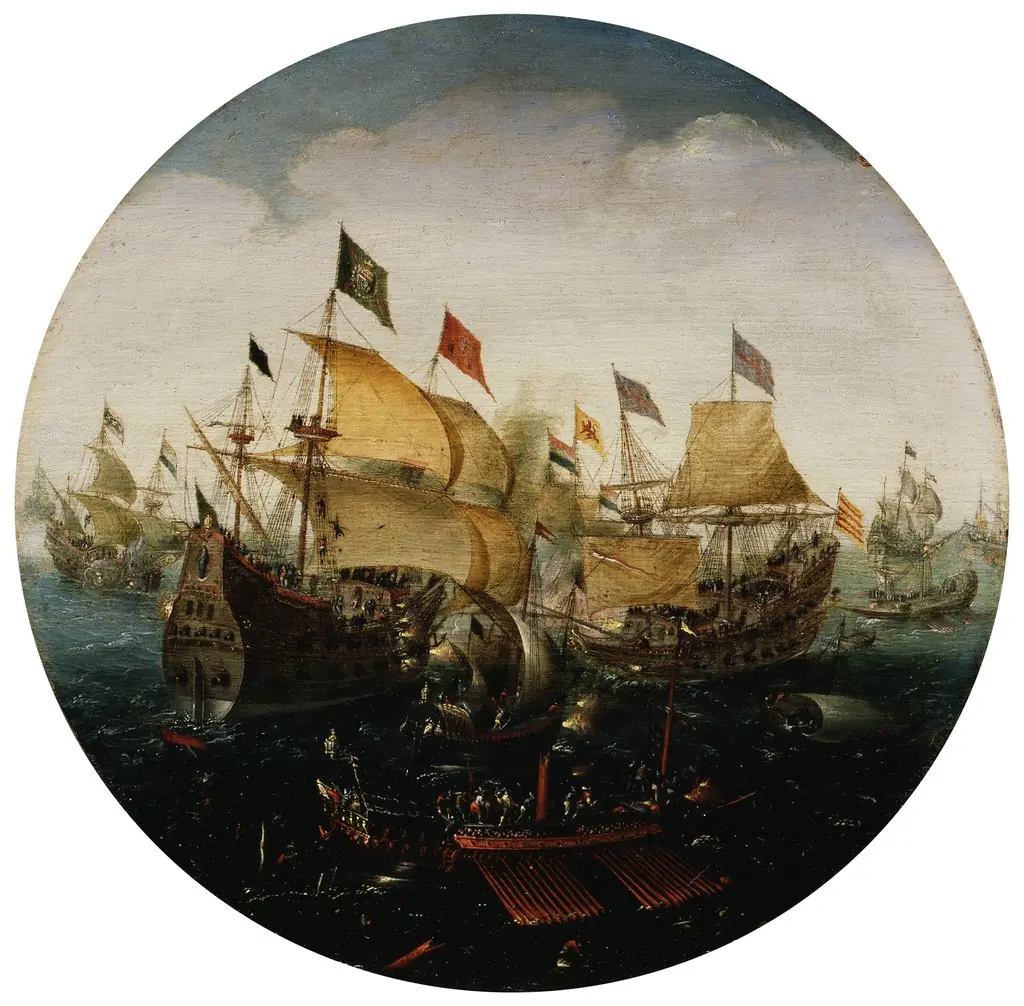 Sea Battle between Dutch and Spanish Ships
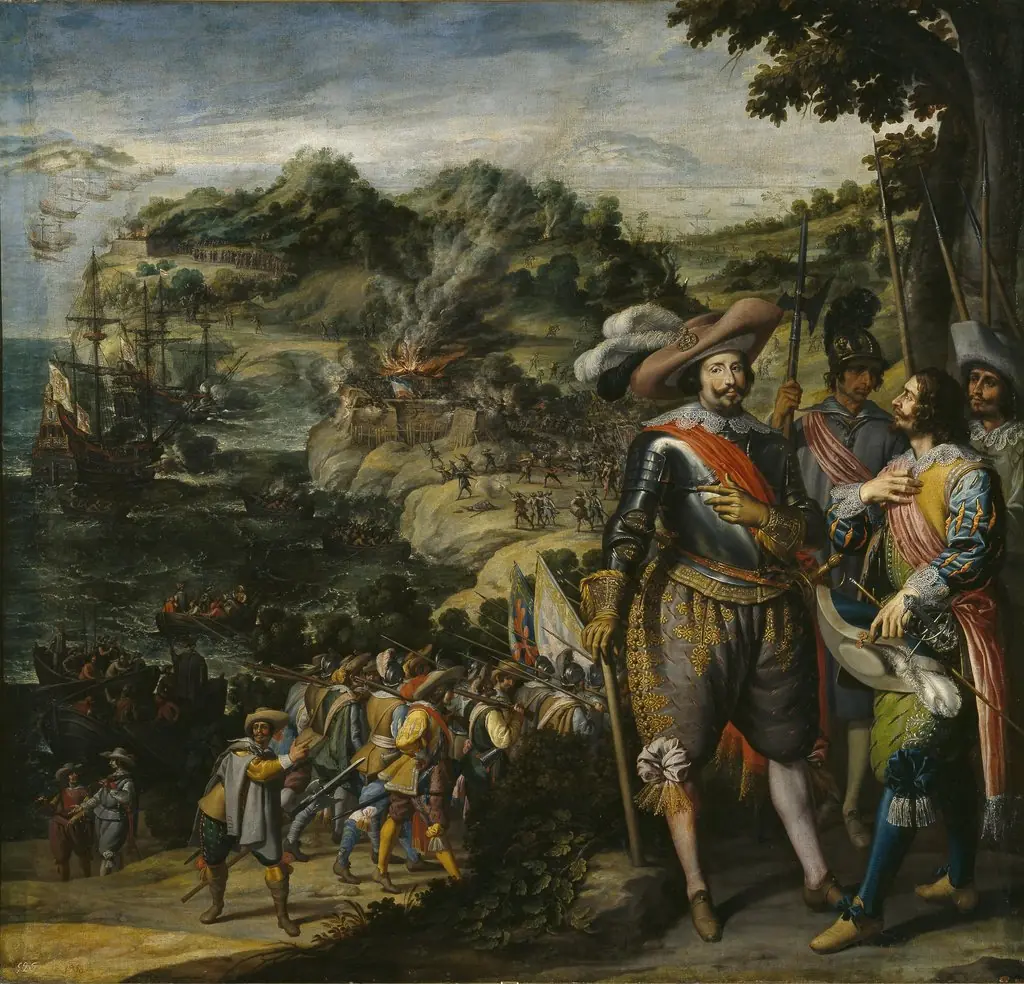 The recovery of the island of San Cristobal by Don Frederic of Toledo
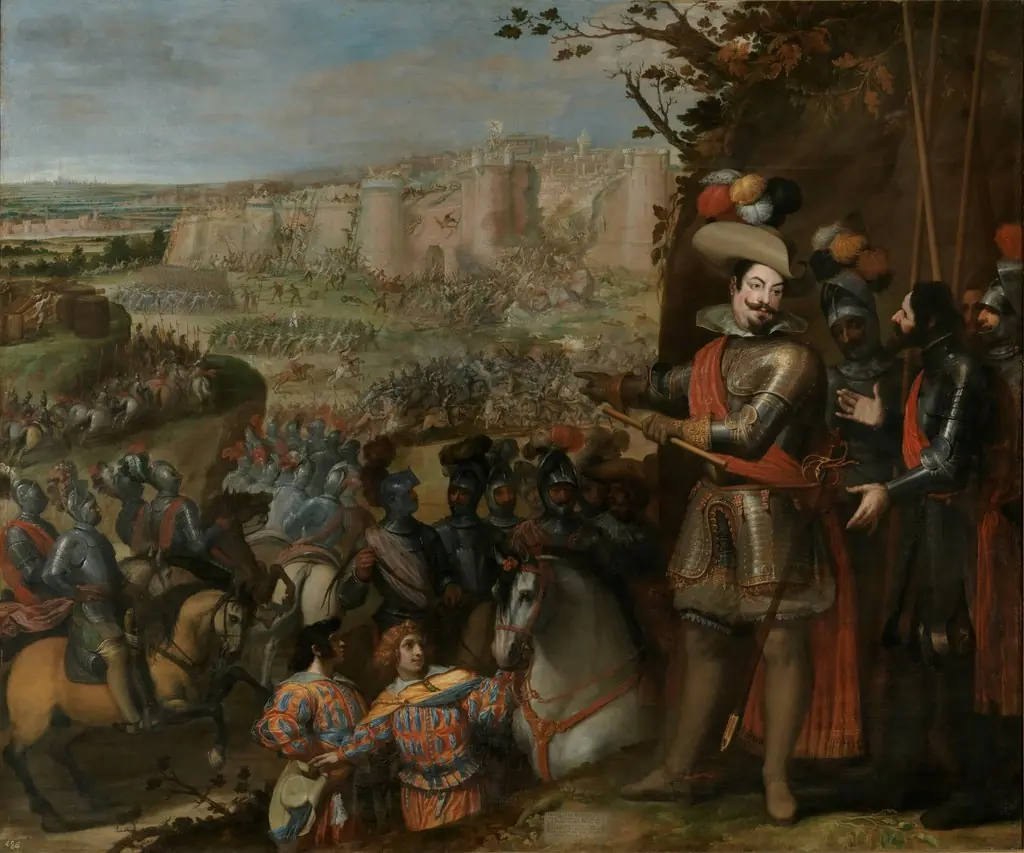 The Storming of Rheinfelden
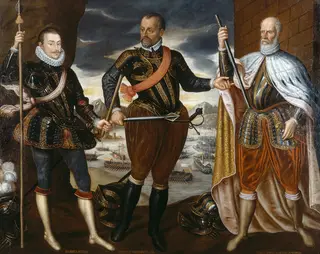 Die Sieger der Seeschlacht von Lepanto 1571
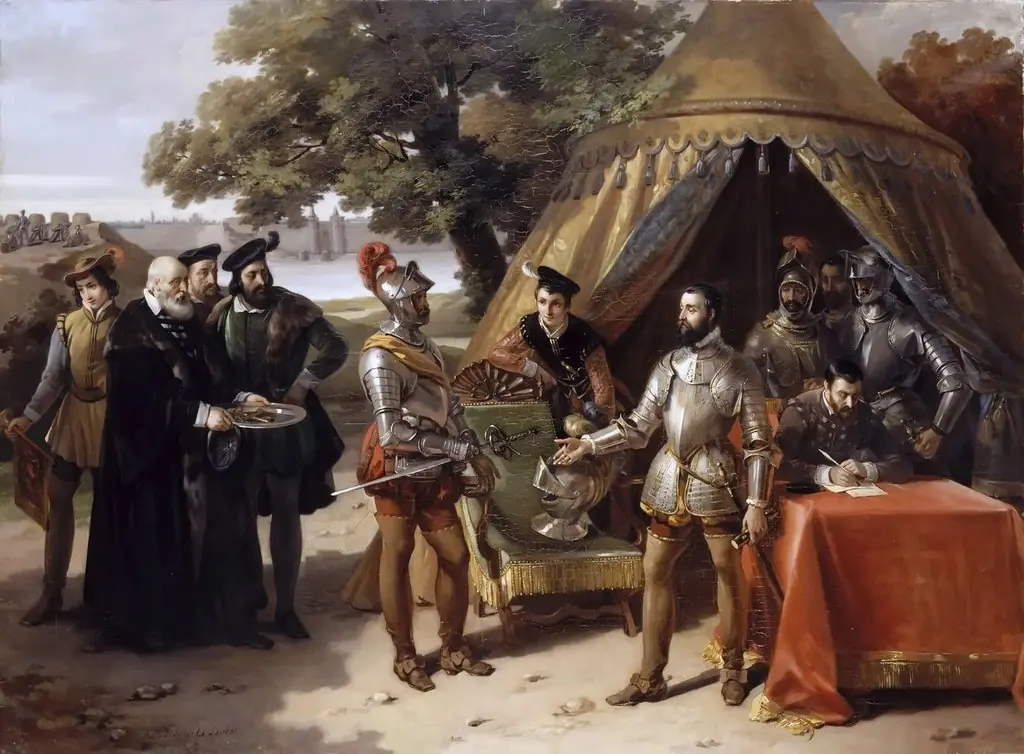 The Siege of Thionville, 23 June 1558
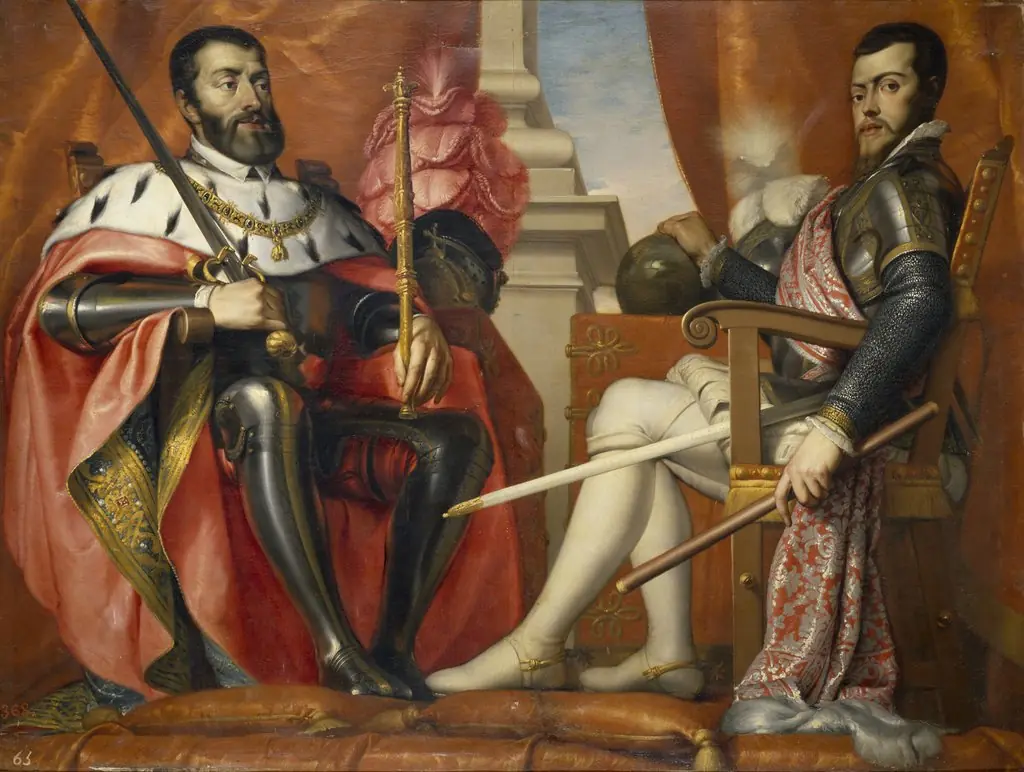 Charles V and Philip II
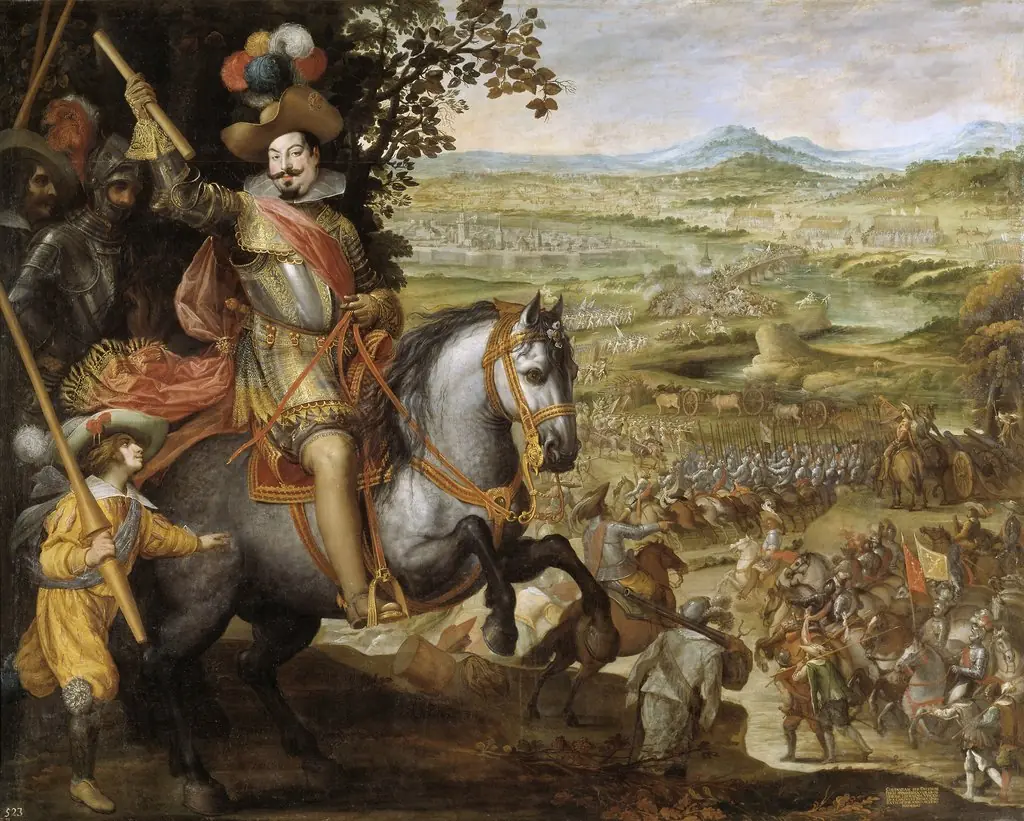 The Relief of Constance
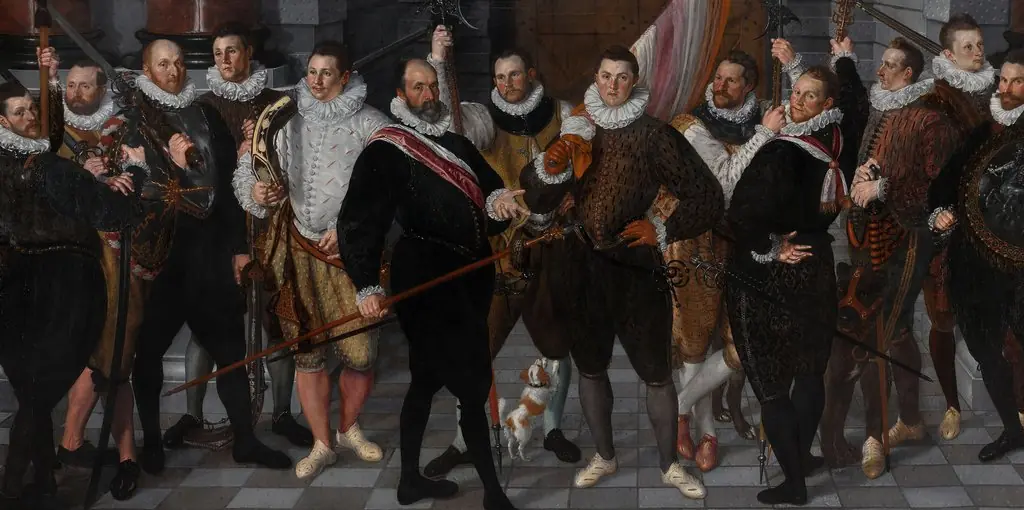 The Company of Captain Dirck Jacobsz Rosecrans and Lieutenant Pauw
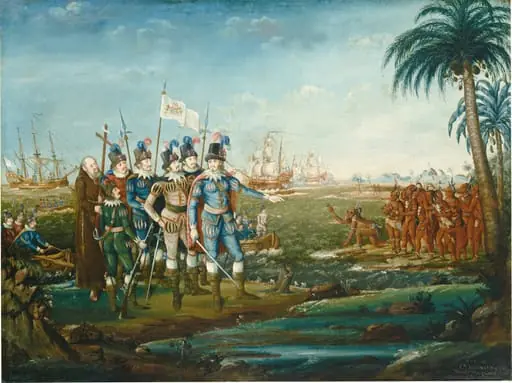 First Landing of Christopher Columbus
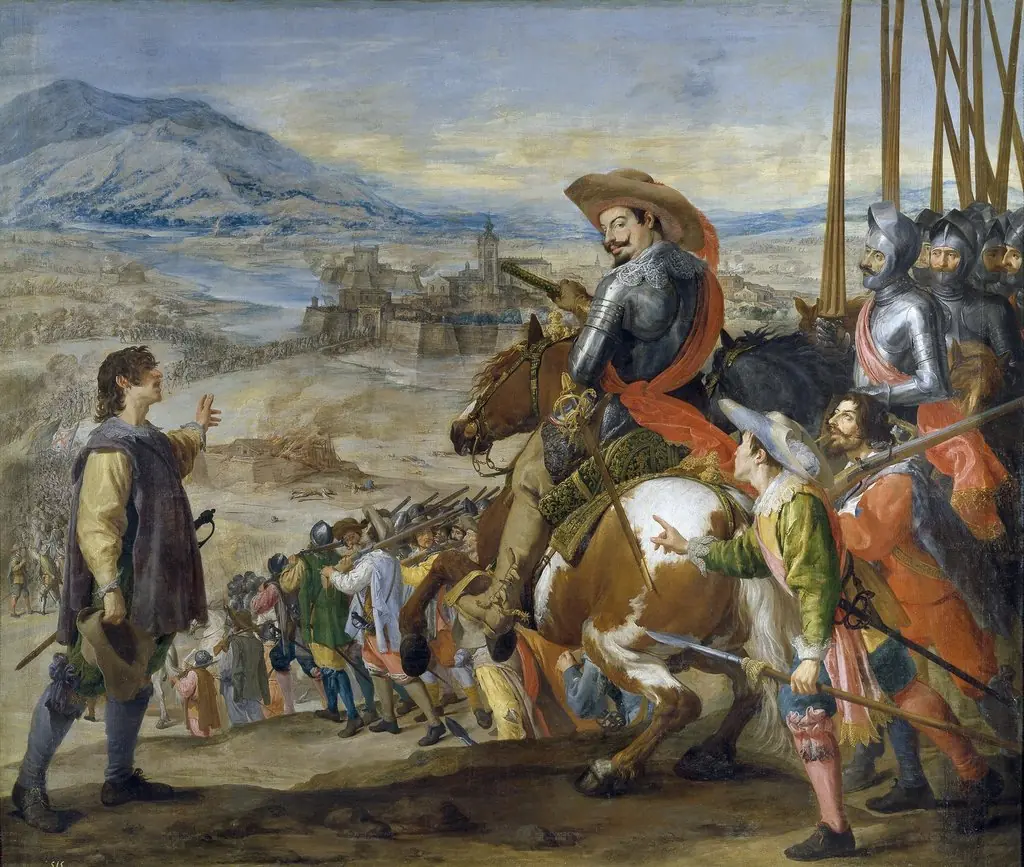 The Liberation of Brisach
 The Spanish Armada off the English coast