Artwork
Saint Lucy
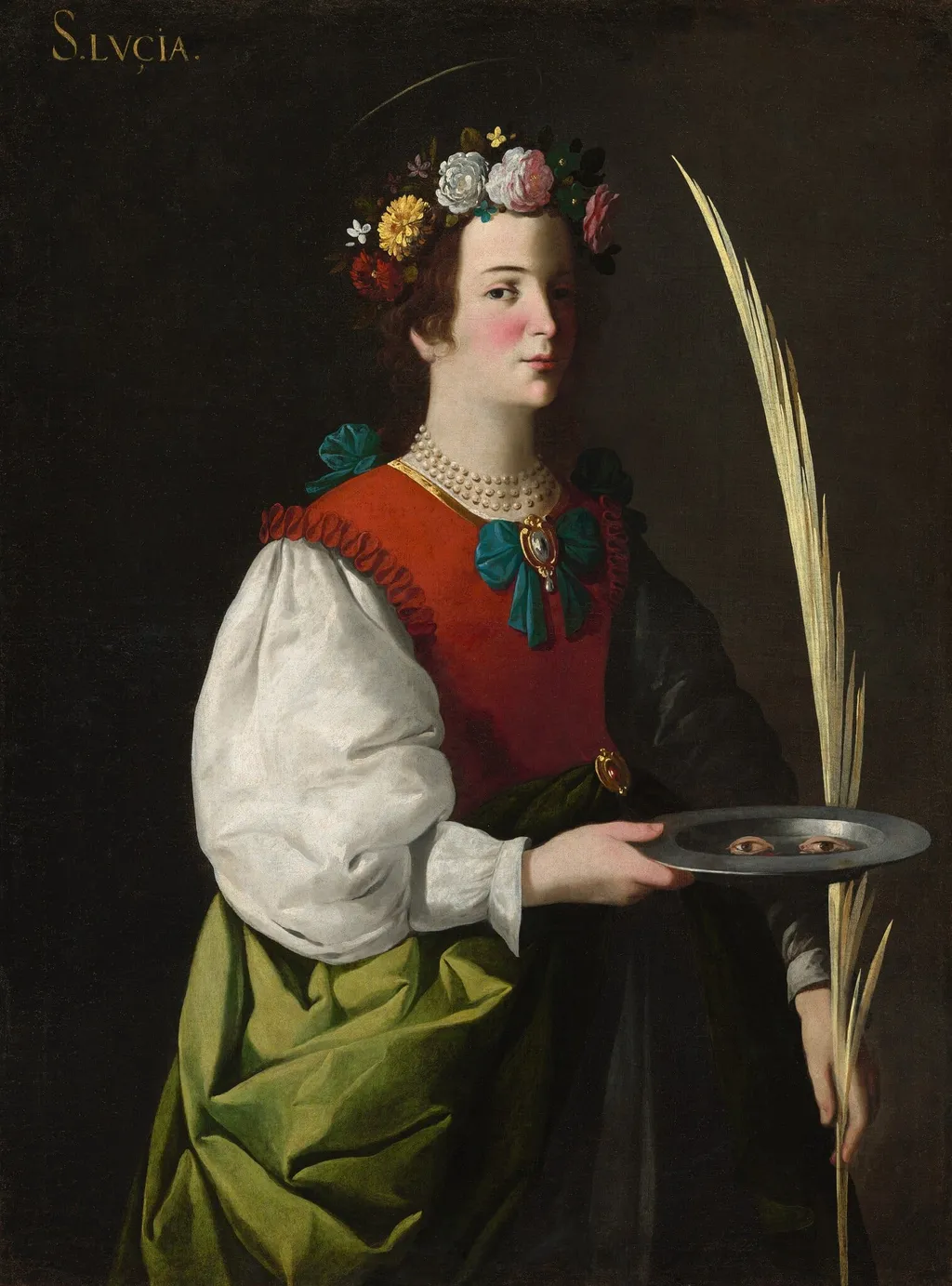
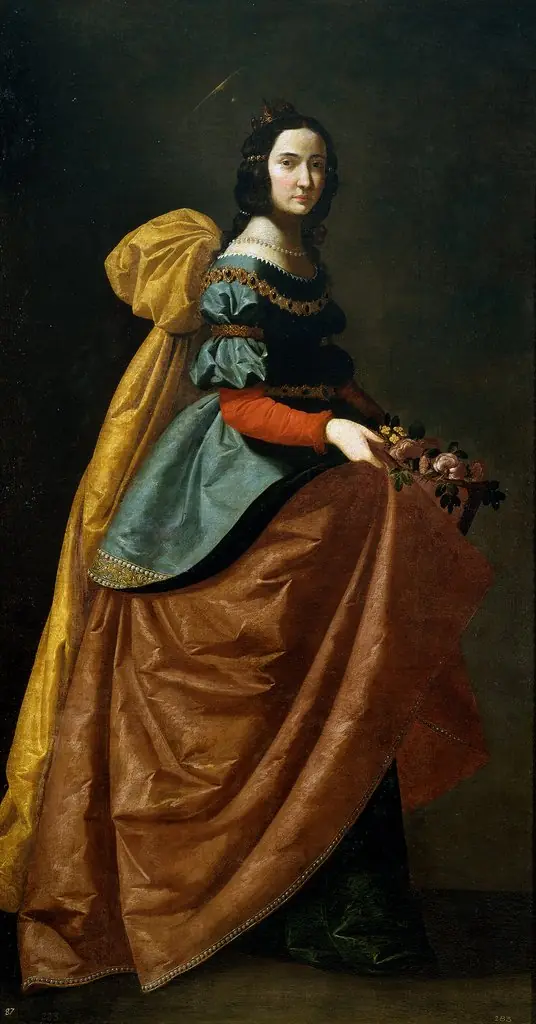
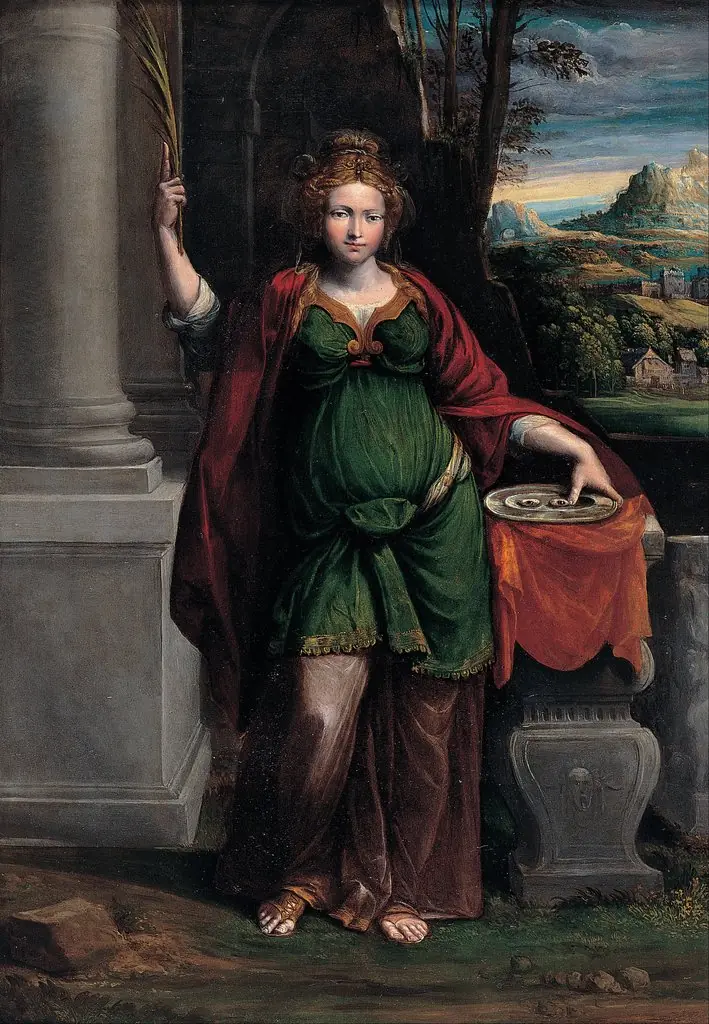
Saint Lucy is an oil painting by the Baroque artist Francisco de Zurbarán. It dates from 1628 and is held in the collection of the National Gallery of Art.
- Inscription
- Inscribed:upper left: S.LVCIA
About this work
Subject & Meaning
The work stands as a visual representation of the saint within the context of seventeenth-century Spanish religious painting.
Francisco de Zurbarán's 1628 oil painting depicts Saint Lucy as its sole subject, functioning as a work of religious art. The available records confirm the identity of the figure and the devotional genre but do not detail the iconographic attributes present in the composition, such as the eyes on a plate traditionally associated with the saint, nor elaborate the intended theological meaning. The work stands as a visual representation of the saint within the context of seventeenth-century Spanish religious painting.
Technique & Style
Saint Lucy by Francisco de Zurbarán is executed in oil on canvas, a support typical of his 17th-century religious works, and measures roughly 104 cm in height by 77 cm in width, as recorded in the National Gallery of Art's catalog. The composition presents the saint in a contemplative pose, rendered with the chiaroscuro and naturalistic detail characteristic of Zurbarán's devotional paintings. Its formal qualities reflect a Baroque emphasis on volumetric solidity and subdued lighting, with a tactile handling of pigment that underscores the materiality of the medium.
History & Provenance
Francisco de Zurbarán painted Saint Lucy in 1628, an oil on canvas classified as a religious painting. The work entered the Paris art market between 1927 and 1928 and was subsequently owned by Paul Somazzi in Izmir (Smyrna), Turkey. In 1930 Somazzi authorized Lily Buser of Philadelphia to act as his agent in selling the work, which passed through Ehrich Galleries in New York before Chester Dale acquired it in February 1934. Dale gifted the painting to the National Gallery of Art, Washington, D.C., in 1943, where it remains.
Overview
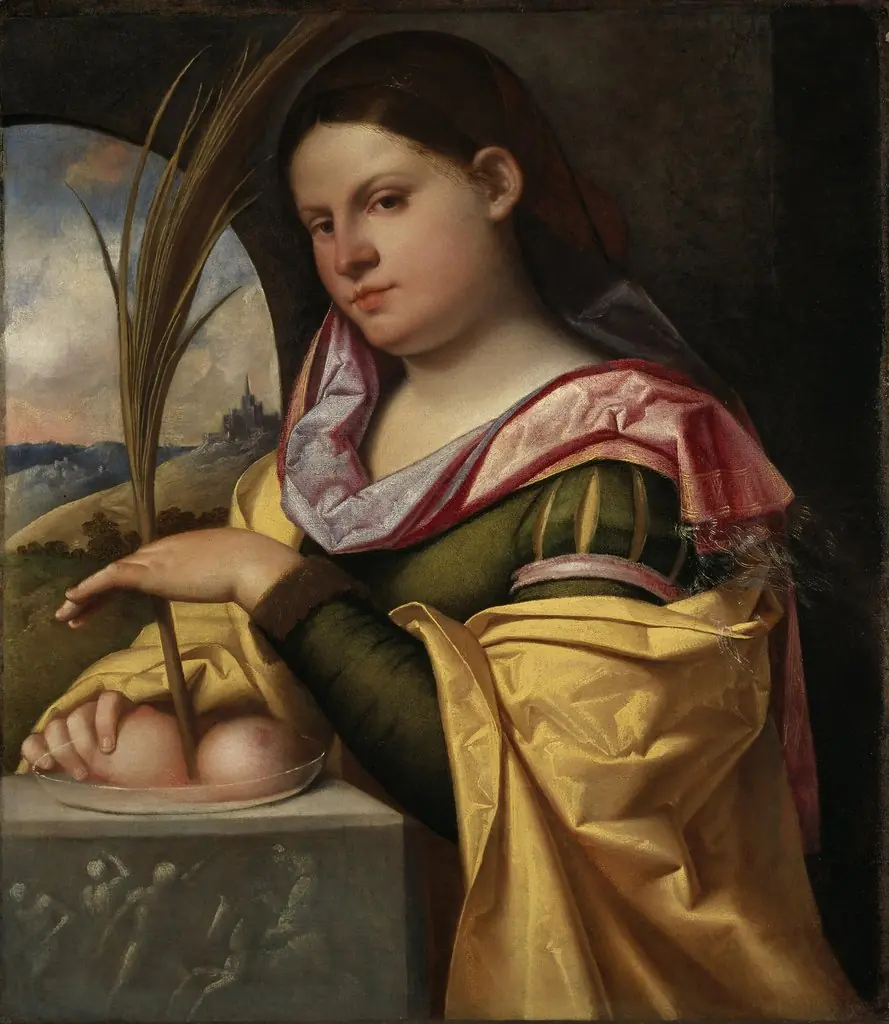
Painted by Francisco de Zurbarán between 1625 and 1630, this oil on canvas depicts Saint Lucy, the Christian martyr associated with light and vision. The composition presents the saint in a half-length format against a dark, undefined background, a hallmark of Zurbarán's tenebrist style. She is shown holding a plate bearing her eyes, the attribute of her martyrdom, while dressed in modest, simple garments that contrast with the luminous quality of her skin and the white cloth.
Her expression is serene and contemplative, directing the viewer's attention to her spiritual fortitude rather than the physical horror of her torture. Created during the artist's early maturity in Seville, the work exemplifies Zurbarán's mastery of chiaroscuro and his ability to infuse religious figures with a tangible, sculptural presence. The painting reflects the Counter-Reformation emphasis on direct emotional engagement and the veneration of saints, utilizing a restrained palette to highlight the sanctity of the subject.
This specific representation aligns with the artist's broader output of monastic and hagiographic works produced for Spanish churches and convents during the 1620s.
Own this work as a print
Artist & collection
Artist
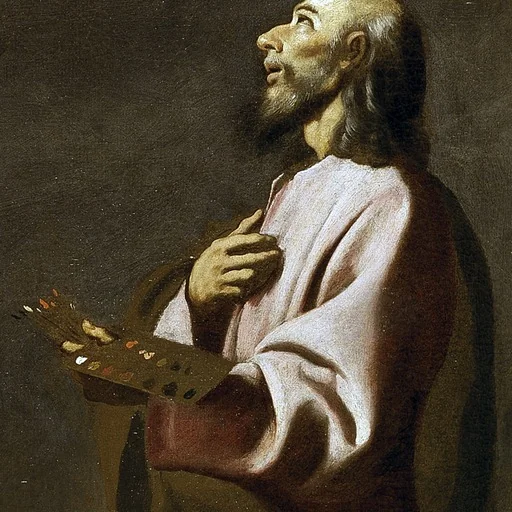
Francisco de Zurbarán was a Spanish Baroque painter. He is known primarily for his religious paintings depicting monks, nuns, and martyrs, and for his still-lifes. Zurbarán gained the nickname "Spanish Caravaggio",…