Artwork
Saint Jerome with Saint Paula and Saint Eustochium
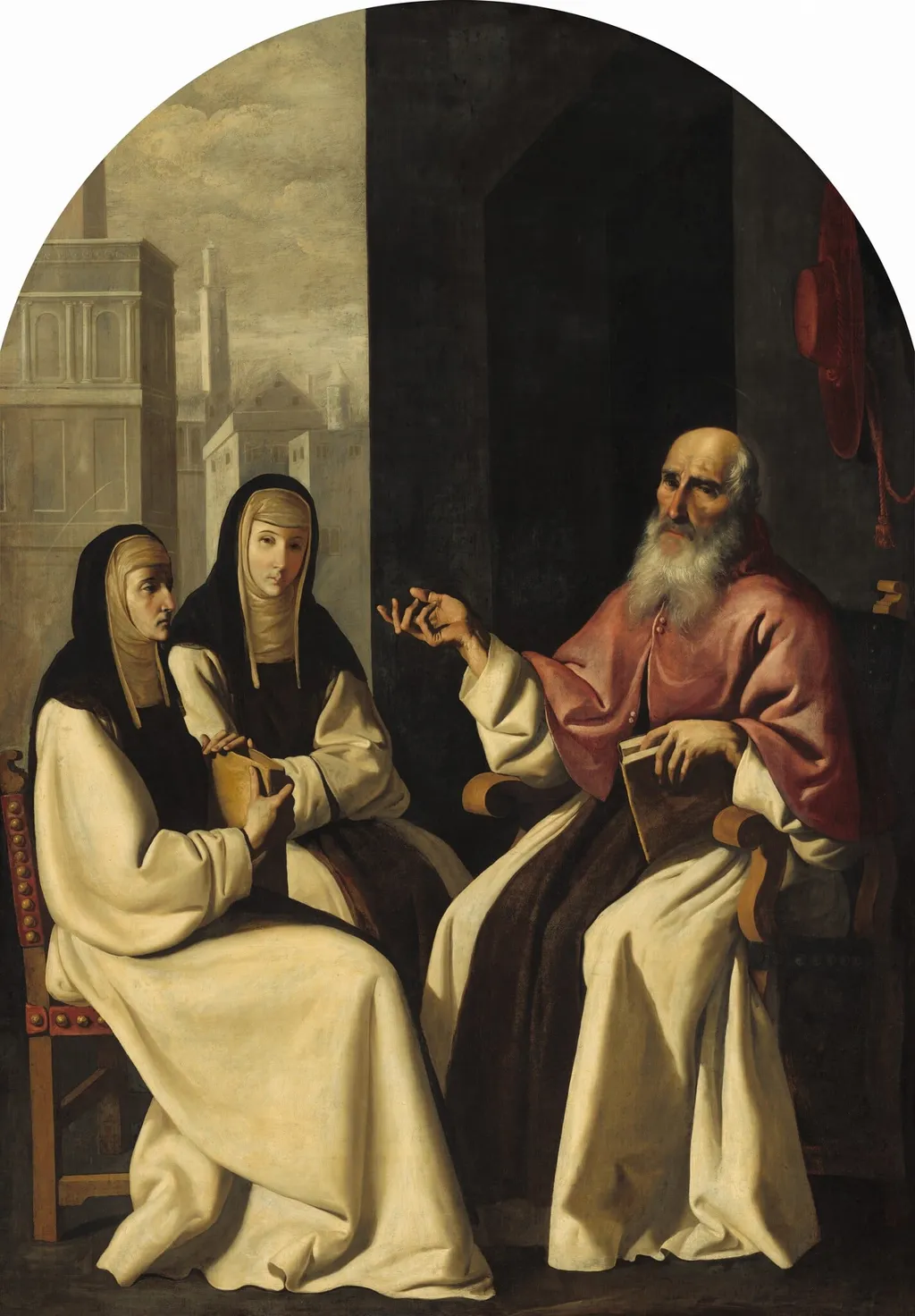
Saint Jerome with Saint Paula and Saint Eustochium is an oil painting by the Baroque artist Francisco de Zurbarán. It dates from 1645 and is held in the collection of the National Gallery of Art.
About this work
Technique & Style
The work is executed in oil on a fabric support, a technique documented for Zurbarán’s late religious paintings.
The work is executed in oil on a fabric support, a technique documented for Zurbarán’s late religious paintings. The composition depicts Saint Jerome alongside Saints Paula and Eustochium in a tightly framed, intimate arrangement, characterized by stark lighting and meticulous rendering of texture, typical of the artist’s chiaroscuro modeling. No explicit assessment of the painting’s physical condition is provided in the cited records, though its provenance records multiple transactions, indicating active handling and transfer between collectors and dealers.
History & Provenance
The work Saint Jerome with Saint Paula and Saint Eustochium, an oil on fabric painted by Francisco de Zurbarán in 1640, entered the collection of Frank Hall Standish, who bequeathed it to King Louis Philippe in 1840; it remained in the Galerie Espagnole of the Louvre until 1848. The painting was later sold at Christie, Manson & Woods in 1853 as "Légende de Saint Dominique," reappeared at Hôtel Drouot in 1869 and 1876 under the title "Evêque instruisant deux saintes religieuses," and was acquired by Maximo Scioletti before M. Knoedler & Co. bought it in 1951; it was sold to the Samuel H. Kress Foundation in February 1952 and gifted to the National Gallery of Art that year.
The painting Saint Jerome with Saint Paula and Saint Eustochium by Francisco de Zurbarán (1640) is currently in the National Gallery of Art, Washington, D.C., where it is catalogued as part of the Samuel H. Kress Collection (accession 2012.M.54). Its provenance traces from Frank Hall Standish, who bequeathed it to King Louis-Philippe, to sales in 1869 and 1876, then to Maximo Scioletti and the dealer Knoedler & Co., before its purchase by the Kress Foundation in February 1952 and donation to the NGA later that year. It was first exhibited in the Galerie Espagnole of the Louvre after 1848 and has been on view in the National Gallery of Art’s collection galleries since its acquisition.
Context
Francisco de Zurbarán’s 1640 oil on canvas, Saint Jerome with Saint Paula and Saint Eustochium, exemplifies the Spanish Baroque emphasis on austere monastic devotion. The composition, showing the saint in contemplation alongside Paula and Eustochium, reflects Counter‑Reformation ideals of penitential scholarship. Its provenance, originally owned by Frank Hall Standish, bequeathed to Louis‑Philippe, and later acquired by the Kress Foundation, illustrates the 19th‑century circulation of Spanish religious art in European collections.
Art historians consider the painting a mature example of Zurbarán’s religious oeuvre, noted for its stark realism and spiritual intensity.
Overview
Francisco de Zurbarán's Saint Jerome with Saint Paula and Saint Eustochium, painted around 1645, is an oil on fabric work depicting three significant figures from early Christian history. This religious painting presents the titular saints, known for their scholarly and ascetic lives, in a contemplative setting. The artwork exemplifies Zurbarán's characteristic approach to devotional subjects, combining solemnity with a focused realism.
Subject & Meaning
The composition centers on Saint Jerome, seated at a desk and engrossed in reading. Behind him stand Saint Paula and Saint Eustochium, both clad in austere black robes that signify their monastic dedication. A skull placed prominently on the desk serves as a traditional memento mori, a reminder of mortality and the transient nature of earthly life, underscoring the spiritual depth of the scene.
Own this work as a print
Artist & collection
Artist
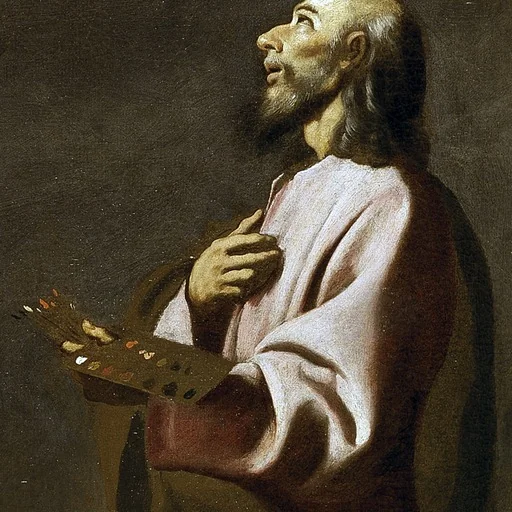
Francisco de Zurbarán was a Spanish Baroque painter. He is known primarily for his religious paintings depicting monks, nuns, and martyrs, and for his still-lifes. Zurbarán gained the nickname "Spanish Caravaggio",…

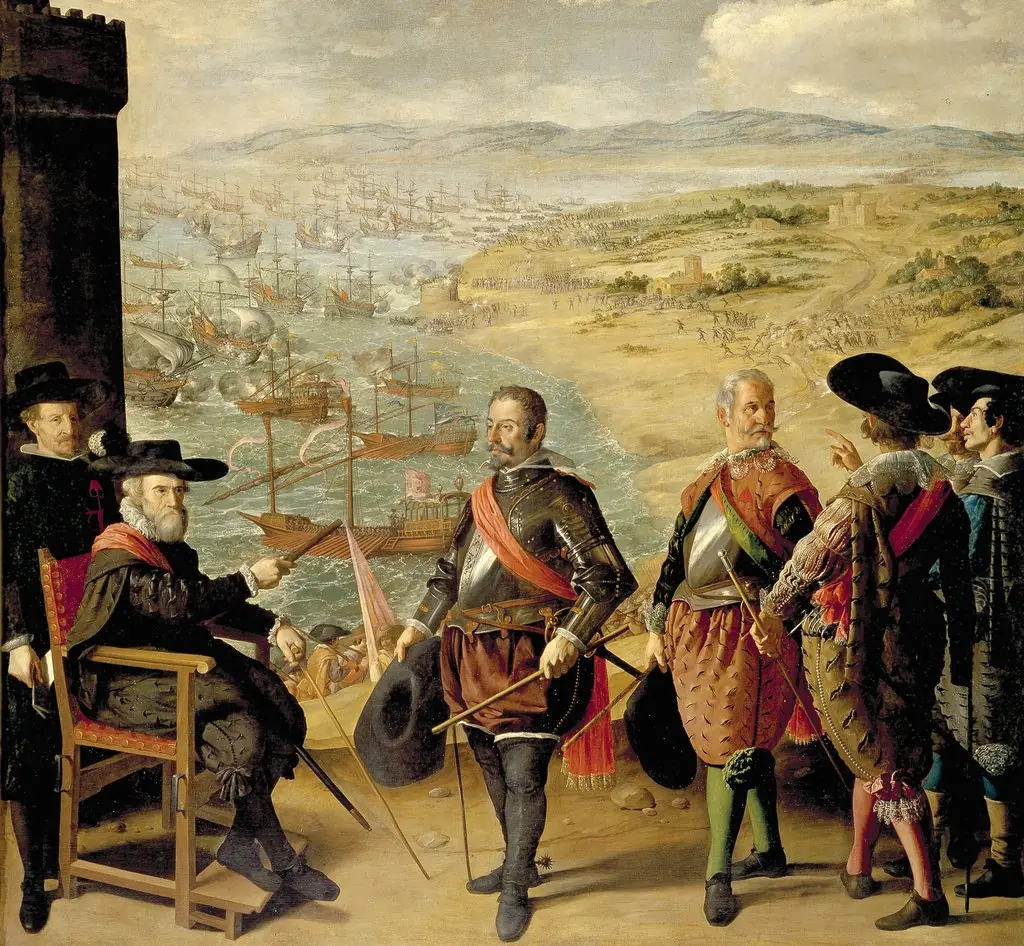
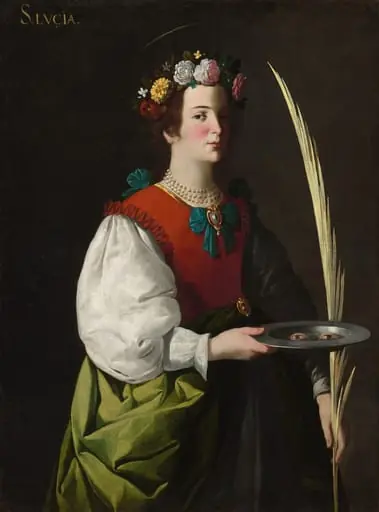
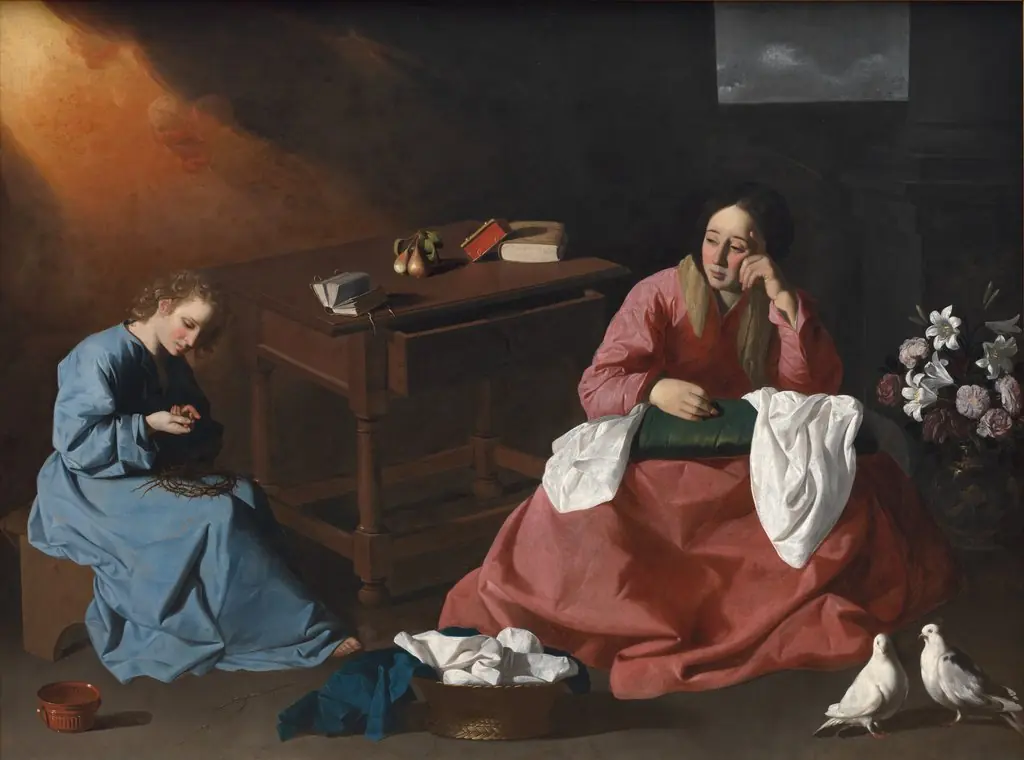
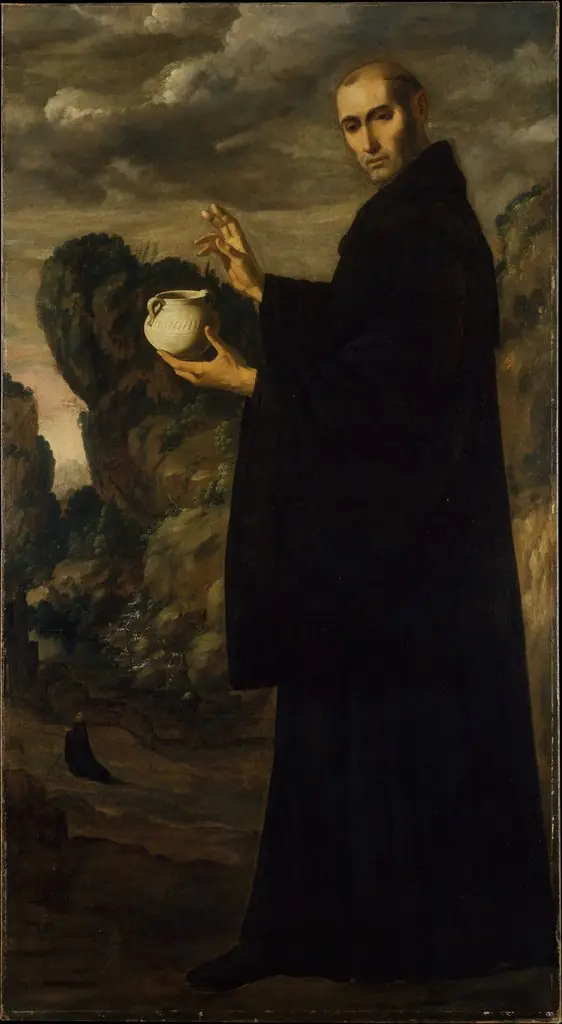
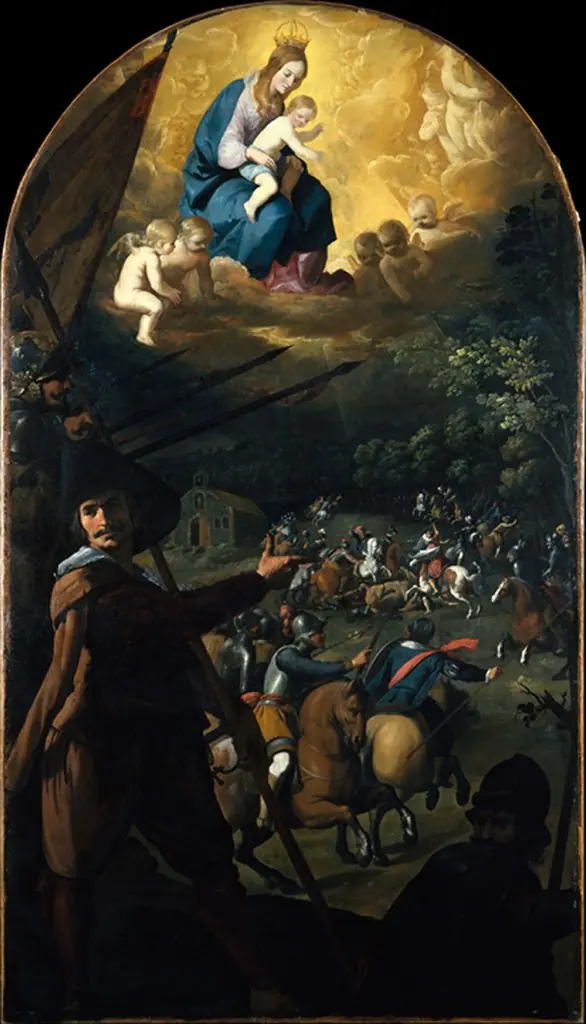
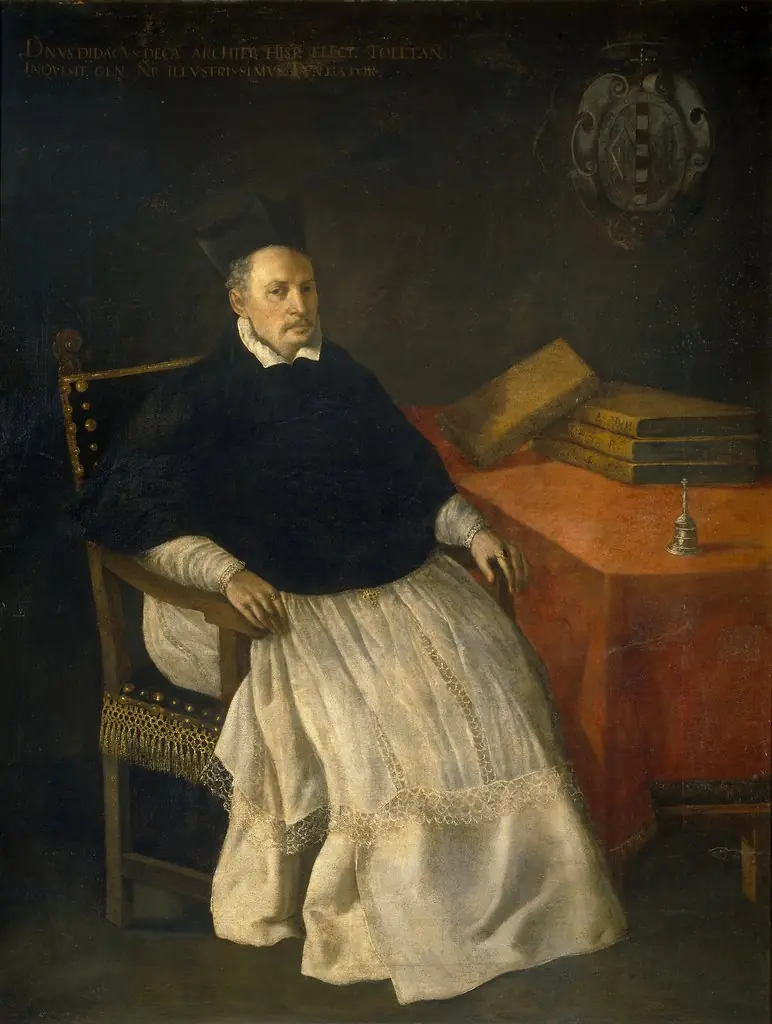
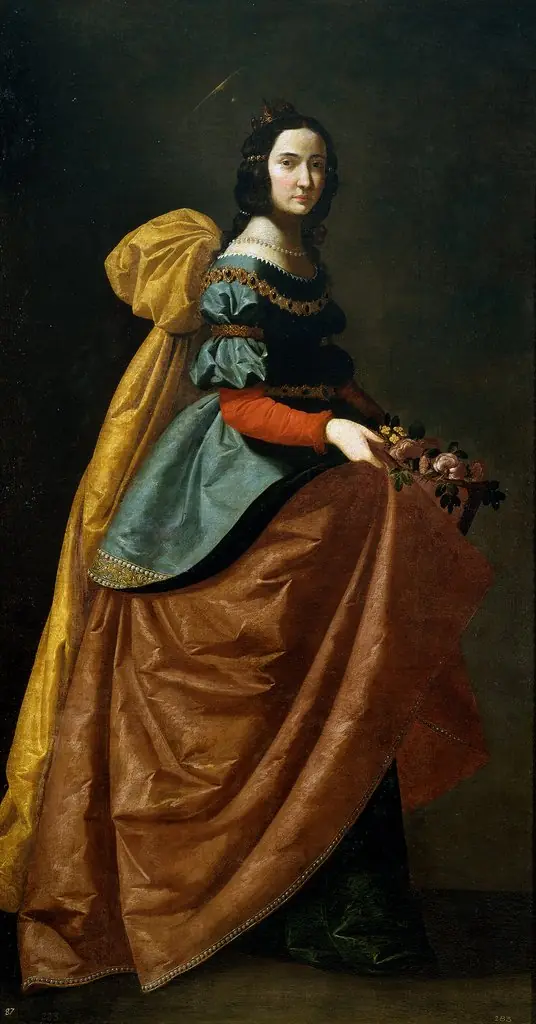
- Study of a Monk
 Heilige, die eine Monstranz anbeten
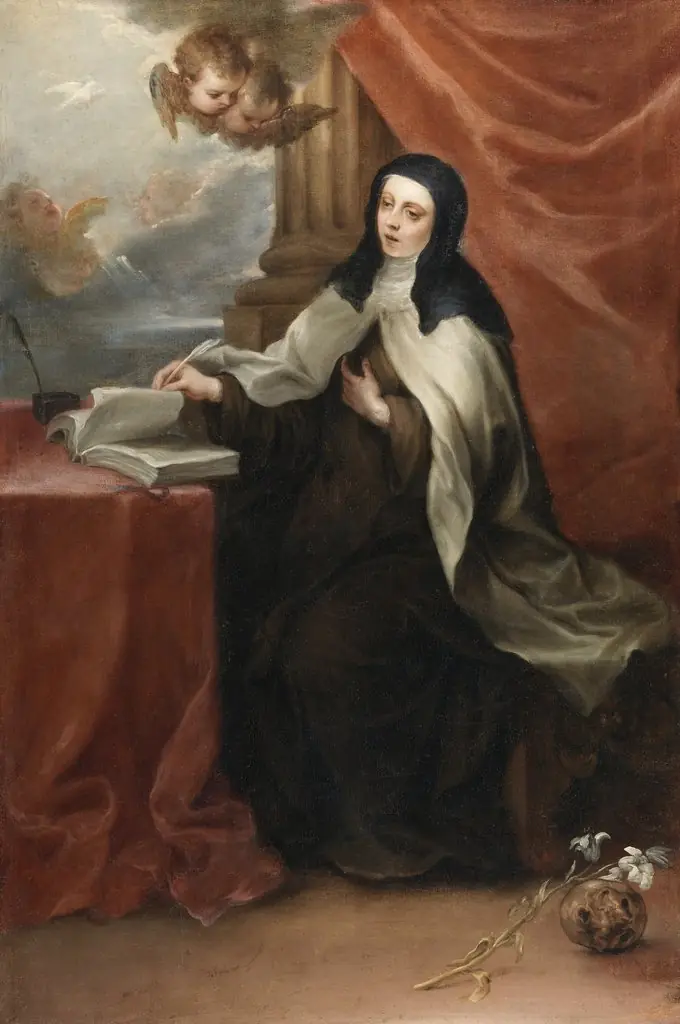 Saint Teresa of Avila
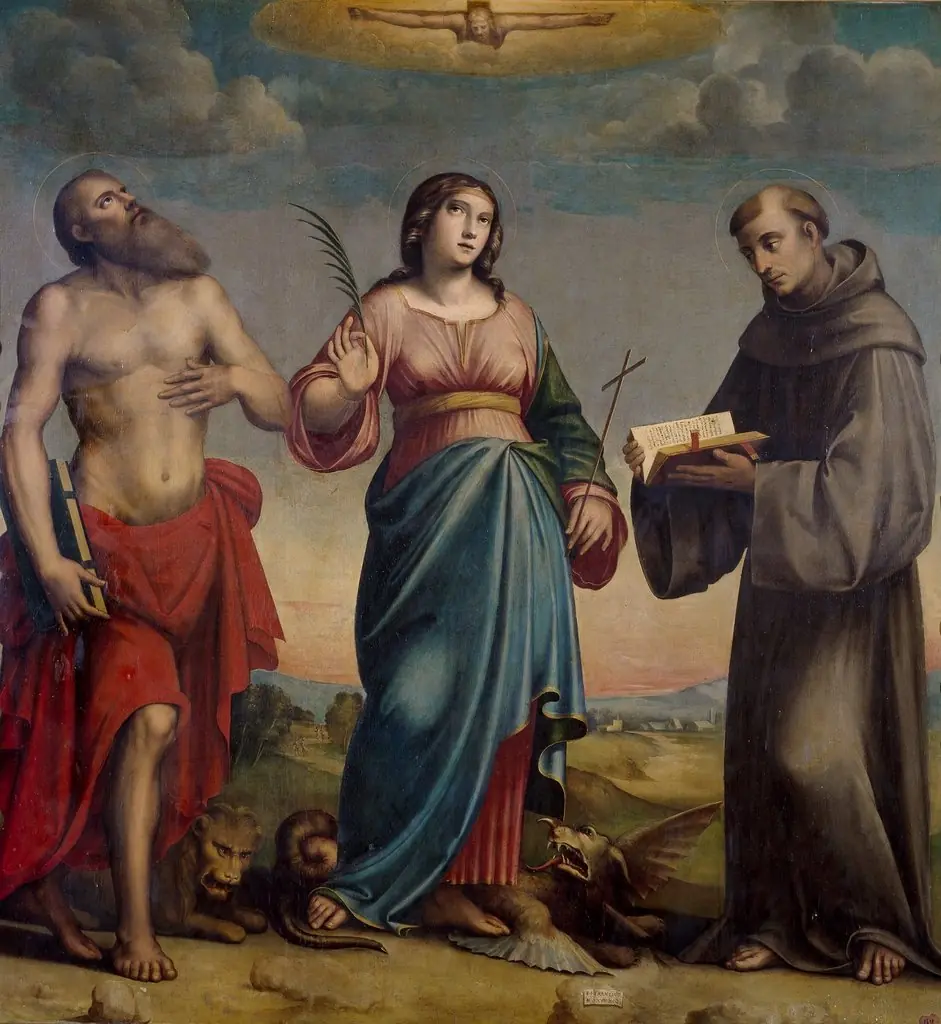 San Jerónimo, Santa Margarita y San Francisco
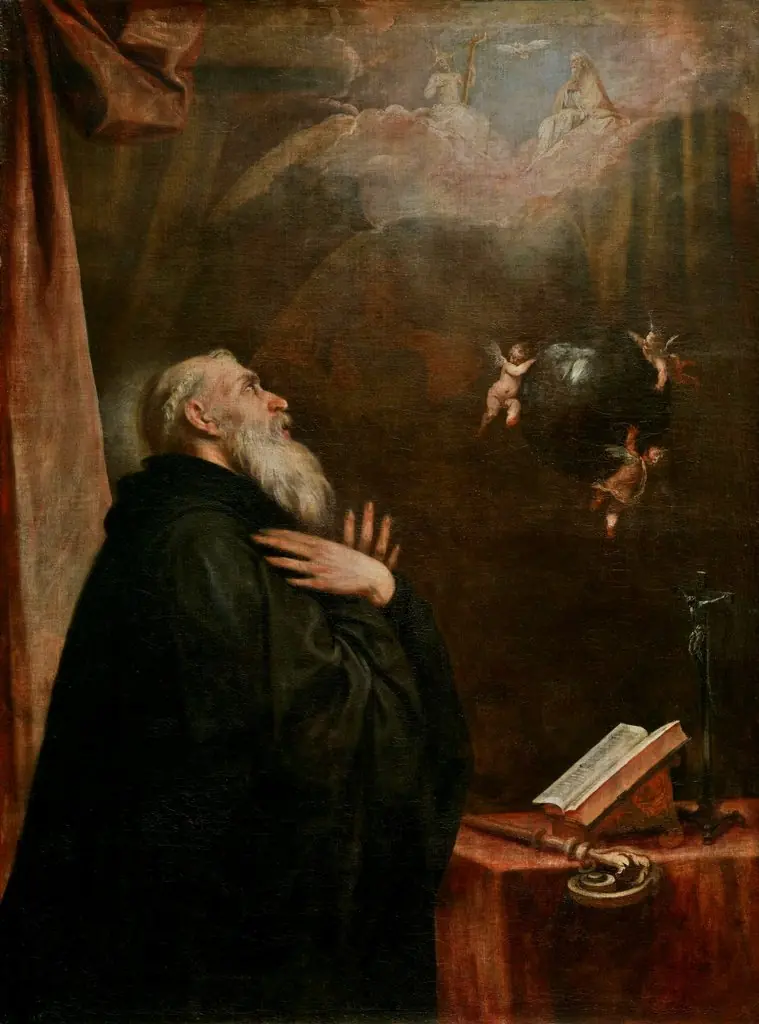 Saint Benedict's Vision of the Globe and the three Angels
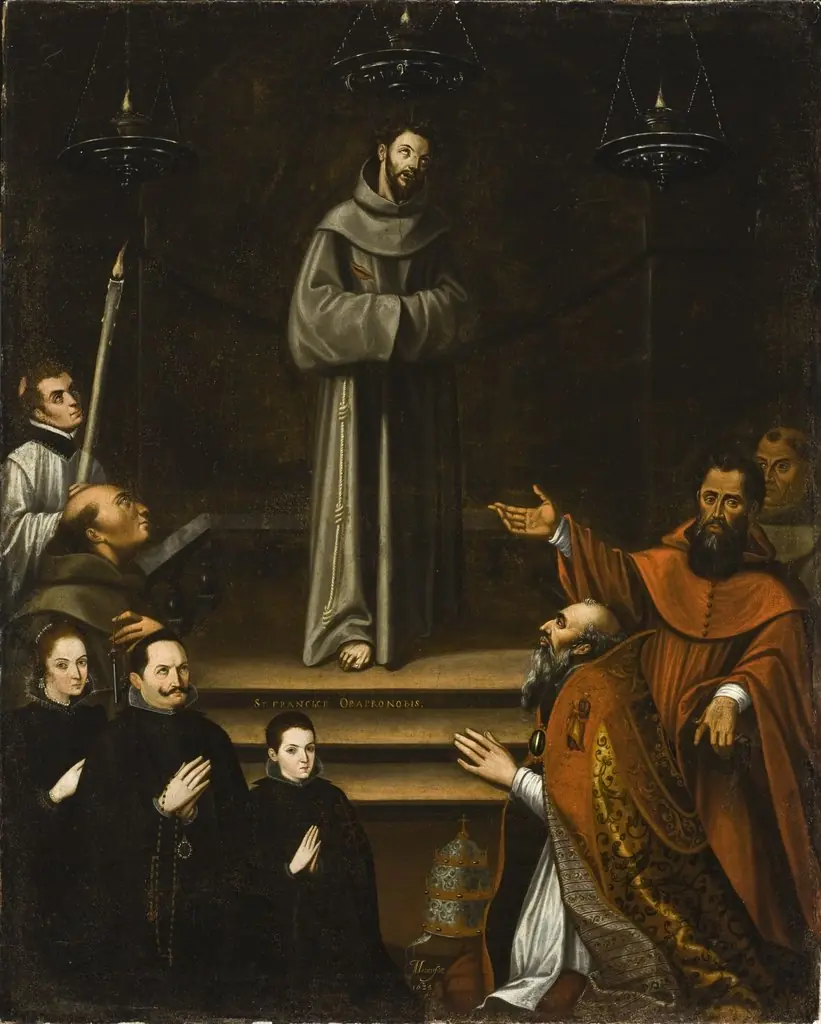 Saint Francis of Assisi Appearing before Pope Nicholas V, with Donors (La aparición de San Francisco de Asís al Papa Nicolás V, con donantes)
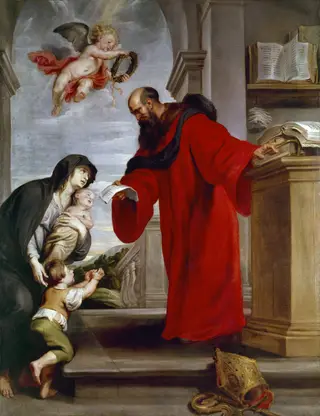 Saint Ives of Treguier, Patron of Lawyers, Defender of Widows and Orphans
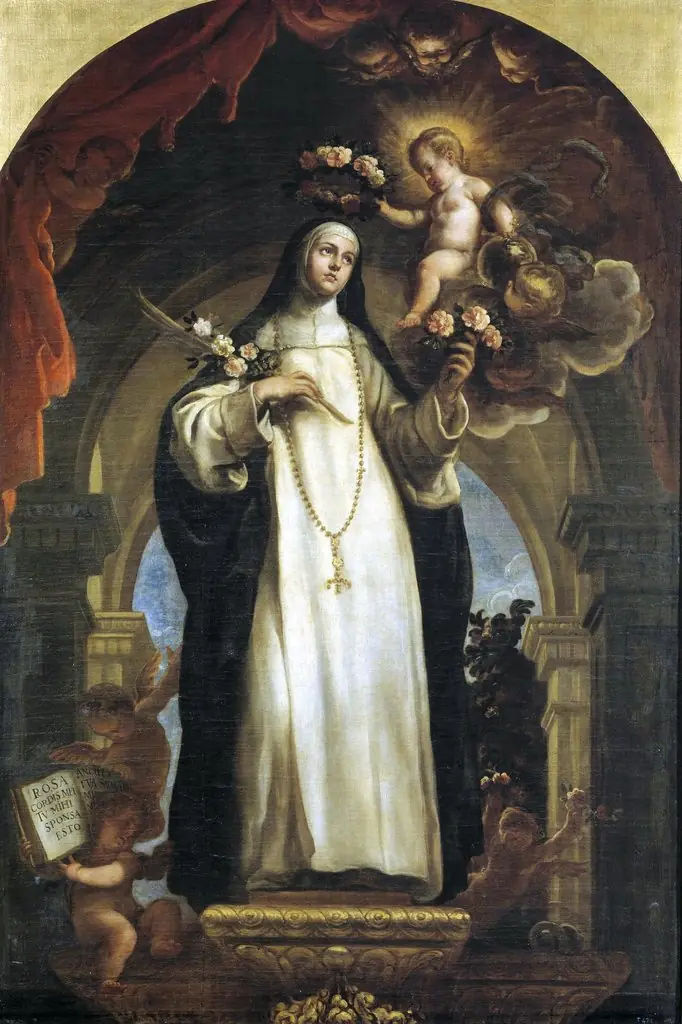 Santa Rosa de Lima
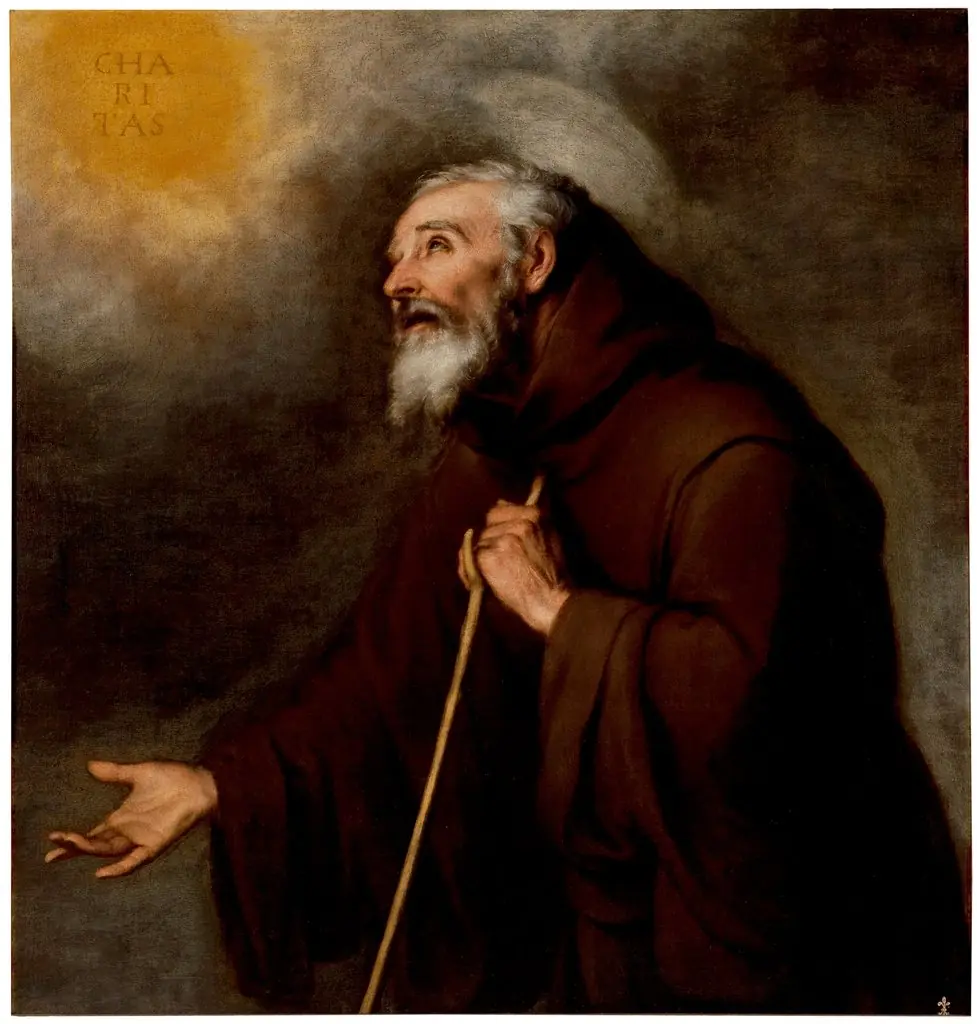 Saint Francis of Paola
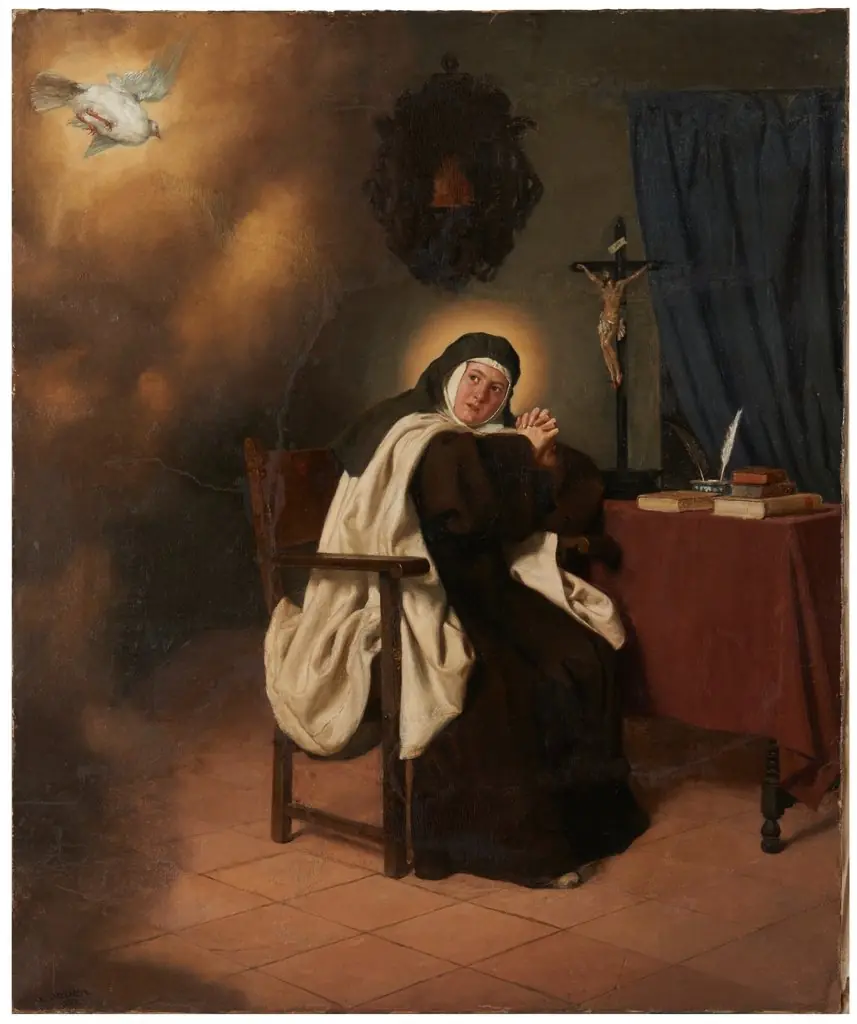 Santa Teresa de Jesús
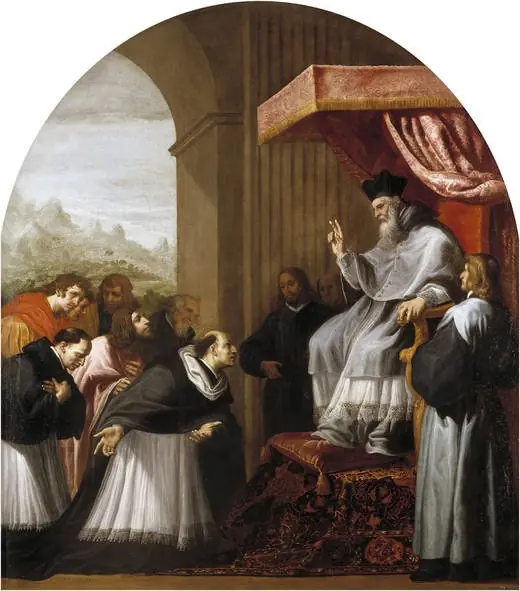 Saint Bruno and his Six Companions Visit Saint Hugo
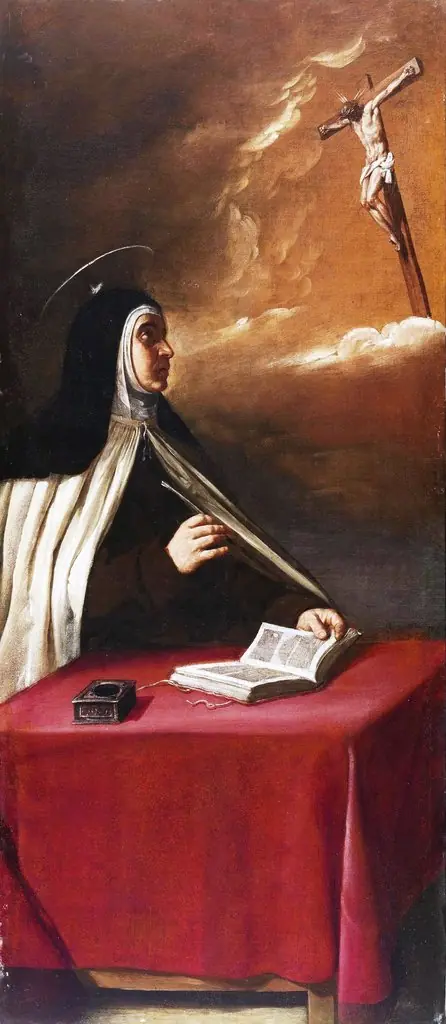 The crucified Christ appears to Saint Teresa of Avila