Artwork
Hunting with a decoy
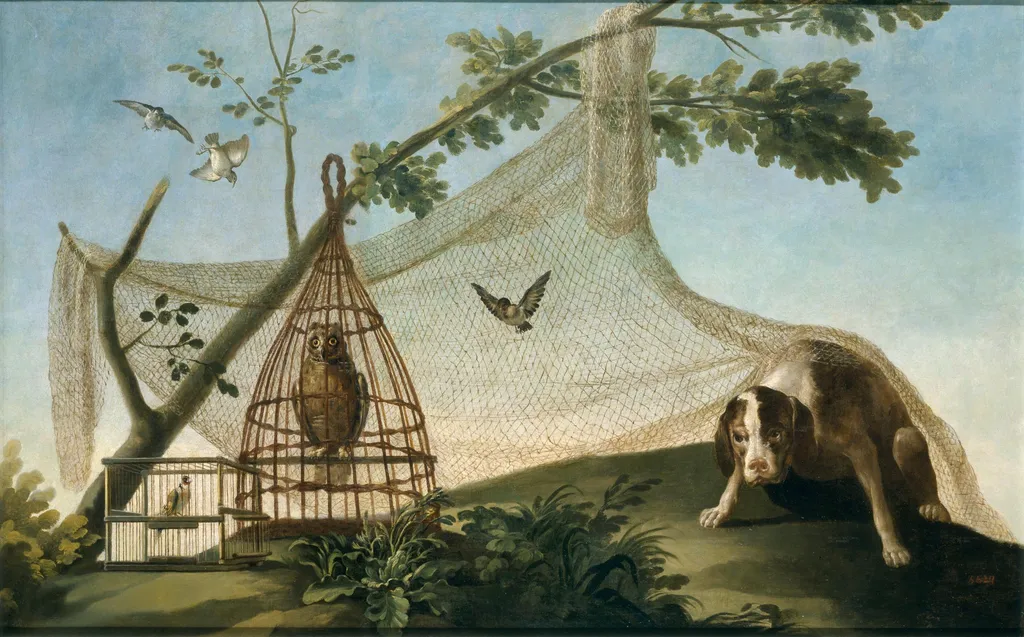
Hunting with a decoy is an oil painting by the Rococo painting artist Francisco de Goya. It dates from 1775 and is held in the collection of the Museo del Prado.
About this work
Subject & Meaning
It shows a birdcage with two birds, a dog, a net, and a tree, set within a stylized landscape featuring a sky and branches.
The painting depicts a hunting scene centered on a decoy bird, or mochuelo, used to attract prey. It shows a birdcage with two birds, a dog, a net, and a tree, set within a stylized landscape featuring a sky and branches. The composition emphasizes the dog and uses diagonal lines and tree branches to unify the space, reflecting a meticulous and detailed style influenced by Francisco Bayeu and Anton Raphael Mengs.
The subject aligns with the tastes of the Prince of Asturias, who favored hunting themes, and the work was created as part of a series of cartoons for tapestry intended for the royal dining room at the Palacio del Pardo. Its elongated format was designed to fit an overdoor in the royal chamber. The painting was delivered to the Royal Tapestry Factory in 1775, rediscovered in 1869, and acquired by the Museo del Prado in 1870, where it remains on display in room 90.
Technique & Style
Hunting with a Decoy is an oil painting on canvas, measuring 112 by 179 cm in an elongated horizontal format originally dictated by its placement above a doorway. Like the other works in Goya's first tapestry-carton series, it is executed as a simple canvas without a broad chromatic range, a restraint likely imposed by the weavers of the Royal Tapestry Factory, who needed a straightforward model to manipulate on the loom.
The composition depicts a hunting stand with a decoy, two caged birds, a dog, and a net framing the scene. The little owl appears to have been copied from a taxidermy specimen, prefiguring Goya's later use of the owl as a symbol of evil in his drawings. The handling is meticulous and detailed, heavily indebted to the Bayeu circle and to Anton Raphael Mengs, and is traditionally viewed from below because of its original architectural setting.
Clear skies and trees, characteristic of Goya's carton work, are visible, while simple pyramidal forms are unified by diagonals and the branches of a tree, with the dog dominating the arrangement.
History & Provenance
Painted in 1775, this work belongs to Francisco Goya's first series of tapestry cartoons commissioned for the dining room of the Prince of Asturias at the Palace of El Escorial. The canvas was delivered to the Royal Tapestry Factory of Santa Bárbara on May 25, 1775, intended as an overdoor decoration reflecting the royal family's passion for hunting.
Following its initial use, the painting was eventually stored in the basement of the Royal Palace of Madrid, where it was considered lost until its rediscovery in 1869 by Gregorio Cruzada Villaamil. By royal decree in January and February 1870, the work was transferred to the Museo del Prado, entering the museum's collection permanently and appearing in its catalog for the first time in 1876.
Hunting with a decoy is held in the collection of the Museo del Prado in Madrid (inventory number 2856). It was delivered to the Royal Tapestry Factory of Santa Bárbara on 25 May 1775 as part of the first series of cartoons for tapestry intended for the dining room of the Prince of Asturias at the Palacio del Pardo. The work was later discovered in the basement of the Royal Palace of Madrid in 1869 by Gregorio Cruzada Villaamil and entered the Museo del Prado in 1870, where it has been exhibited in gallery 90 since 1876.
Context
Hunting with a decoy was created in 1775 as part of Goya's first series of cartoons intended for the dining room of the Prince of Asturias at the Palacio del Pardo, later installed in the royal tapestry workshop at the Escurial palace. The work was delivered to the Royal Tapestry Factory on 24 May 1775 and remained largely unnoticed until its rediscovery in 1869 by Gregorio Cruzada Villaamil, after which it entered the Prado Museum collection and was first catalogued in 1876. Contemporary accounts indicate the royal family appreciated the series, and factory managers later permitted Goya to produce cartoons of his own invention.
Stylistically, the painting reflects the influence of Goya's contemporaries Francisco Bayeu and Anton Raphael Mengs, employing a meticulous, detailed approach suited to the tapestry format, with simple pyramidal forms, dominant canine figures, and characteristic skies and trees rendered in a manner typical of Goya's cartoon series. Scholars such as Janis Tomlinson have noted the composition's diagonal and linear unifying elements, while the work's subdued palette likely resulted from the practical demands of the weaving process.
Legacy
The painting Hunting with a decoy influenced later tapestry design and royal court aesthetics, establishing Goya's reputation for blending hunting themes with decorative art. Its rediscovery in 1869 and display at the Museo del Prado cemented its legacy within the Prado's collection, where it remains exhibited in room 90. Scholars highlight its role in shaping Goya's later symbolic use of owls and its impact on tapestry cartoon traditions, as noted by Tomlinson and others.
Overview
Created in 1775, Hunting with a Decoy is an oil painting by the Spanish artist Francisco Goya. Executed during his early career, the work belongs to the Rococo period and is part of the Museo del Prado’s collection. The canvas presents a quiet outdoor scene in which a dog, a net, and a caged bird occupy the foreground against a muted landscape of trees and foliage.
Own this work as a print
Artist & collection
Artist
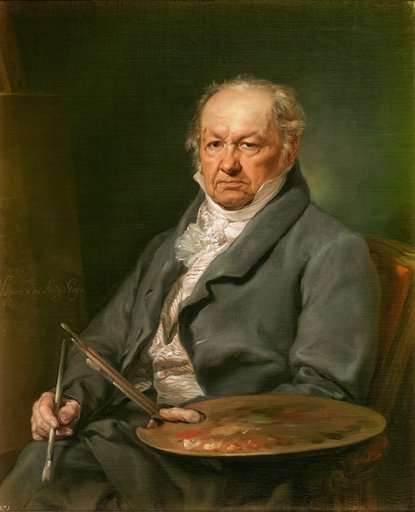
Francisco José de Goya y Lucientes was a Spanish romantic painter and printmaker.

- Ansichten aus den vier Weltteilen mit Szenen von Tieren: Santo Domingo (Dominikanische Republik)
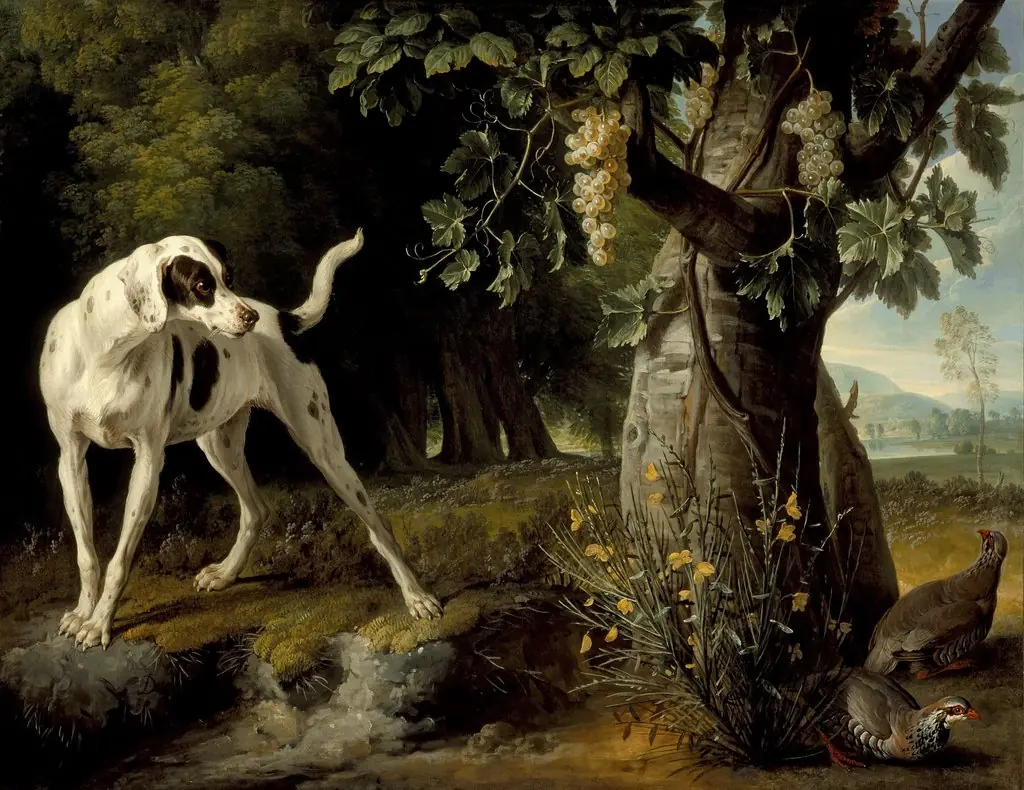 Landscape with a Dog and Partridges
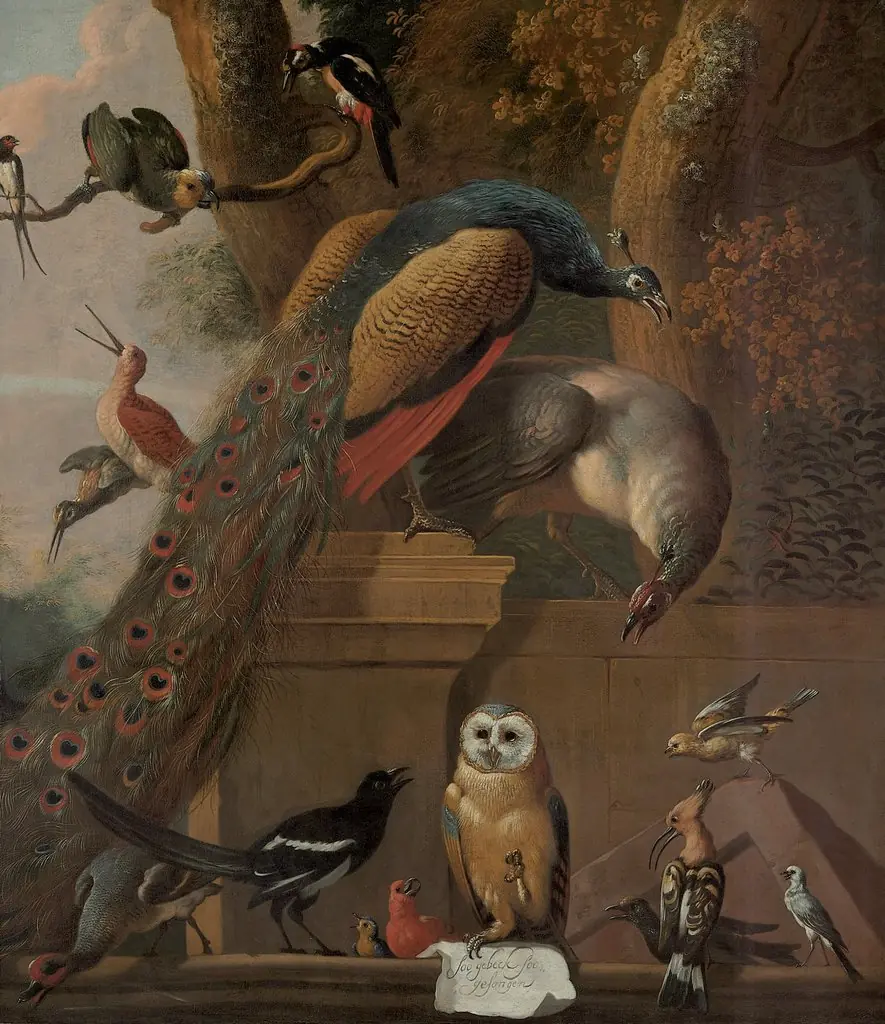 Bird Concert
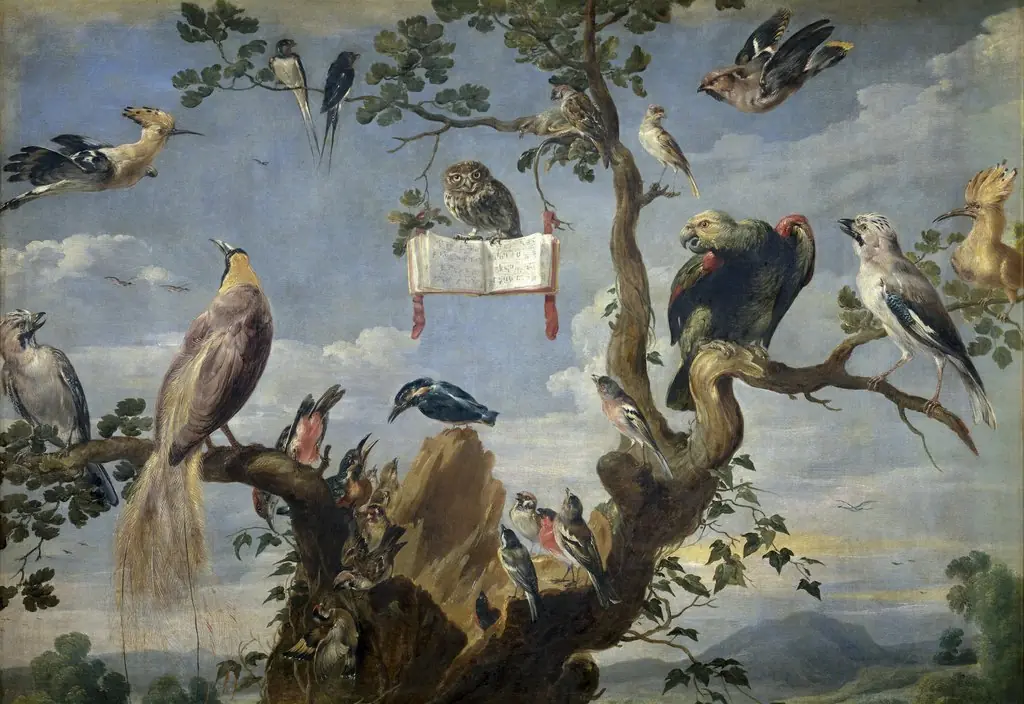 The Concert of Birds
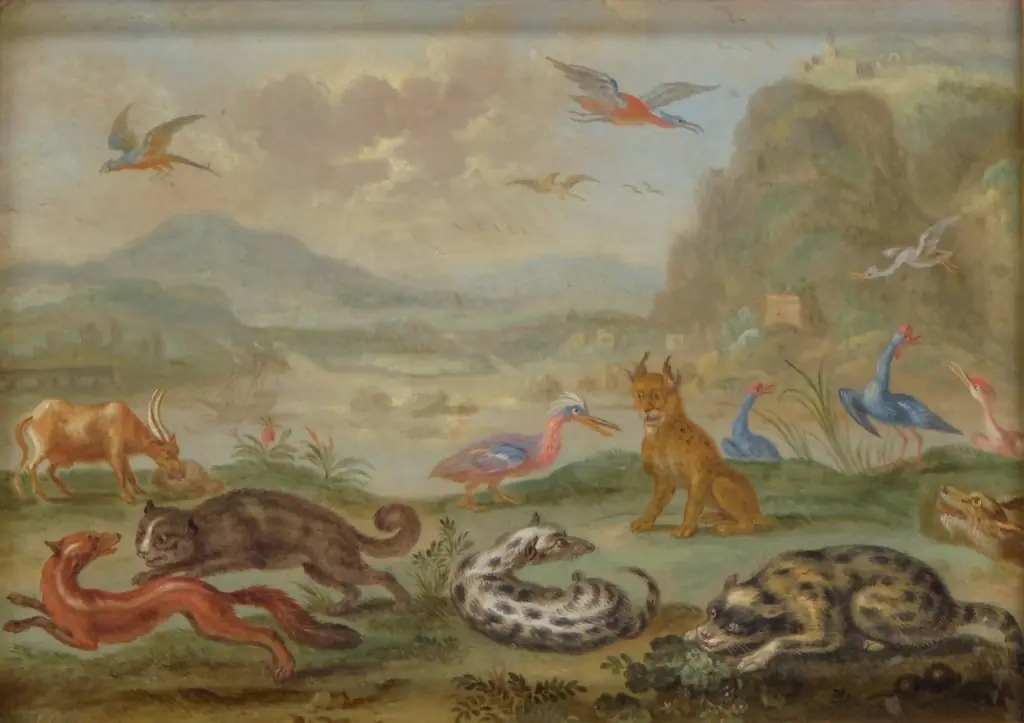 Berg Carmel
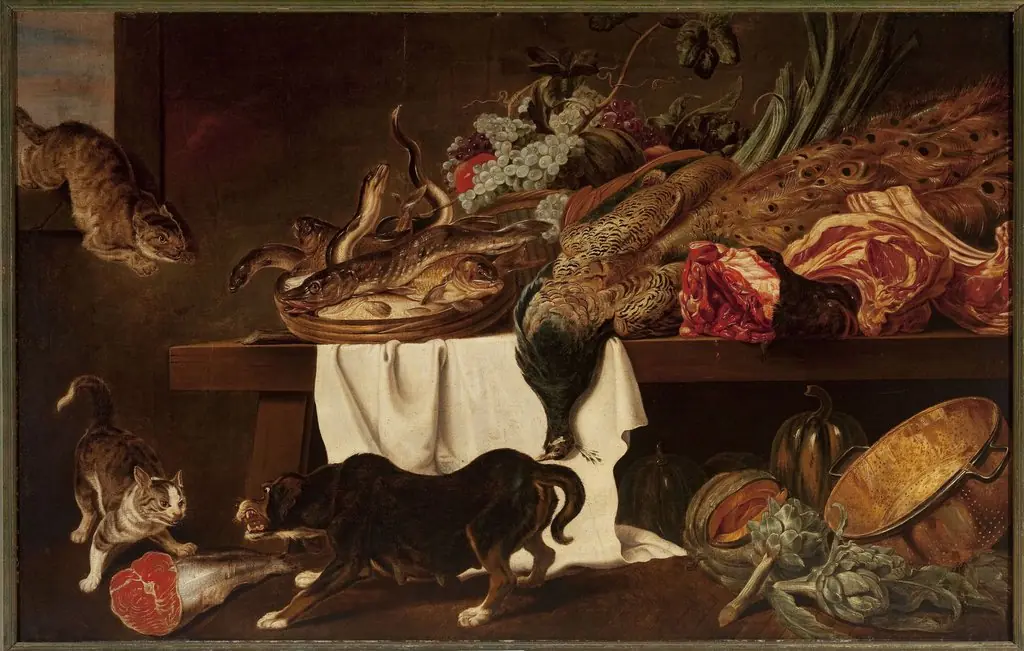 Pantry
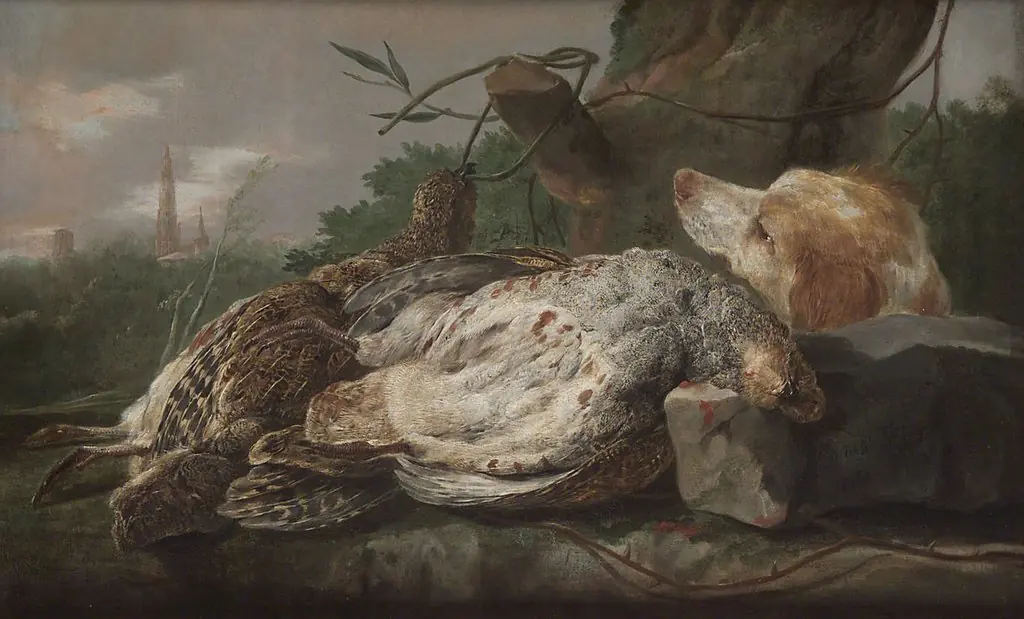 Dead partridges with hound
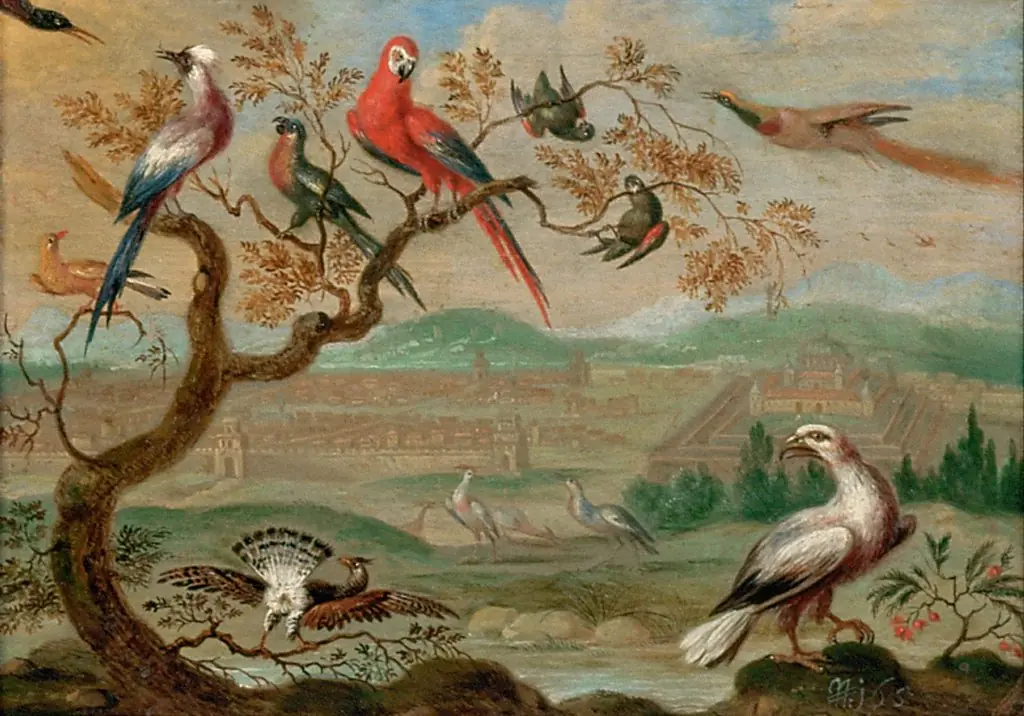 Ansichten aus den vier Weltteilen mit Szenen von Tieren: Cusco
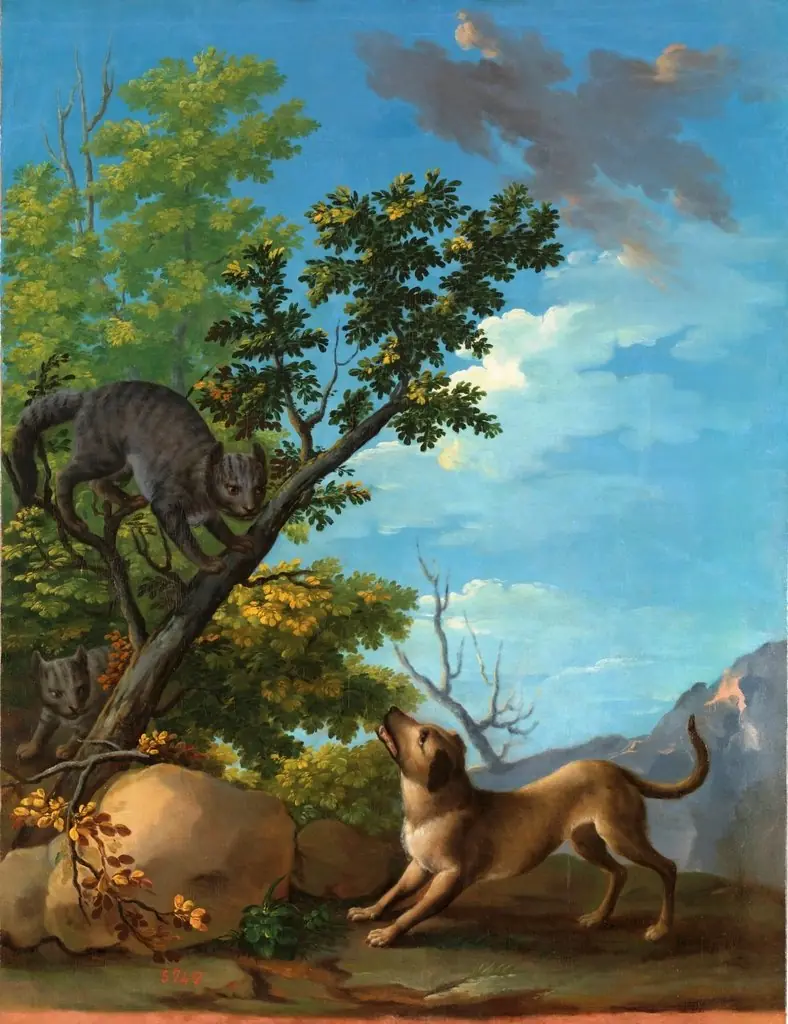 Perro y gatos
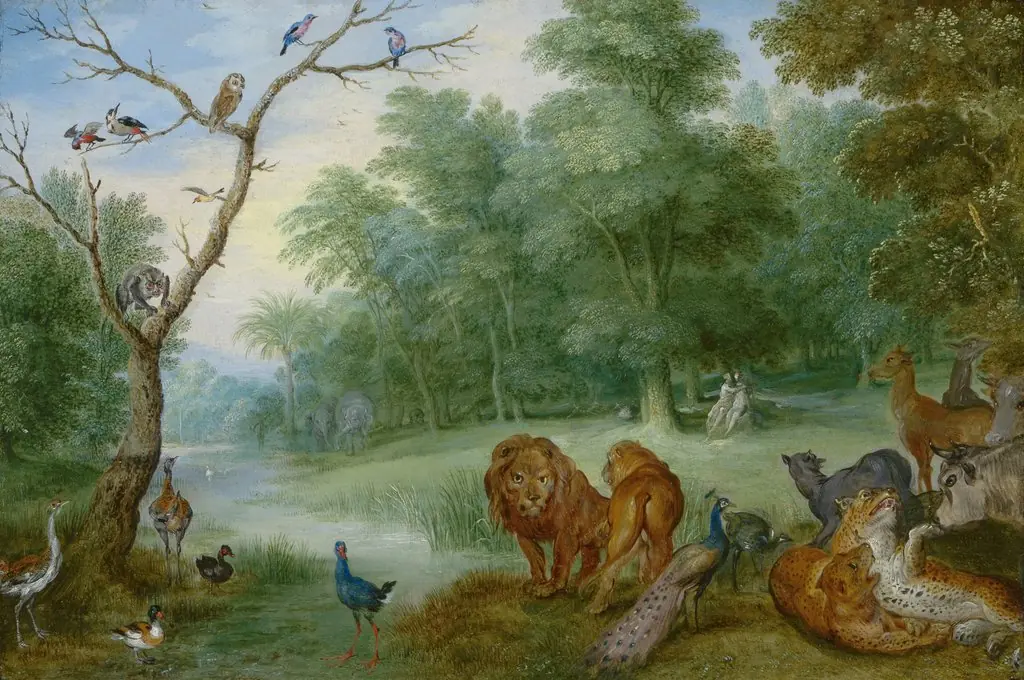 Paradise with the Fall of Adam and Eve
 Dog attacking a cat
 Concierto de aves