Artwork
Bartolomé Sureda y Miserol
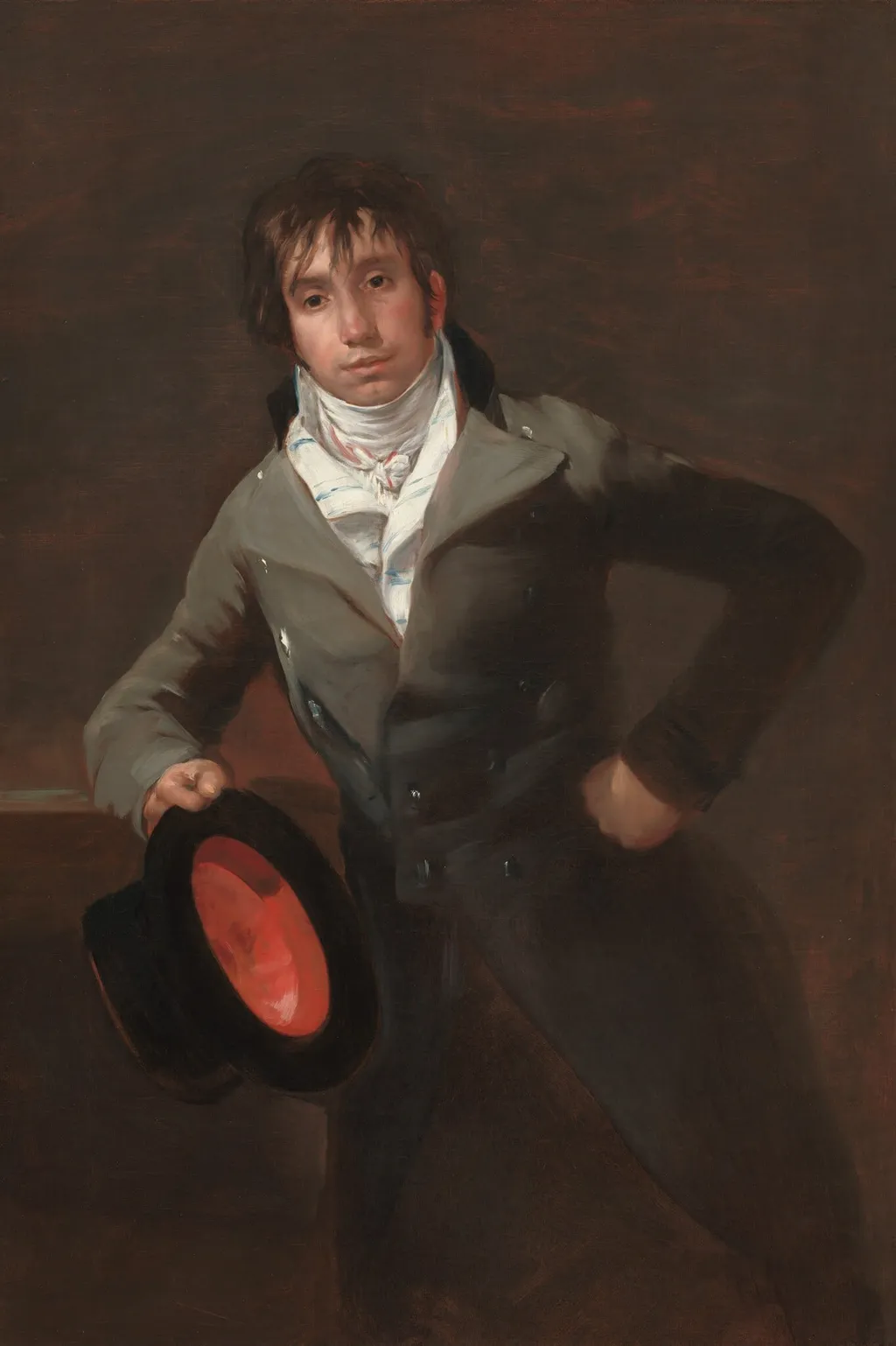
Bartolomé Sureda y Miserol is an oil painting by the Romanticist artist Francisco de Goya. It dates from 1804 and is held in the collection of the National Gallery of Art.
About this work
Subject & Meaning
The composition emphasizes individual character over formal symmetry, a hallmark of Goya's late portraiture.
The work portrays Bartolomé Sureda y Miserol, a Mallorcan industrialist and close associate of Goya, as a standing male sitter wearing a top hat and a bourgeois costume of the early 19th century. Goya renders him in a dynamic diagonal pose, his hat extended toward the viewer and a hand on his hip, while light falls on his face and the rich satin lining of the hat glows against a darkened background. The portrait, paired with its pendant of his wife Teresa, was commissioned to capture the couple's personality and social stature, reflecting the sitter's role as a prominent figure in Madrid's elite circles. The composition emphasizes individual character over formal symmetry, a hallmark of Goya's late portraiture.
Technique & Style
Executed in 1804, the portrait of Bartolomé Sureda y Miserol is an oil painting on canvas, measuring approximately 119.7 by 79.3 centimeters. Goya employs a dynamic diagonal composition to animate the standing figure, who leans informally against a pedestal with one hand on his hip and the other extending a top hat toward the viewer. The artist utilizes a dramatic lighting scheme that illuminates the upper portion of the canvas, focusing attention on the face, while the lower section remains in shadow.
Within this penumbra, the brilliant, rosy satin lining of the hat creates a striking visual contrast. This handling of light and pose diverges from traditional symmetrical marital portraits, aiming instead to capture the specific character and psychology of the bourgeois subject.
History & Provenance
The portrait of Bartolomé Sureda y Miserol, an oil on canvas painted by Francisco Goya in 1804, was commissioned by the Mallorcan industrialist and his wife Teresa, friends of the artist, and executed as a pendant to the portrait of Teresa. Earlier ownership may trace to the Sureda family and to Pedro Escat in Palma de Mallorca. The painting was purchased on 28 September 1897 by Henry O. and Louisine Havemeyer from the dealer Durand-Ruel et Cie., inherited by their daughter Adaline Havemeyer Frelinghuysen, and given by her to the National Gallery of Art, Washington, D.C., in 1941, where it is held under accession number 1941.10.1. Its pendant, the portrait of Teresa Sureda, is held by the same institution.
Context
Painted in 1804, this portrait reflects Francisco Goya's status as a fashionable artist sought after by the aristocracy and high bourgeoisie of Madrid. The work depicts Bartolomé Sureda y Miserol, a Mallorcan industrialist and director of the Royal Porcelain Factory of Buen Retiro, who had studied industrial arts in England. The painting was commissioned by Sureda and his wife, Teresa, with whom Goya shared a friendship.
Art historical analysis positions the work as a pendant to Teresa's portrait, distinguishing itself from traditional Renaissance and Baroque matrimonial double portraits through its depiction of the couple in distinct, non-symmetric attitudes. Critics note that Goya used diagonal composition and dramatic lighting to capture the sitter's bourgeois fashion and psychological character.
Legacy
Acquired by the Havemeyers in the late 19th century, the pendant portraits entered the National Gallery of Art in 1941 and later featured in the 1993 Metropolitan Museum of Art exhibition 'Splendid Legacy: The Havemeyer Collection', underscoring their role in the history of Goya scholarship. Critics have highlighted the work's dynamic composition, noting the husband's assured stance and the wife's contrasting pose as a departure from traditional symmetrical pairings, a trait that has contributed to its reputation as a notable example of Goya's psychological portraiture.
Overview
This oil-on-canvas portrait, titled Bartolomé Sureda y Miserol, was created by the Spanish artist Francisco de Goya around 1804. It depicts its namesake, Bartolomé Sureda y Miserol, a contemporary of the painter. The work exemplifies Goya's portraiture from the early 19th century, capturing the sitter with a direct gaze and a composed demeanor.
Own this work as a print
Artist & collection
Artist
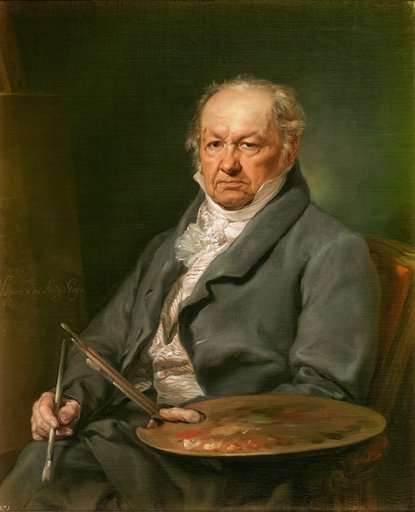
Francisco José de Goya y Lucientes was a Spanish romantic painter and printmaker.

- George Harley Drummond (1783–1855)
 John Myers
 Portrætskitse. Maleren N.A. Abildgaard (?).
 John Randolph
 Portrait of Arthur Atherley as an Etonian
 Portretul unui adolescent
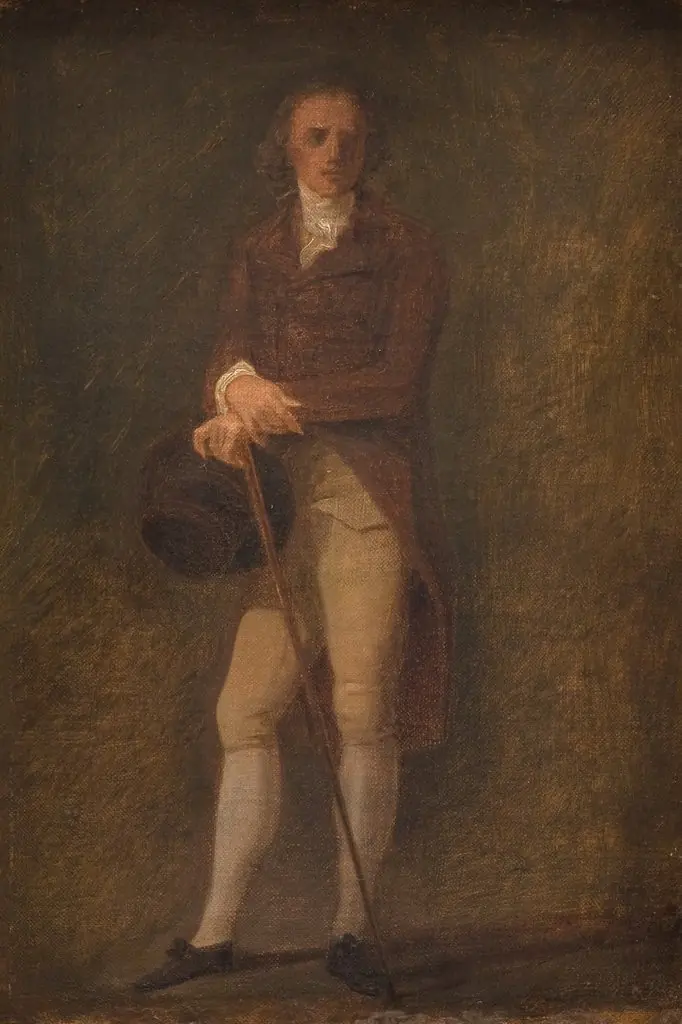 Portrætskitse. Maleren N.A. Abildgaard (?).
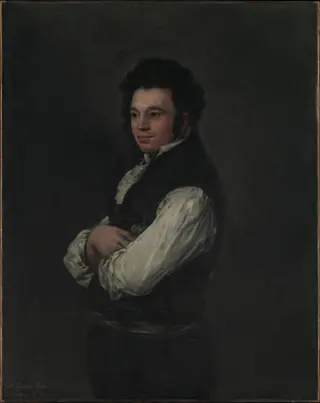 Portrait of Tiburcio Pérez y Cuervo, the Architect
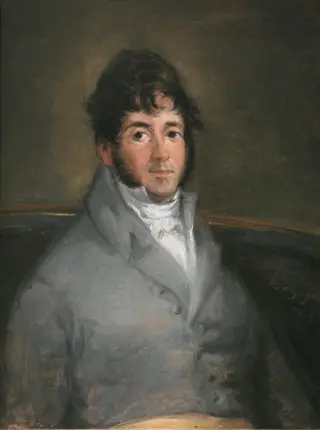 The Actor Isidoro Máiquez
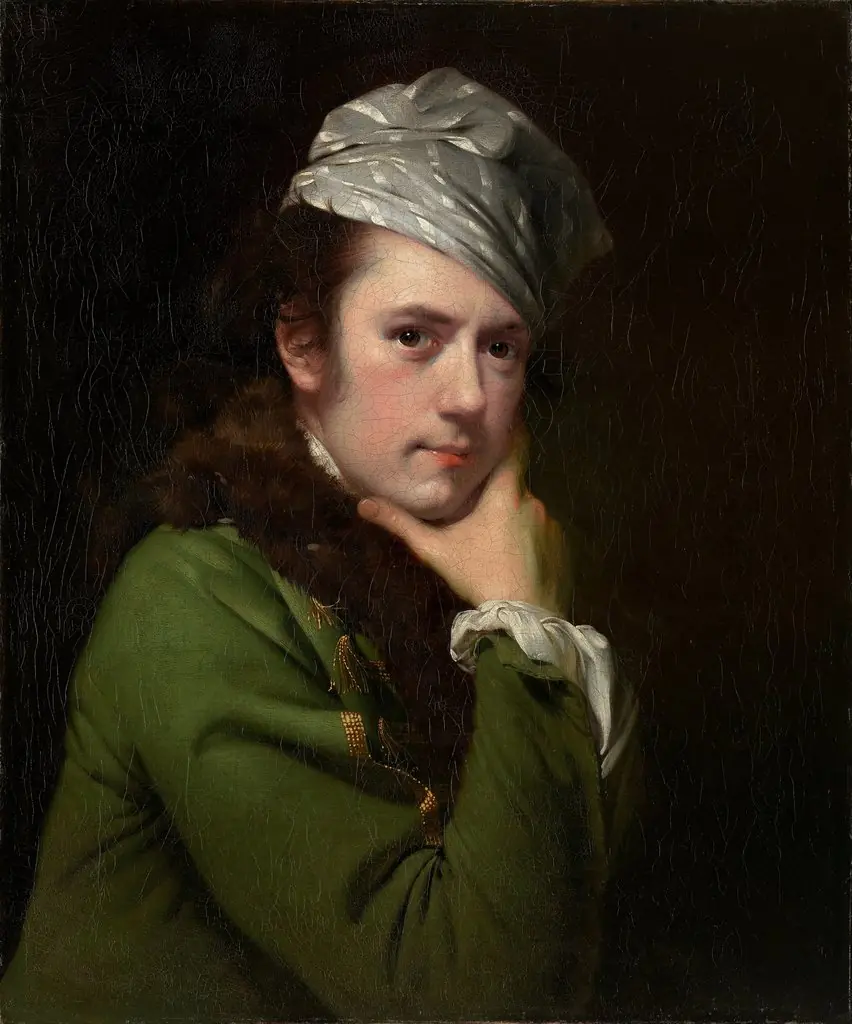 Self-portrait
 Portrait of Don Ramón Satué
 Porträt des Alexander Petrovich Dubovitsky