Artwork
Queen María Luisa on horseback
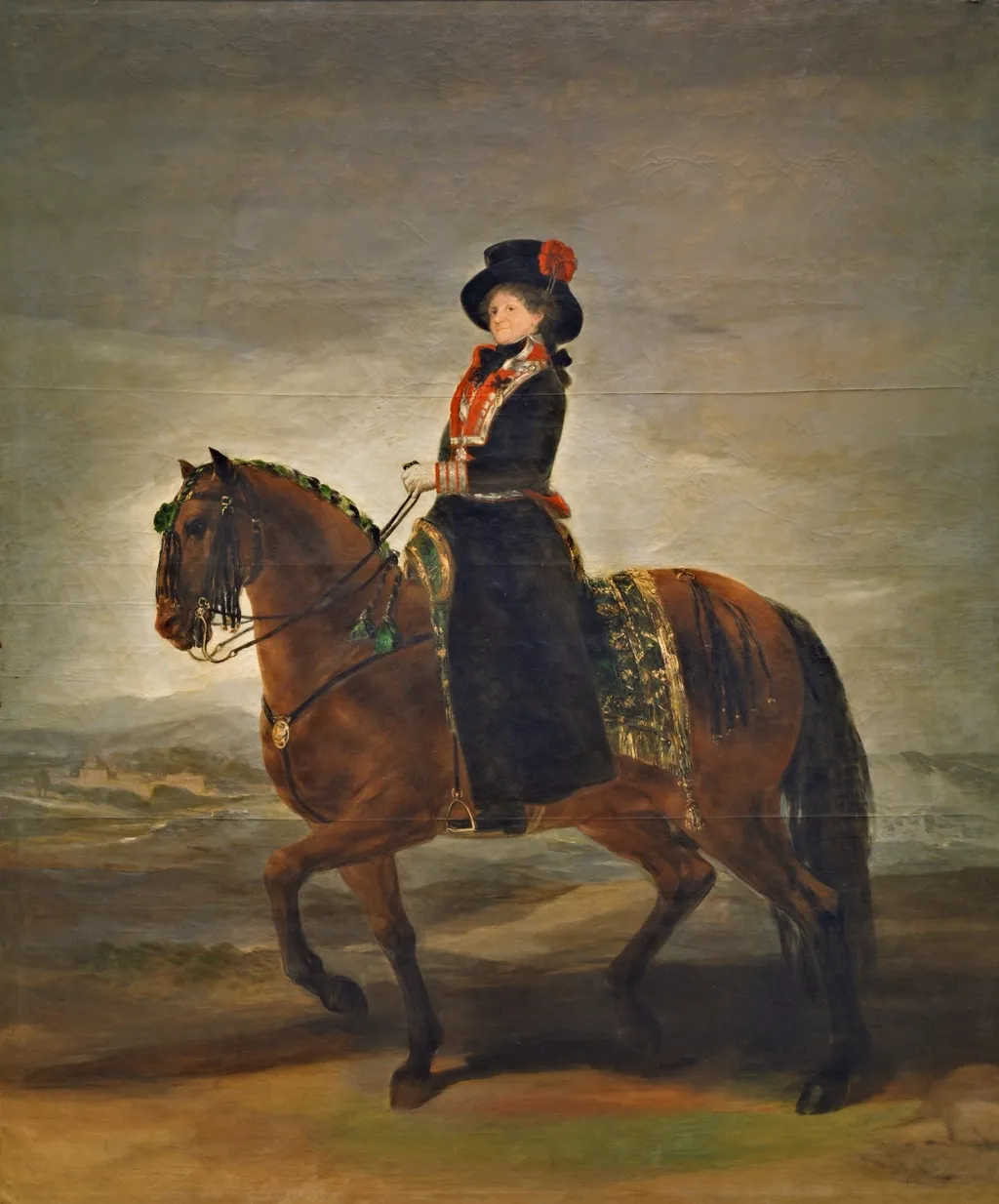
Queen María Luisa on horseback is an oil painting by Francisco de Goya. It dates from 1800 and is held in the collection of the Museo del Prado. This 1800 oil painting by Francisco Goya portrays Queen María Luisa of Spain on horseback.
About this work
Subject & Meaning
The painting portrays Queen María Luisa of Parma riding the horse Marcial, symbolizing both her personal authority and the renewed prestige of the Spanish monarchy. The equestrian pose, rendered in a dignified and composed manner, reflects the queen's role as a stabilizing figure during a period of political uncertainty following the Bourbon dynasty's precarious position after the French Revolution. Goya's depiction draws on the iconography of earlier royal equestrian portraits by Velázquez and Tiziano, yet introduces a more dynamic and naturalistic style, emphasizing the queen's mastery over a spirited horse rather than the traditional symbol of unbridled power.
The inclusion of specific regalia, such as the Order of Queen Maria Luisa and the Order of the Crossed Stars, underscores her noble lineage and the ceremonial significance of her position. The work was commissioned for display in the Royal Palace of Madrid, where it stood alongside other grand portraits intended to reinforce dynastic continuity and legitimacy.
Technique & Style
Queen María Luisa on horseback is an oil painting on canvas, classified as an equestrian portrait, measuring 338 cm in height by 282 cm in width.
Queen María Luisa on horseback is an oil painting on canvas, classified as an equestrian portrait, measuring 338 cm in height by 282 cm in width. Goya executed the work in 1799, depicting the queen in the uniform of a colonel of the Guardia de Corps in a specially tailored feminine version, with the sash of the Order of Queen Maria Luisa crossing her chest and the Order of the Cross of the Star pinned to her lapel.
Stylistically, Goya drew on Velázquez's equestrian portraits of queens Margarita of Austria and Isabel de Borbón, works he had studied through drawings and prints in 1778, deliberately departing from the convention of a rearing horse to present a majestic but peaceful mount. The queen rides astride, à la jineta, rather than sidesaddle, her gaze proud and self-assured. Goya's horses are rendered as more dynamic than Velázquez's, though he found painting them difficult, as his letters to Martín Zapater reveal, and numerous pentimenti are visible around the ears and legs.
The composition sets the queen's silhouette against a stormy, clouded sky, with the Sierra de Guadarrama and the silhouette of El Escorial in the background, areas for which Goya prepared sketches.
History & Provenance
Painted in 1799, this equestrian portrait of Queen María Luisa de Parma was commissioned by King Carlos IV to decorate the representative dining hall of the Royal Palace of Madrid. Goya, the court painter, executed the work after the queen posed for him on three separate occasions. The painting was intended to hang alongside historic equestrian portraits by Velázquez and Titian, serving to emphasize the continuity of the Spanish monarchy during a precarious political era.
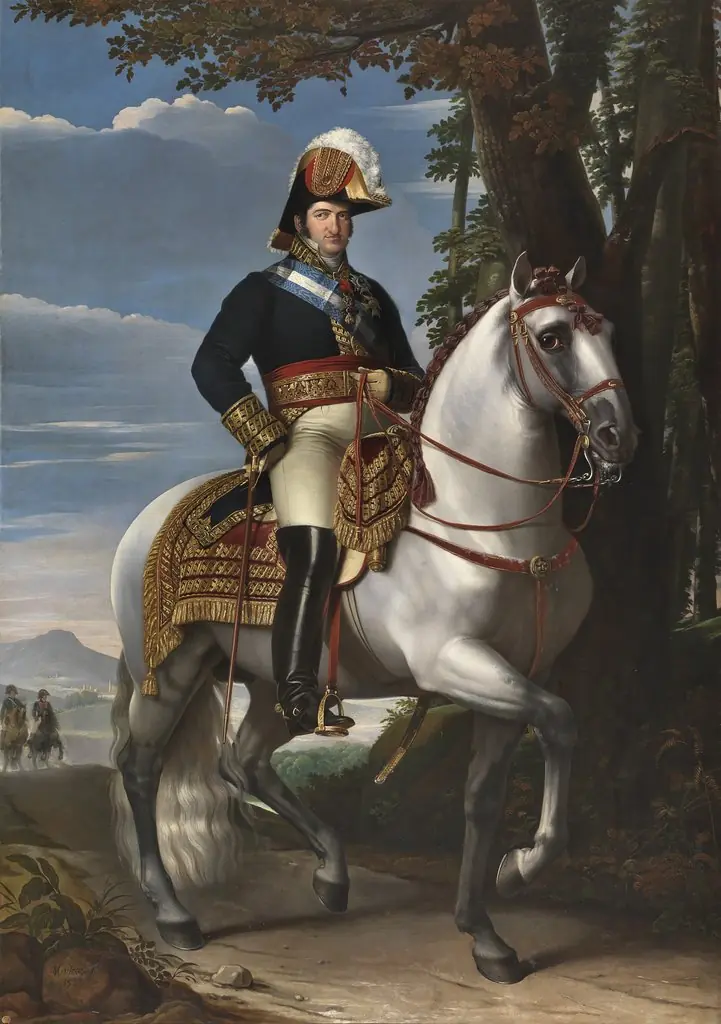
The work, along with its pendant depicting Carlos IV (completed in 1800–1801), was originally displayed in the Royal Palace before becoming part of the collection that formed the Museo del Prado.
The painting is held in the collection of the Museo del Prado in Madrid. It was originally displayed in the representative dining hall of the Royal Palace of Madrid, where it hung alongside equestrian portraits by Velázquez and Titian to emphasize the continuity of the Spanish monarchy. Along with the rest of the royal collection, the work was later transferred to the Museo del Prado.
The source material does not provide a specific inventory or accession number for the artwork, nor does it list a detailed history of public exhibitions beyond its initial placement in the palace and subsequent inclusion in the museum's collection.
Context
The critical reception of Queen María Luisa on horseback has been shaped by its artistic ambition and political symbolism. Scholarship emphasizes its role within Goya’s broader context as a court painter navigating the transition from the Habsburg to Bourbon dynasties, reflecting the monarchy’s precarious position after the French Revolution. The work’s placement in the Royal Palace’s representational hall alongside equestrian portraits by Velázquez and Tiziano underscores its function in asserting dynastic continuity.
Its depiction of Queen María Luisa in a tailored military uniform, astride a horse gifted by Manuel Godoy, blends personal vanity with statecraft, while its technical execution reveals Goya’s experimentation with dynamic horse anatomy and atmospheric landscape, drawing on Velázquez’s compositions yet diverging in mood and movement. The painting’s provenance from the Palacio Real to the Museo del Prado cements its institutional significance as both a masterpiece and a diplomatic artifact.
Overview
This 1800 oil painting by Francisco Goya portrays Queen María Luisa of Spain on horseback. It is part of the Museo del Prado's collection in Madrid.
Own this work as a print
Artist & collection
Artist
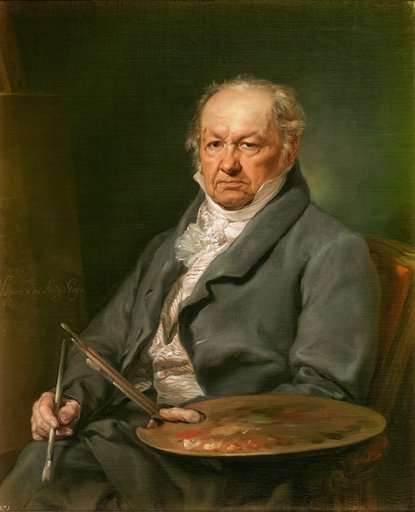
Francisco José de Goya y Lucientes was a Spanish romantic painter and printmaker.

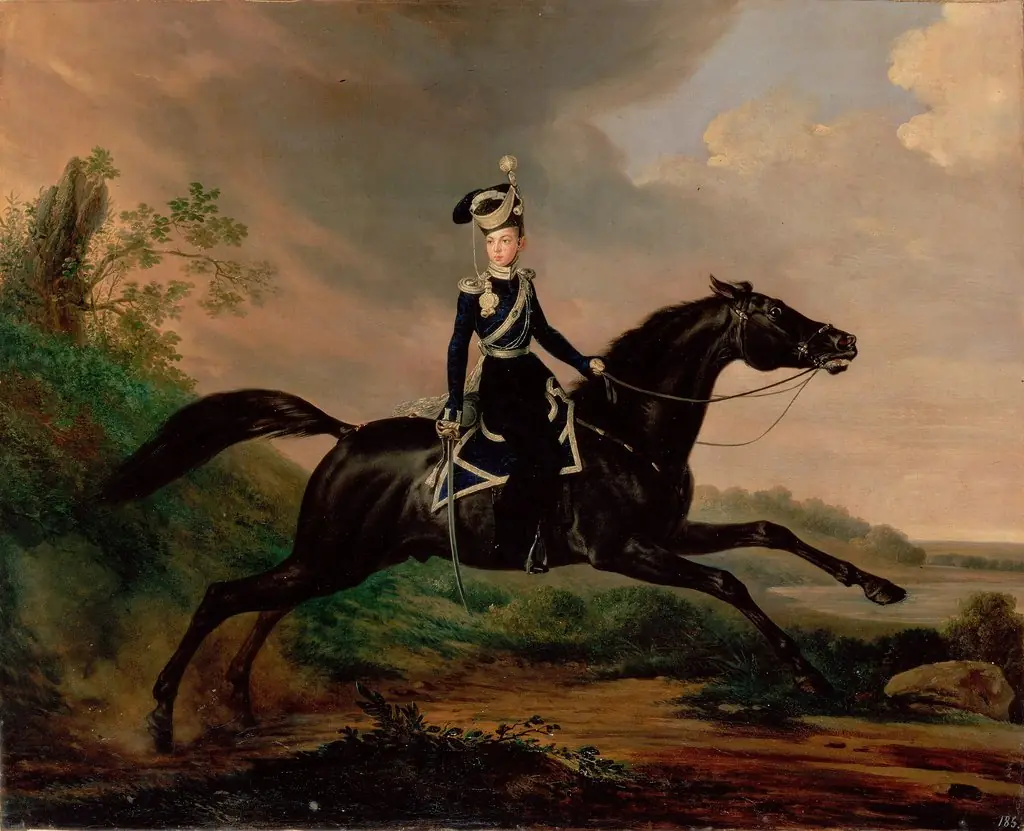 Equestrian Portrait of Grand Prince Alexander Nikolayevich
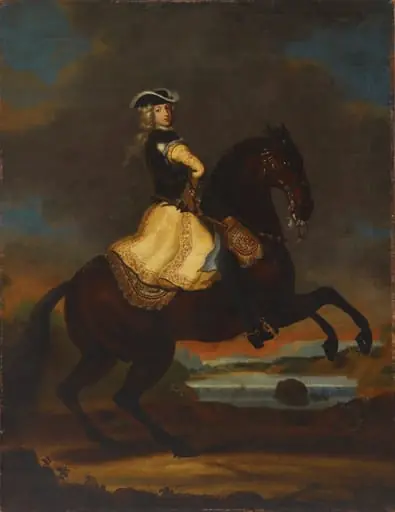 Kuningas Kaarle XII
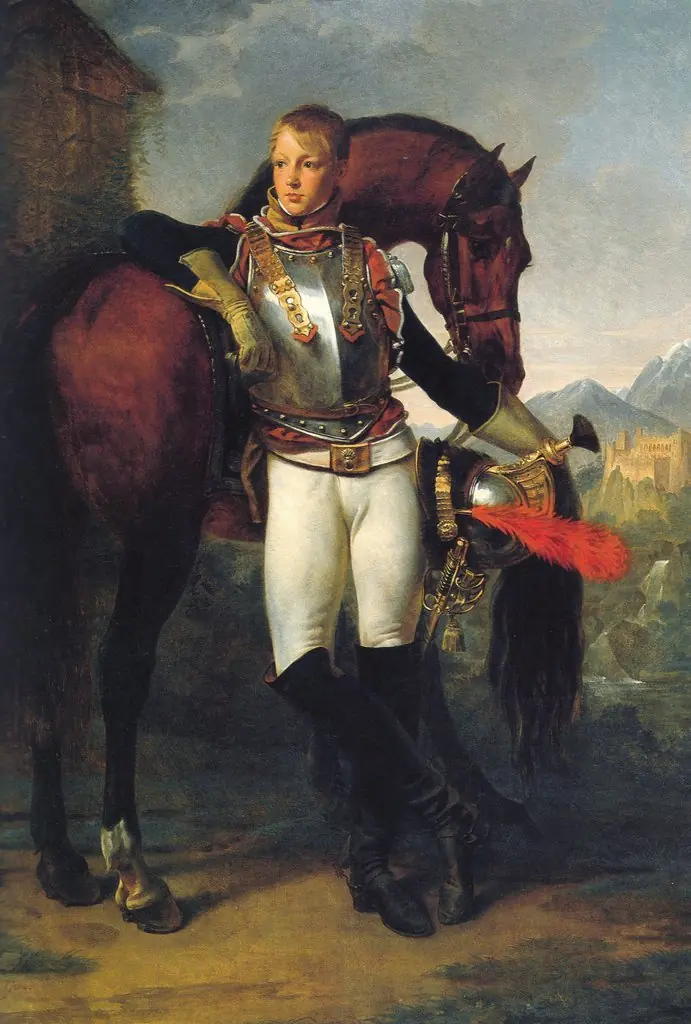 Portrait of Second Lieutenant Charles Legrand
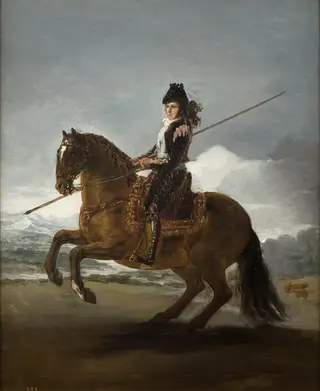 A spearman
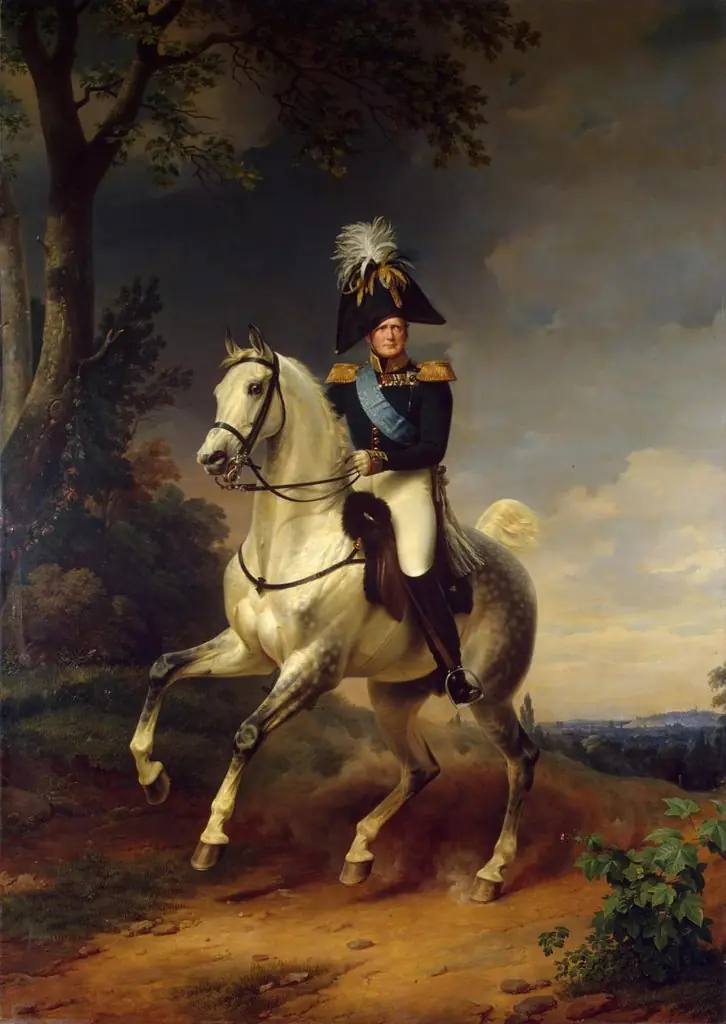 Equestrian Portrait of Alexander I (1777–1825)
 Equestrian Portrait of Franz I (1768-1835)
 Equestrian Portrait of Wilhelmina of Prussia, Consort of Prince William V (Frederika Sophia Wilhelmina)