Artwork
Queen of Spain Maria Louisa, née Bourbon-Parma
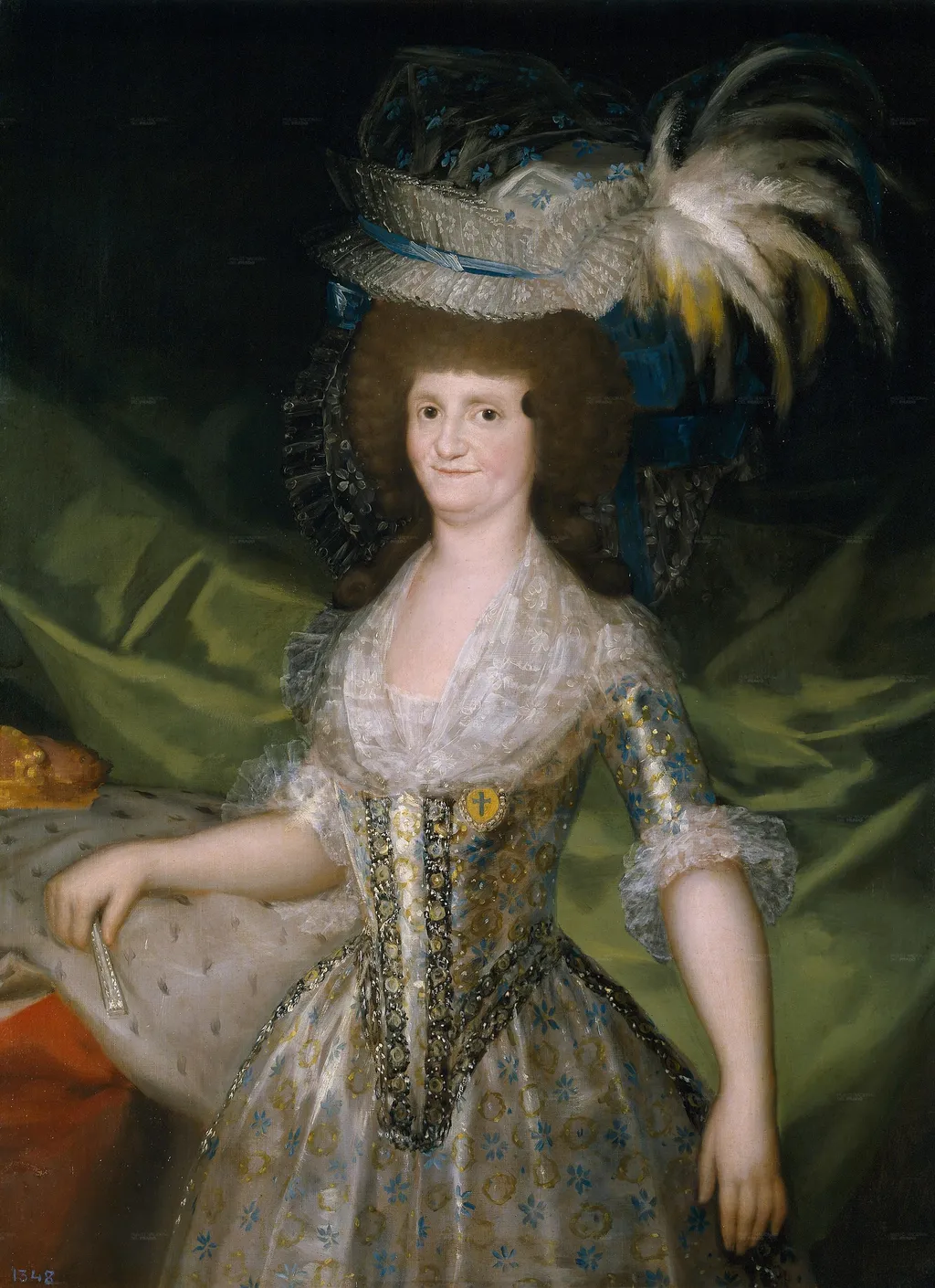
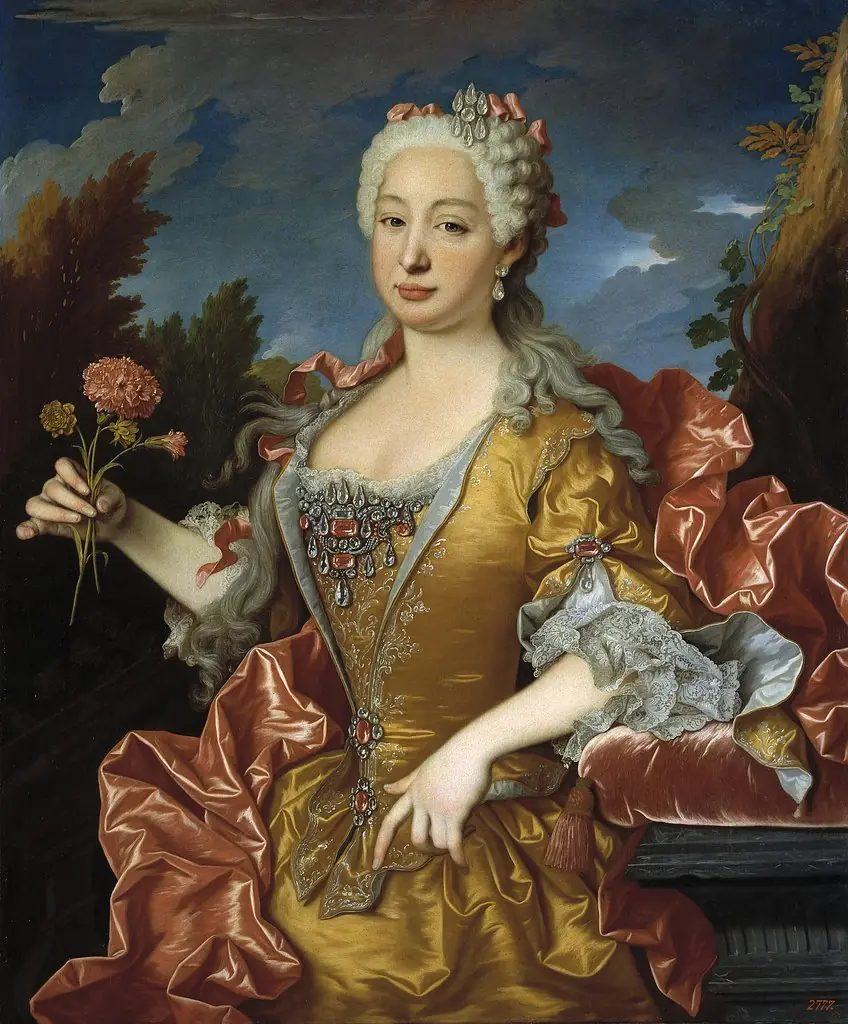
Queen of Spain Maria Louisa, née Bourbon-Parma is an oil painting by the Early Baroque Italian artist Francisco de Goya. It dates from 1796 and is held in the collection of the Museo del Prado. Francisco Goya’s 1796 oil portrait presents Maria Luisa of Parma, queen consort of Spain, in regal attire.
About this work
Subject & Meaning
Her attire consists of a tightly fitted dress richly embroidered with gold and blue floral motifs, adhering to French fashion standards of the era.
The painting depicts Maria Luisa of Parma, Queen of Spain, presented in a half-length view. She is adorned in royal regalia, specifically wearing a crown, a royal mantle, and gemstones that signify her sovereign status. Her attire consists of a tightly fitted dress richly embroidered with gold and blue floral motifs, adhering to French fashion standards of the era.
The ensemble is further embellished with ribbons, a feathered hat, and a closed fan held in her right hand, an essential feminine accessory of the eighteenth century.
Goya rendered the Queen's visage without idealization, capturing her actual appearance with a slight smile. This expression conveys not mere sympathy, but the confidence and haughty dominance characteristic of her personality. The work serves as a realistic representation of the monarch, emphasizing her authoritative presence through both her opulent clothing and her unflattering yet psychologically penetrating facial depiction.
Technique & Style
Goya painted this portrait in oil on canvas around 1800, depicting Maria Luisa of Bourbon-Parma in a tightly fitted, richly embroidered dress adorned with gold and blue floral motifs, delicate sleeve points, and a sheer plastron. The composition shows her holding a closed fan, a fashionable accessory of the late eighteenth century, while the background features a light-toned, exuberant decorative scheme with ribbons and feathered plumes. Goya rendered her face without idealization, capturing a subtle, confident smile that reflects her dignified presence.
The work measures 127 cm by 94 cm and is housed in the Biblioteca Museu Víctor Balaguer, where it is displayed alongside a portrait of her husband, Charles IV, also by Goya.
History & Provenance
The portrait was painted by Francisco Goya in 1790, according to the work's cataloguing data. It depicts Maria Luisa of Parma, Queen of Spain, and is executed in oil on canvas.
The painting is today held at the Biblioteca Museu Víctor Balaguer in Vilanova i la Geltrú, where it is installed in the museum's Prado room alongside a portrait of her husband, Charles IV, also by Goya. The work is on deposit there from the Museo del Prado, the institution that retains ownership of the canvas. Goya rendered the queen's likeness without idealization, capturing her features with a directness that reflects her commanding character.
The portrait is held by the Biblioteca Museu Víctor Balaguer in Vilanova i la Geltrú, on deposit from the Museo del Prado. According to the Wikidata record, the painting is listed in both the Museo del Prado and Biblioteca Museu Víctor Balaguer collections, with its location given as the Biblioteca Museu Víctor Balaguer. The French-language source confirms that the work is conserved at the library-museum Víctor Balaguer as a deposit from the Prado.
Regarding display, the same source notes that the painting is exhibited in the Prado room of the Biblioteca Museu Víctor Balaguer, hung alongside a portrait of her husband, Charles IV, also painted by Goya. No specific accession number is provided in the available sources, and no further exhibition history beyond this permanent display is documented.
Overview
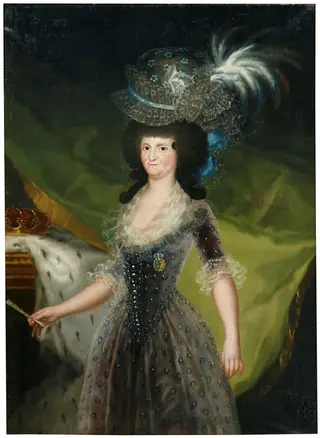
Francisco Goya’s 1796 oil portrait presents Maria Luisa of Parma, queen consort of Spain, in regal attire. She is shown against a dark background that accentuates her white dress with blue‑gold patterning, a feathered hat, and a delicate fan in her left hand. The composition balances the figure with a dark table and a red fruit bowl, creating a formal yet intimate courtly scene.
Own this work as a print
Artist & collection
Artist
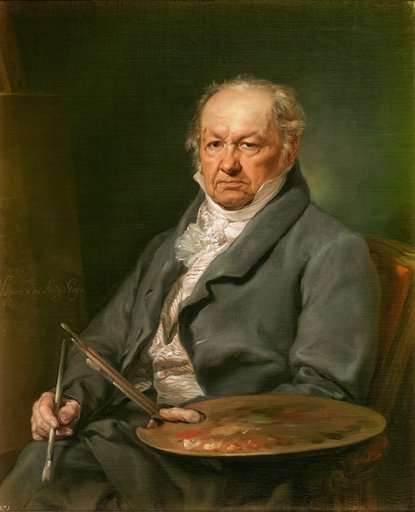
Francisco José de Goya y Lucientes was a Spanish romantic painter and printmaker.