Artwork
The Junta of the Philippines
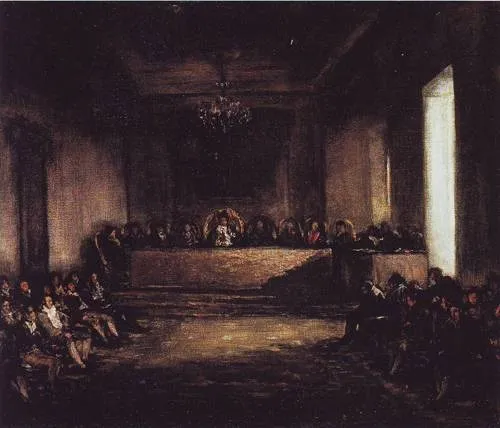
The Junta of the Philippines is an oil painting by Francisco de Goya. It dates from 1816 and is held in the collection of the Gemäldegalerie Berlin.
About this work
Overview
Measuring approximately 327 x 415 cm or 327 x 447 cm according to varying sources, the painting is executed in oil on canvas.
The Junta of the Philippines is an oil painting by the Spanish artist Francisco de Goya (1746-1828), dated to 1815 or 1816. The work depicts a formal assembly of men gathered around a long table in a dimly lit interior, representing the Royal Company of the Philippines, a colonial trading enterprise. Measuring approximately 327 x 415 cm or 327 x 447 cm according to varying sources, the painting is executed in oil on canvas. Its current location is disputed among sources: the Gemäldegalerie Berlin holds it according to institutional records, while other sources place it at the Museo Goya in Castres, France. The painting occupies a significant place in Goya's oeuvre as a history painting that addresses the machinery of colonial governance during a period of profound political instability in Spain, following the Peninsular War (1808-1814) and amid the broader crisis of the Spanish Empire.
Subject & Meaning
The painting depicts the Junta, or governing board, of the Royal Company of the Philippines, a colonial enterprise that managed trade between Spain and its Pacific colony. The main subject is explicitly identified as this institutional body. The composition centers on a long elevated table behind which numerous seated figures are arranged in a row, with a single figure prominently placed at the center, slightly elevated above the rest. Below and before this platform, additional figures are seated in rows on both left and right, facing inward toward the central space. The attire of the assembled men consists of dark suits and formal wear, indicating positions of authority and influence. The iconography carries symbolic weight: the rigid symmetrical arrangement emphasizes order and officialdom, while the aged and damaged walls of the chamber, with patches of plaster missing and revealing the underlying structure, introduce an element of fragility and impermanence that subtly undermines the authority represented by the assembled men. The figures' expressions vary from stern and resolute to withdrawn or apprehensive, conveying a palpable lack of animation that suggests somber mood or forced composure. The physical proximity of the figures, packed closely together with bodies pressed against one another, may symbolize shared responsibility or, conversely, indicate tension and suppressed conflict. The darkness beyond the illuminated area suggests a larger, unknown context that looms over the proceedings. The painting thus
Technique & Style
Goya executed The Junta of the Philippines in oil on canvas, with dimensions reported variously as 327 x 415 cm or 327 x 447 cm. The handling of paint is characteristic of his mature style: loose and somewhat sketchy, with forms suggested rather than sharply defined. The brushwork employs broad horizontal strokes particularly evident in the floor treatment, while architectural details remain indistinct in the shadows. The palette is dominated by browns, blacks, and muted earth tones, with a bright vertical shaft of light entering from a tall opening on the right side providing the only significant illumination. This creates a stark contrast against the shadows that engulf much of the room, particularly in the foreground and along the walls. The light source seems to originate from an unseen window high on the right, casting long, dramatic shadows that obscure details and contribute to a sense of unease. The overall finish is dark and atmospheric, with figures blending into their surroundings. No individual faces or expressions are clearly distinguishable in the more distant passages, though some figures in the illuminated zones receive more deliberate treatment. The artist combines smooth and rough textures to create depth and dimension, with varied brushstrokes contributing to the emotional impact. The prevailing color of green noted by some observers may refer to tonal underpainting or the optical effect of the earthy palette. The chandelier hanging from the ceiling provides minimal additional light, its glow struggling to penetrate the pervasive gloom. This technique of dramatic chiaroscuro and atmospheric obscurity aligns with Goya's broader artistic development toward expressive realism and positions the work among the precursors of Romanticism.
History & Provenance
The painting was created in 1815 or 1816, during the turbulent aftermath of the Peninsular War and amid Spain's broader colonial crisis. The commission circumstances remain unspecified in the available sources, though the subject of the Royal Company of the Philippines suggests official or institutional patronage connected to colonial administration. The provenance includes ownership by Étienne-Edmond Martin, Baron de Beurnonville, and subsequently by Rudolph Philip Goldschmidt before its acquisition by a public collection. The current location presents a significant discrepancy in the sources: the Gemäldegalerie Berlin is identified as the holding institution in institutional records, while multiple independent sources place the work at the Museo Goya in Castres, France. This divergence may reflect a loan, a disputed attribution period, or cataloguing confusion with another version or related work. Exhibition history is not documented in the provided sources beyond its general presence in these collections.
Context
The Junta of the Philippines emerged from a tumultuous period in Spanish history marked by political instability, the Peninsular War, and the subsequent struggle for independence in Spanish colonies. The Spanish Enlightenment significantly shaped Goya's artistic vision, with its emphasis on reason, individualism, and skepticism of authority informing his critical perspective on established power structures. The painting serves as a visual commentary on the political elite's role in society and the complex dynamics of power and governance in Spain, particularly the influence of colonialism. Goya's position as court painter to Charles IV and member of the Academy provided him intimate knowledge of institutional power, even as his work increasingly critiqued it. Scholars have compared this work to The Third of May 1808, noting that both reflect Goya's concern with the consequences of war and political strife, employing dramatic lighting and emotional expression to convey human suffering and the impact of authority. While The Third of May 1808 addresses violence directly, The Junta of the Philippines examines the bureaucratic and deliberative face of power. Modern critiques often explore the painting's relevance to contemporary political issues, with art historians noting that Goya's work continues to resonate, prompting discussions about power, governance, and social responsibility. The painting's suggestion that those in power often act in self-interest, neglecting broader population needs, aligns with Enlightenment critiques that Goya absorbed and transmitted through his art.
Legacy
The Junta of the Philippines occupies a significant though understudied position in Goya's corpus and in the broader trajectory of Spanish art. The work exemplifies Goya's innovative techniques and thematic explorations that influenced subsequent movements including Romanticism, Realism, and beyond. His ability to blend social commentary with emotional depth, using loose brushwork and atmospheric effects to convey psychological and political tension, paved the way for future artistic directions. The painting's power resides not in overt narrative but in its evocation of quiet anxiety and veiled uncertainty, capturing collective deliberation under conditions of constraint. This approach to political subject matter, treating institutional power with atmospheric ambiguity rather than heroic clarity, distinguishes Goya's contribution to history painting. The work has prompted conservation efforts to address issues of fading and damage, ensuring its preservation for future study. Its exploration of colonial governance and the machinery of empire maintains contemporary relevance, serving as a reminder of art's capacity to provoke thought about power and social responsibility. The painting's influence extends to modern artists engaging with social issues, who find in Goya's example a model for combining personal vision with political critique. As a pivotal figure in Spanish art, Goya's contributions extend beyond his lifetime, with works like The Junta of the Philippines shaping understanding of how artistic technique can encode political meaning and how the representation of institutional space can carry critical force.
Artist & collection
Artist
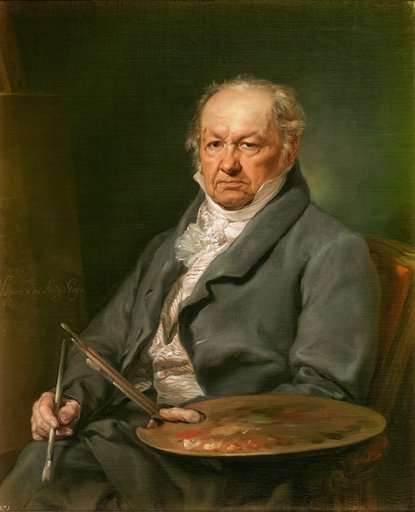
Francisco José de Goya y Lucientes was a Spanish romantic painter and printmaker.

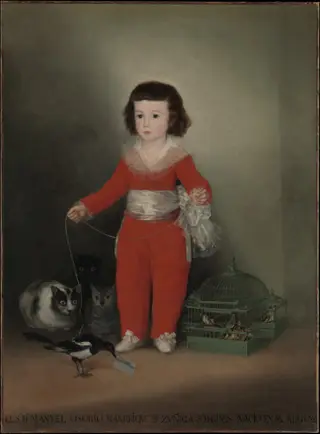
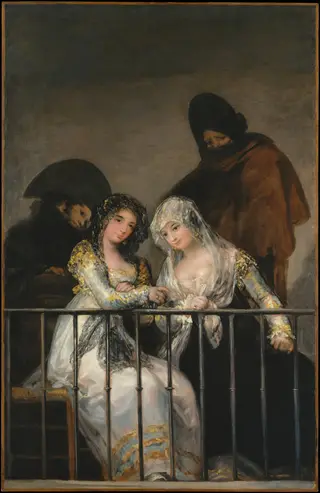
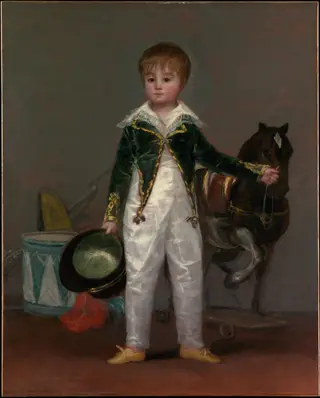
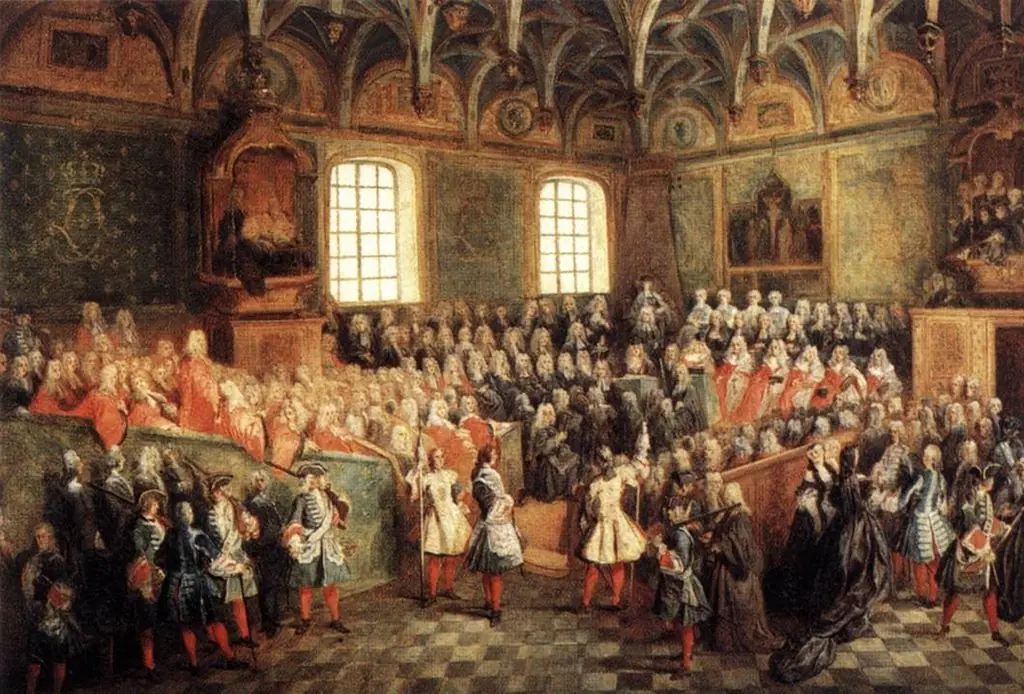
- The Seat of Justice in the Parliament of Paris in 1723
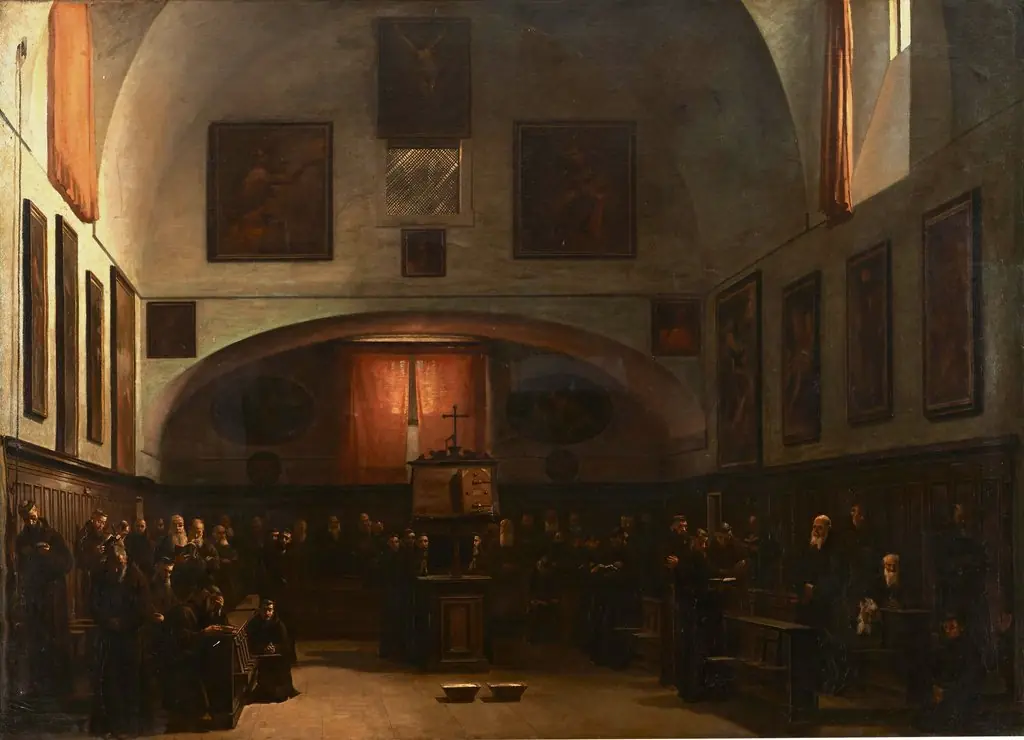 Capuchinos en el coro
 Interior of the Choir in the Capuchin Church on Piazza Barberini in Rome
 The Preaching of John Knox before the Lords of the Congregation 10th June 1559
 Homage to a Bishop
 San Bernardino preaching in the Campo, Siena
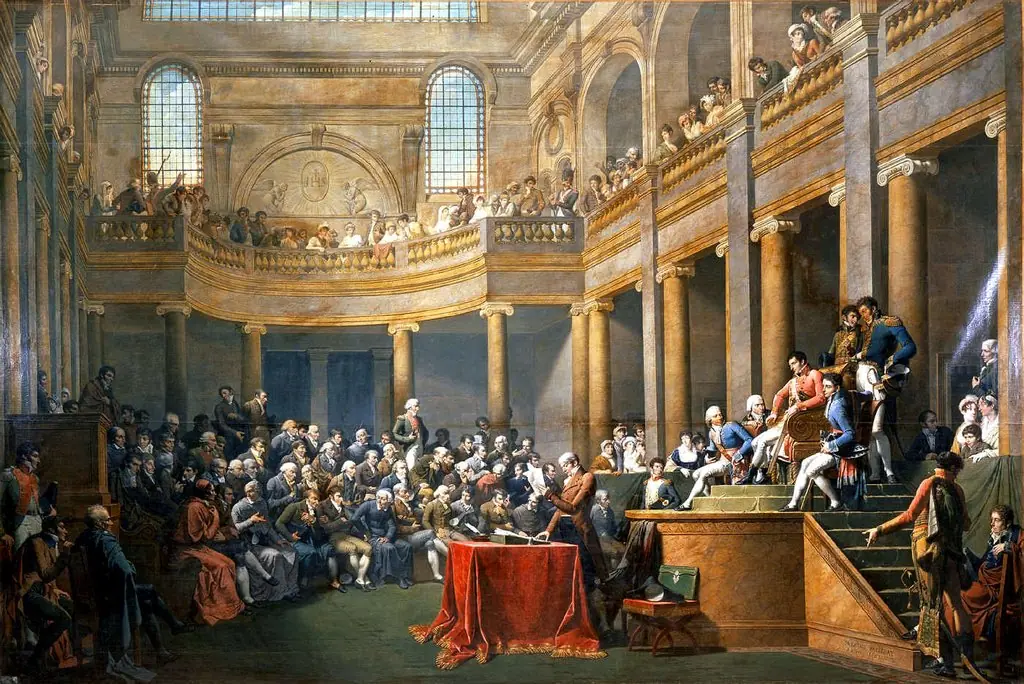 Les Comices de Lyon
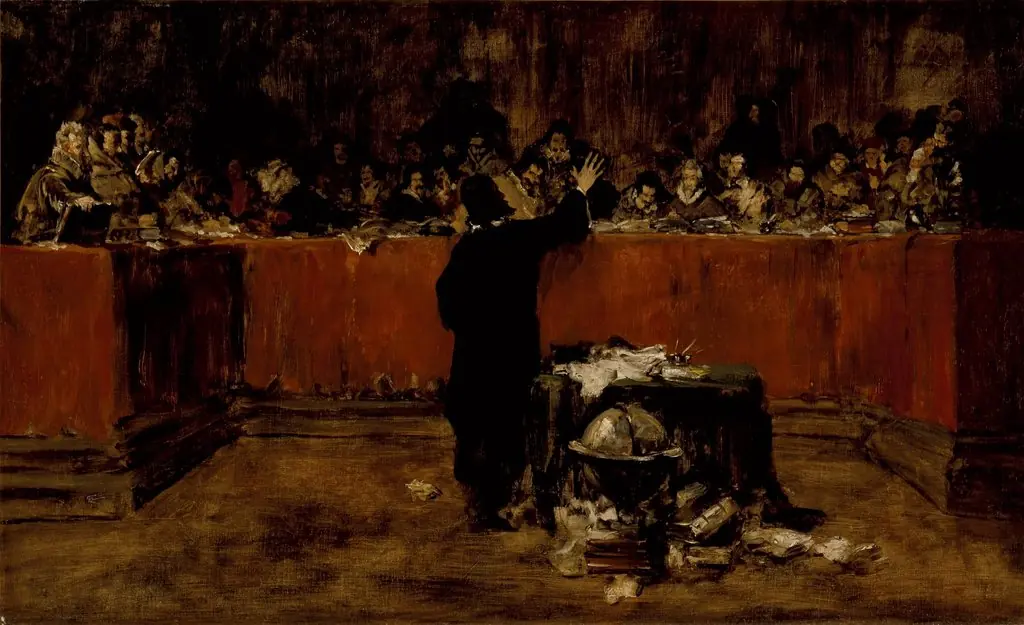 Sketch for a Picture--Columbus before the Council of Salamanca (B) (Christopher Columbus before the Spanish Council)
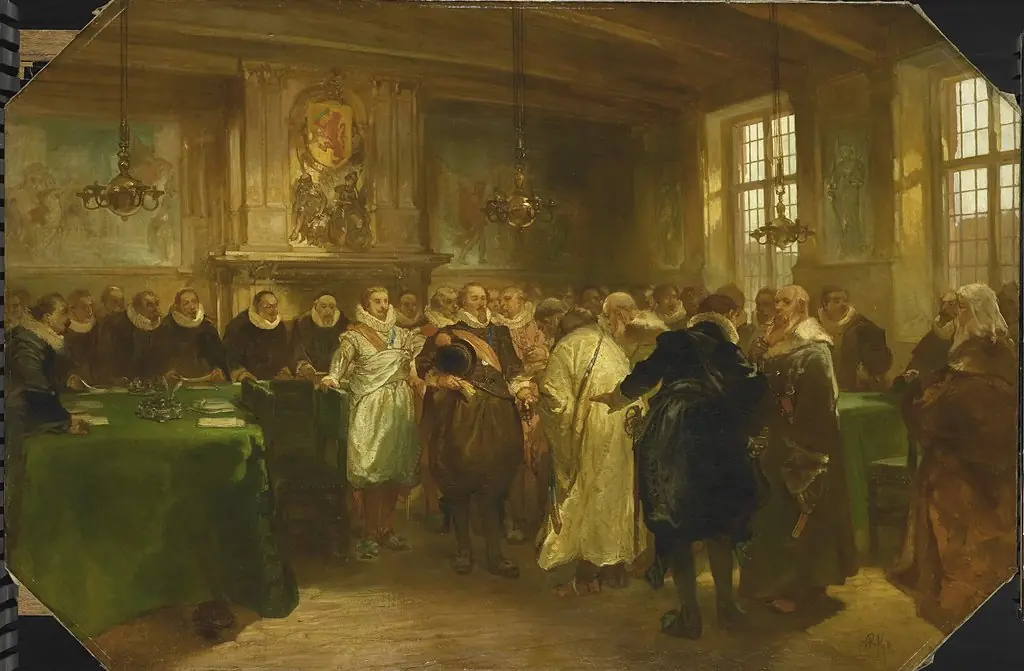 Prince Maurits Receiving a Russian Delegation in 1614
 Homage to a Bishop
 Belshazzar's Feast
 The Choir of the Capuchin Church in Rome