Artwork
the lumberjacks
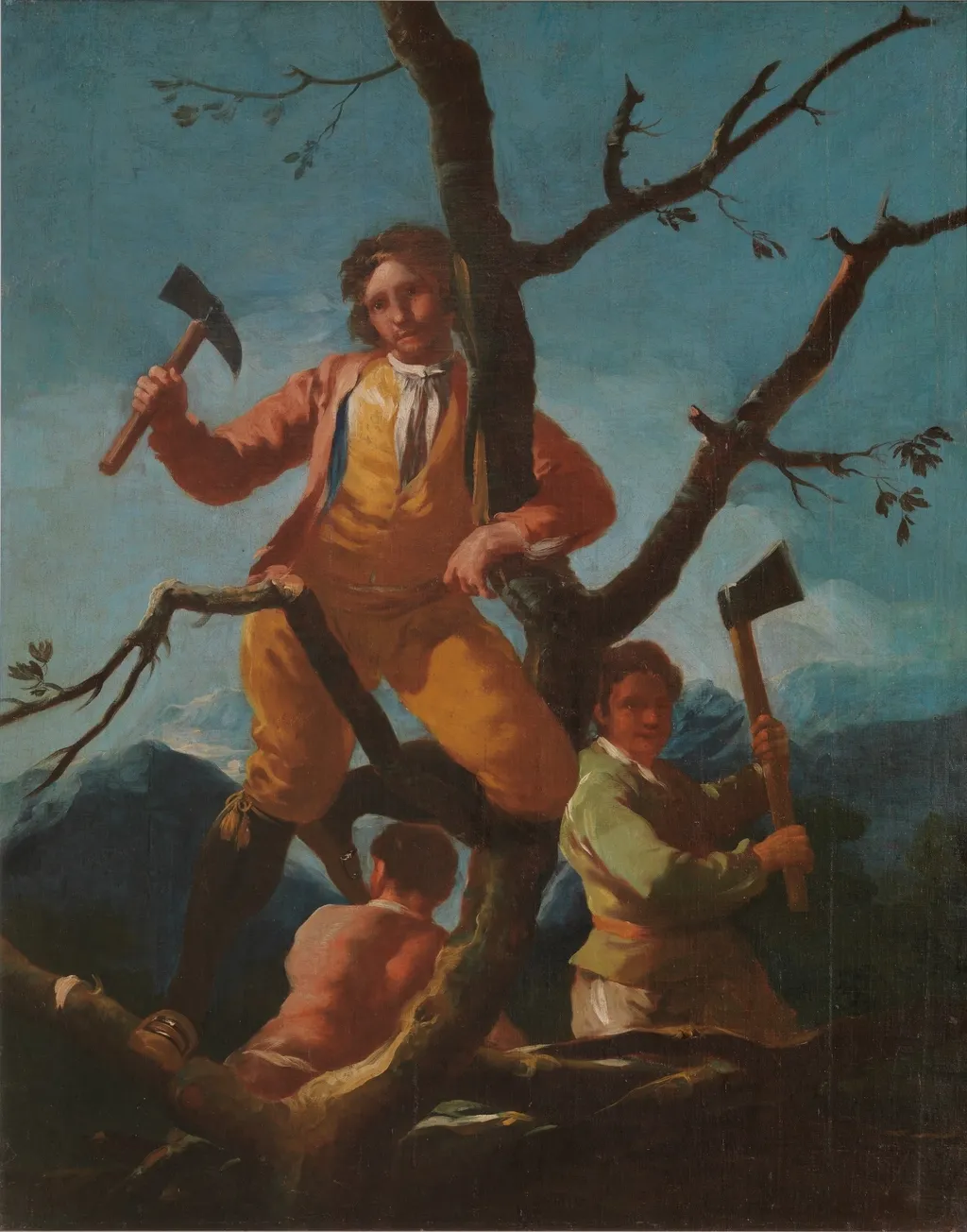
the lumberjacks is an oil painting by the Rococo painting artist Francisco de Goya. It dates from 1789 and is held in the collection of the Museo del Prado.
About this work
Subject & Meaning
Goya's brushwork remains loose, consistent with the tapestry cartoon series, and the low perspective foreshadows the later use of the work as an overdoor.
The painting depicts two lumberjacks felling a fallen tree, a scene that symbolizes labor and the transformation of nature through human effort. The figures are arranged in a spiral composition, emphasizing a realistic genre scene of everyday activity. Light falls primarily on the protagonist's orange garment, creating a dramatic contrast in an otherwise dark composition. Goya's brushwork remains loose, consistent with the tapestry cartoon series, and the low perspective foreshadows the later use of the work as an overdoor. The subject reflects contemporary interest in rural labor and aligns with the decorative purpose of the cartoons for the Prince of Asturias' chambers.
Technique & Style
The painting was executed in oil paint on canvas, measuring 141 cm in height by 114 cm in width. It depicts a realistic genre scene of two lumberjacks felling a fallen tree, rendered in a spiral composition that guides the viewer’s eye through the three figures. The brushwork is loose and expressive, characteristic of the cartoons for tapestry series, and the perspective is low, emphasizing the flattened spatial treatment of the decorative panels. The work was created circa 1777-1780 as part of the fourth series of cartoons intended for the Prince of Asturias’ bedroom at the Palacio del Pardo, and it was later installed in the Museo del Prado’s gallery 91 after its rediscovery in 1869.
History & Provenance
Los leñadores was painted by Francisco de Goya in 1777 as part of the fourth series of tapestry cartoons produced for the Real Fábrica de Santa Bárbara. The canvas was intended to serve as an over-window (sobreventana) in the antichamber, or, according to the Spanish account, the bedroom, of the Prince of Asturias at the Palacio del Pardo, the residence of the future Charles IV and his wife María Luisa of Parma. The cartoon was delivered to the Royal Tapestry Factory on 24 January 1780. It was subsequently considered lost until 1869, when Gregorio Cruzada Villaamil recovered it from the basement of the Madrid Royal Palace. By royal order of 19 January and 9 February 1870, the painting was transferred to the Museo del Prado, where it has remained on view in Room 91 and was first catalogued in 1876. The lumberjacks is held in the collection of the Museo del Prado in Madrid. It was acquired by the museum in 1870, following its discovery in the basement of the Palacio Real in 1869 by Gregorio Cruzada Villaamil, and formally entered the museum's holdings in January and February of 1870. The work was first listed in the museum's 1876 catalogue and has remained on display in Gallery 91. The painting was originally created in 1780 as part of Goya's fourth series of cartoon tapestries intended for the antechamber of the Prince of Asturias in the Palacio del Pardo. It was delivered to the Royal Tapestry Workshop on 24 January 1780. The work is documented in both Spanish and French Wikipedia entries as forming part of that decorative program.
Context
Created as part of Goya's fourth series of tapestry cartoons, this work was intended for the antechamber of the Prince of Asturias at the Palace of El Pardo. The painting, delivered in January 1780, features an elongated composition designed specifically to function as an overdoor. Art historical analysis describes the scene as a realistic genre depiction arranged in a spiral formation, characterized by a loose brushwork typical of the series. Scholars suggest the artist may have been influenced by Zacarías González Velázquez, though Goya diverges from Velázquez's atmospheric models by employing a dark setting illuminated primarily by the protagonist's orange attire. After being considered lost for nearly a century, the canvas was rediscovered in the Royal Palace of Madrid in 1869 and subsequently entered the Museo del Prado collection in 1870, where it was first cataloged in 1876.
Own this work as a print
Artist & collection
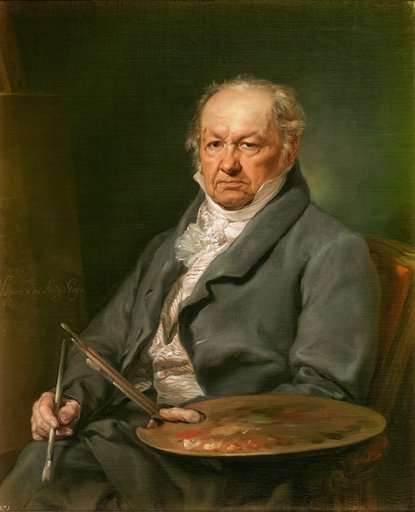
Artist
Francisco José de Goya y Lucientes was a Spanish romantic painter and printmaker.