Artwork
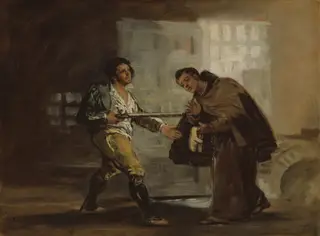
El Maragato Threatens Friar Pedro de Zaldivia with His Gun
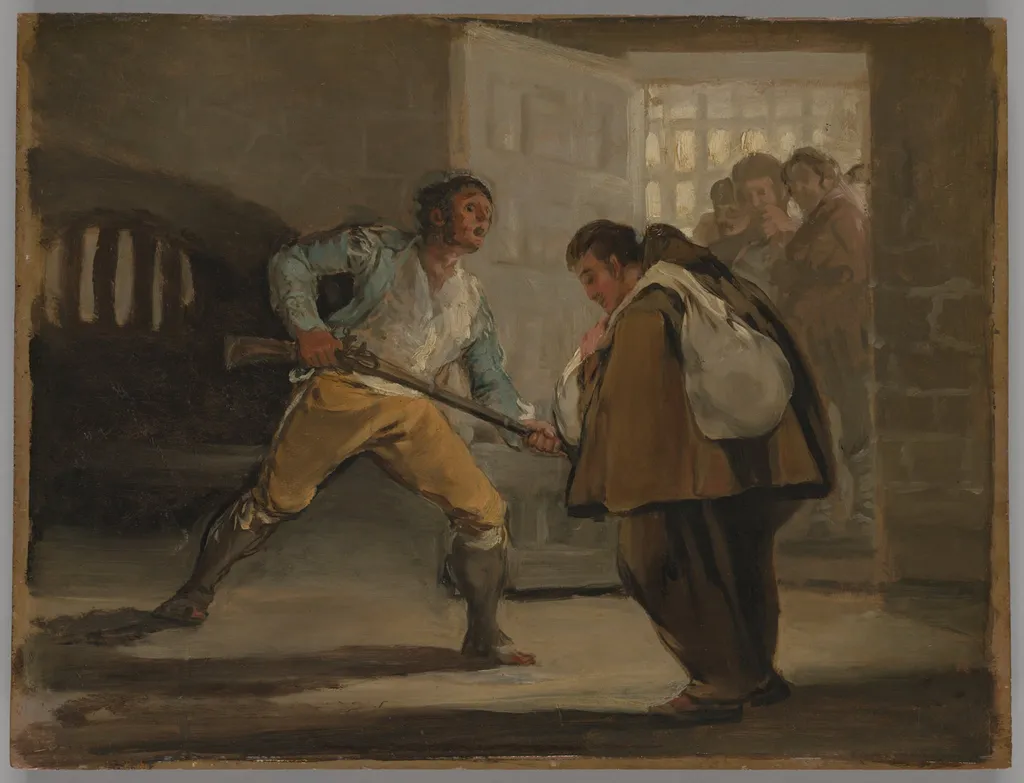
El Maragato Threatens Friar Pedro de Zaldivia with His Gun is an oil painting by the Romanticist artist Francisco de Goya. It dates from 1806 and is held in the collection of the Art Institute of Chicago.
- Accession no.
- 20692
- Credit line
- Mr. and Mrs. Martin A. Ryerson Collection
About this work
If you like this raw energy, look up the technique called impasto, thick paint that stands up off the canvas.
You see a friar wrestling a bandit for a gun in a rocky ravine.
Goya painted this like a news flash, six small panels that tell the whole story of a real 1806 crime. This is the moment the friar grabs the barrel before the bandit can fire. The brushwork is quick, almost like a sketch, so the fear feels immediate.
If you like this raw energy, look up the technique called impasto, thick paint that stands up off the canvas.
Overview
El Maragato Threatens Friar Pedro de Zaldivia with His Gun is a small oil-on-panel painting by Francisco de Goya, depicting a pivotal moment in a true crime story from 1806. One of six panels narrating the event, it captures the intense confrontation between the notorious bandit El Maragato and Friar Pedro de Zaldivia.
Subject & Meaning
The painting illustrates the climax of El Maragato's attempted hostage-taking, where Friar Pedro seizes control of the bandit's gun in a rocky ravine. The scene conveys the themes of confrontation, cunning, and the thwarting of criminal intent, reflecting Goya's interest in satirizing and portraying everyday Spanish life.
Technique & Style
Characterized by quick, expressive brushwork akin to a sketch, the painting features a dynamic, almost immediate representation of fear and tension. The use of impasto (thick, raised paint) enhances the raw energy of the scene, drawing attention to the physicality of the struggle.
History & Provenance
Inspired by a widely popularized event of 1806, in which Friar Pedro de Zaldivia captured El Maragato after a two-month crime spree, the painting is part of a series Goya created for personal or select patron enjoyment. The event was commemorated in various Spanish arts of the time.
Context
Created in the early 19th century, the work reflects Goya's exploration of satirical and popular themes in Spanish life during this period. It also showcases his ability to narrate a story across multiple panels, akin to a visual news report.
Legacy
While the specific legacy of this panel is intertwined with the series as a whole, it contributes to Goya's reputation for capturing the essence of Spanish culture and his innovative use of technique to convey emotional intensity. The work's themes and style have influenced subsequent artists in depicting everyday drama and conflict.
Own this work as a print
Artist & collection
Artist
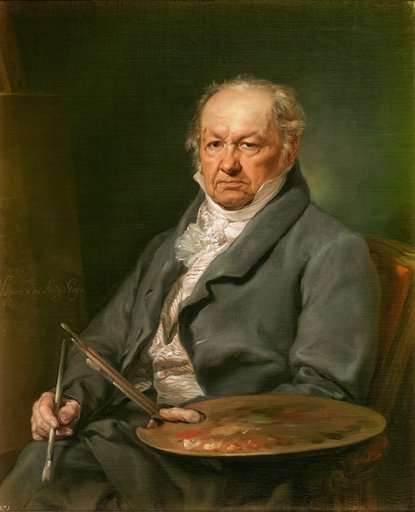
Francisco José de Goya y Lucientes was a Spanish romantic painter and printmaker.

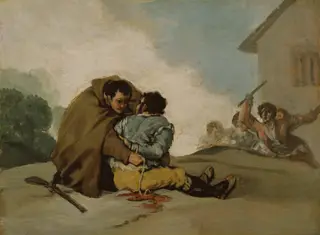
- Friar Pedro Binds El Maragato with a Rope
 Friar Pedro Offers Shoes to El Maragato and Prepares to Push Aside His Gun
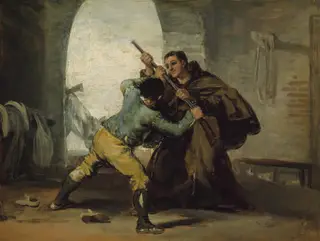 Friar Pedro Wrests the Gun from El Maragato
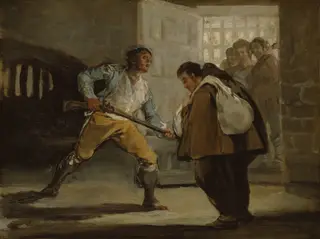 El Maragato Threatens Friar Pedro de Zaldivia with His Gun
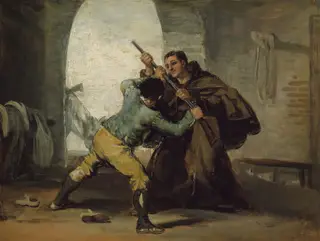 Friar Pedro Wrests the Gun from El Maragato
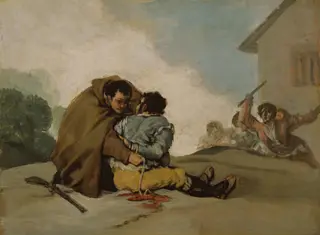 Friar Pedro Binds El Maragato with a Rope
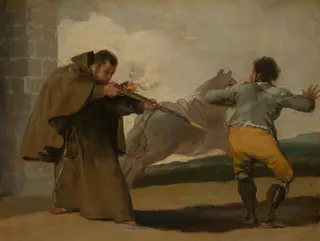 Friar Pedro Shoots El Maragato as His Horse Runs Off
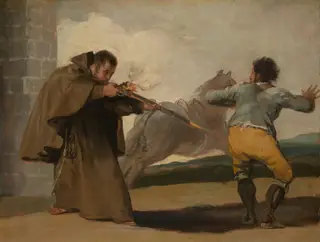 Friar Pedro Shoots El Maragato as His Horse Runs Off
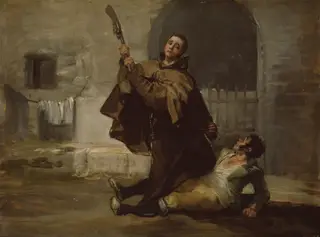 Friar Pedro Clubs El Maragato with the Butt of the Gun
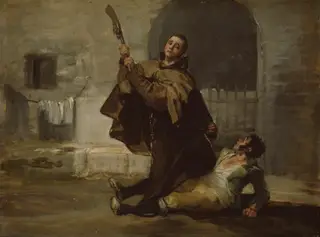 Friar Pedro Clubs El Maragato with the Butt of the Gun