Artwork
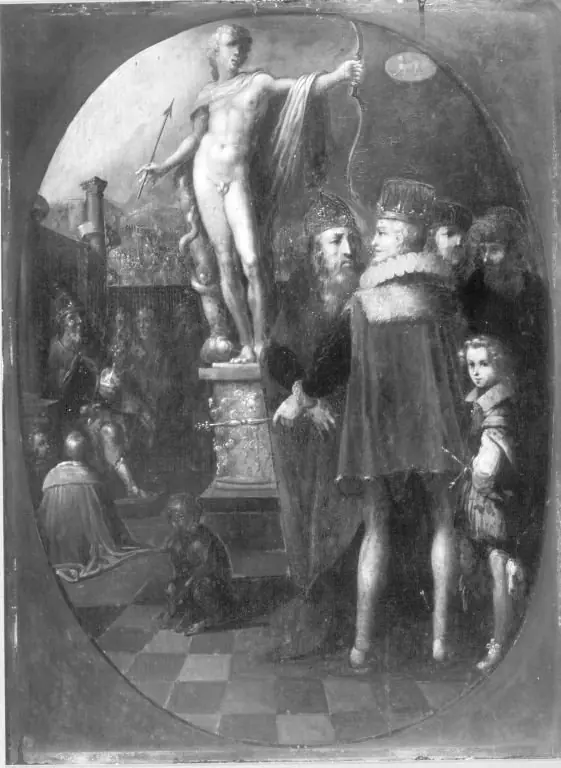
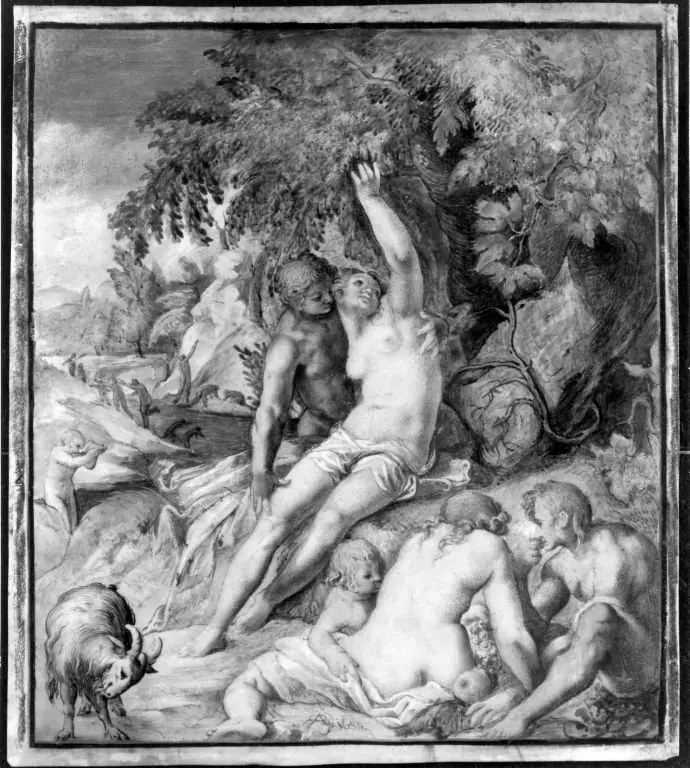
Diana als Patronin der Navigationskunst, der Fischer und Jäger (nach Jan Saenredam)
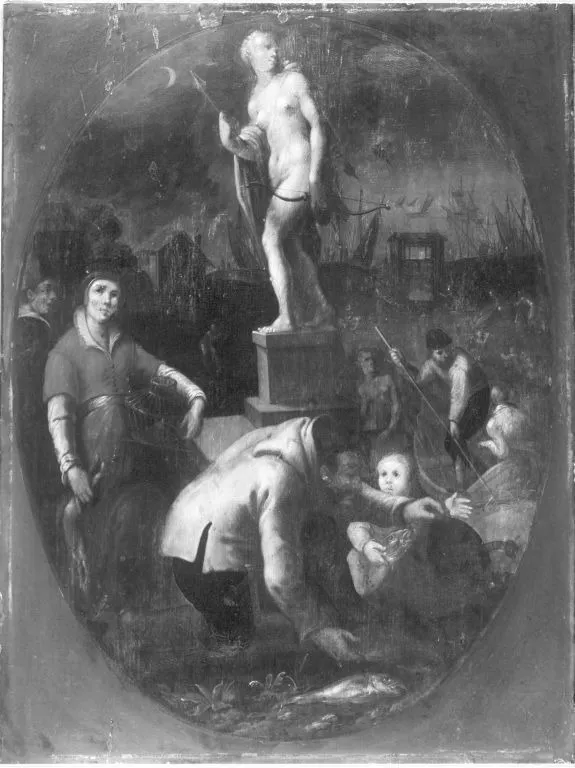
Diana als Patronin der Navigationskunst, der Fischer und Jäger (nach Jan Saenredam) is an unspecified painting by the Flemish Baroque painting artist Frans Francken III. It dates from 1637 and is held in the collection of the Bavarian State Painting Collections.
About this work
If you're interested in learning more about this style, you might want to look into the work of artist Frans Francken III.
This painting depicts a scene with a statue of a woman in the center, surrounded by people. The woman is nude and holds a bow and arrow, with a crescent moon above her head. The people around her are dressed in clothing from the 17th century. In the background, there is a landscape with trees and a building.
The painting is done in a style that suggests it was created in the Baroque period. The use of chiaroscuro, a technique that uses strong contrasts between light and dark, adds depth and drama to the scene.
If you're interested in learning more about this style, you might want to look into the work of artist Frans Francken III.
Subject & Meaning
The painting depicts Diana, the Roman goddess of hunting, as patron of navigation, fishing, and hunting, drawing on motifs from Jan Saenredam’s engraving. Diana is shown in her traditional role as a huntress with bow and quiver, surrounded by symbols of her diverse domains: navigational instruments and maritime scenes indicate her patronage of sailors, while fish and hunting gear underscore her association with fishermen and hunters. The composition thus presents her as a unifying divine figure overseeing three interrelated spheres of human activity.
The work’s iconography synthesizes classical mythology with contemporary early modern interests, reflecting the period’s engagement with both classical sources and practical arts. By positioning Diana at the nexus of these pursuits, the painting conveys the Renaissance and Baroque ideal of divine oversight extending to all aspects of human endeavor, merging mythological narrative with allegorical significance.
Technique & Style
Frans Francken III’s Diana als Patronin der Navigationskunst, der Fischer und Jäger (1637) is executed in oil on a wooden panel, measuring 56.8 × 43.3 cm. The support, typical of early seventeenth-century Flemish painting, provides a smooth, stable surface that allows for fine detail and delicate glazing.
Stylistically, the work reflects Francken’s adherence to the Northern Mannerist tradition, characterized by intricate figural arrangements and a refined, almost enamel-like finish. The handling of paint is precise, with meticulous attention to costume textures, foliage, and celestial details, enhancing the allegorical narrative. The palette is controlled, relying on harmonious earth tones punctuated by luminous accents in Diana’s drapery and the surrounding putti, demonstrating Francken’s skill in rendering mythological subjects with clarity and elegance.
History & Provenance
The painting was created by Frans Francken III in 1637, after a composition by Jan Saenredam. It is a mythological work depicting Diana and is held by the Bavarian State Painting Collections at the Alte Pinakothek.
The sources do not provide further details regarding the original commission, the chain of ownership prior to its acquisition by the Bavarian State Painting Collections, or any intermediate provenance records.
Overview
Frans Francken III, a Flemish painter active in the early seventeenth century, completed this mythological canvas in 1637. The work portrays the Roman goddess Diana, presented as a protector of navigation, fishing and hunting, and is part of the collection of the Alte Pinakothek in Munich.
Context
Francken III belonged to a prolific artistic dynasty and worked within the vibrant cultural milieu of Antwerp, where mythological subjects were popular among patrons. The depiction of Diana as a patron of navigation reflects contemporary interests in exploration and trade during the Dutch Golden Age.
Artist & collection
Artist
Frans Francken III (1607–1667) was a Flemish Baroque painter and the best known member of the fourth generation of the Francken family of artists.

 Der Mund der Wahrheit
 Maria mit Kind und den hll. Sebastian und Katharina (zugeschrieben)
 Opferung der Iphigenie
 Coriolan lässt sich von seiner Familie bereden
 Allegorie auf den Tod einer Fürstin
 Birth of Maria de Medici (study)
 Mars
Mars Kreuzabnahme (Kopie nach)
 Johannes predigt in der Wüste
 Goldenes Zeitalter (Kopie nach)
- Hl. Magdalena