Artwork
Ideallandschaft (Art des)
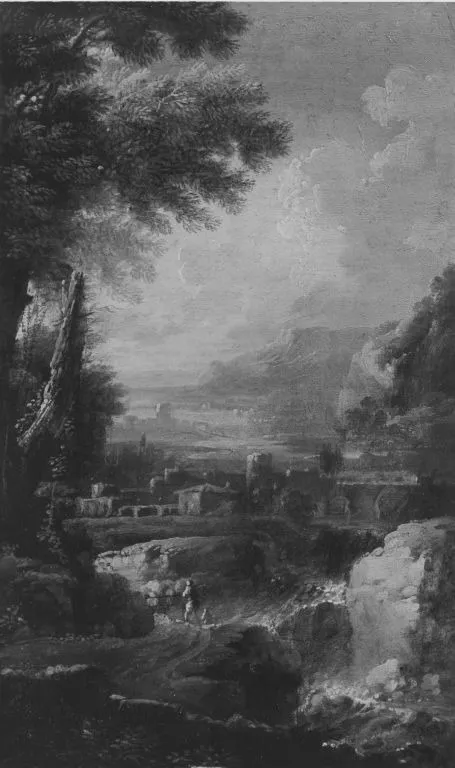
Ideallandschaft (Art des) is an unspecified painting by the Barbizon school artist Franz Joachim Beich. It dates from 1706 and is held in the collection of the Bavarian State Painting Collections.
About this work
Overview
The work stands as a representative example of early 18th-century German landscape painting, where the artist constructs a perfected vision of the countryside.
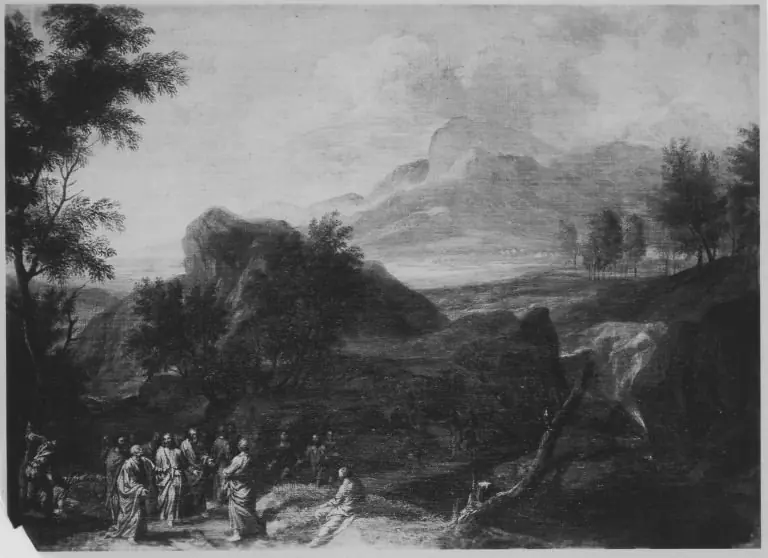
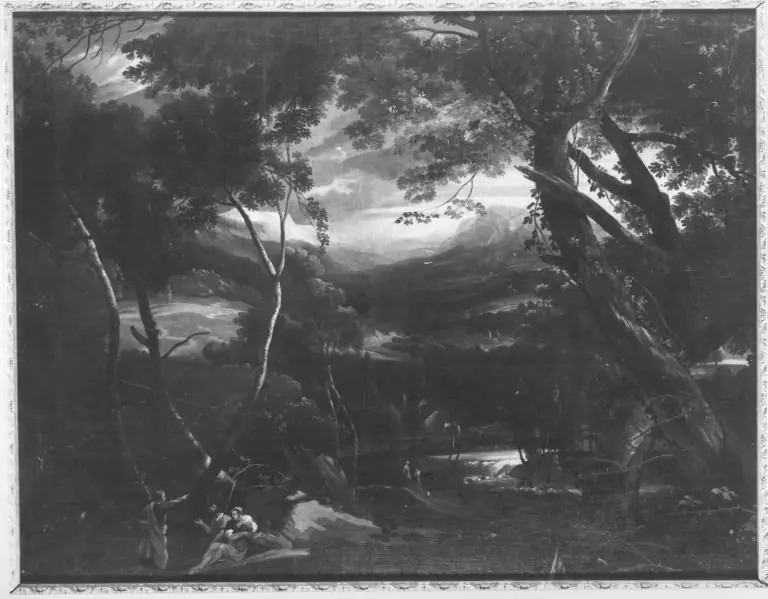
Created in 1706, Ideallandschaft (Art des) by Franz Joachim Beich is a German Baroque landscape that synthesizes observed natural elements into a harmonious, idealized composition. The painting features a serene pastoral scene anchored by a large, dominant tree in the left foreground, whose upward-reaching branches frame the view and guide the eye into the depth of the picture plane. Beyond this arboreal foreground, the composition unfolds across rolling hills dotted with scattered trees, leading to a small village nestled in the middle distance.
The background is defined by a range of mountains that establish a sense of vastness and atmospheric perspective. Beich, a Munich-based painter known for his topographical accuracy and idealized views, utilizes this work to demonstrate his mastery of the 'Art des' style, which balances realistic detail with classical compositional order. The date 1706 places this work within the height of his career, reflecting the period's preference for landscapes that evoke a sense of peace and divine order rather than wild, untamed nature.
The work stands as a representative example of early 18th-century German landscape painting, where the artist constructs a perfected vision of the countryside.
Subject & Meaning
The canvas portrays a distant village nestled among gently rolling hills and distant mountains, while a prominent tree dominates the left foreground. Sparse trees and a modest settlement suggest a harmonious relationship between humanity and nature, reflecting the period’s fascination with idealized landscapes that convey order and serenity.
Technique & Style
Beich employs a muted palette of greens, browns, and greys, allowing subtle tonal shifts to define form. Visible brushwork creates a tactile surface that hints at three-dimensionality. Light and shadow are carefully modulated, enhancing depth and guiding the eye from the foreground tree toward the receding horizon.
History & Provenance
Created in 1706, the painting entered the Alte Pinakothek’s holdings, where it remains on display. Its acquisition reflects the museum’s commitment to representing German Baroque landscape painting, situating Beich among his contemporaries in the broader narrative of European art history.
Artist & collection




 Arcadian Landscape
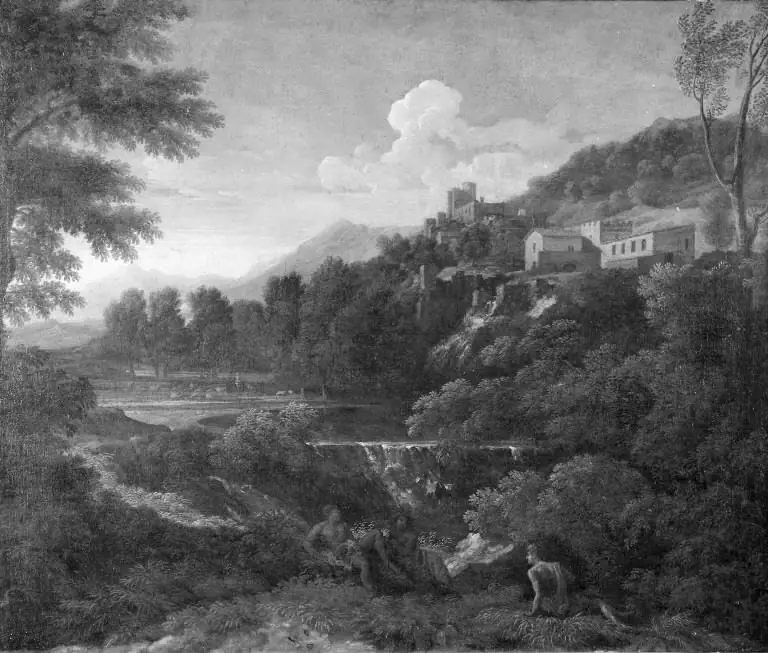 Arcadian Landscape
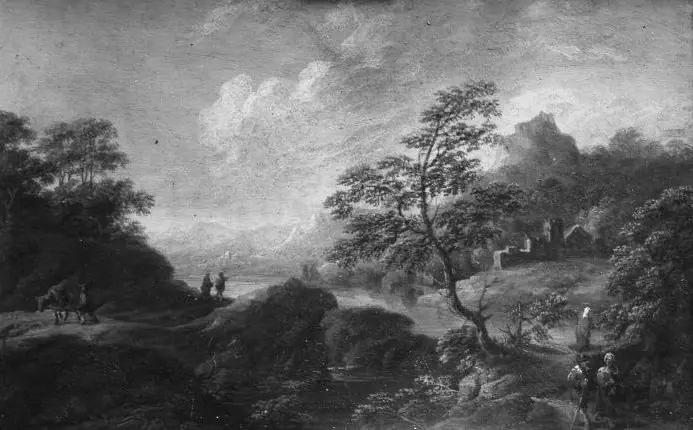 Landscape: Backside: copper engraving portrait of a man
 Gebirgslandschaft
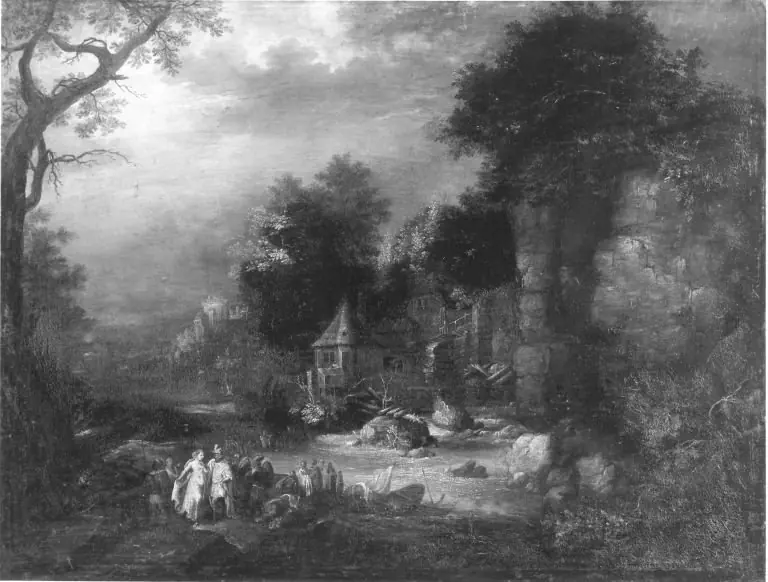 Ideallandschaft
 Landscape with the Temple of Sibyl in Tivoli
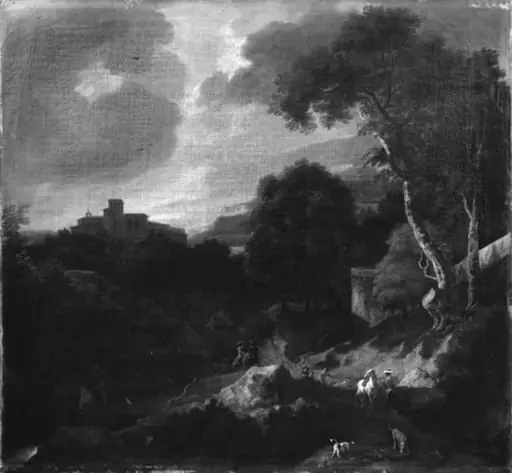 Mountainous Landscape with a Monastery
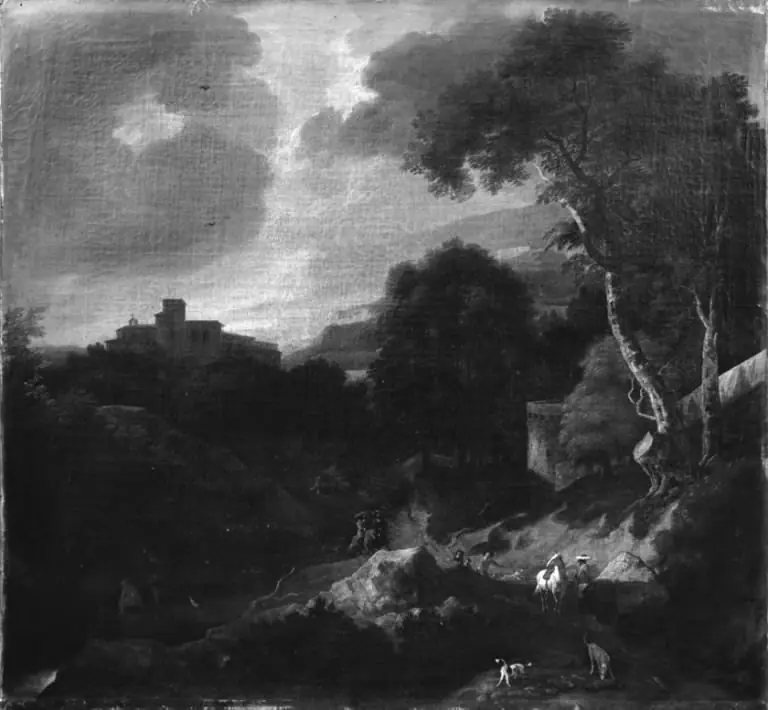 Mountainous Landscape with a Monastery
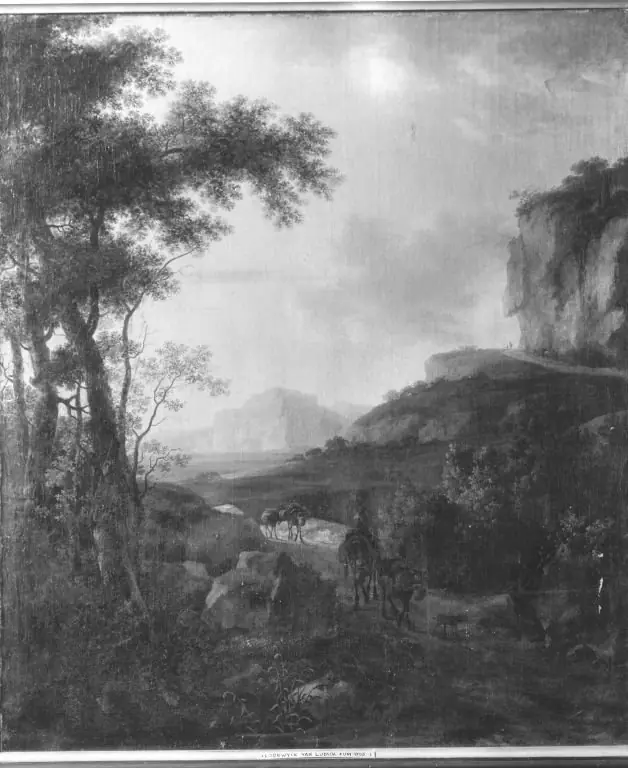 Landschaft
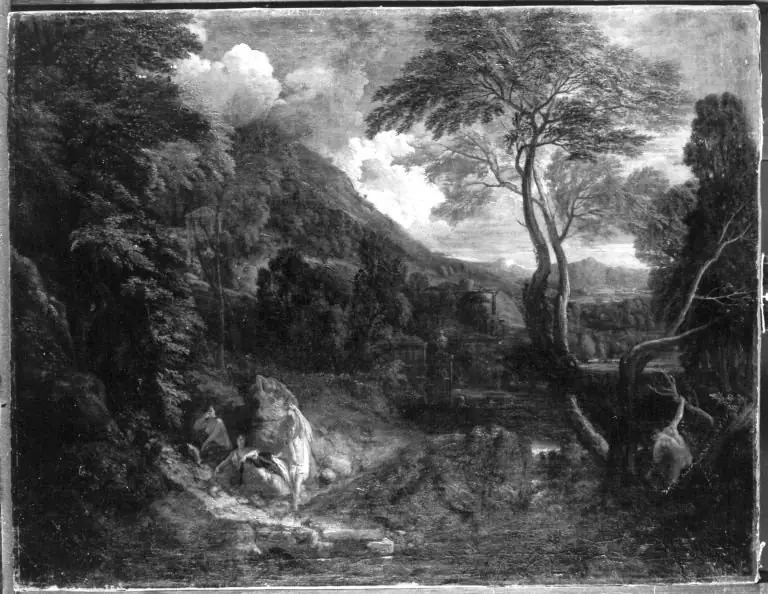 Italienische Ideallandschaft
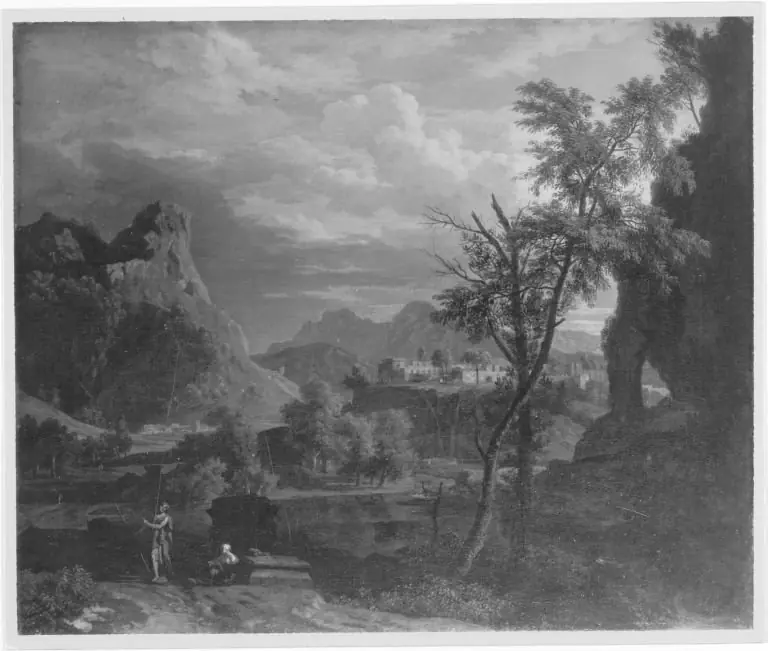 Italienische Landschaft