Artwork
Subtitle for "Various Landscapes"
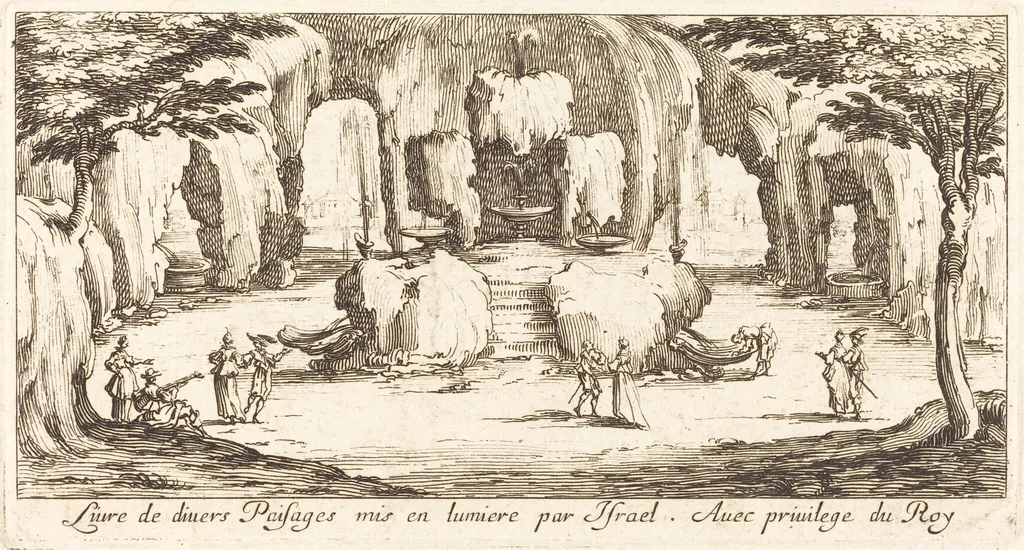
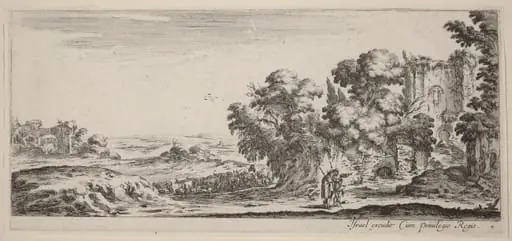
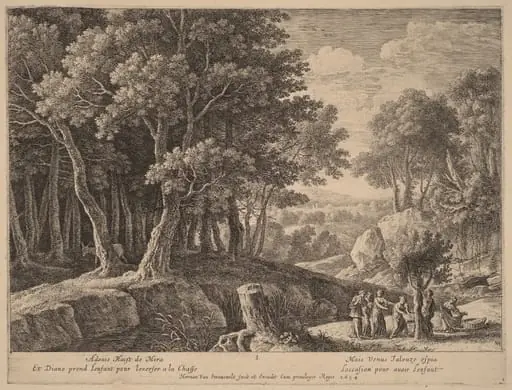
Subtitle for "Various Landscapes" is an ink print by the Baroque artist French 17th Century. It dates from 1635 and is held in the collection of the National Gallery of Art. This etching is one of several landscape prints in a series, rendered on laid paper with fine linear detail.
About this work
Overview
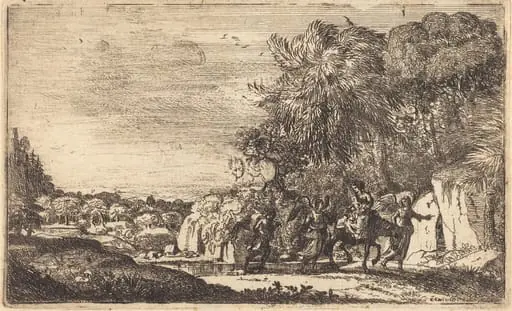
It depicts a somber coastal scene where figures gather near a rocky ledge and a small boat, their postures suggesting quiet preparation or conversation.
This etching is one of several landscape prints in a series, rendered on laid paper with fine linear detail. It depicts a somber coastal scene where figures gather near a rocky ledge and a small boat, their postures suggesting quiet preparation or conversation. The composition is framed by dark trees and lit by a subtle, diffuse glow behind the rocks, creating an atmosphere of quiet tension and mystery.
Subject & Meaning
The figures, clustered near water and rock, imply a moment of transition, perhaps departure, arrival, or waiting. Their lack of clear narrative action invites interpretation rather than storytelling. The faint light behind the rocks may suggest an unseen path or threshold, reinforcing a sense of ambiguity. The scene avoids grandeur, instead focusing on quiet human presence within an indifferent natural setting.
Technique & Style
The artist employed etching to achieve fine, controlled lines and deep tonal contrasts. Cross-hatching and varying line density create shadows that define form and depth, while the sparse use of light enhances the mood. The textured surface of the laid paper interacts with the ink, adding subtle grain that complements the roughness of the landscape. This technique was standard for detailed printmaking in the period.
History & Provenance
As part of a series titled 'Various Landscapes,' this print was likely produced to be collected or sold as a set. Its modest scale and subject matter suggest it was intended for private ownership rather than public display. No specific artist or date is recorded in the provided details, but its style aligns with early modern European print traditions, particularly those focused on atmospheric scenery.
Context
During this period, landscape prints were increasingly valued for their ability to evoke mood and place without narrative. Artists often drew from observed nature, though with stylized lighting and composition. This print reflects a broader trend toward introspective, atmospheric scenes, moving away from idealized vistas toward more personal, emotionally resonant views of the natural world.
Legacy
Though not attributed to a major named artist, this etching exemplifies the quiet, observational approach that influenced later generations of printmakers. Its emphasis on light, shadow, and psychological tone contributed to the development of landscape as a vehicle for mood rather than mere topography. Such works remain valuable for understanding how everyday scenes were elevated through technical precision and restrained composition.
Artist & collection

Artist
Seventeenth-century French printmakers worked in burin and acid. See the Beggar Woman with Rosary (1622), etched on laid paper with her hands folded in prayer, or The Siege of La Rochelle (1628/1631), one sheet from a…

 Landscape with Ruins
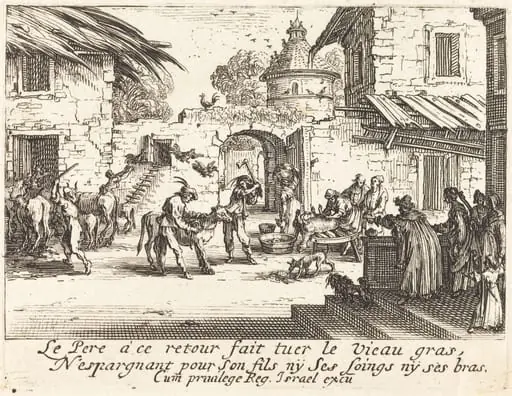 Killing the Fatted Calf
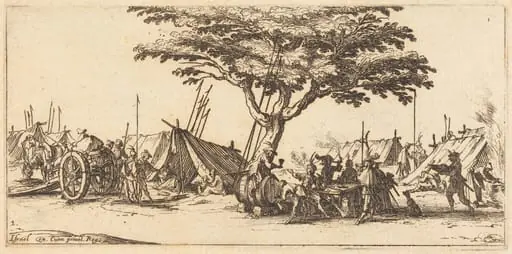 The Camp
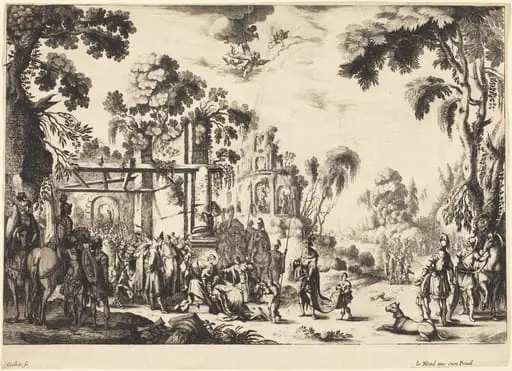 The Adoration of the Magi
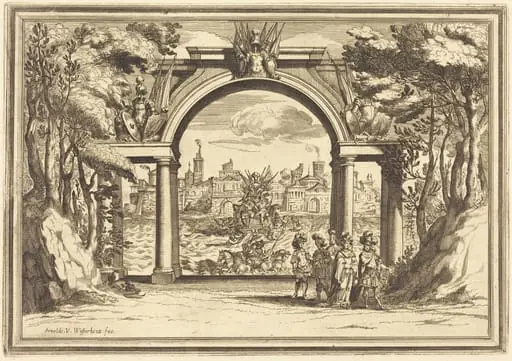 Il Greco in Troia: Plate 1
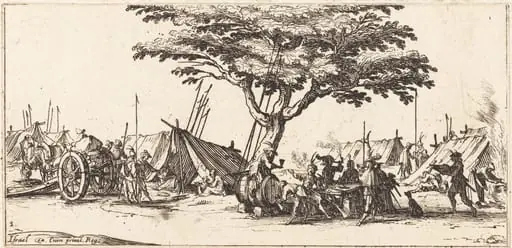 The Camp
 The Prima Macchina for the Chinea of 1761: The Salubrious Baths
 The Flight into Egypt (La fuite en Egypte)
 Landscape
 Travelers Approaching a Bridge
 Birth of Adonis
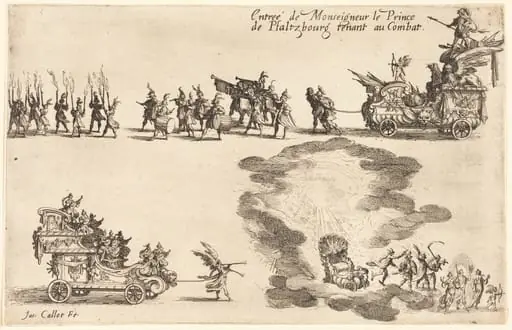
- Entry of the Prince of Pfaltzbourg