Artwork
Sketches of a Horse and a Nobleman
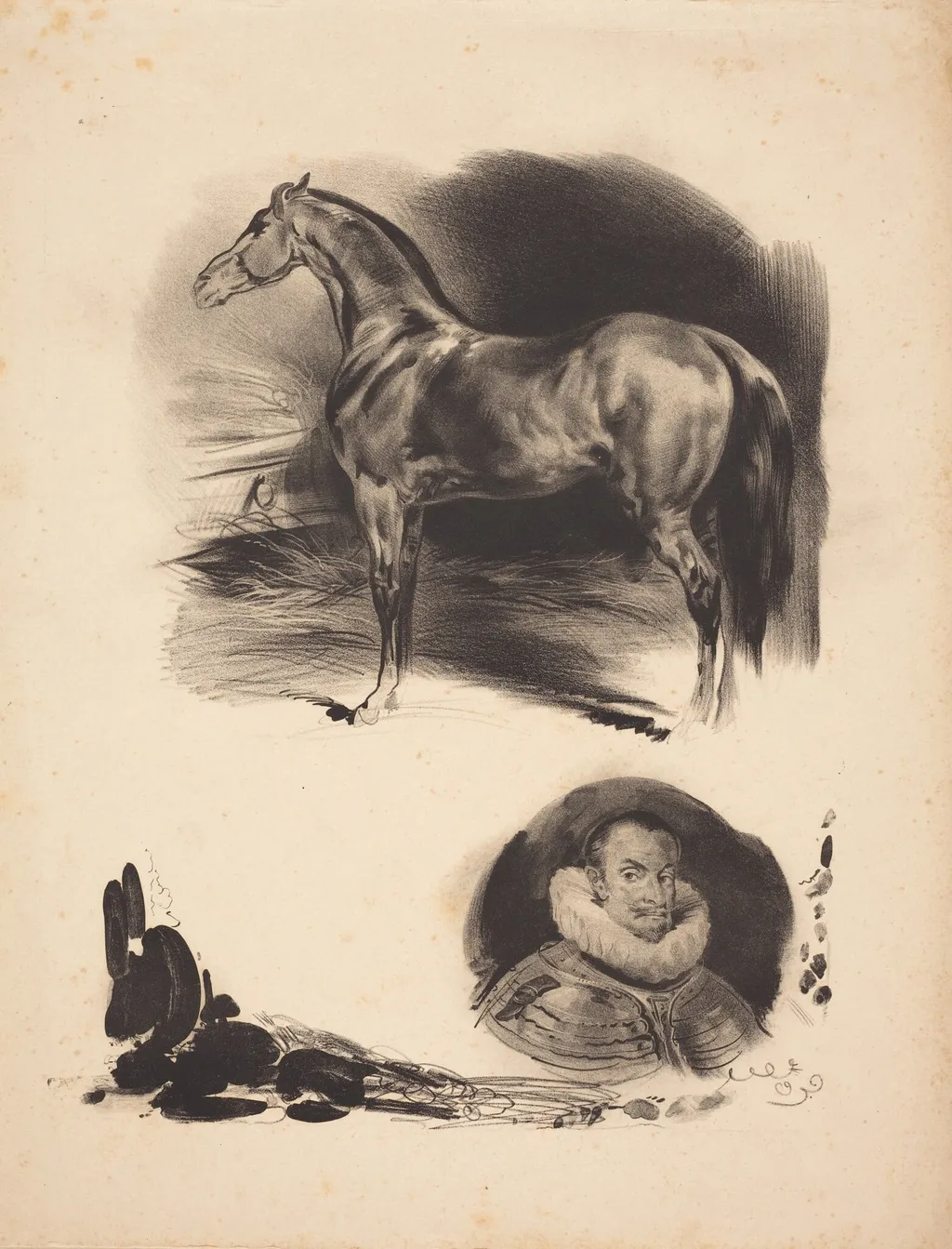
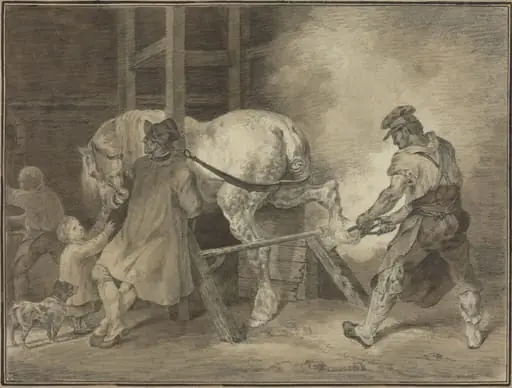
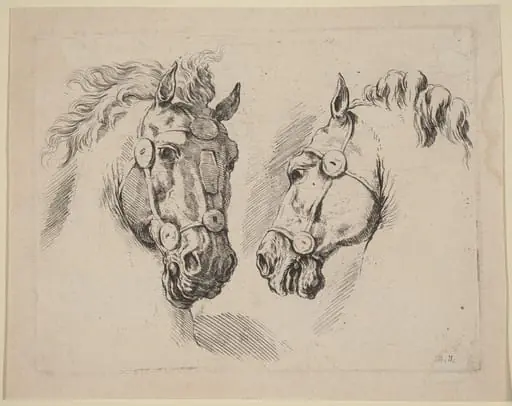
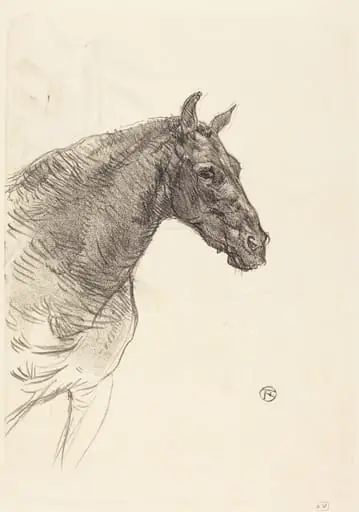
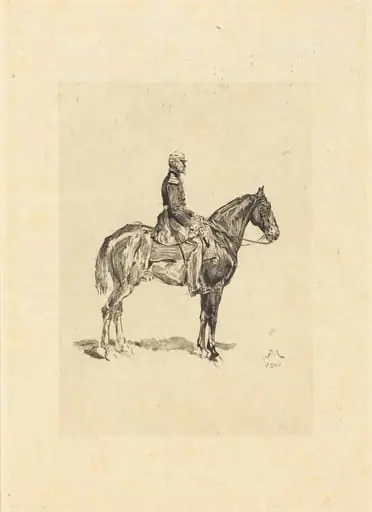
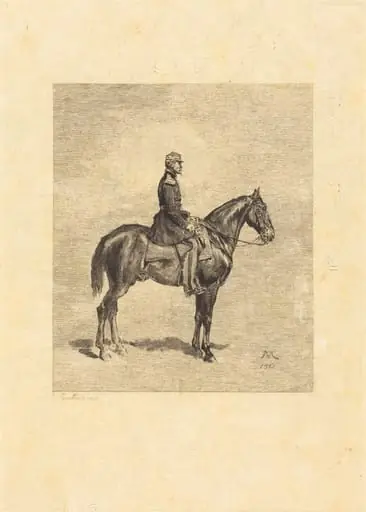
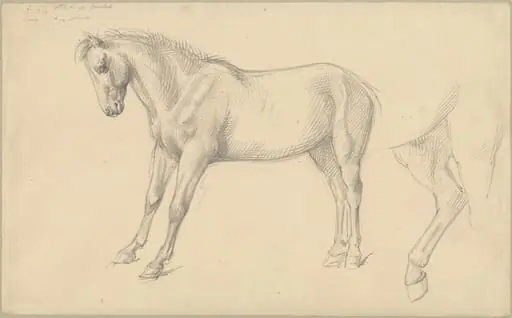
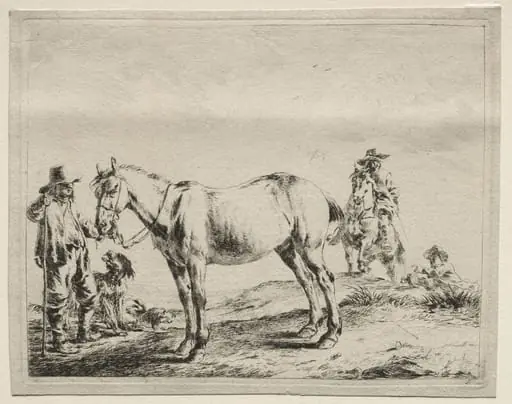
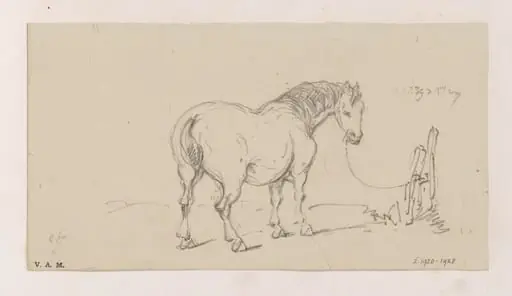
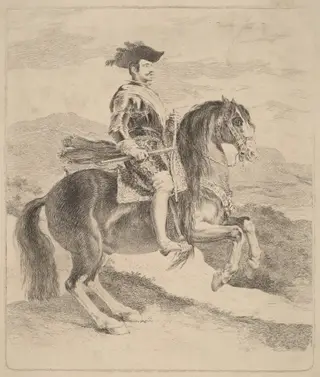
Sketches of a Horse and a Nobleman is an ink print by the Romanticist artist French 19th Century. It dates from 1850 and is held in the collection of the National Gallery of Art. A lithograph in black ink on wove paper, this work captures a horse and a nobleman in loose, expressive lines.
- Inscription
- Inscribed:all inscriptions by later hands, lower left verso in graphite: T Johannot? / 070 MG-83-85-GE; lower right verso in graphite: anonymous. chevale l'[?] 15[1]
About this work
Overview
The contrast between dynamic animal forms and rigid human posture defines the composition, rendered with minimal detail yet strong emotional presence.
A lithograph in black ink on wove paper, this work captures a horse and a nobleman in loose, expressive lines. The horse stands alert, tail in motion, while a rabbit curls nearby. Below, a figure in ornate armor sits with composed stillness, gaze fixed forward.
The contrast between dynamic animal forms and rigid human posture defines the composition, rendered with minimal detail yet strong emotional presence.
Subject & Meaning
The horse, alive with tension and movement, suggests vitality and wildness, while the armored nobleman, seated with formal stillness, evokes restraint and hierarchy. The rabbit, a quiet presence at the figure’s feet, may imply vulnerability or the natural world’s quiet coexistence with human power. Together, they frame a subtle tension between nature and nobility, common in Romantic-era reflections on human place within the natural order.
Technique & Style
Executed in rapid, dark lithographic strokes, the drawing emphasizes texture and motion over precision. The horse’s musculature and the rabbit’s fur are suggested through fluid, overlapping lines, while the nobleman’s armor is rendered with sharper, angular marks. The light paper enhances the contrast, allowing the ink to dominate without shading or tone. This sketch-like approach prioritizes immediacy and expressive energy over finish.
History & Provenance
The work is attributed to an artist active during the early 19th century, likely connected to Romantic circles in Europe. As a lithograph, it was produced using stone-based printing, a technique gaining popularity for its ability to mimic hand-drawn marks. No documented collection history is available, but its style aligns with private sketches made for personal or academic use rather than public exhibition.
Context
Created during the height of Romanticism, the piece reflects the era’s fascination with emotion, nature, and the sublime. Artists increasingly turned to spontaneous drawing to capture fleeting moments and inner states, moving away from academic rigidity. The inclusion of animals as active presences, not mere ornaments, signals a broader cultural shift toward viewing nature as a force equal to human civilization.
Legacy
Though not widely exhibited, this sketch exemplifies how lithography enabled artists to explore informal, expressive modes outside traditional painting. Its emphasis on gesture and atmosphere influenced later generations of printmakers who valued spontaneity. The work remains a quiet testament to the Romantic ideal of art as a direct conduit to feeling, not just representation.
Artist & collection

Artist
This sculptor liked to keep sharp tools in the studio and blunt ones in his pocket, his niece recalled finding him absentmindedly whittling a stick while talking philosophy.