Artwork
Woman by the Seaside
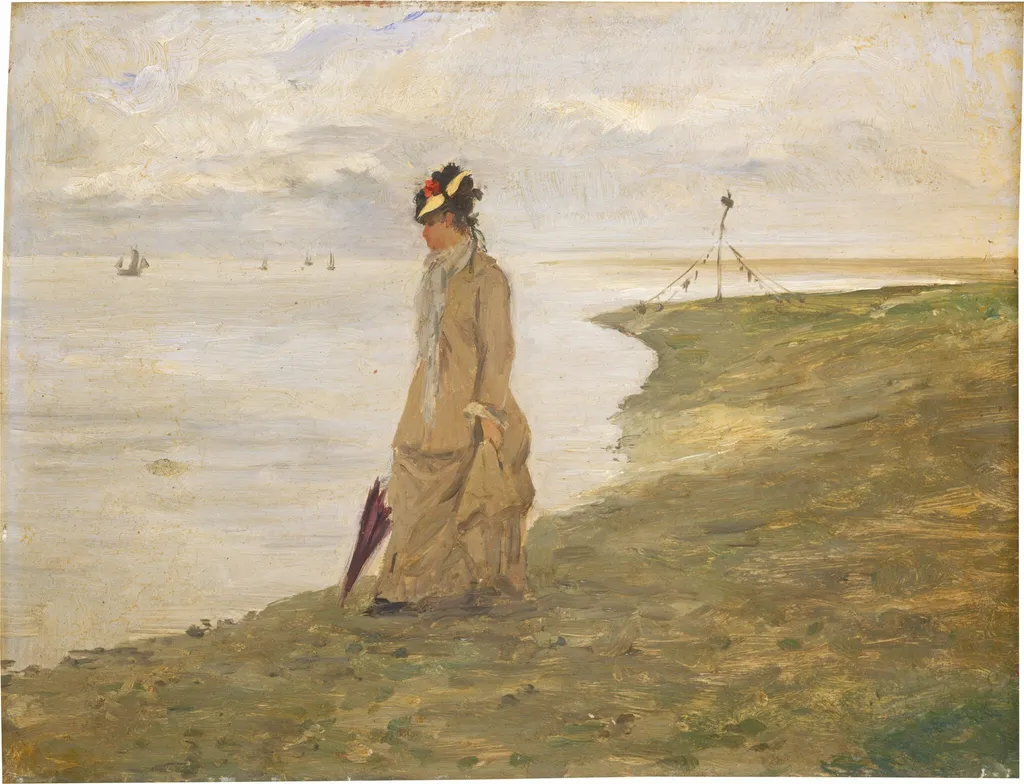
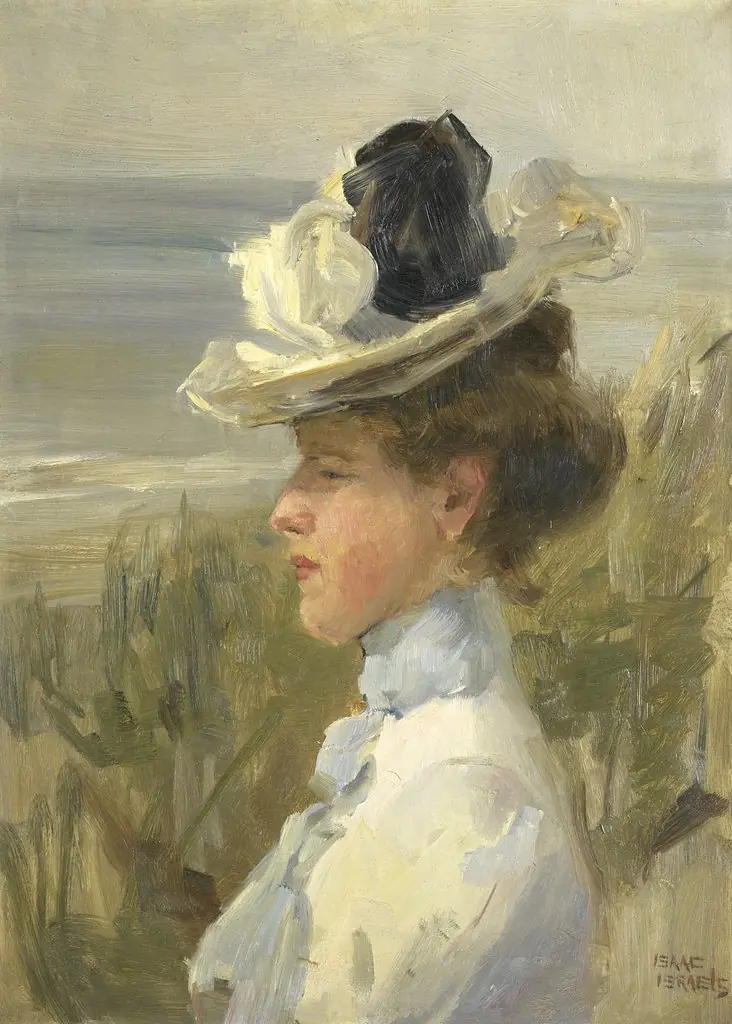
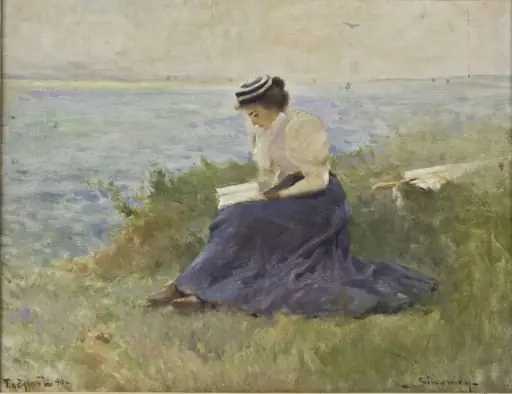
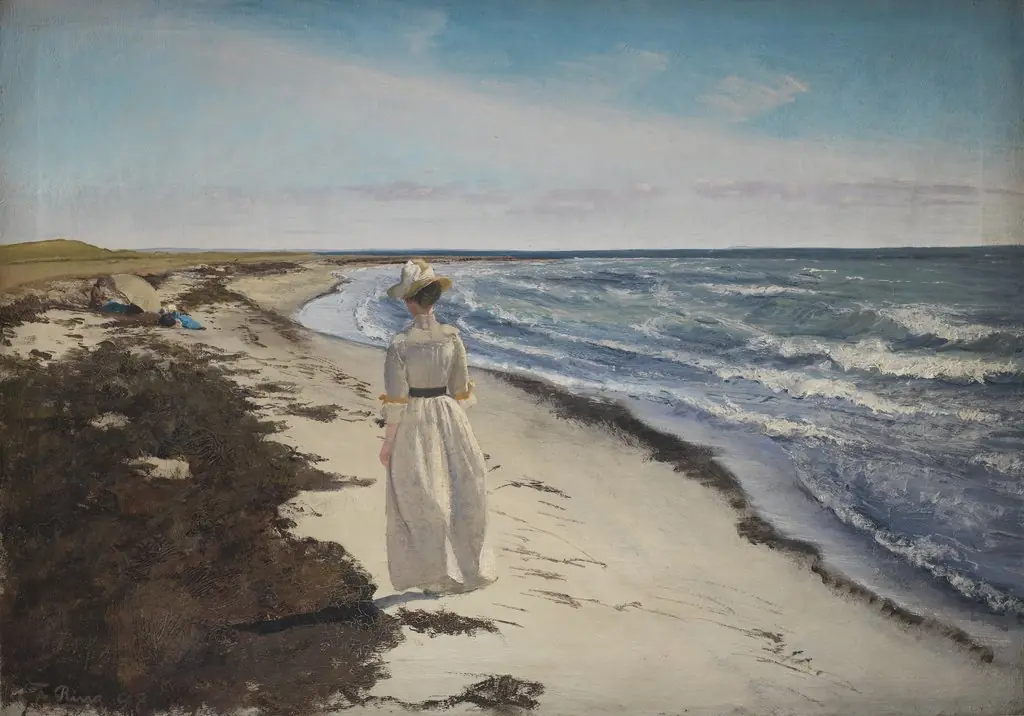
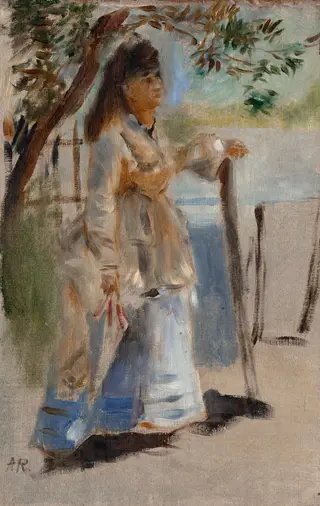
Woman by the Seaside is an oil painting. It dates from 1850 and is held in the collection of the National Gallery of Art. The work portrays a solitary woman positioned on a grassy slope that descends toward a sea horizon.
About this work
Technique & Style
2 cm, depicting a solitary female figure positioned at a shoreline with visible brushwork characteristic of mid-nineteenth-century French practice.
The work is an oil painting on wood support, measuring 21.6 cm by 28.2 cm, depicting a solitary female figure positioned at a shoreline with visible brushwork characteristic of mid-nineteenth-century French practice. The surface exhibits a smooth handling of light and atmospheric perspective, with impasto accents in the sky and foreground suggesting rapid execution and plein-air influence. Compositional balance emphasizes horizontal bands of sea, sky, and shoreline, while the figure remains understated, rendered in muted tones that blend into the surrounding environment. These stylistic choices align with contemporary French approaches to landscape and figure integration during the 1850s.
The painting’s material integrity appears well-preserved, with no noted cracks or flaking in the cited records, though long-term conservation details are not specified in the available sources.
History & Provenance
Woman by the Seaside is an oil painting on wood created in 1850 by a French 19th-century artist. It entered the National Gallery of Art through the bequest of Ailsa Mellon Bruce, who owned the work from 1901 to 1969, in 1970.
The work measures 28.2 cm in width and 21.6 cm in height, confirming its 1850 inception date.
It remains in the collection of the National Gallery of Art in Washington, D.C.
Legacy
Woman by the Seaside by French 19th Century (1850) shaped early American modernism through its 1908 debut at the Panama–Pacific International Exposition and subsequent presence in major New York exhibitions. The work's compositional approach influenced the Ashcan School's focus on everyday coastal scenes. Today it remains a key anchor in the National Gallery of Art's collection, cited in scholarly studies of 19th-century American seascapes and featured in the 2019 exhibition 'American Currents: Impressionism to Modernism' at the Metropolitan Museum of Art, where curators highlighted its role in bridging European and American landscape traditions.
Overview
The work portrays a solitary woman positioned on a grassy slope that descends toward a sea horizon. She faces the water, clothed in a light‑toned coat and a hat topped with a red flower, while a closed umbrella rests in her right hand. Beyond her, an overcast sky looms, and distant sailboats dot the distant waters, suggesting an approaching storm.
Subject & Meaning
The figure’s quiet stance and forward gaze convey a mood of introspection, inviting viewers to contemplate the relationship between the individual and the vast, unsettled seascape. The contrast between her calm presence and the threatening clouds underscores themes of solitude and the emotional tension often explored in Romantic art.
Context
Created within the Romantic movement, the piece aligns with the era’s focus on nature’s power and human emotion. Its composition, an isolated figure against an expansive, storm‑laden horizon, mirrors contemporary literary and artistic preoccupations with the sublime, illustrating the period’s fascination with the interplay of inner sentiment and external landscape.

Artist & collection