Artwork
Portrait of Raden Syarif Bustaman Saleh
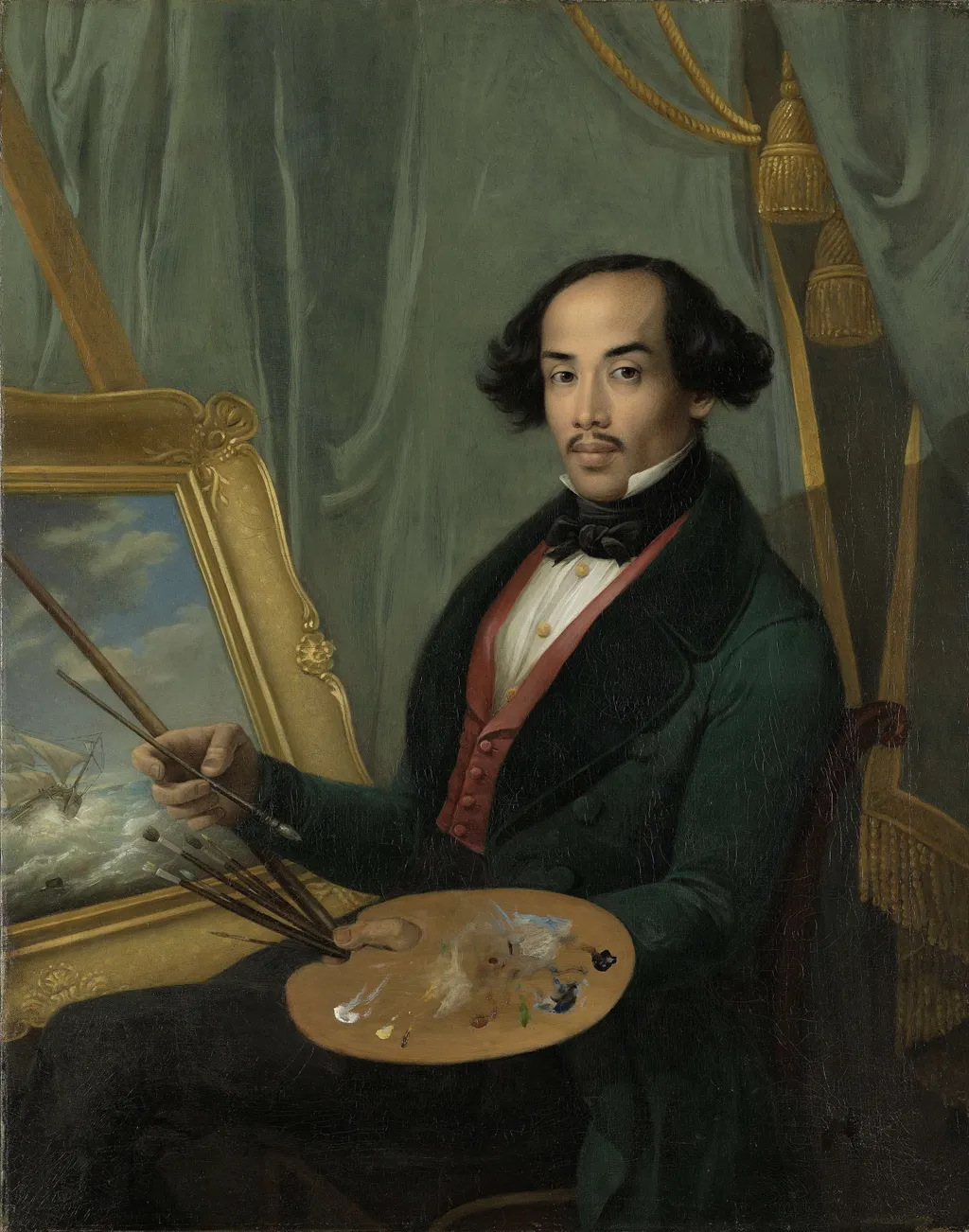
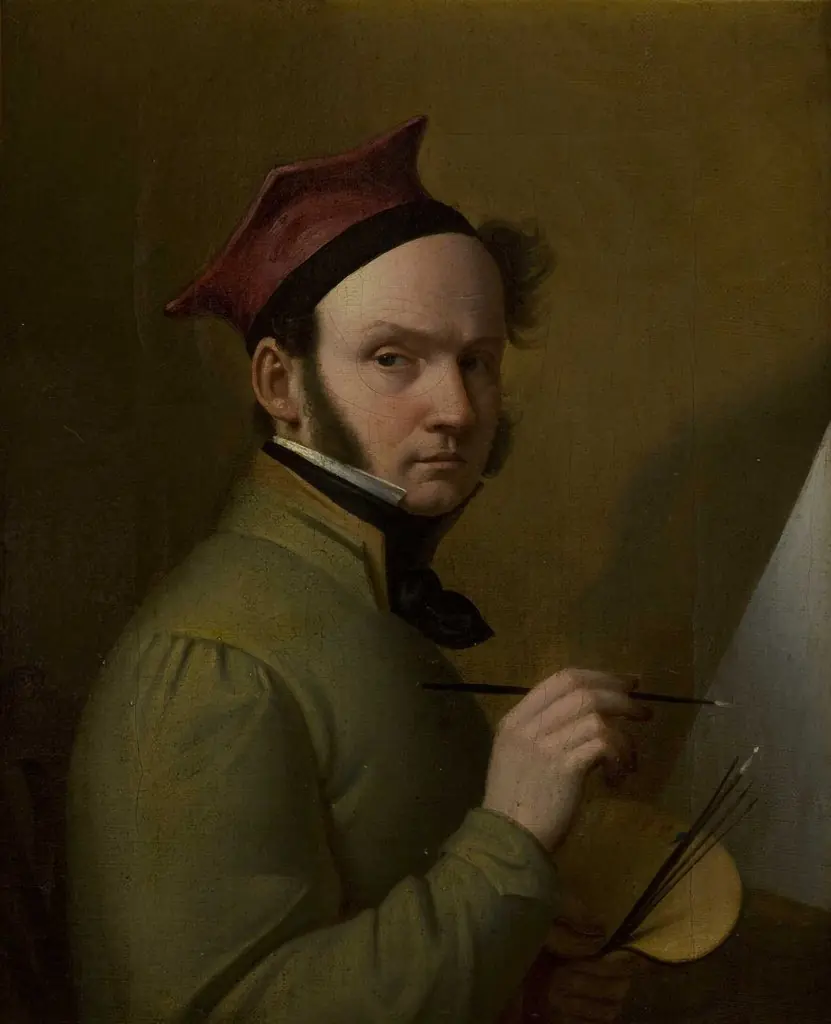
Portrait of Raden Syarif Bustaman Saleh is an oil painting by Friedrich Carl Albert Schreuel. It dates from 1840 and is held in the collection of the Rijksmuseum.
About this work
If you're interested in learning more about the artist behind this work, you might want to look up Friedrich Carl Albert Schreuel.
This painting features a man seated in a chair, holding a paintbrush and palette. He is dressed in a dark green jacket with a red vest and white shirt, and has dark hair. The background is a green curtain with gold tassels, and there is a gold-framed painting on an easel to his left.
The man's attire and the style of the painting suggest that it is from the 19th century. The artist has used oil paint to create a detailed and realistic portrait.
If you're interested in learning more about the artist behind this work, you might want to look up Friedrich Carl Albert Schreuel.
Subject & Meaning
The painting depicts the Javanese artist Raden Saleh, shown dressed in a dressing gown while actively engaged in painting a seascape. He holds a palette in his left hand and a brush in his right, leaning against an easel stick. This composition presents the subject as a working painter, capturing him during his European travels around 1840, likely while he was in Dresden.
The work serves as a representation of Saleh's artistic identity and his presence in the European art world of the 19th century.
Technique & Style
The work is executed in oil paint on canvas, a standard combination for mid-nineteenth-century European portraiture. According to the catalogue record, the canvas measures 106.7 cm in height by 85.3 cm in width, a vertical format suited to a half- or three-quarter-length seated figure.
Stylistically, the composition presents the sitter in the act of painting: he wears a painter's smock and holds a palette in his left hand while his right hand grasps a brush, leaning on a maulstick. This self-reflexive motif, a painter shown painting, is characteristic of artist portraits of the period and lends the canvas a deliberately informal, working-air quality rather than a formal pose.
No information on the painting's present condition, conservation history, or specific handling of paint (such as glazing, impasto, or underdrawing) is provided in the available sources.
History & Provenance
The painting was created in 1840 by Friedrich Carl Albert Schreuel, who was active in Dresden during the sitter's visit there. The subject, the Javanese painter Raden Syarif Bustaman Saleh, had studied in The Hague in the 1830s and departed on a European tour in 1839, arriving in Dresden around 1840, where the portrait is presumed to have been made. The Rijksmuseum in Amsterdam attributes the work to Schreuel, though staff at the Rijksbureau voor Kunsthistorische Documentatie have proposed an attribution to Saleh himself, treating it as a possible self-portrait.
The work entered the Rijksmuseum's collection in April 1978, purchased for 8,022.98 guilders from Reinhold Wimmers-Sonderegger in Wachtberg-Niederbachem.
The painting is held by the Rijksmuseum, Amsterdam, where it is inventoried as object number SK-C-1192.
Its exhibition history is limited to the moment of acquisition: it was purchased in April 1978 from Reinhold Wimmers-Sonderegger (Wachtberg-Niederbachem) for 8,022.98 Dutch guilders.
Context
The work occupies a complex position in art historical discourse due to conflicting attributions regarding its creator. While the Rijksmuseum officially ascribes the 1840 portrait to the Dutch painter Friedrich Carl Albert Schreuel, who was active in Dresden during the sitter's European travels, the RKD (Rijksbureau voor Kunsthistorische Documentatie) attributes it to Raden Saleh himself, suggesting it may be a self-portrait. This scholarly disagreement highlights the work's significance as a visual record of Saleh's time in Europe, where he studied in The Hague during the 1830s before traveling through the continent.
The painting depicts the artist in a dressing gown holding a palette and brush, capturing a moment of his professional life around 1840. Its acquisition by the Rijksmuseum in 1978 further cemented its status as a key artifact documenting the cross-cultural artistic exchanges of the period.
Overview
This oil painting, created in 1840, is a portrait of Raden Syarif Bustaman Saleh, an Indonesian nobleman. It is the work of Friedrich Carl Albert Schreuel, a Dutch-born painter.
Own this work as a print
Artist & collection
Artist
Friedrich Carl Albert Schreuel
Friedrich Carl Albert Schreuel, also known as Frederik Karel Albert Schreuel and Jan Christian Aelbert Schreuel (14 June 1773 – 1853), was a Dutch-born painter.

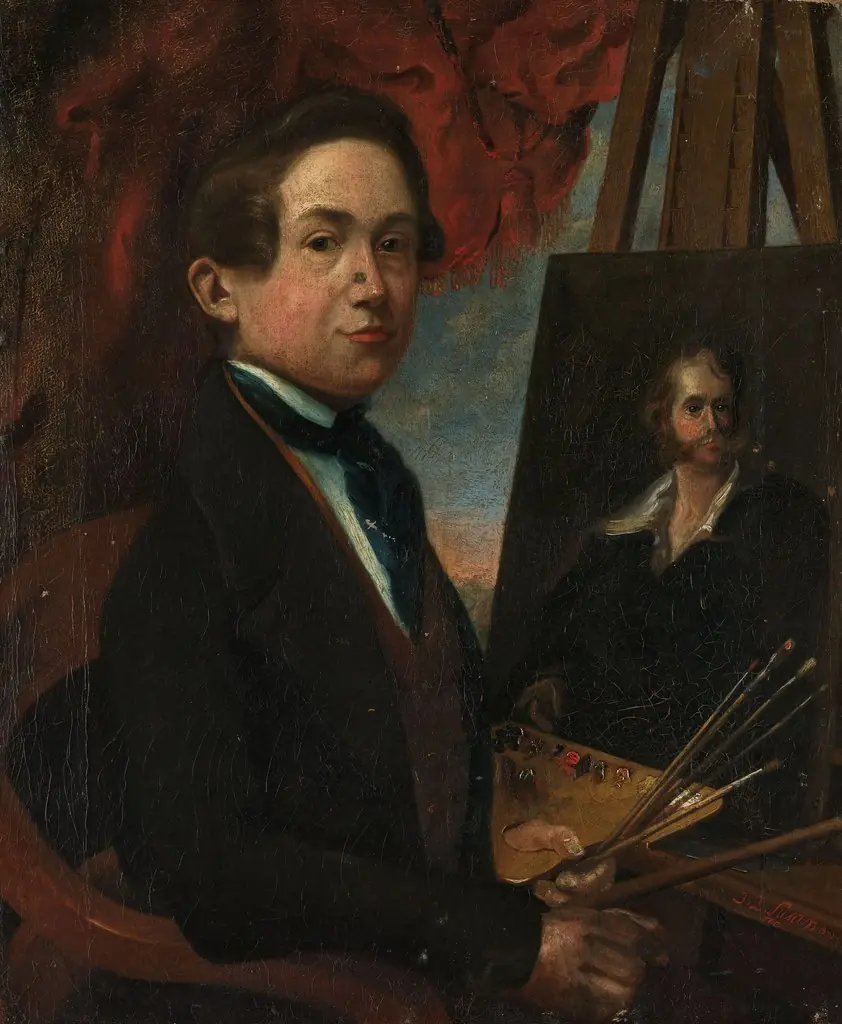
- Self-Portrait
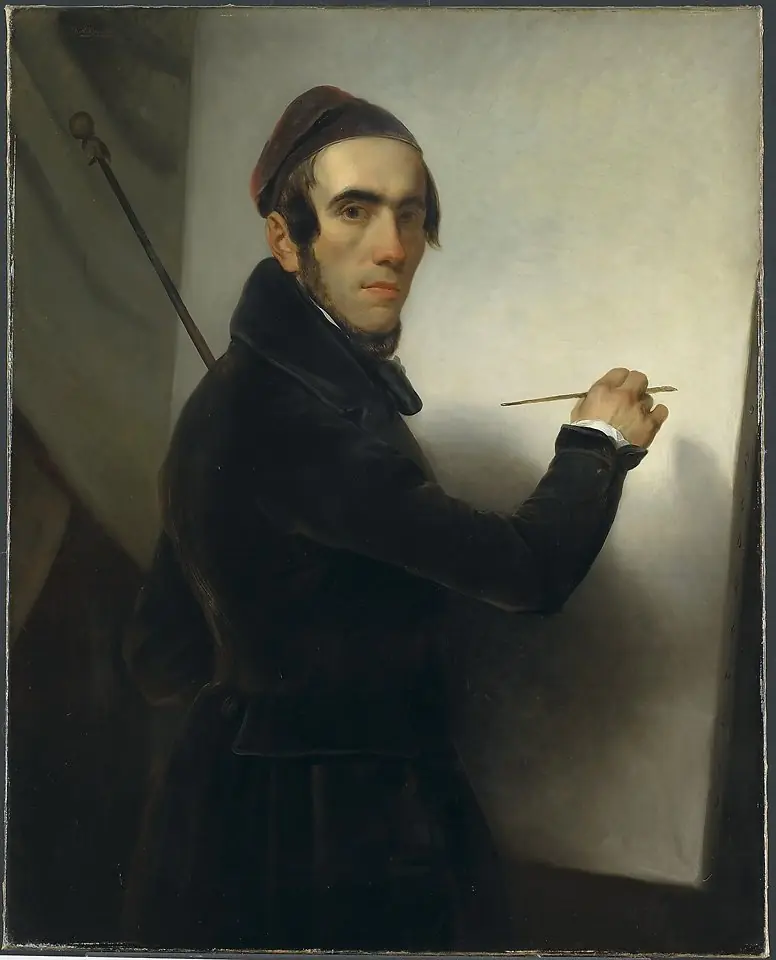 Self-Portrait
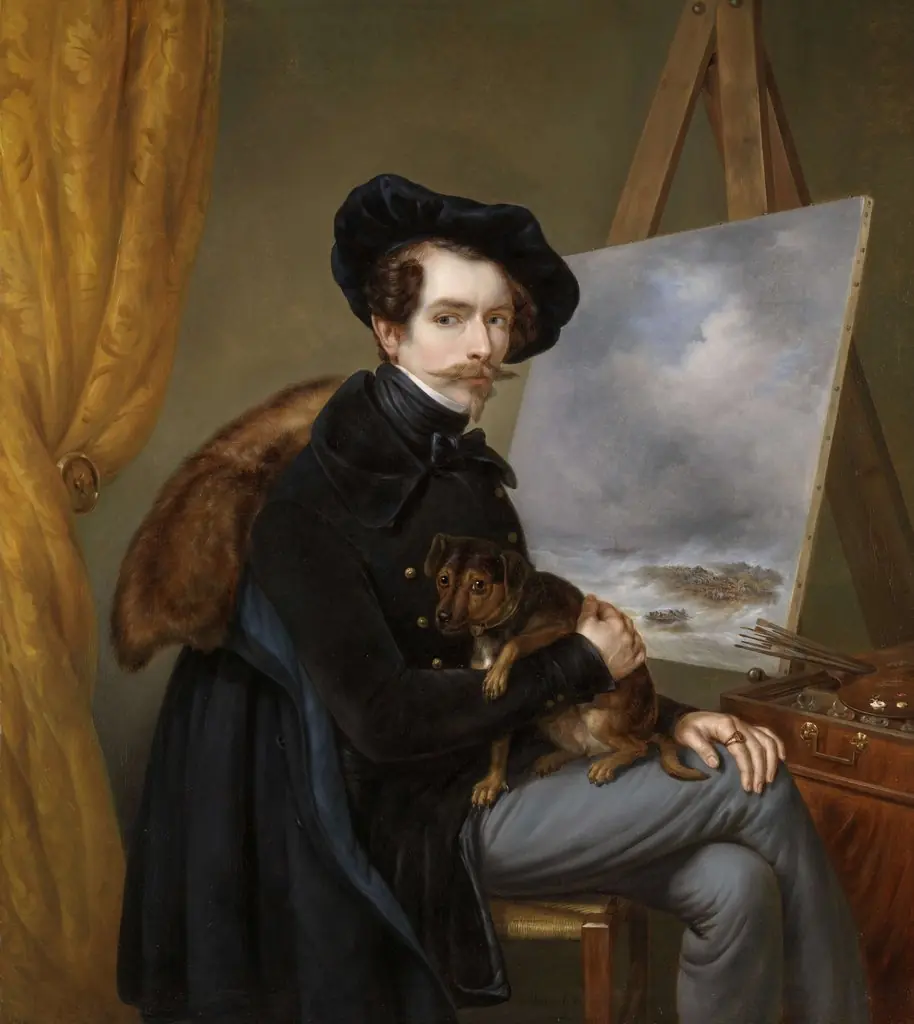 Self-Portrait
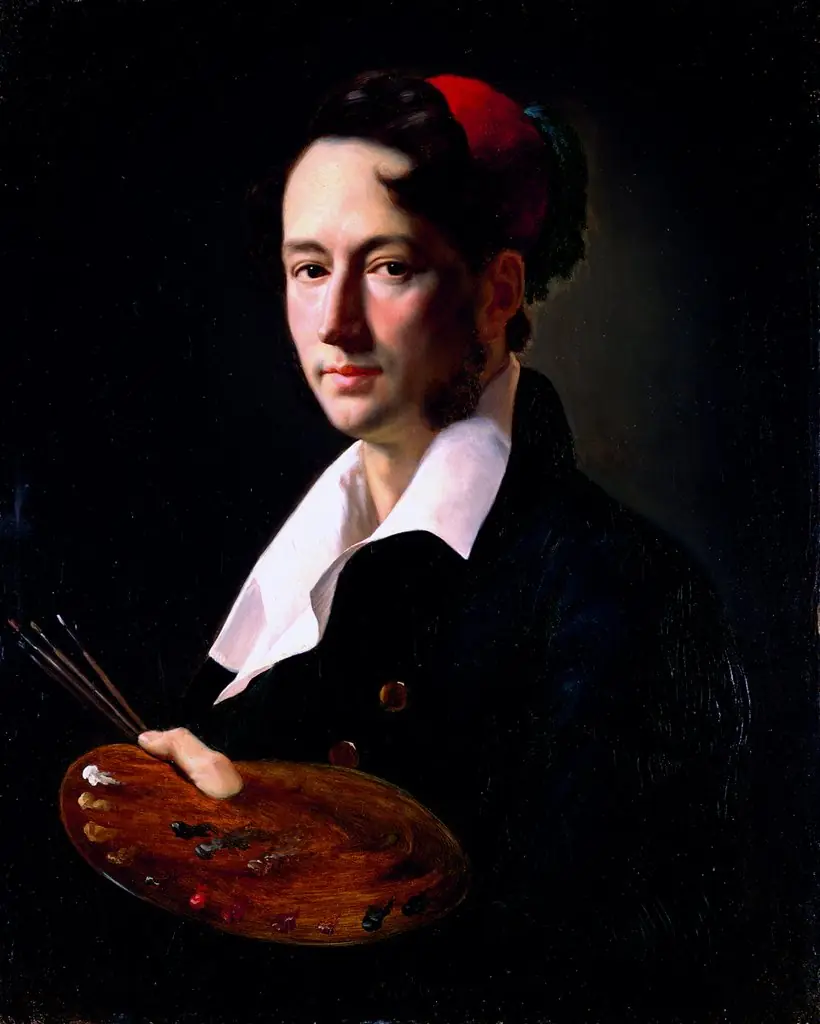 The painter Jean-Claude Bonnefond
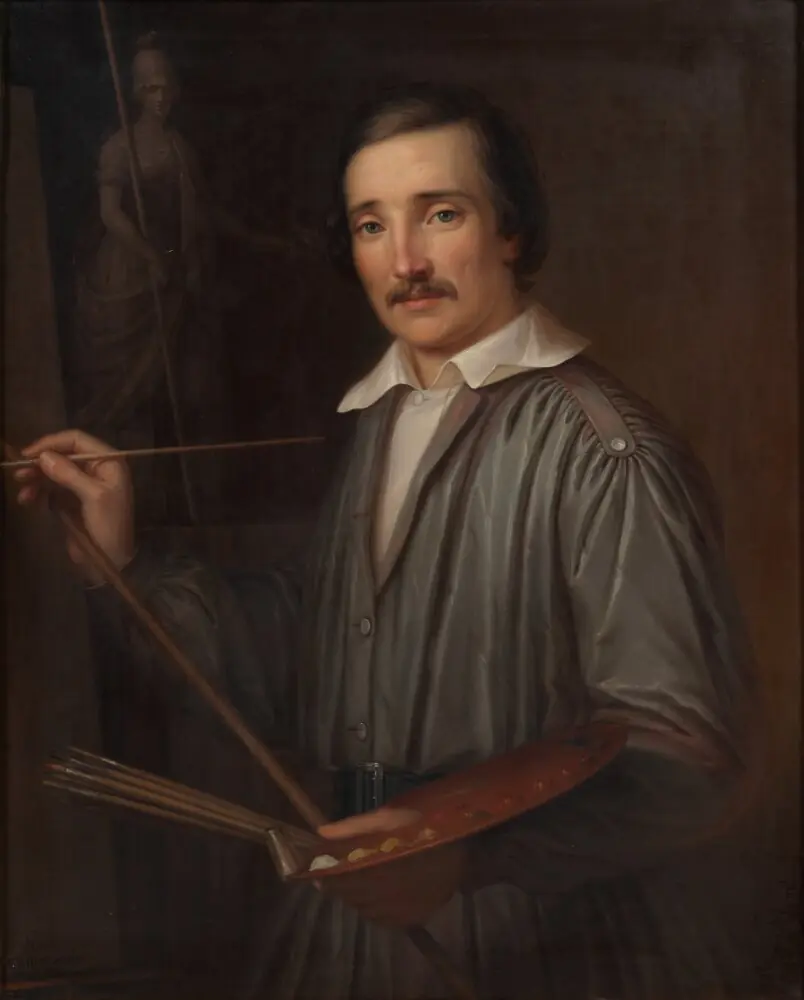 Self portrait, Erik Wahlbergson (1808-1865), artist
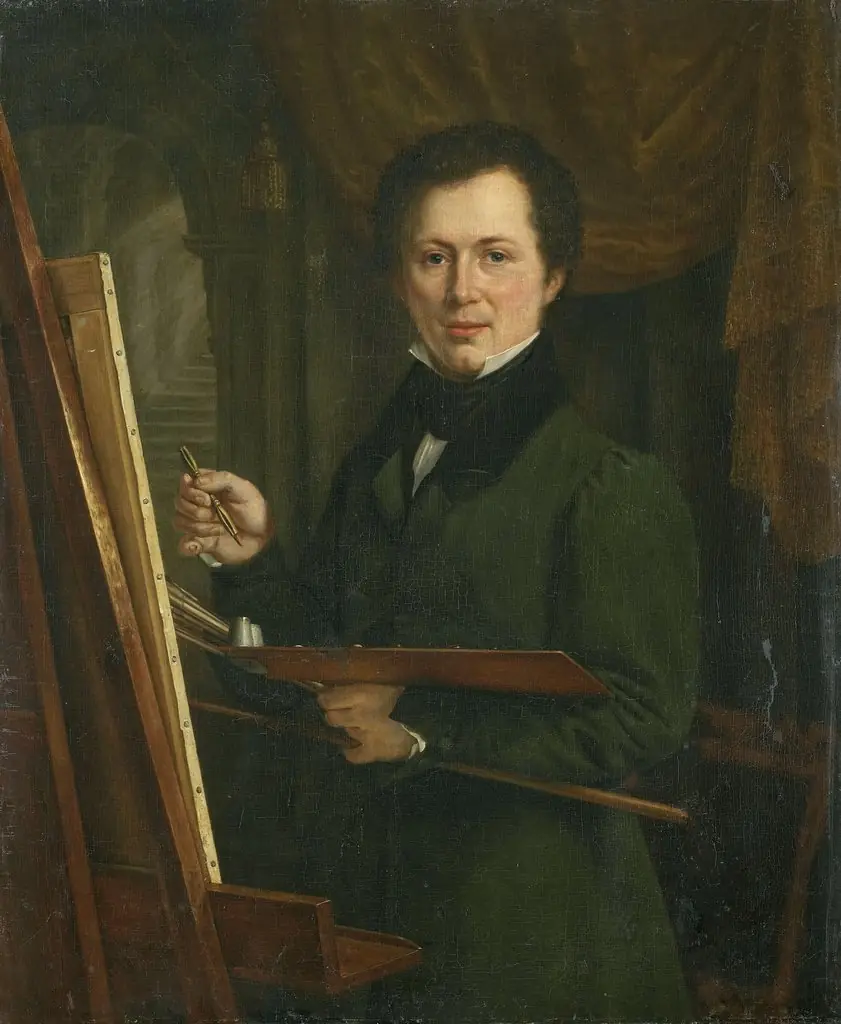 Portrait of a Painter
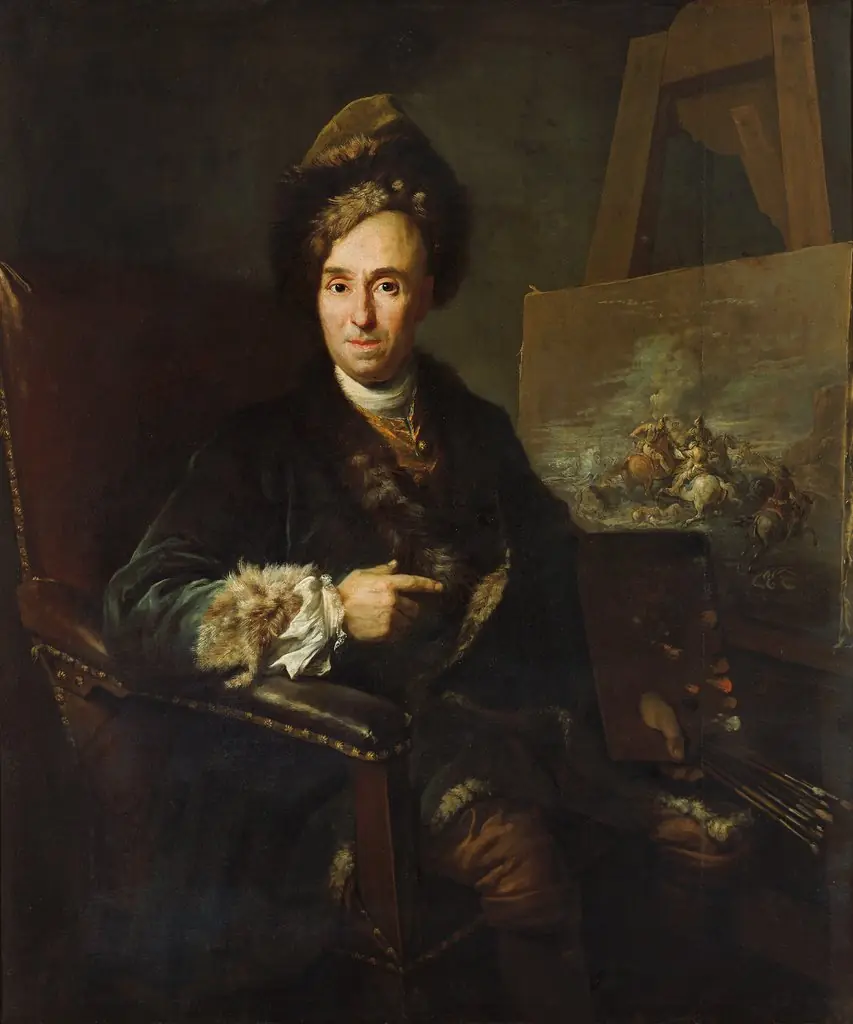 Portrait of the battle-painter Ignace-Jacques Parrocel
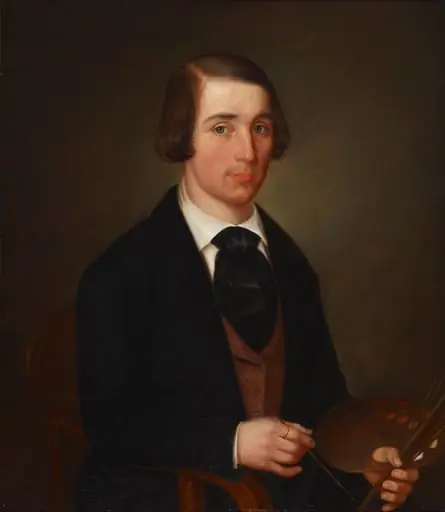 Omakuva
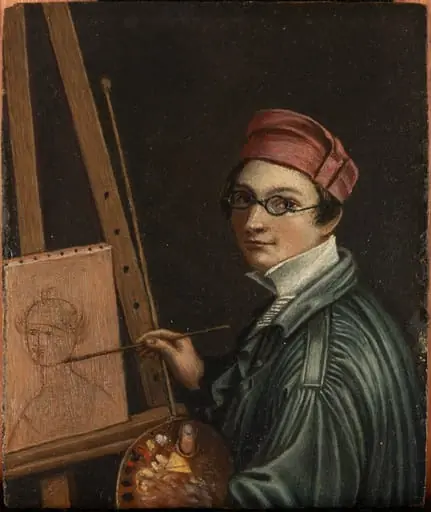 Selbstbildnis des Malers Anton Meier vor der Staffelei
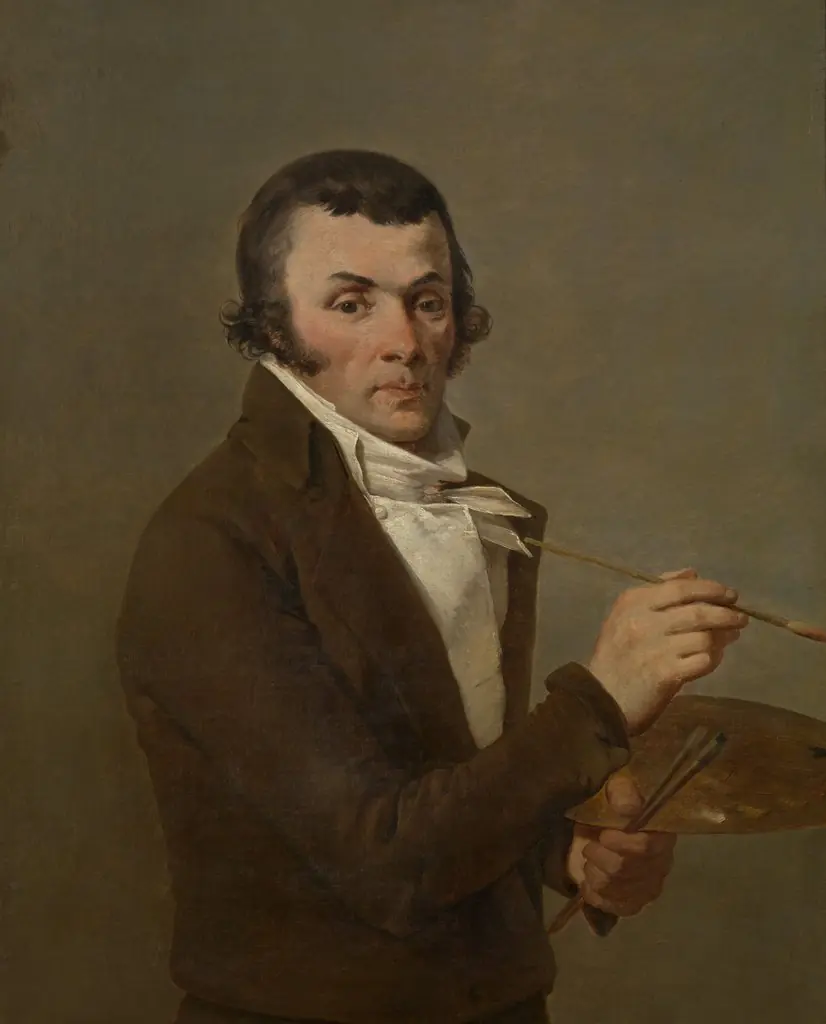 The Painter Jan Baptist Berré
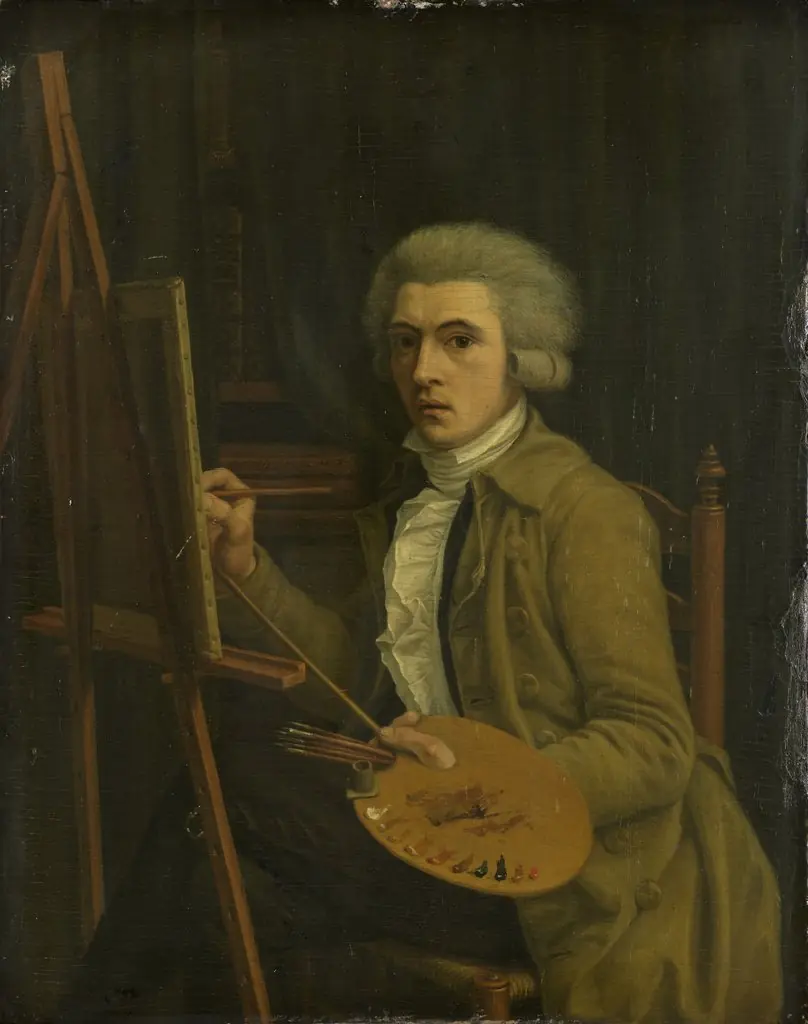 Portrait of a Painter, probably the Artist himself
 Selbstporträt