Artwork
Title Page for Agostino Mascardi, Silvarium Libri IV
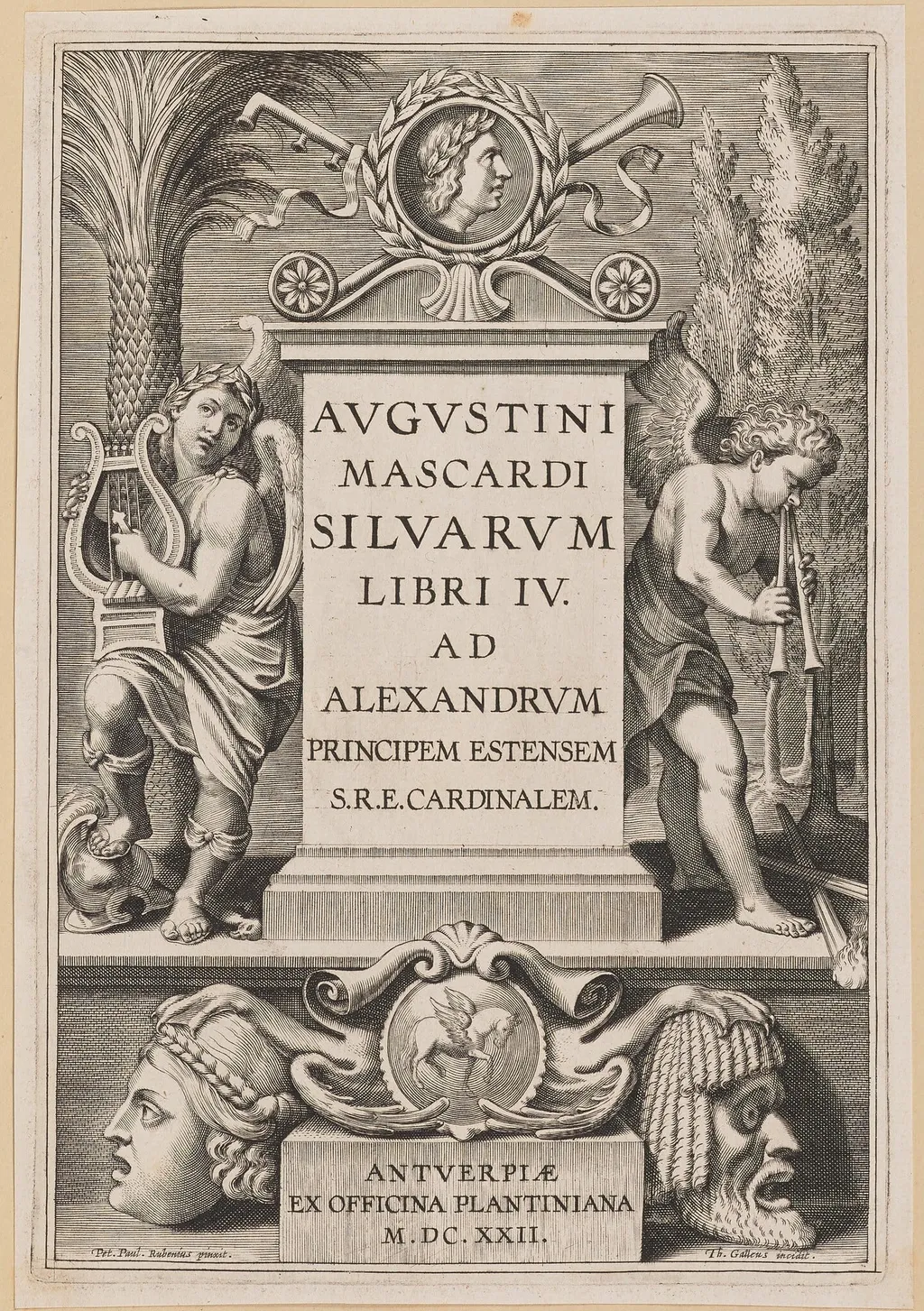
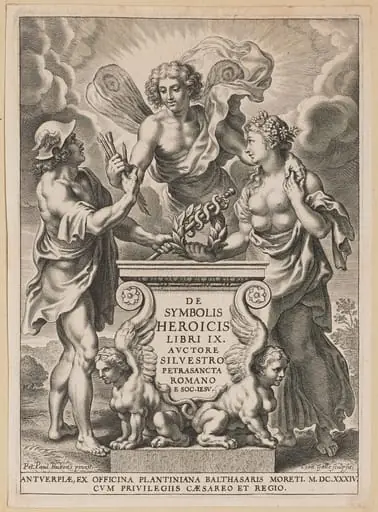
Title Page for Agostino Mascardi, Silvarium Libri IV is an ink print by the Baroque artist Theodor Galle. It dates from 1622 and is held in the collection of the National Gallery of Art.
About this work
Overview
The title page for Agostino Mascardi’s Silvarium Libri IV is a 1622 engraving executed by Theodor Galle. Produced on laid paper, the print serves as the frontispiece for the four‑book collection, presenting the work’s title and dedicatory information in a formal, ornamental layout.
Subject & Meaning
Above them, a crowned head emerges from a laurel wreath, suggesting honor or patronage, and the composition frames the Latin title and dedication to a cardinal.
The central decorative scheme features allegorical figures: a winged musician with a lyre stands on a pedestal, while a second figure holds a scroll and leans against a broken column, a motif often associated with the fragility of knowledge. Above them, a crowned head emerges from a laurel wreath, suggesting honor or patronage, and the composition frames the Latin title and dedication to a cardinal.
Technique & Style
Galle’s engraving employs fine, cross‑hatching and stippling to render intricate details within the borders and figures. The use of bold, centered lettering for the title contrasts with the delicate line work of the allegorical scene, exemplifying early‑17th‑century printmaking conventions that balanced ornamental richness with textual clarity.
History & Provenance
Created in the early Baroque period, the frontispiece was likely printed as part of the original edition of Mascardi’s Silvarium. Theodor Galle, a noted engraver of the time, contributed the design, and copies of the work have survived in several European library collections, reflecting its distribution among scholarly and ecclesiastical circles.
Context
The engraving appears within a broader tradition of dedicatory title pages that combine classical symbolism with contemporary patronage. The inclusion of a cardinal’s dedication aligns with the Counter‑Reformation emphasis on learned clergy, while the allegorical imagery underscores the intellectual aspirations of the text.
Own this work as a print
Artist & collection


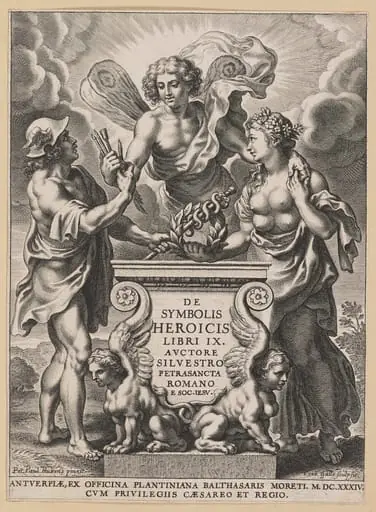 Title Page for Silvester Pietrasanta, De Symbolis Heroicis
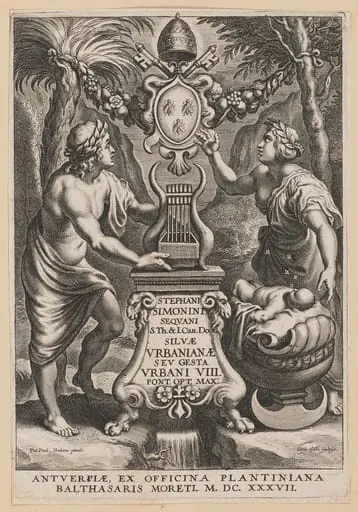 Title Page for Stephanus Simonini, Silvae Urbaninae
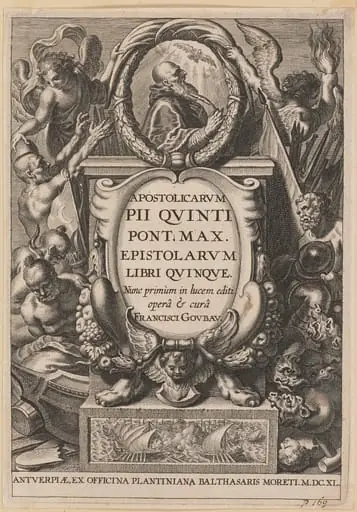 Title Page for Apostolicarvm PII Qvinti Pont. Max...
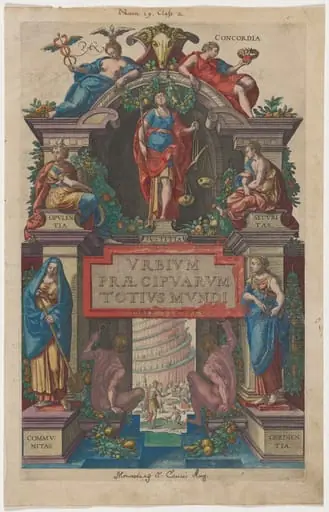 Title Page to Urbium Praecipuarum Totius Mundi
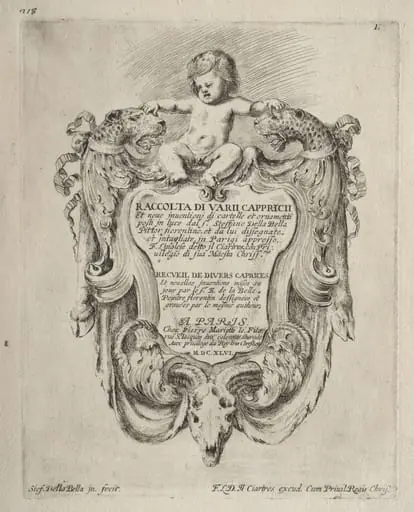 Collection of Various Caprices and New Designs of Cartouches and Ornaments
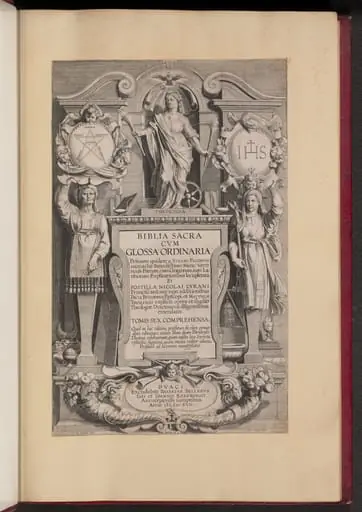 Title Page for Biblia Sacra Cvm Glossa Ordinaria
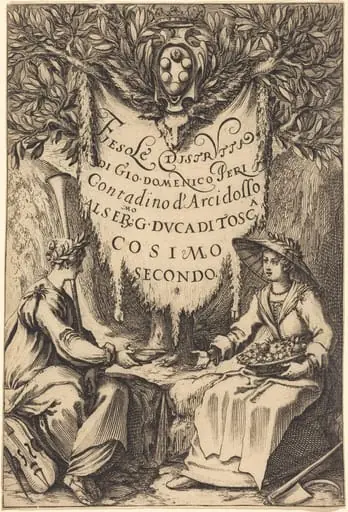 La belle jardinière
 Title Page for Silvester Pietrasanta, De Symbolis Heroicis