Artwork
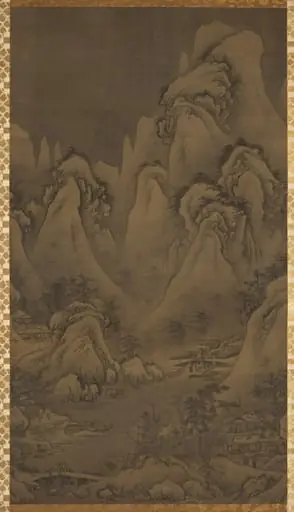
清 佚名 高克恭(僞款) 山水圖 軸|Landscape
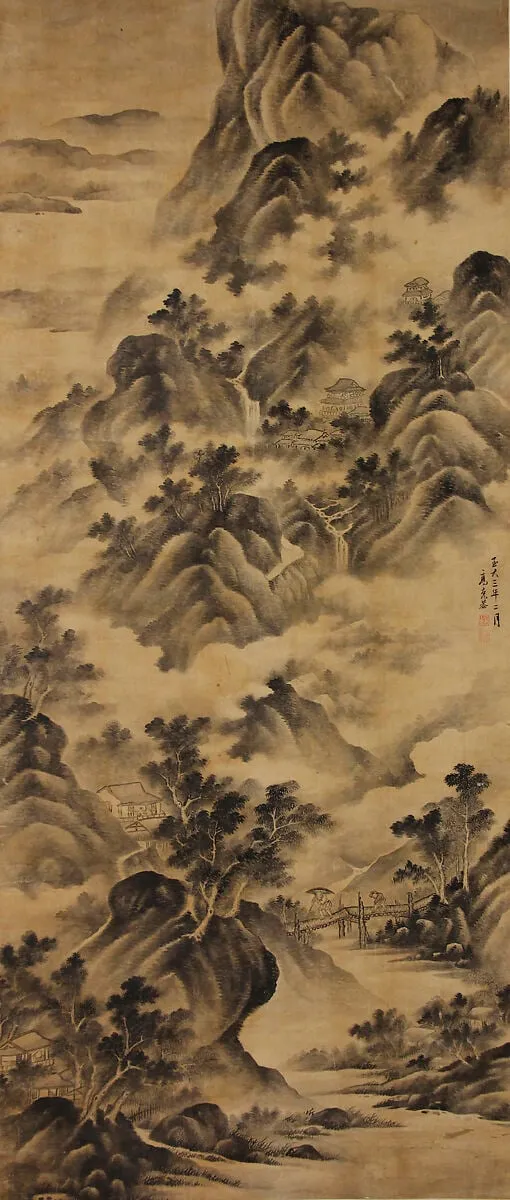
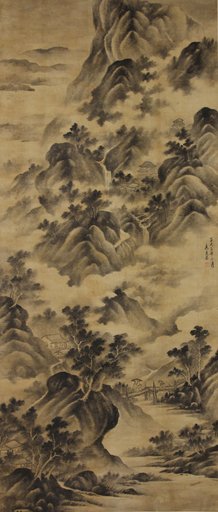
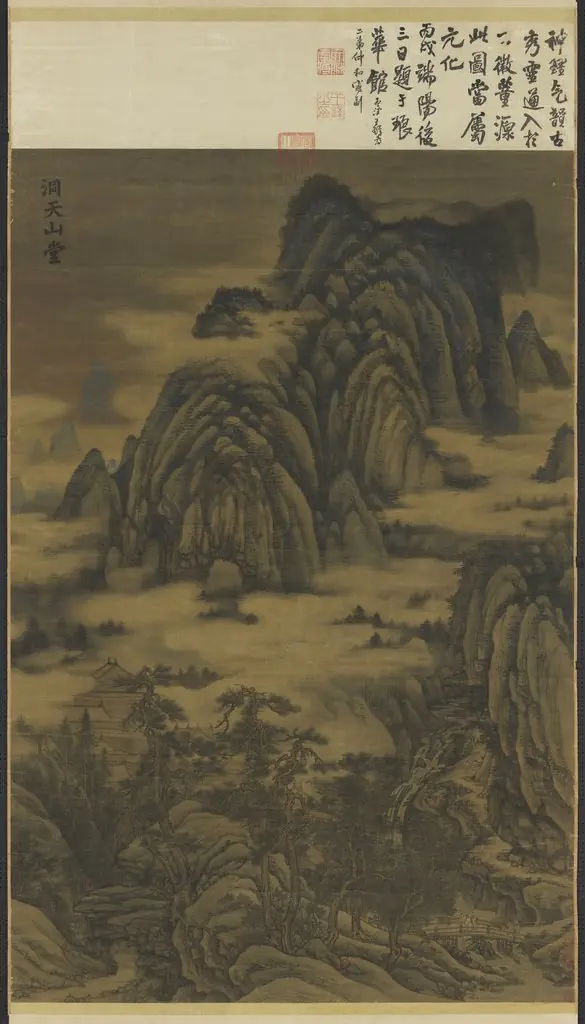
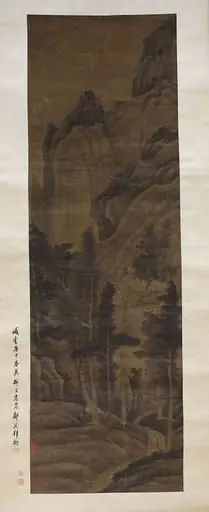
清 佚名 高克恭(僞款) 山水圖 軸|Landscape is an ink painting by the Song dynasty landscape artist Gao Kegong. It is held in the collection of the Metropolitan Museum of Art. This Qing dynasty hanging scroll, titled Landscape, presents a serene mountainous vista rendered in ink on silk.
- Accession no.
- 54.193
- Credit line
- Gift of Edgar Worch, in memory of his uncle, Adolphe Worch, of Paris, 1954–1955
About this work
Subject & Meaning
Rendered in ink on silk, the work adheres to the traditional Chinese landscape genre, utilizing the mountainous terrain as its primary visual subject.
Executed in 1639, this hanging scroll presents a landscape composition centered on the depiction of mountains. Rendered in ink on silk, the work adheres to the traditional Chinese landscape genre, utilizing the mountainous terrain as its primary visual subject. The available records identify the scene simply as a mountain landscape without detailing specific narrative elements, distinct iconographic programs, or layered symbolic meanings beyond the general representation of nature typical of the form.
Attributed to an unidentified artist despite bearing a spurious signature of Gao Kegong, the painting functions as a formal exploration of topography rather than an illustration of a specific historical event or literary allegory. The work's meaning is derived from its engagement with the established conventions of depicting the natural world, focusing on the structural and atmospheric qualities of the mountainous environment.
Technique & Style
Executed in 1639, this landscape is rendered as a hanging scroll using ink applied directly onto a silk support. The work originates from China and is attributed to an unidentified artist, though it bears a spurious signature of Gao Kegong. Stylistically, the composition focuses on mountainous terrain, adhering to traditional landscape genres.
The physical dimensions of the piece are substantial, measuring 119.4 centimeters in height and 277.5 centimeters in width. As an ink-on-silk creation, the technique relies on the absorbency and texture of the fabric to modulate the tonal variations of the monochromatic pigment, characteristic of East Asian scroll painting traditions of the period.
History & Provenance
The work titled 清 佚名 高克恭(僞款) 山水圖 軸, a hanging scroll in ink on silk, was produced in China in 1639. Although the artist is listed as Gao Kegong in a pseudo‑signature, the painting is attributed to an anonymous master of the period. Its creation reflects the Chinese landscape tradition of the early Qing era.
The scroll entered the collection of the Metropolitan Museum of Art, where it remains on display; the museum’s records indicate acquisition of the piece (accession number 54.193) and describe it as a landscape painting depicting a mountain. No evidence of prior private patronage or commercial commission is recorded.
The hanging scroll landscape, dated to 1639 and attributed to an unidentified artist with a false signature of Gao Kegong, is held in the collection of the Metropolitan Museum of Art in New York. The work is cataloged under the accession number 54.193. Physical dimensions recorded for the piece include a height of 119.4 cm and a width of 277.5 cm. The source material identifies the artwork as a landscape painting depicting mountains, created in China, but does not provide a specific record of past exhibitions or a detailed chronological provenance beyond its current institutional holding.
Overview
This Qing dynasty hanging scroll, titled Landscape, presents a serene mountainous vista rendered in ink on silk. Although once attributed to the Yuan-dynasty master Gao Kegong, contemporary scholarship identifies it as the work of an anonymous artist. The painting, dated to 1639, exemplifies a contemplative approach to nature, inviting viewers into a world shaped by subtle brushwork and atmospheric effects.
Artist & collection