Artwork
Christ Washing the Disciples' Feet
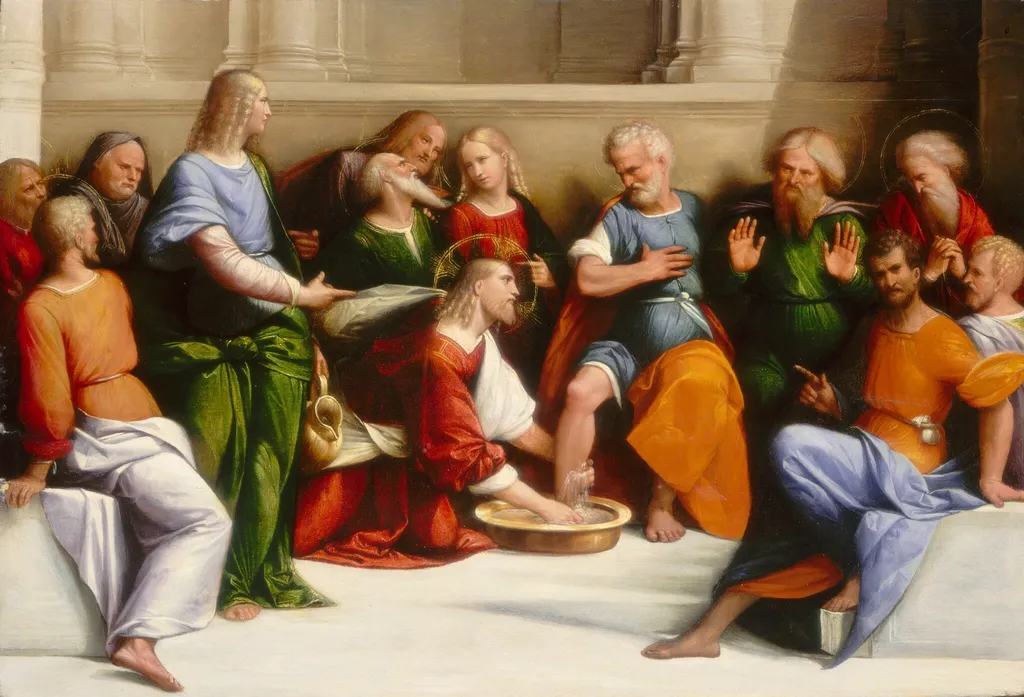
Christ Washing the Disciples' Feet is an oil painting by the Mannerist artist Garofalo. It dates from 1522 and is held in the collection of the National Gallery of Art.
- Inscription
- Inscribed:old label reverse: Reçu de Monsieur L. Lebeuf de Mongermont la somme / de neuf mille francs pour payment d'un tableau / peint par Garofolo représentant le lavement des / pieds des apôtres, dont quittance Paris le 21 Mai 1870 / Provenant de la vente du Prince Poniastowski [sic] - F. Nieuwenhuys.
About this work
Subject & Meaning
The painting depicts the New Testament episode in which Christ washes the feet of his disciples, a moment recorded in the Gospel of John (13:1–17).
The painting depicts the New Testament episode in which Christ washes the feet of his disciples, a moment recorded in the Gospel of John (13:1–17). Garofalo's panel isolates the act of humble service, presenting Christ performing a gesture traditionally reserved for servants, thereby inverting expectations of authority and rank. The subject functions as an emblem of humility, charity, and self-giving love, and it is also read as a Eucharistic prefiguration, since Christ links the washing to the disciples' participation in his body. As a religious genre work, the image invites contemplation of discipleship as service rather than dominion.
The main subject is identified in the catalogue record as Christ washing the Disciples' feet, and the work is classified as a religious painting held by the National Gallery of Art.
Technique & Style
Christ Washing the Disciples' Feet is executed in oil on panel, a support consistent with Garofalo's practice in the early sixteenth century. The painting is modest in scale, measuring 35.9 by 52.1 centimeters, a horizontal format suited to the narrative of Christ kneeling before the disciples arranged across the composition.
The work is classified as a religious painting and is held in the collection of the National Gallery of Art in Washington, D.C., having entered the institution in 2001. No further information on handling, condition, or specific stylistic qualities is documented in the available sources.
History & Provenance
The painting was executed around 1520 as an oil work on panel depicting a biblical scene of Christ washing the disciples' feet. Its early ownership likely began with Cardinal Ludovico Ludovisi in Rome, passing to his nephew Niccolò Ludovisi before entering the collection of Prince Joseph Poniatowski in Paris. The work later appeared in sales in 1867, 1870, and 1990–1996, moving through several private owners before being acquired by the National Gallery of Art in 2001.
No record of a specific commission survives, and the piece has remained a religious painting within the gallery's collection since its purchase.
Christ Washing the Disciples' Feet by Garofalo, an oil on panel from 1520, is held by the National Gallery of Art in Washington, D.C. It entered the collection on 28 February 2001, acquired through Hall & Knight Ltd. of New York and London.
The painting's documented provenance traces back to Cardinal Ludovico Ludovisi at the Villa Ludovisi in Rome by 1623, passing to Niccolò Ludovisi, Prince of Piombo, until 1664. It later surfaced in the 19th century with Prince Joseph Poniatowski in Paris, appearing at his sale at the Hôtel Drouot on 25 March 1867. Subsequent owners included François Niewenhuys and Alfred Louis Lebeuf de Montgermont, who purchased it on 21 May 1870.
It remained in the Montgermont family by descent before appearing at Sotheby's Monaco on 7–8 December 1990 and again at Sotheby's, New York, on 11 January 1996, where it was bought in. Earlier scholarship had tentatively linked the panel to a work formerly in the Empress Josephine's collection at Malmaison and later with the Dukes of Leuchtenberg, based on an engraving by J. N. Muxel published in the 1851 Passavant catalogue.
Legacy
The painting’s later reputation is reflected in its passage through distinguished collections and its reproduction in print. After ownership by Cardinal Ludovico Ludovisi and his heirs, it entered the holdings of Prince Joseph Poniatowski and later the Lebeuf de Montgermont family. In the 19th century the work was identified with a picture once owned by Empress Josephine and her heirs, the Dukes of Leuchtenberg, and an engraving by J. N. Muxel of the composition appeared in the luxurious 1851 catalogue of the Leuchtenberg collection.
Today it forms part of the National Gallery of Art’s holdings, where it continues to be studied and exhibited.
Overview
Garofalo's painting, Christ Washing the Disciples' Feet, created around 1522, presents a pivotal moment from Christian scripture. Executed in oil on panel, the work captures Jesus performing an act of humility and service for his followers. This religious composition is a characteristic example of the artist's output during the High Renaissance, reflecting the era's focus on narrative clarity and emotional expression within sacred themes.
Own this work as a print
Artist & collection


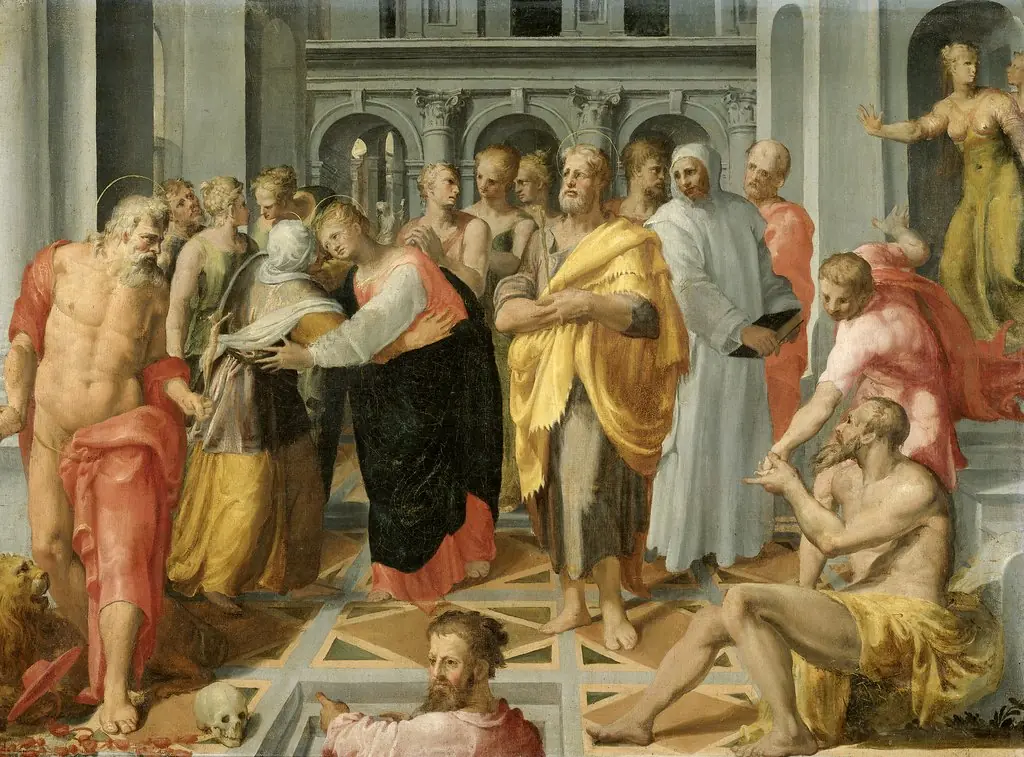 Visitation (Meeting of Mary and Elizabeth in the Presence of Saints Joseph and Jerome)
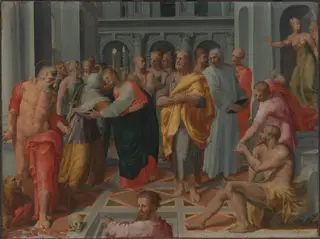 Visitation (Meeting of Mary and Elizabeth in the Presence of Saints Joseph and Jerome)
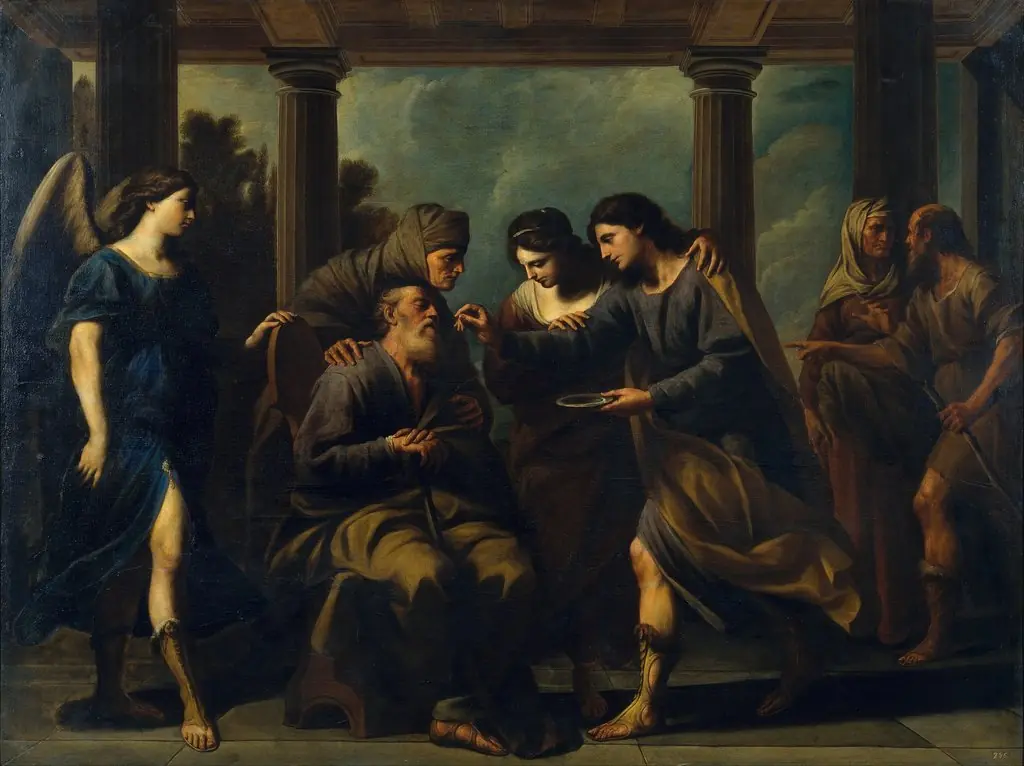 Tobias Heals his Blind Father
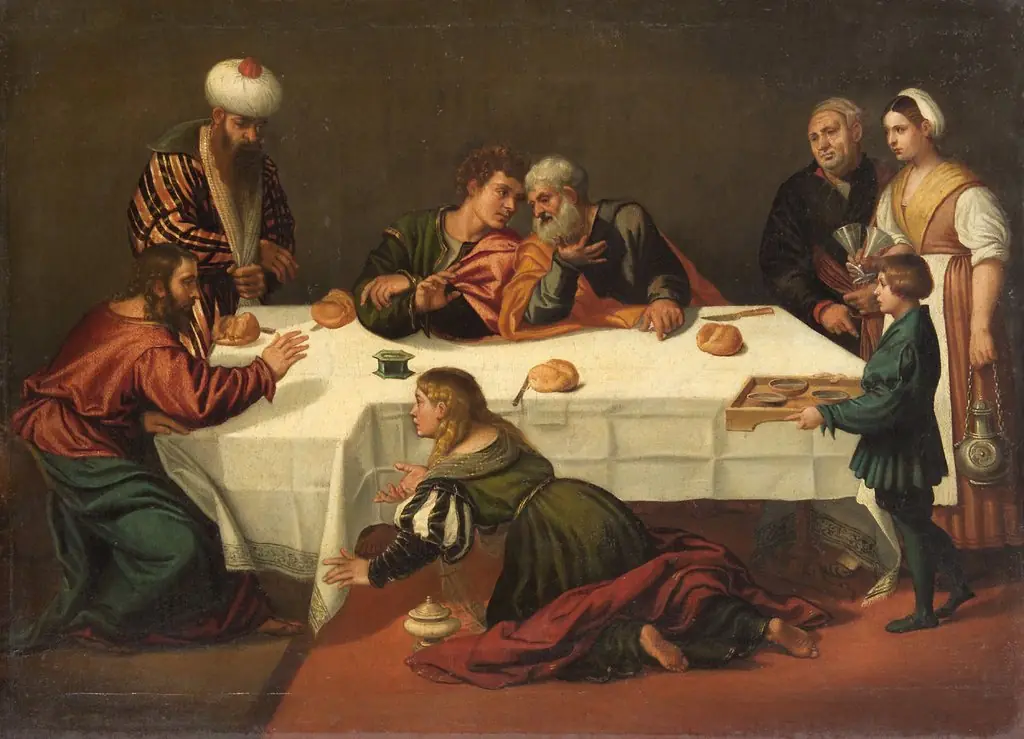 Anointing of Christ in Bethany
 The Presentation of Christ in the Temple, and the Baptism of Christ
 The Healing of the Lame Man