Artwork
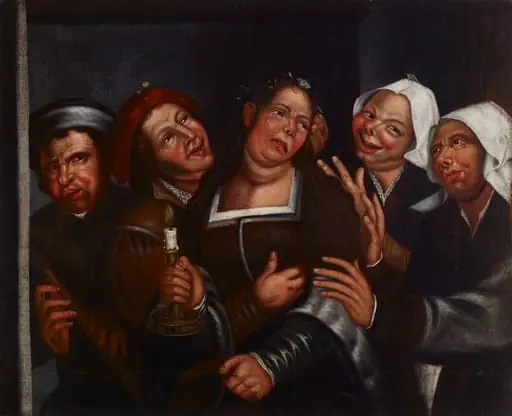
Teasing a Sleeping Girl
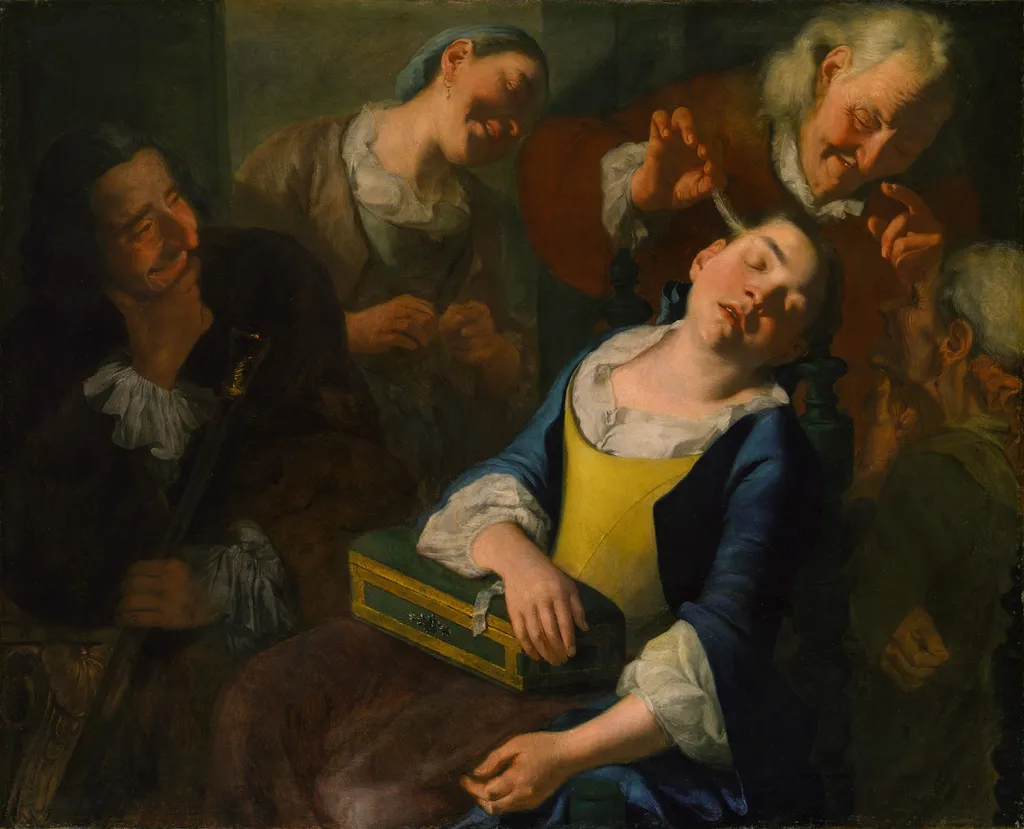
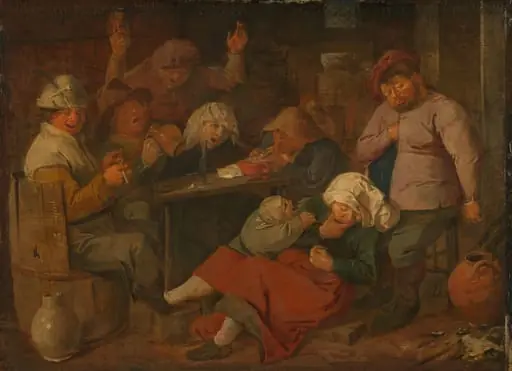
Teasing a Sleeping Girl is an oil painting by the Academic Art artist Gaspare Traversi. It dates from 1760 and is held in the collection of the Metropolitan Museum of Art.
About this work
Subject & Meaning
The presence of a walking stick and a container further populates the domestic setting, grounding the interaction in a tangible reality.
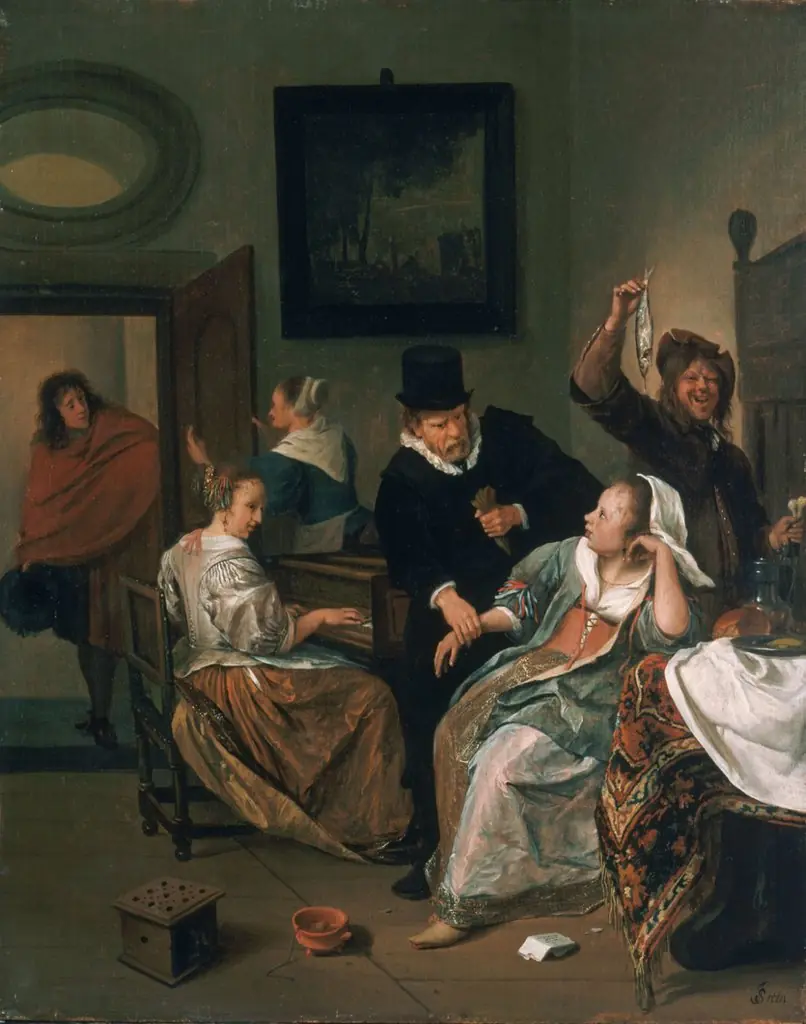
Gaspare Traversi's 1760 oil painting, Teasing a Sleeping Girl, depicts a scene of intimate mischief featuring a man and a young woman. The composition centers on the sleeping girl, whose repose is interrupted by the man's playful actions. He utilizes a feather, a specific prop drawn from the visual inventory, to tickle or tease the slumbering figure.
The presence of a walking stick and a container further populates the domestic setting, grounding the interaction in a tangible reality. Iconographically, the work explores themes of eroticism and voyeurism, characteristic of Traversi's genre scenes, where a private moment is captured with a sense of narrative tension. The title itself clarifies the action, framing the painting as a study of the boundary between sleep and wakefulness, and the power dynamics inherent in such a teasing encounter.
Technique & Style
Teasing a Sleeping Girl is executed in oil paint on canvas, a medium and support typical of mid‑eighteenth‑century easel painting. The work is classified as a painting and belongs to the academic art movement, indicating a adherence to the formal conventions and technical standards promoted by contemporary academies. Its handling reflects the smooth, controlled brushwork associated with academic practice, though specific details of brush technique or surface condition are not elaborated in the sources.
History & Provenance
The painting Teasing a Sleeping Girl was executed by Gaspare Traversi in oil on canvas circa 1760, as indicated by its inception date and medium. After its creation, the work passed through several hands: it was owned by dealer Edward Speelman, then by the Kleinberger Galleries, followed by collector Harry G. Sperling, before entering the collection of the Metropolitan Museum of Art, where it remains today. The sources do not record any specific commission or patron for the piece.
Context
Critical scholarship situates Traversi’s Teasing a Sleeping Girl within the academic art tradition of mid‑18th‑century Italian painting, noting its technical execution in oil on canvas and its thematic focus on a domestic, intimate encounter. The work’s provenance traces from Edward Speelman through Kleinberger Galleries and Harry G. Sperling to its present ownership by the Metropolitan Museum of Art, reflecting a documented chain of ownership typical of European genre scenes. Its classification as a painting and attribution to Gaspare Traversi are confirmed by both the artist’s catalogue entry and the museum’s collection records, underscoring its significance as an example of academic realism and its enduring presence in museum displays.
Overview
This oil painting, titled Teasing a Sleeping Girl, presents a lively social scene. It features a woman in repose, surrounded by several individuals who are actively engaged in a playful interaction. The artwork draws attention to the contrast between the woman's peaceful slumber and the animated expressions and gestures of those observing her, inviting the viewer to interpret the unfolding narrative within the composition.
Own this work as a print
Artist & collection

Artist
Gaspare Traversi (February 1722 – 1 November 1770) was an Italian Rococo painter best known for his genre works. Active mostly in his native city of Naples, he also painted throughout the Italian peninsula, including a stay in Parma.