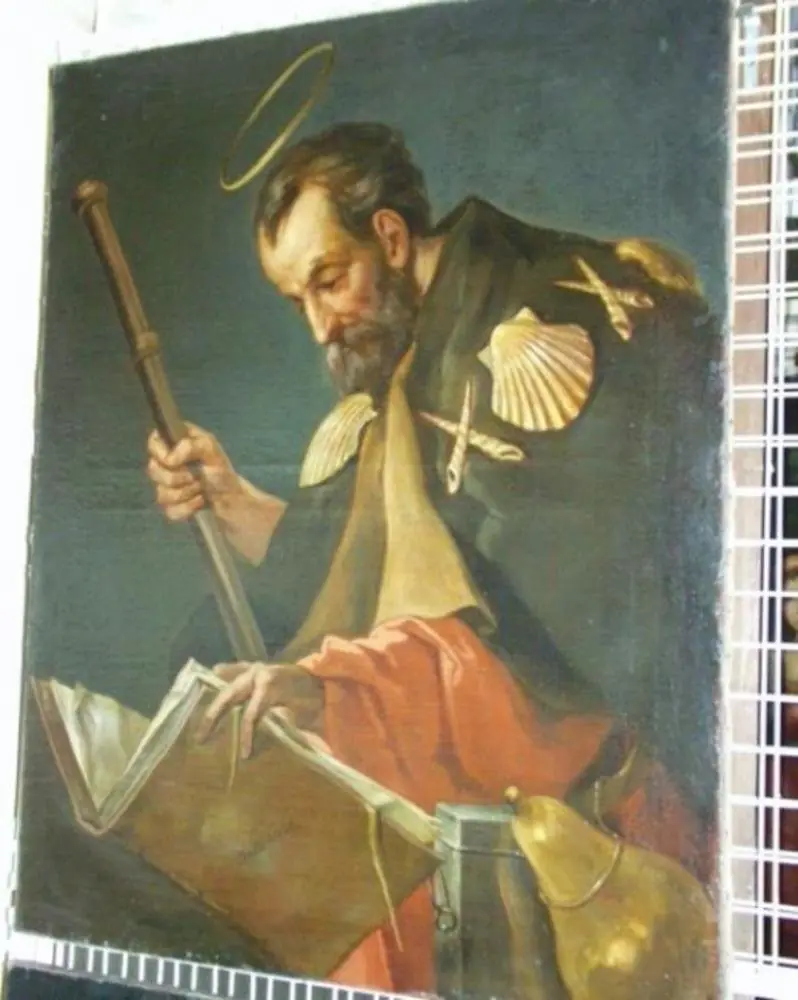
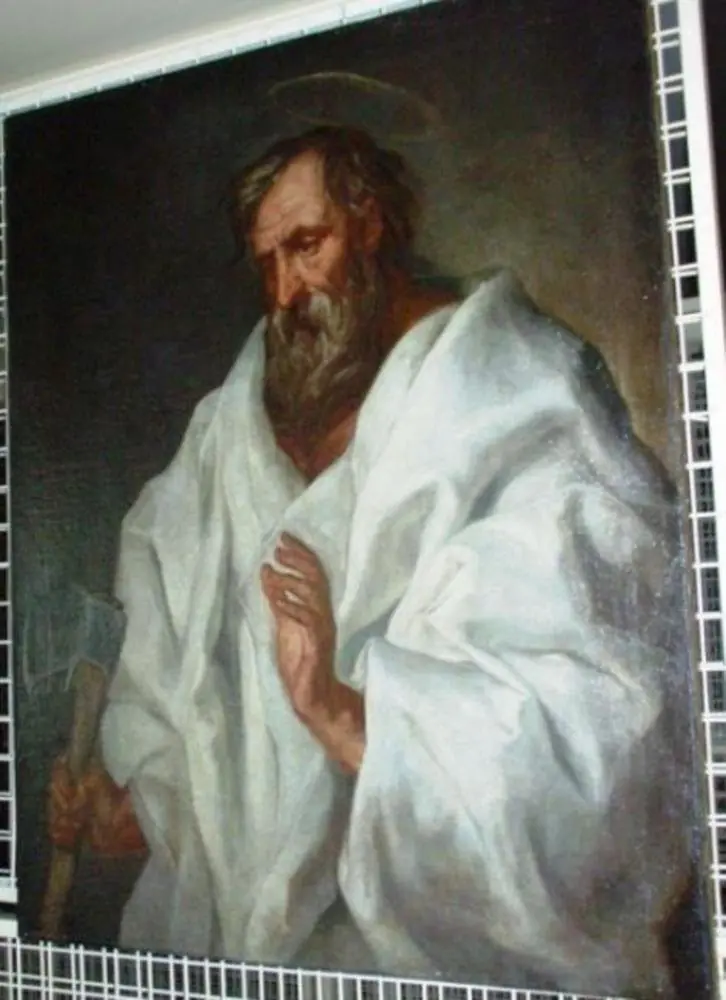
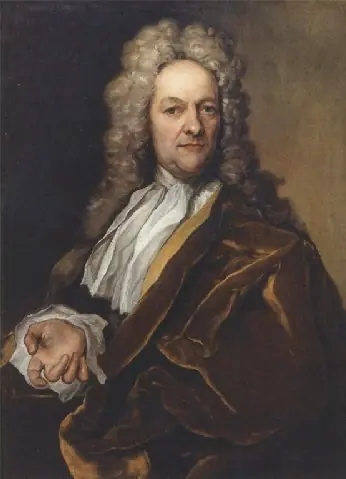
Artwork
St Peter the Apostle
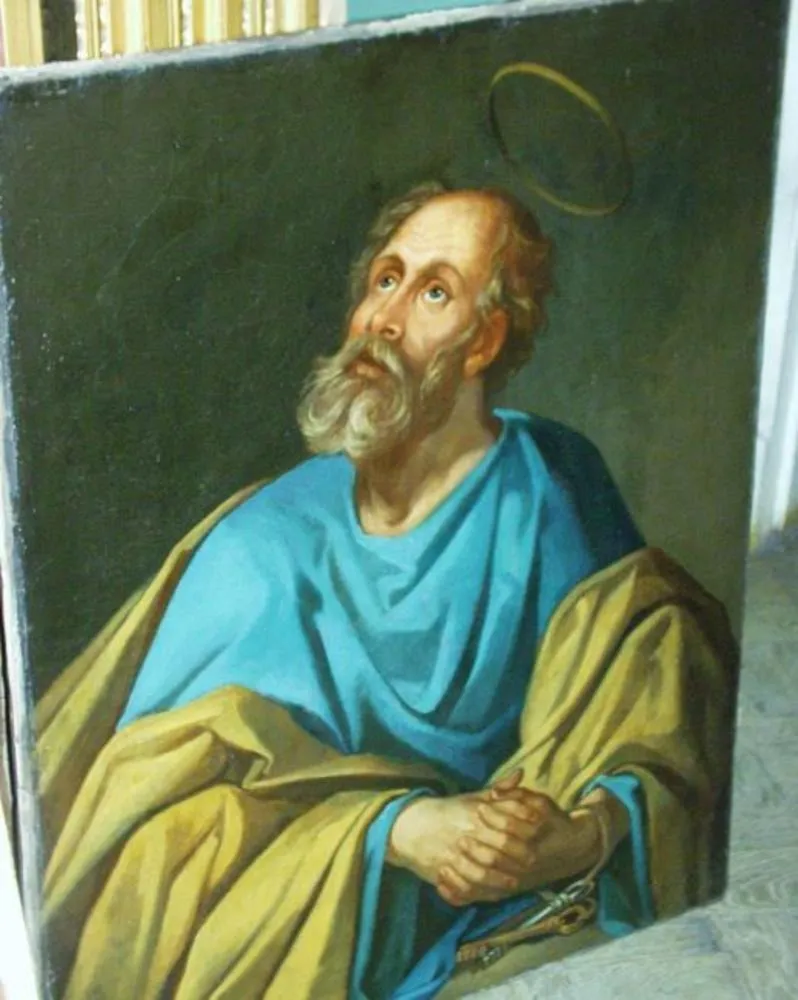
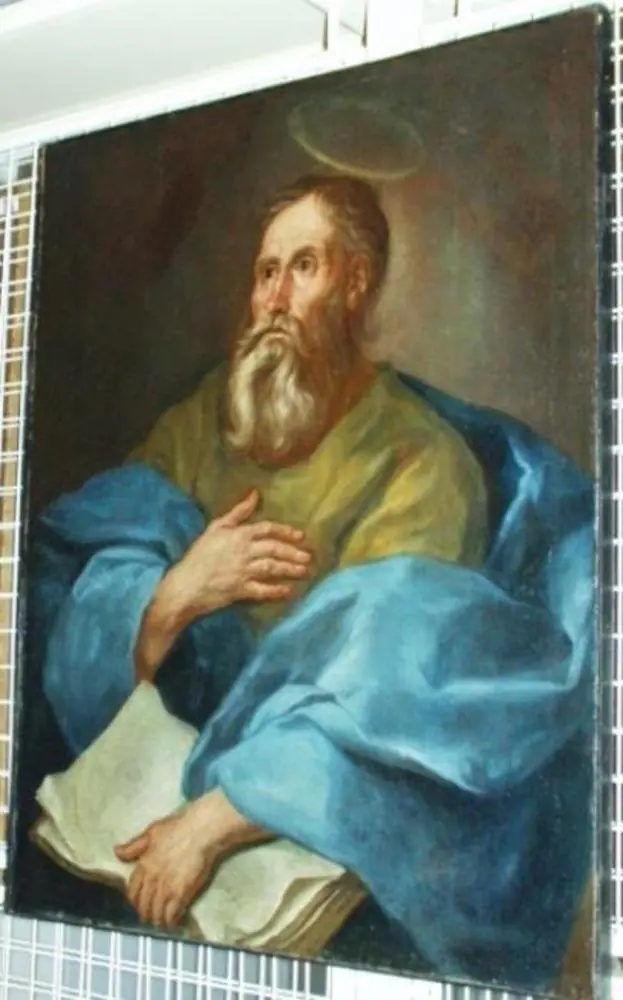
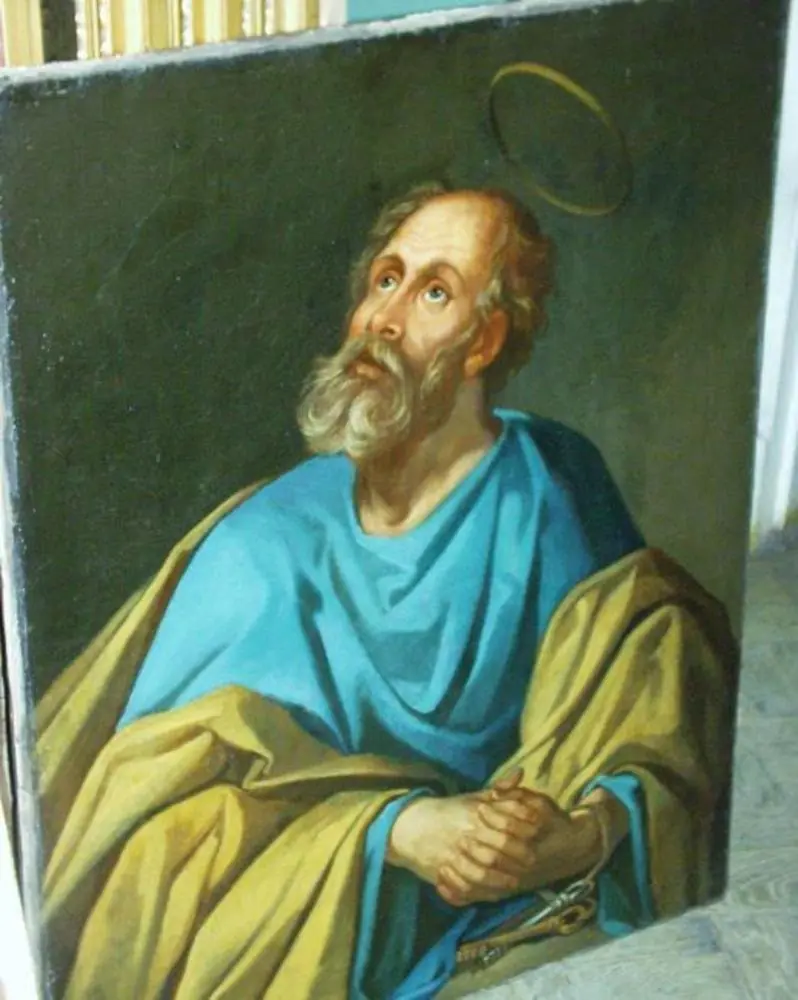
St Peter the Apostle is an oil painting by the Rococo painting artist Georg Gsell. It dates from 1729 and is held in the collection of the Hermitage Museum.
About this work
Overview
The work is a half-length devotional portrait of the apostle, executed in the smooth, blended manner characteristic of Gsell's religious paintings.
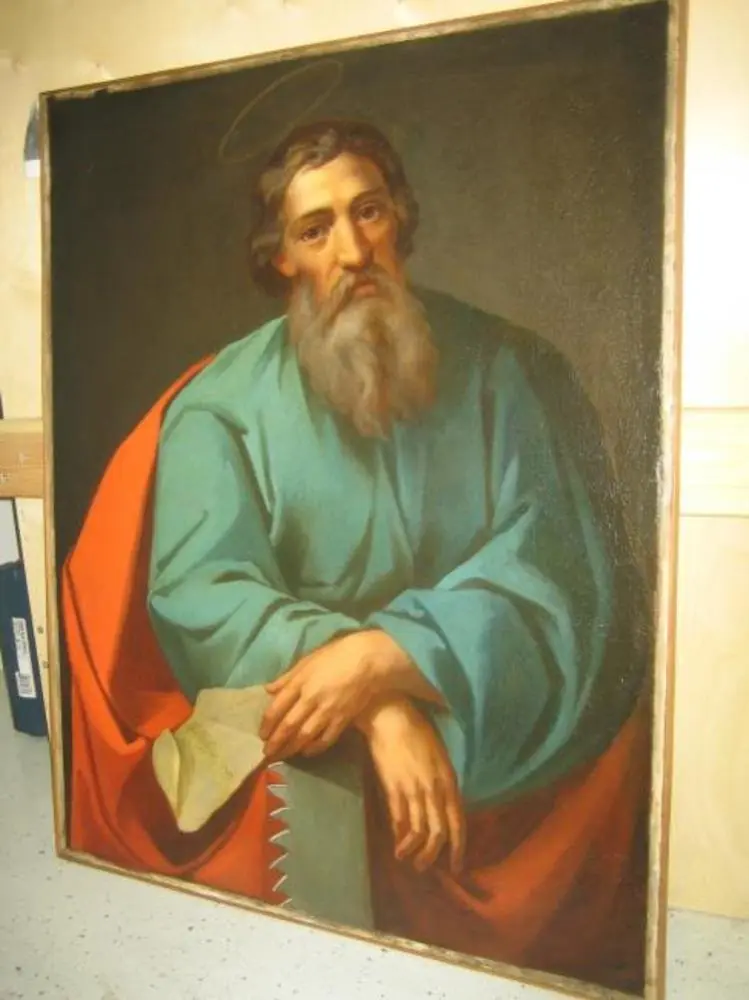
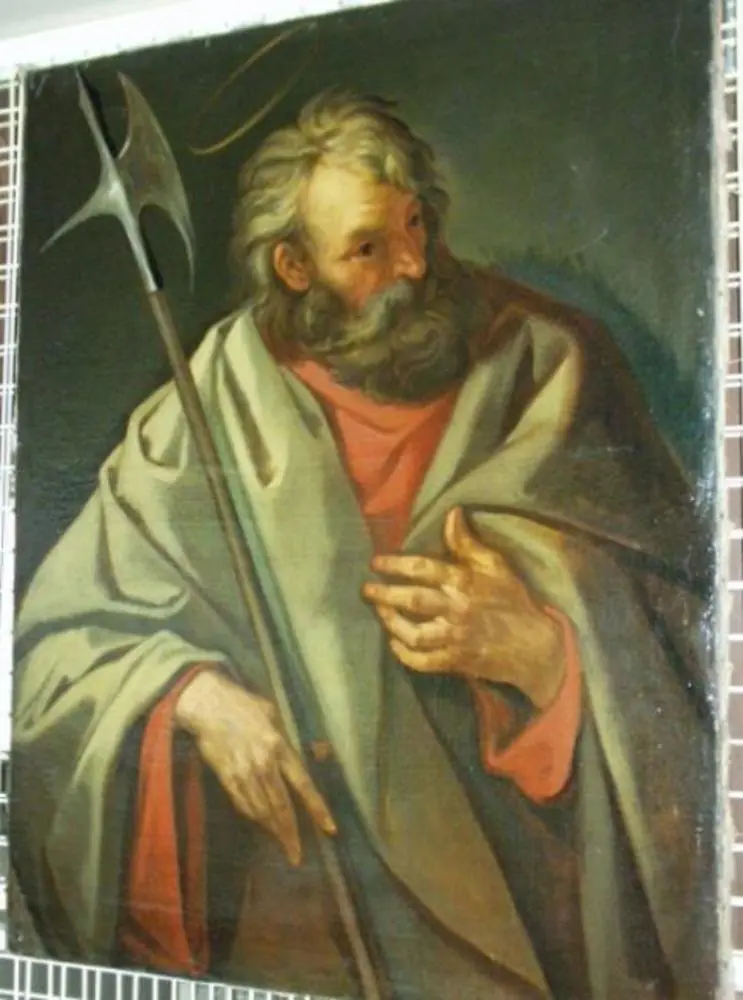
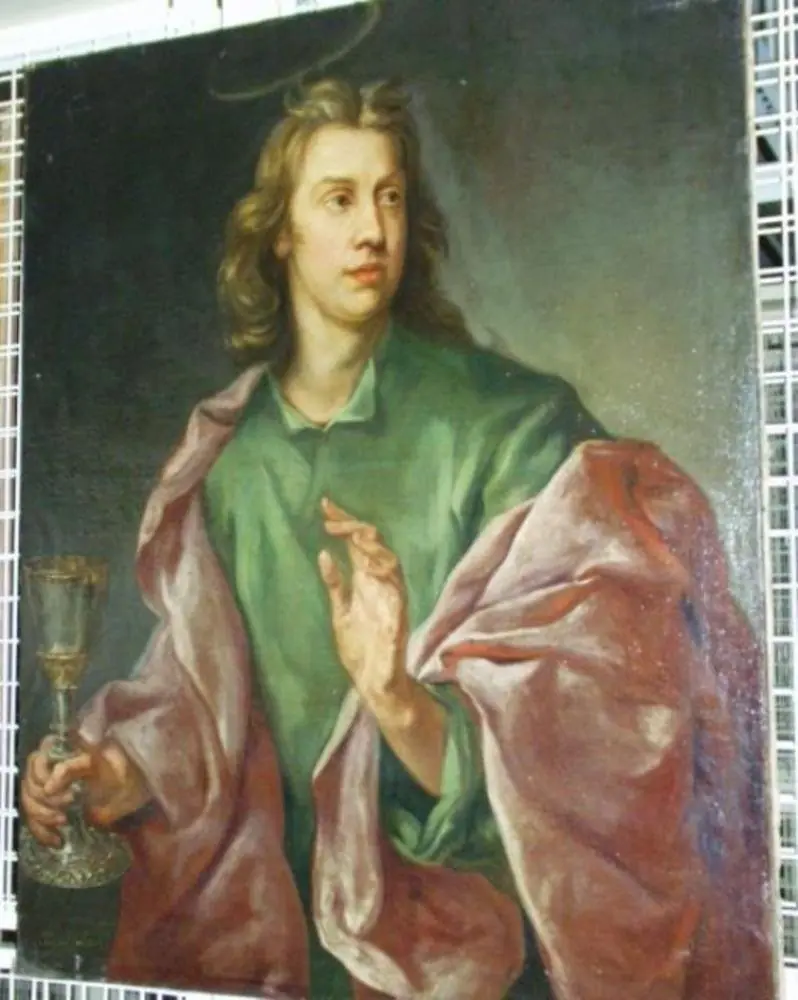
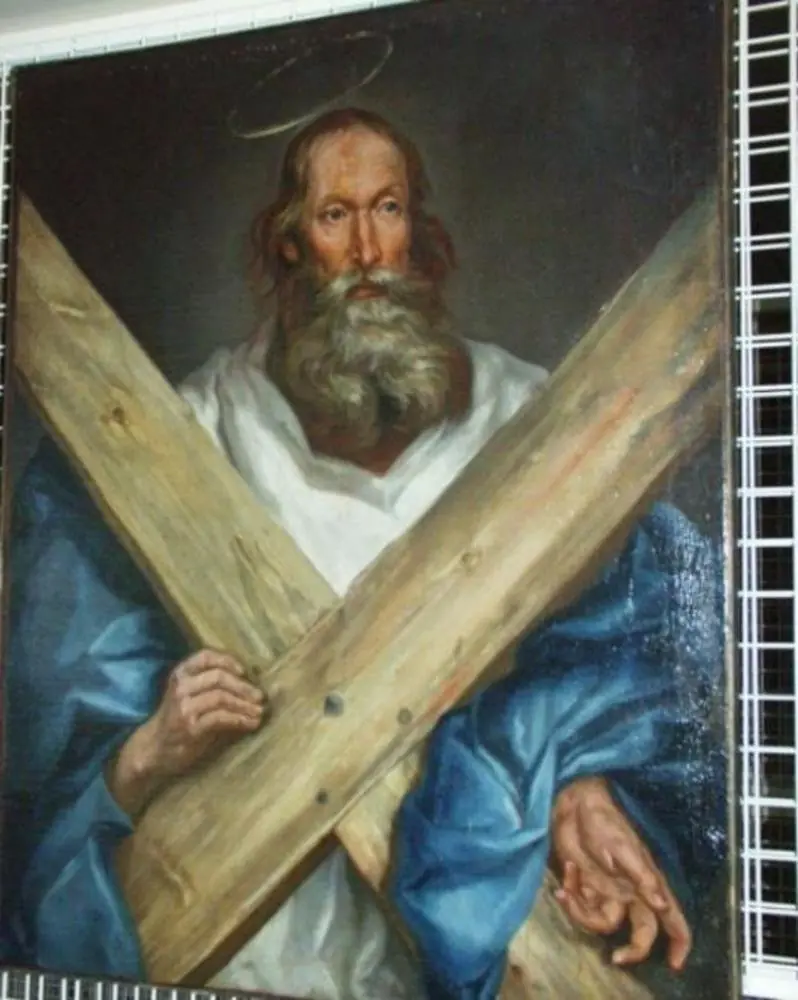
St Peter the Apostle is an oil on canvas painting by the Swiss Baroque painter Georg Gsell, dated 1729, and now held in the Hermitage Museum in Saint Petersburg. The work is a half-length devotional portrait of the apostle, executed in the smooth, blended manner characteristic of Gsell's religious paintings. It belongs to a significant series of thirteen paintings the artist created in 1729 for the Lutheran Church of Saint Peter on Nevsky Prospect in Saint Petersburg, representing a key moment in the development of religious art in early imperial Russia. The painting exemplifies the transfer of Western European Baroque conventions to the Russian court context through the agency of a foreign artist recruited by Peter the Great.
Subject & Meaning
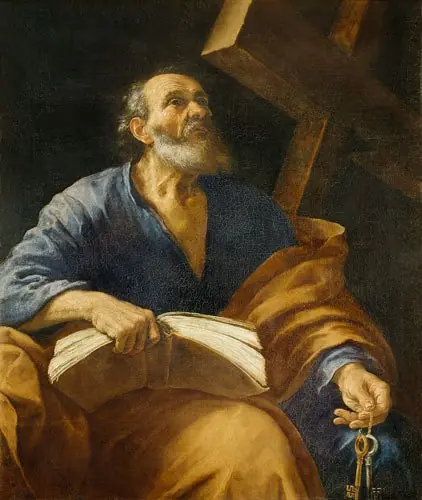
The painting depicts Saint Peter the Apostle as a half-length male figure, immediately identifiable through his established iconographic attributes. He wears a bright blue tunic beneath a heavy golden-yellow cloak, with a thin golden halo hovering above his balding head. His eyes gaze heavenward, his mouth slightly open in an expression of fervent devotion or spiritual rapture. Most significantly, two large keys are visible between his clasped hands, resting on the lower edge of the cloak. These keys refer to Matthew 16:19, in which Christ declares to Peter, "I will give to thee the keys of the kingdom of heaven." Since at least the early sixth century in the West, the keys have served as Peter's primary attribute, symbolizing his role as gatekeeper of heaven and, in Roman Catholic tradition, the foundation of papal authority. The saint's balding head with brownish-gray hair curling at the sides and his full gray beard conform to the long-established visual convention for Peter, documented since at least the fourth century. The upward gaze and clasped hands suggest a penitential or contemplative mode, aligning the work with the tradition of the penitent Saint Peter rather than narrative episodes from his life.
Technique & Style
The painting is executed in oil on canvas, a medium Gsell employed for his religious commissions in Russia. The brushwork appears smooth and blended, with careful modeling of light across the face and fabric folds. Lighting falls from thebari upper left, illuminating the face and the bright blue garment while casting shadows in the dark, muted green background and beneath the drapery. This dramatic but controlled chiaroscuro reflects the Baroque conventions Gsell absorbed during his training in Vienna under the Antwerp painter A. Schoonjans and his subsequent residence in Amsterdam and Antwerp. The heavy golden-yellow cloak shows particular attention to the volumetric rendering of drapery, with folds that suggest weight and movement. A sliver of architectural molding or frame visible at the top edge indicates the painting may have been conceived as part of a larger decorative ensemble, consistent with its original function within a church interior. The overall handling demonstrates the synthesis of Flemish Baroque naturalism with the more restrained devotional requirements of Lutheran religious art in early eighteenth-century Russia.
History & Provenance
Gsell created this painting in 1729 as part commission of thirteen works for the Lutheran Church of Saint Peter on Nevsky Prospect in Saint Petersburg. This commission comprised knee-high images of the Apostles and Gospel writers, plus an image of the Crucifixion. The church, established to serve the foreign Protestant community in the Russian capital, provided an important venue for Gsell's religious painting at a time when he was prince was consolidating his position as a leading court artist. The painting is now in the collection of the Hermitage Museum in Saint Petersburg, though the precise date of its transfer from the church to the museum remains undocumented in the available sources. The work's accession number and exact circumstances of acquisition are not specified in the provided materials. No exhibition history is recorded in the sources.
Context
Georg Gsell (1673-1740) occupies a significant position in Russian art history as one of the foreign specialists recruited by Peter the Great to establish Western European artistic standards at the imperial court. Born in St. Gallen, Switzerland, he studied in Vienna under A. Schoonjans before working in Antwerp and Amsterdam, where he married Dorothea Maria Henrietta Graff in 1715. Peter the Great encountered Gsell in Amsterdam and invited him to Russia, where he arrived around 1717. Gsell became the first curator of the Imperial art gallery founded in 1720 at Peterhof and taught drawing and painting at the Academy of Sciences from 1726. His activity was remarkably diverse: he painted plafonds at the Summer Palace, designed rockwork for the Summer Garden, created illuminations and triumphal gate compositions, and executed icons for the Peter and Paul Cathedral. The 1729 commission for the Lutheran Church of Saint Peter came at a mature point in his career, when he had already spent over a decade establishing artistic institutions and practices in Russia. The painting of Saint Peter thus emerges from a context where a Swiss-trained artist was mediating between Western European Baroque traditions and the devotional needs of a cosmopolitan, multi-confessional imperial capital.
Legacy
The Saint Peter the Apostle painting represents a surviving unity of Gsell's now-dispersed decorative program for the Lutheran Church of Saint Peter. While the sources do not record specific later influence of this individual work, the broader pattern of Gsell's activity left a durable mark on Russian artistic culture. His students included Fyodor Cherkasov, A. Grekov, Mikhail Nekrasov, Alexei Malinovkin, Ivan Nesterov, Pyotr Pagin, A. Dedeshin, and Ivan Shereshperov, constituting a significant transmission of Western European painting methods to native Russian practitioners. His two sons continued the family profession, earning him the sobriquet "Father Gsellermann." The painting's residence in the Hermitage Museum ensures its continued visibility within one of the world's major collections, though scholarly literature specifically devoted to this work appears limited in the provided sources. As a material document of the international artistic exchanges facilitated by Peter the Great's cultural policies, the painting retains value for understanding the formation of a Russian Baroque aesthetic and the role of foreign artists in that process.
Artist & collection
Artist
Georg Gsell (Russian: Георг Гзелль; 28 January 1673 – 22 November 1740) was a Swiss Baroque painter, art consultant and art dealer.