Artwork
Artemisia
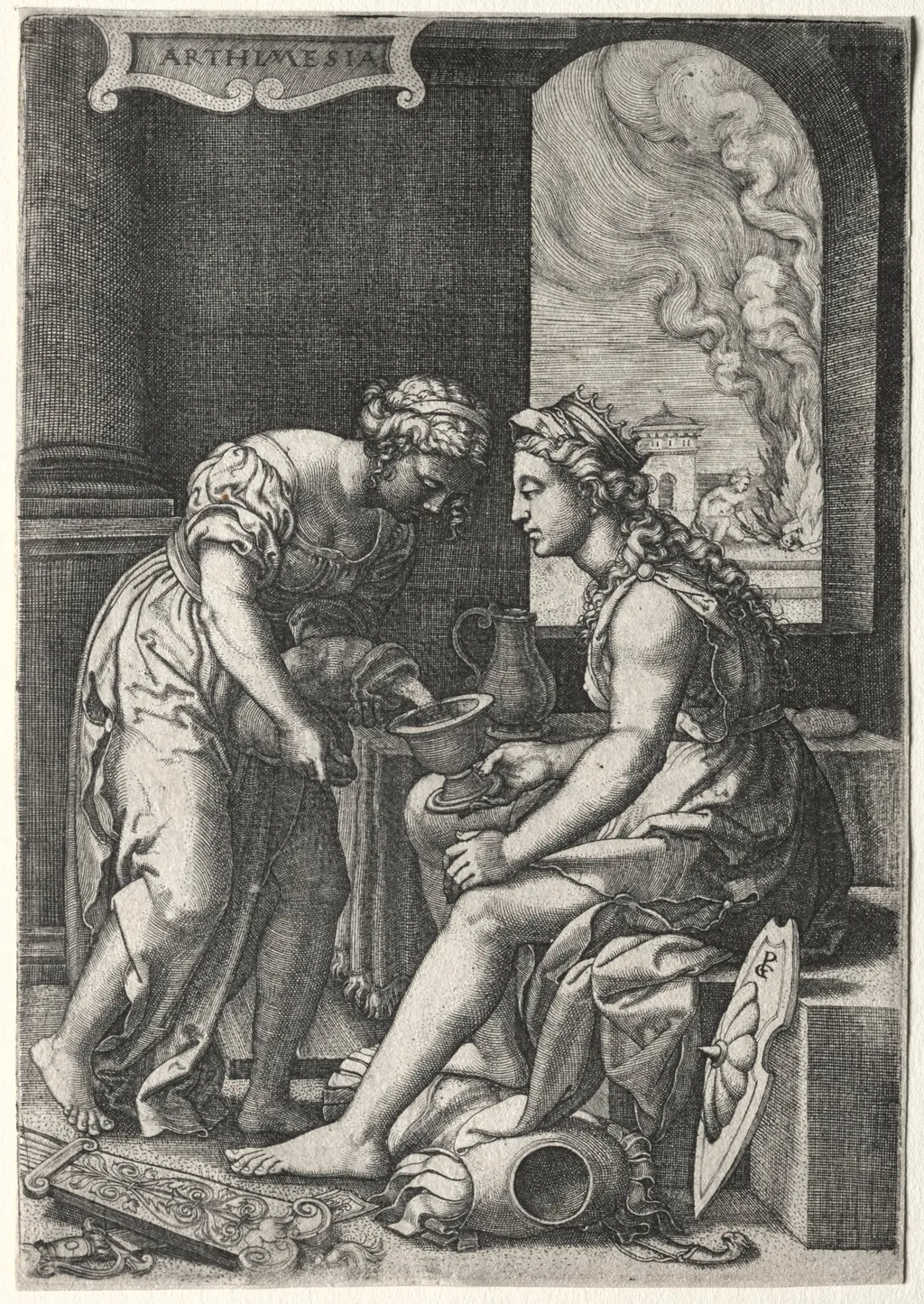
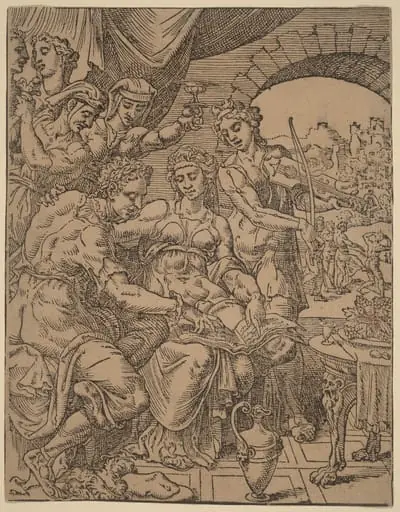
Artemisia is a print by the Renaissance artist Georg Pencz. It dates from 1539 and is held in the collection of the Cleveland Museum of Art.
- Accession no.
- 1964.468
- Credit line
- Gift of Mr. and Mrs. H. Austin Hauxhurst
About this work
Overview
Pencz, trained in Albrecht Dürer’s workshop and influenced by his time in Italy, merged Northern European precision with Italian compositional sensibilities.
Created around 1539 by the Nuremberg artist Georg Pencz, this print is a late example of his career, produced shortly before his death in 1550. Pencz, trained in Albrecht Dürer’s workshop and influenced by his time in Italy, merged Northern European precision with Italian compositional sensibilities. The work is part of The Cleveland Museum of Art’s collection and reflects his engagement with classical themes through the lens of Renaissance humanism.
Subject & Meaning
The figures depict Artemisia, a historical figure celebrated in antiquity for her loyalty and resolve, often invoked during the Renaissance as a symbol of moral strength. The quiet interaction between the two women, one standing with a bowl, the other seated with a cup, suggests a moment of ritual or reflection. Their attire and demeanor evoke dignity and introspection, aligning with humanist ideals that elevated classical virtue as a model for contemporary conduct.
Technique & Style
Pencz employs chiaroscuro to model form and create spatial depth, a technique learned from Italian models but adapted with Northern attention to detail. The dim interior, pierced by a narrow shaft of light from a distant window, enhances the solemn mood. Figures are rendered with careful line and subtle tonal gradations, emphasizing texture in fabric and the quiet weight of their gestures, characteristic of his synthesis of German draftsmanship and Italian lighting.
History & Provenance
The work entered The Cleveland Museum of Art’s collection as part of its broader acquisition of Northern Renaissance prints. Its attribution to Pencz is supported by stylistic parallels with his other engraved works and documented connections to his Nuremberg circle. No earlier provenance is widely recorded, but its survival reflects the continued appreciation of his prints among collectors in the 19th and 20th centuries.
Context
In early 16th-century Nuremberg, artists like Pencz were navigating the tension between traditional religious imagery and emerging secular humanist subjects. Artemisia’s depiction reflects a broader trend of reviving classical narratives to convey ethical ideals. Pencz’s exposure to Venetian art during his travels informed his approach to light and composition, distinguishing his work from more rigid Northern predecessors.
Legacy
Pencz’s prints, including this one, contributed to the dissemination of humanist themes across Central Europe. Though less celebrated than Dürer, his integration of Italianate elements into Northern printmaking helped bridge regional styles. This work remains a quiet testament to the intellectual currents of its time, valued for its restraint and thoughtful execution rather than dramatic flair.
Own this work as a print
Artist & collection
Artist
Georg Pencz (c. 1500 – 11 October 1550) was a German engraver, painter and printmaker. Pencz was probably born in Westheim near Bad Windsheim/Franconia. He travelled to Nuremberg in 1523 and joined Albrecht Dürer’s…

- Rhetoric
 The Prodigal Son Squandering His Inheritance on Harlots
 Christ and the Samaritan Woman
 Lot and His Daughters
 Envy Driven from the Temple of the Muses
 Lot and His Daughters
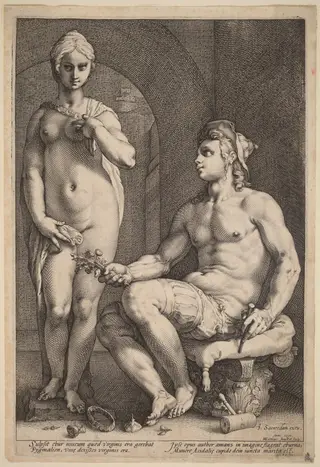 Pygmalion and Galatea
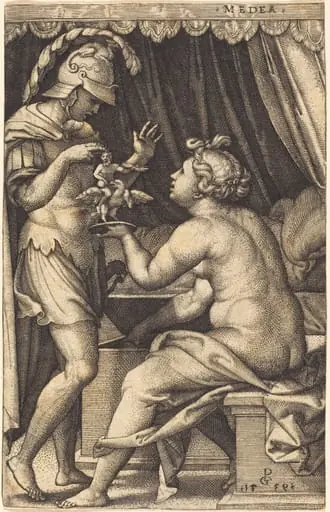 Medea Returning the Penates to Jason
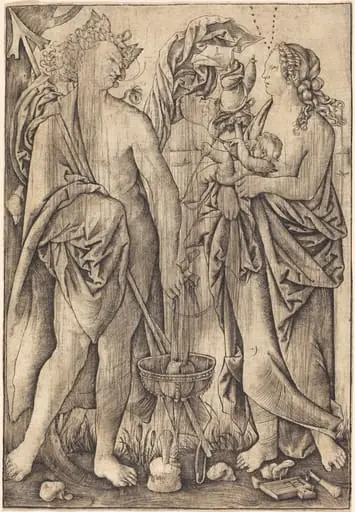 Mars and Venus (Mercury and Venus?)
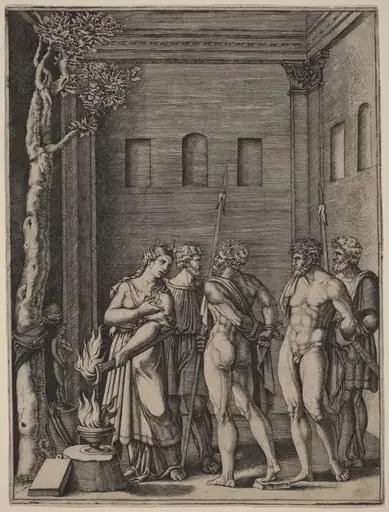 Iphigenia Recognizing Her Brother
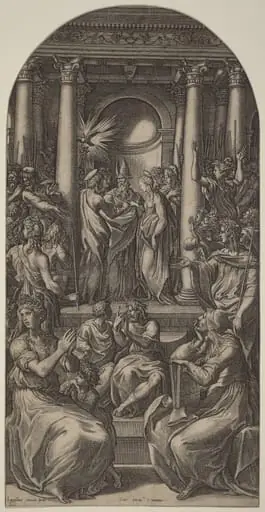 The Marriage of the Virgin
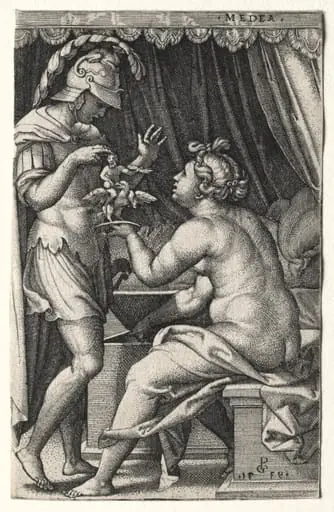 Medea and Jason