Artwork
Samuel Knopf
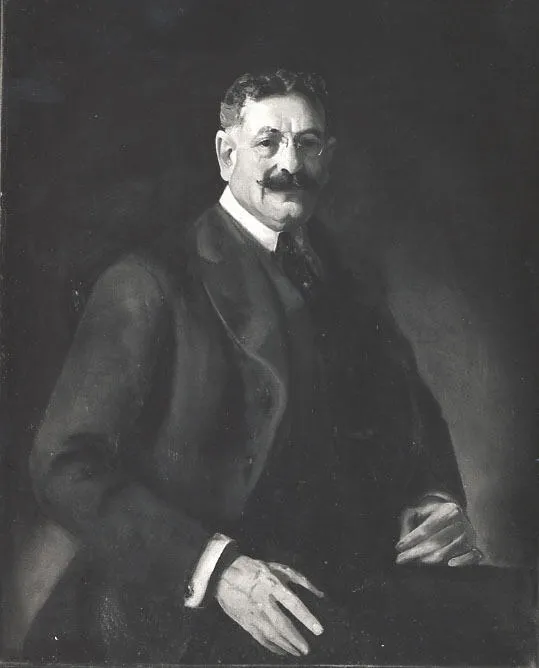
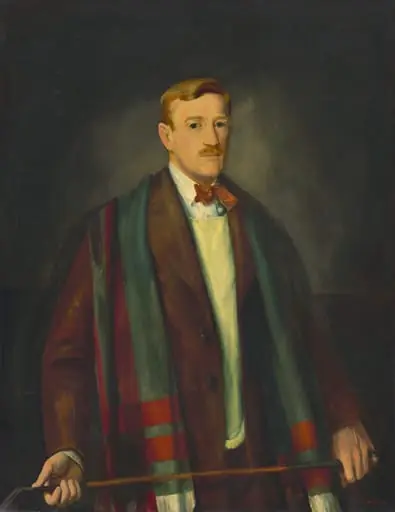
Samuel Knopf is an oil painting by the American Impressionist artist George Bellows. It dates from 1922 and is held in the collection of the Metropolitan Museum of Art.
About this work
History & Provenance
The portrait titled Samuel Knopf was painted by George Bellows in 1922, as recorded in both the artist’s records and institutional documentation.
The portrait titled Samuel Knopf was painted by George Bellows in 1922, as recorded in both the artist’s records and institutional documentation. The work entered the collection of the Metropolitan Museum of Art in New York, where it remains held. It is catalogued as an oil-on-canvas portrait depicting a man, with dimensions of 100.8 cm in height and 81 cm in width.
The painting’s creation date aligns with Bellows’s mature period, reflecting his established practice in portraiture during the early 1920s.
The portrait Samuel Knopf is held in the collection of the Metropolitan Museum of Art, New York, where it is recorded under accession number 22.12.2. The painting was bequeathed to the museum in 1922, aligning with the work’s execution date. It has not been recorded as part of any subsequent traveling or thematic exhibitions in the sources consulted.
Overview
George Bellows completed Samuel Knopf, an oil painting, in 1922. This portrait is held in the collection of The Metropolitan Museum of Art. Bellows was a prominent American artist of his era, recognized for his commitment to realism and his ability to capture the distinct character of his subjects. This work exemplifies his approach to portraiture, focusing on a direct and detailed representation of the sitter.
Subject & Meaning
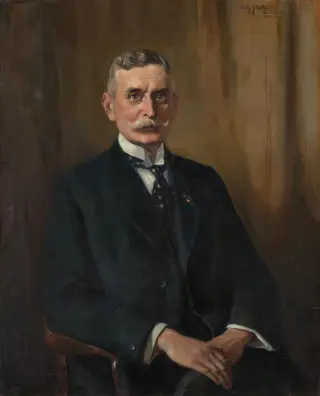
The painting depicts Samuel Knopf, a man with dark, short hair and a mustache, seated with his hands clasped before him. Dressed in a dark suit, white shirt, and tie, his posture conveys a sense of self-assurance and authority. A serious expression marks his face, suggesting a dignified and composed presence. The artist aimed to convey the subject's individual essence through these carefully observed details.
Technique & Style
Executed in oil paint, the portrait employs a dark background with subtle shading, which contributes to the image's depth. Bellows utilized chiaroscuro, a technique emphasizing strong contrasts between light and dark, to create a dramatic visual effect. This interplay of light and shadow draws the viewer's attention directly to Knopf's face, highlighting his features and expression. The work is characterized by elements associated with American Impressionism in its rendering.
Context
George Bellows, a leading American realist painter, was widely recognized for his dynamic portrayals of urban life in New York City. While often associated with gritty cityscapes, his portraiture, such as Samuel Knopf, demonstrates his versatility. Created in 1922, this work reflects his broader artistic mission to depict subjects with an unvarnished realism and a keen eye for detail, contributing to his reputation as a significant artist of his generation.
Artist & collection
Artist
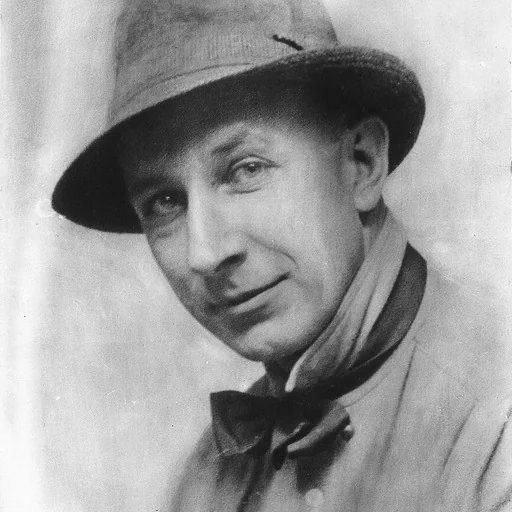
George Wesley Bellows (August 12 or August 19, 1882 – January 8, 1925) was an American realist painter, known for his bold depictions of urban life in New York City.

- Portretul Profesorului Eugen Ciolac
 Vătășeanu, directorul Băncii Albina
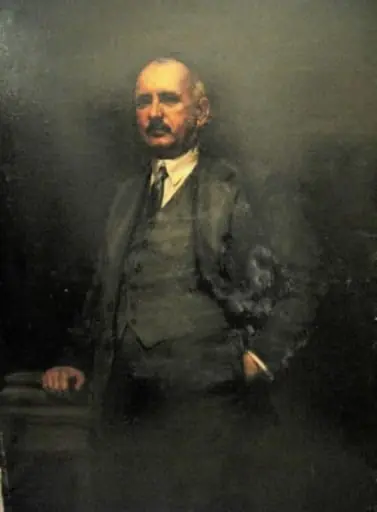 Aurel Vlad
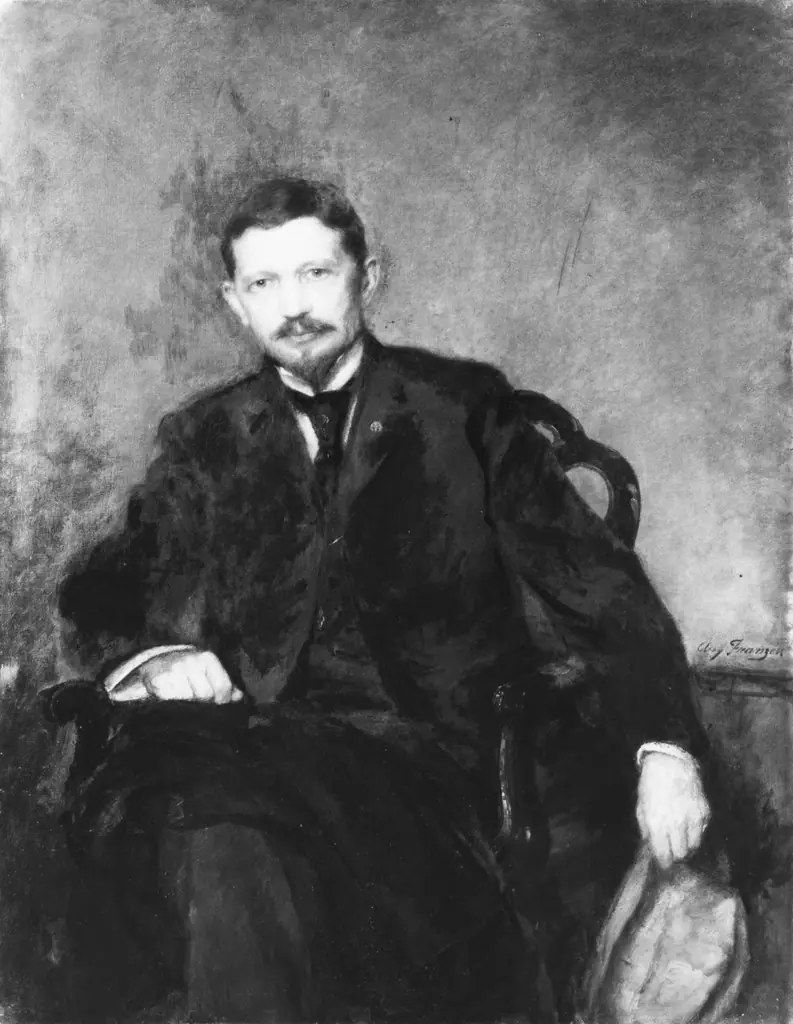 Alphonso T. Clearwater
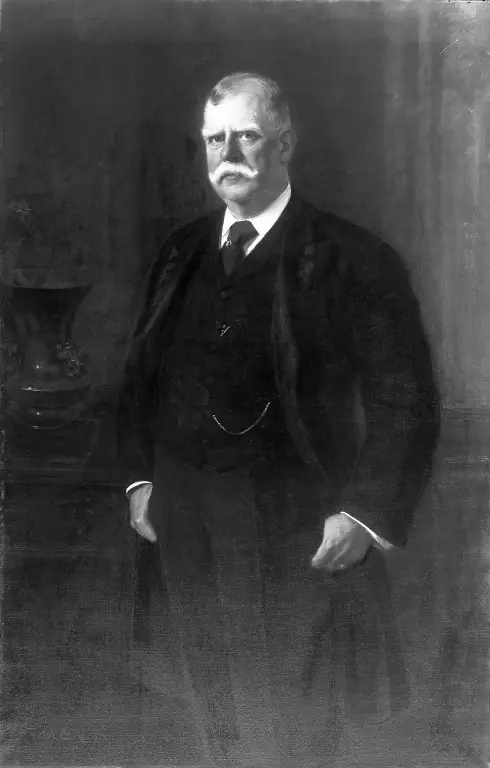 Carll H. de Silver
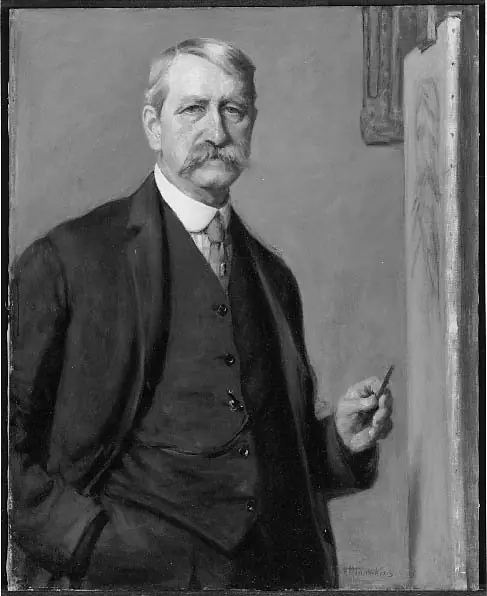 Self Portrait
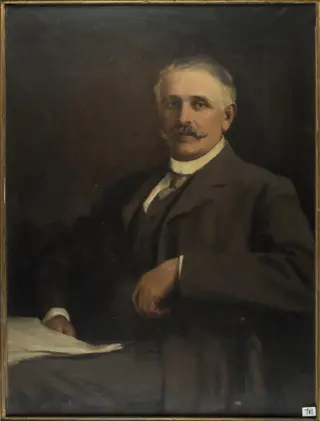 Charles Martin Strick Humphreys
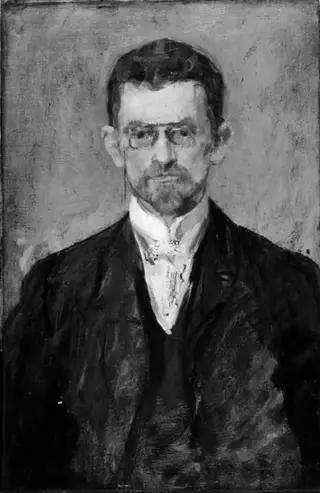 Portrait of the Norwegian Keeper of National Antiquities, Christopher Brinckmann
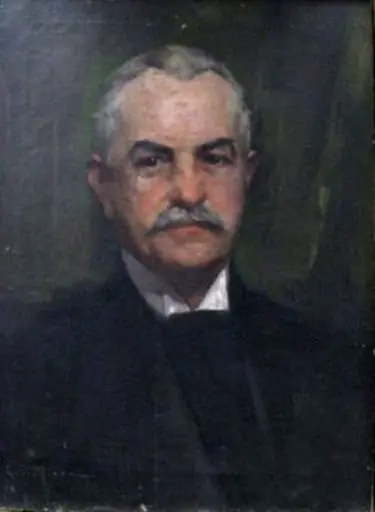 Portret
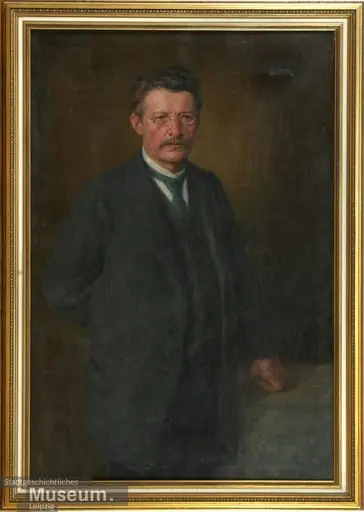 Painting
 Jacob Christiaan Koningsberger (1867-1951). Chairman of the People's Council (1918-19)
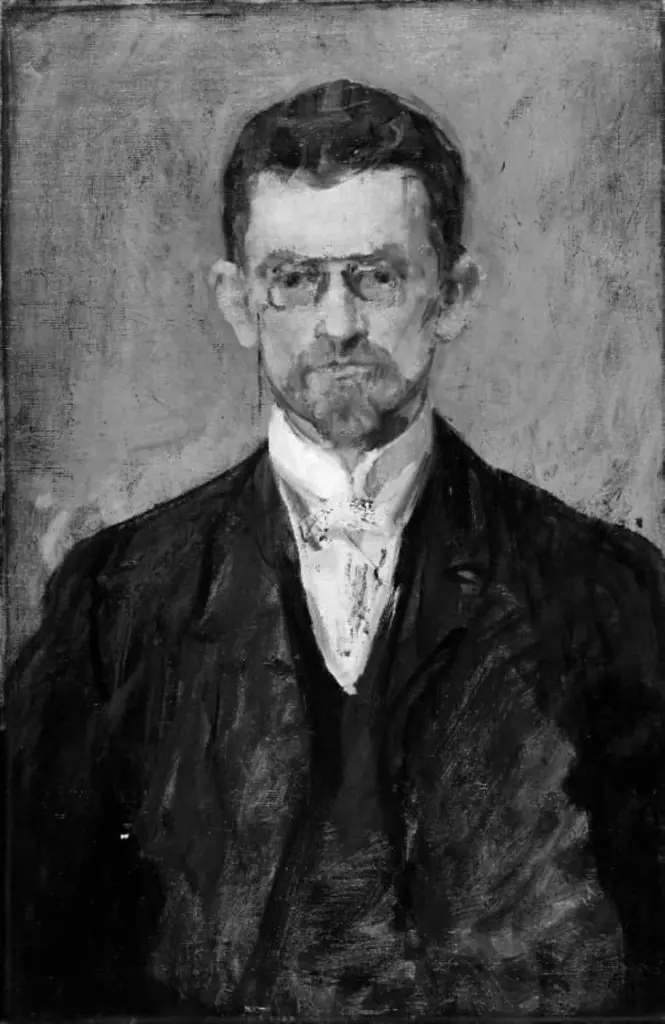 Portrait of the Norwegian Keeper of National Antiquities, Christopher Brinckmann